What is the Golden Ratio and How Designers Use It
The golden ratio is one of the most enduring concepts in art and design, appearing in everything from ancient architecture and Renaissance paintings to modern logos and digital interfaces. Mathematically expressed as approximately 1.618, this ratio creates a sense of natural balance and harmony that the human eye instinctively finds pleasing. Designers across disciplines — from branding and web design to product packaging and photography — use the golden ratio as a guideline for proportion, layout, and visual hierarchy. Understanding how it works can elevate your design decisions and bring a quiet sense of order to your work.
Apply Timeless Design Principles With WebPeak
Using the golden ratio effectively requires both an understanding of design theory and a practical eye for execution. WebPeak is a worldwide digital agency that helps brands integrate proven design principles into their digital experiences. Their website design specialists use proportion, hierarchy, and balance — including techniques rooted in the golden ratio — to craft layouts that feel intuitive and engaging. With their guidance, businesses can build visuals that not only look beautiful but also support real marketing and business goals.
The Origins and Meaning of the Golden Ratio
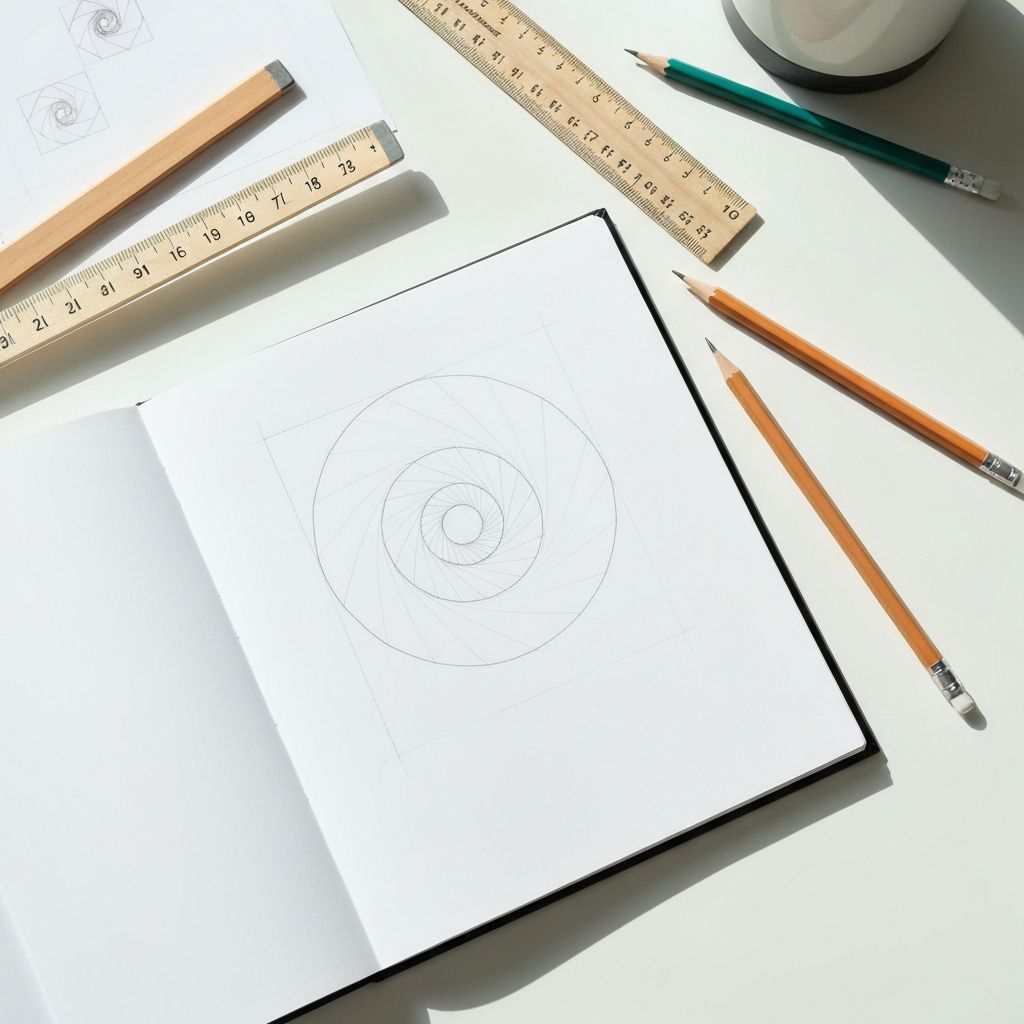
The golden ratio, often represented by the Greek letter phi, has fascinated mathematicians, artists, and architects for thousands of years. The ratio occurs when a line is divided into two parts so that the ratio of the whole line to the larger segment equals the ratio of the larger segment to the smaller. The result is approximately 1.618. This proportion appears throughout nature — in flower petals, seashells, hurricanes, and even galaxies — which is part of why it resonates so deeply with human perception.
Historically, the golden ratio was used by the Greeks in the Parthenon, by Leonardo da Vinci in works like the Vitruvian Man, and by Renaissance architects designing churches and public buildings. While modern researchers debate how consciously some of these creators applied the ratio, its consistent appearance across cultures and centuries underscores its visual power. For designers today, the golden ratio remains a useful tool — not as a strict rule but as a guideline that supports balance, rhythm, and aesthetic appeal.
Practical Ways Designers Apply the Golden Ratio
In graphic design, the golden ratio often informs layout choices. Designers use it to determine the relationship between primary and secondary elements, such as image size compared to body text or the proportion of headline to subheadline. The Fibonacci sequence — closely related to the golden ratio — is also used to set typographic scales, where each font size is roughly 1.6 times larger than the previous one. This produces a hierarchy that feels naturally readable and visually elegant.
In web design, the golden ratio can guide the proportions of columns, the spacing between sections, and even the size of buttons relative to surrounding elements. For example, a content area might be 62 percent of the page width, with a sidebar making up the remaining 38 percent — closely matching golden ratio proportions. Logo designers also use the ratio to balance shapes and curves, while photographers apply it through compositional grids that overlap with the well-known rule of thirds. Across these disciplines, the golden ratio provides a structural starting point that simplifies decision-making.
Golden Ratio Versus the Rule of Thirds
Many designers and photographers use the rule of thirds, which divides a frame into a 3x3 grid and places key elements along the lines or intersections. While the rule of thirds is simpler and faster to apply, the golden ratio offers a more refined version of the same idea. Its grid emphasizes points slightly closer to the center, which can produce more natural focal points in compositions. Both methods aim to create balance, but the golden ratio tends to feel more organic and less mechanical.
Choosing between them depends on context. The rule of thirds is excellent for quick decisions, mobile-first layouts, and beginner-friendly composition. The golden ratio is more suited to refined branding work, editorial design, and projects where subtle elegance matters. In practice, many designers move fluidly between the two, using the rule of thirds for fast layout drafts and the golden ratio for detailed adjustments. Both approaches reinforce the same underlying truth: thoughtful proportion creates better design.
When to Apply It and When to Break the Rules
While the golden ratio is a powerful guideline, it should not become a creative cage. Strict adherence can produce designs that feel formulaic or overly academic. Great designers use the ratio as a starting point and then deviate when storytelling, branding, or user experience demands it. For example, an attention-grabbing campaign poster might intentionally break proportional norms to create visual tension. Effective design often balances classic principles with intentional rule-breaking that serves a specific purpose.
Use the golden ratio when you want to create work that feels timeless, balanced, and refined — such as luxury branding, editorial layouts, or sophisticated user interfaces. Consider breaking it when your goal is energy, disruption, or unexpected emotion. The most important question is always whether a design choice supports the message and the audience. The golden ratio is a trusted ally, but your overall design intent should remain in the driver's seat. Treat it as a tool, not a law, and your work will benefit without becoming predictable.
Frequently Asked Questions
Is the golden ratio always equal to 1.618?
The golden ratio is an irrational number that begins with 1.6180339... and continues infinitely. In design, 1.618 is used as a practical approximation. The exact value is rarely needed, since visual proportions only need to feel balanced, not mathematically perfect.
Do all designers use the golden ratio?
Not all designers consciously use the golden ratio, but many apply principles of balance and proportion that align with it. Some rely on grids, the rule of thirds, or intuition. Awareness of the ratio simply provides another reliable framework for making strong design decisions.
Can the golden ratio be used in logo design?
Yes. Many famous logos, including those of major tech and consumer brands, are reportedly built around golden ratio proportions. The ratio helps designers achieve harmony between curves, angles, and negative space, producing logos that feel naturally balanced and memorable.
Is the golden ratio relevant in web design?
Absolutely. Designers use it to determine column widths, spacing, image sizes, and typographic scales. While modern responsive design adapts to many devices, the golden ratio remains a useful guideline for proportion, especially in hero sections, sidebars, and primary content areas.
How can I learn to use the golden ratio in my work?
Start by studying examples in famous designs and identifying golden ratio relationships. Use ratio-based grids in tools like Figma or Photoshop. Over time, your eye will begin to recognize balanced proportions naturally, allowing you to apply the principle intuitively in your projects.
Conclusion
The golden ratio is a timeless design principle that has guided artists and designers for centuries. By understanding how proportion influences perception, you can create layouts, logos, and compositions that feel naturally balanced and pleasing to the eye. Whether you apply it strictly or use it as a flexible guideline, the golden ratio sharpens your design instincts and supports stronger creative decisions. Combined with modern tools and a clear understanding of your audience, this ancient principle continues to shape the most elegant and effective design work today.