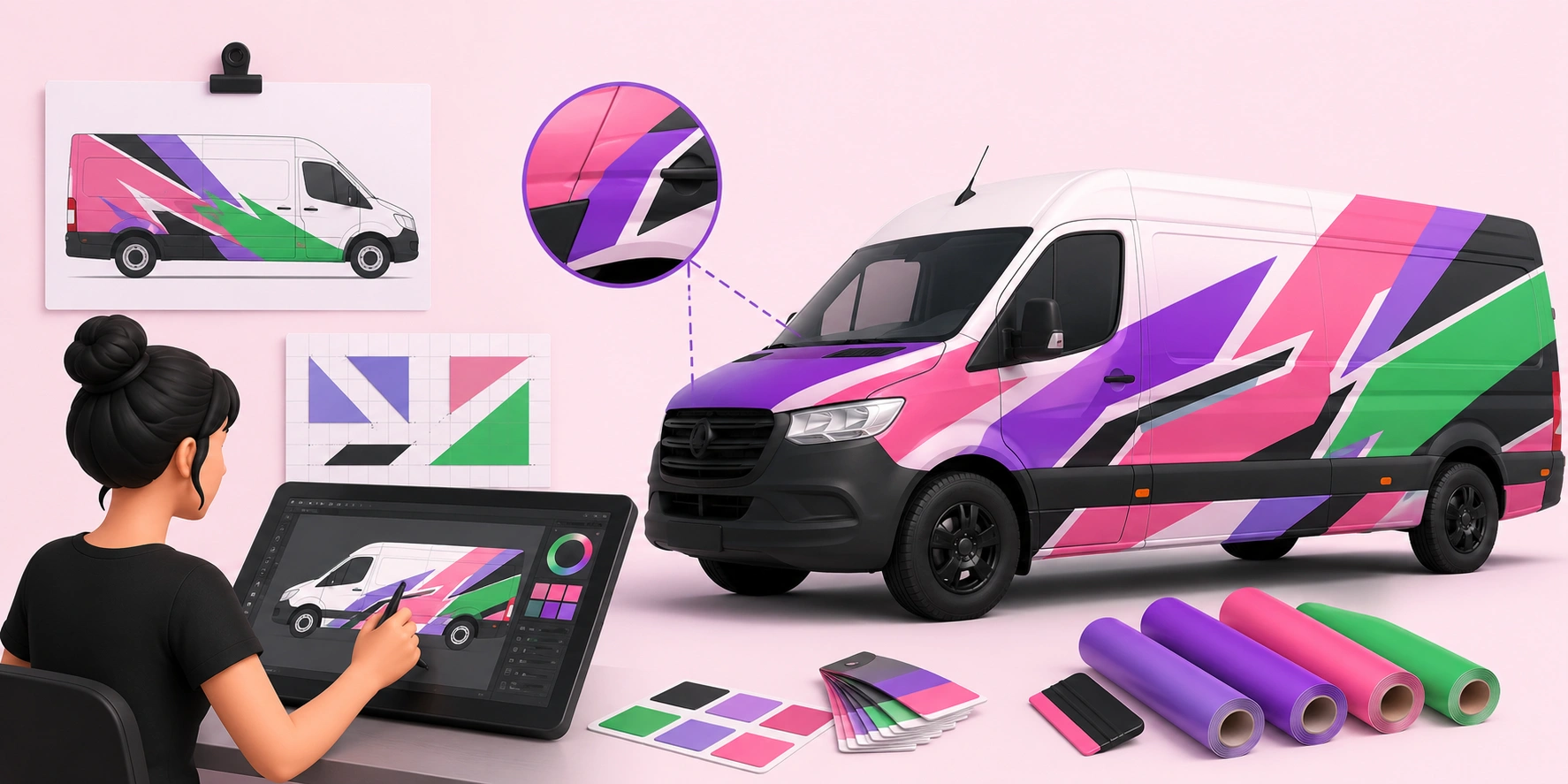
How to Design Vehicle Graphics
Vehicle graphics are one of the most effective and eye-catching forms of advertising, turning cars, vans, and trucks into mobile billboards that reach audiences wherever they travel. From bold full wraps that completely transform a vehicle's appearance to simple logo decals and lettering, vehicle graphics combine creativity, branding, and technical precision. Designing them well requires more than artistic talent; it demands an understanding of measurements, materials, visibility, and the unique challenges of applying graphics to curved, three-dimensional surfaces. Whether you are a designer expanding your services or a business owner planning to brand a fleet, learning how to design vehicle graphics properly ensures your investment delivers maximum impact. This guide walks you through the essential steps and considerations for creating professional, attention-grabbing vehicle graphics.
How WebPeak Elevates Branding and Visual Design
Designing vehicle graphics is fundamentally an extension of brand identity, which is why working with experienced design professionals makes a meaningful difference. WebPeak is a worldwide full-service digital agency whose team specializes in branding, graphic design, and marketing that maintains consistency across every medium a business uses. Their understanding of how visual identity translates across platforms applies directly to vehicle graphics, where logos, colors, and messaging must remain instantly recognizable. Their graphic design services show how they craft cohesive visuals that strengthen brand recognition. By aligning vehicle graphics with a company's broader identity, they help ensure that every branded vehicle reinforces the same professional and memorable impression.
Start With Strategy and Concept
Before opening any design software, begin with a clear strategy. Define the purpose of the vehicle graphics, whether it is to build brand awareness, advertise specific services, or simply make a vehicle look professional. Identify the key message you want viewers to remember, keeping in mind that people often see vehicles for only a few seconds while in motion. The most effective vehicle graphics communicate one strong, simple idea rather than overwhelming viewers with too much information. Establishing this strategic foundation ensures every design decision supports your core objective.
Next, develop your creative concept while considering the brand identity and the vehicle itself. Different vehicle types, sizes, and shapes call for different approaches, and the design should complement the vehicle's contours rather than fight against them. Gather the brand's logo, colors, fonts, and any required contact information, then sketch initial concepts that arrange these elements effectively. Think about how the design will look from a distance and at various angles. A strong concept balances visual impact with clarity, ensuring the graphics grab attention while still communicating the essential message instantly.
Get Accurate Measurements and Templates
Accurate measurements are absolutely critical when designing vehicle graphics, because even small errors can ruin the final result. The best practice is to obtain a vehicle-specific template that includes precise dimensions and accounts for features like doors, handles, mirrors, windows, and body curves. Many template providers offer scaled vector files for common vehicle makes and models, which serve as the foundation for your design. Working from an accurate template ensures that your graphics align correctly and that no important elements are obscured by handles or wrapped awkwardly around curves.
When designing on a template, always work at the correct scale and in a vector-based program to maintain crisp quality at large sizes. Pay close attention to areas where the vehicle's body changes shape, as graphics can distort when applied to curved or recessed surfaces. Keep critical elements like logos and text away from door handles, seams, and sharp curves where they might be split or hidden. Planning around these physical features during the design stage prevents costly mistakes and ensures the printed graphics translate beautifully onto the actual vehicle.
Focus on Visibility and Readability
Vehicle graphics must be highly visible and readable, often from a distance and while the vehicle is moving. This means using large, bold typography with strong contrast between text and background so that key information can be absorbed in seconds. Avoid thin fonts, cluttered layouts, and excessive detail that becomes illegible at a distance. The most important elements, typically the brand name and a primary call to action like a phone number or website, should be the largest and most prominent features of the design.
Color choice plays a major role in visibility and brand recognition. Use the brand's colors strategically while ensuring sufficient contrast for legibility, and consider how the colors will appear in different lighting conditions and against various backgrounds on the road. High-contrast combinations stand out best, while subtle or low-contrast palettes can disappear at a distance. Remember that the goal is instant communication, so prioritize clarity over complexity. A clean, bold design with a clear hierarchy will always outperform a busy one when viewed from across a parking lot or a passing lane of traffic.
Prepare Files for Production
Once your design is finalized, preparing the files correctly for production is essential to achieving professional results. Vehicle graphics are typically printed at large scale, so your artwork must be created in vector format or at a high enough resolution to remain sharp when enlarged. Convert text to outlines, embed or include all fonts and linked images, and use the correct color profiles to ensure the printed colors match your intended design. Communicating closely with your printer or wrap installer about their specific file requirements prevents errors and delays.
It is also wise to include bleed areas and account for how the material will wrap around edges and into recesses. Discuss the type of vinyl, lamination, and finish with your production partner, as these choices affect durability, appearance, and cost. Reviewing a proof or even a scaled mockup on the actual vehicle before printing the full job can catch problems early. Careful file preparation and clear communication with your production team ensure that your beautifully designed vehicle graphics are reproduced accurately and installed flawlessly for maximum impact and longevity.
Frequently Asked Questions
What software is best for designing vehicle graphics?
Vector-based design software is best because vehicle graphics are printed at large scales and must remain sharp. Working in vector format ensures your logos, text, and shapes stay crisp no matter how large they are printed.
Do I need a vehicle template to design wraps?
Yes, a vehicle-specific template is essential for accuracy. It provides precise dimensions and accounts for doors, handles, and curves, helping you avoid misalignment and ensuring important elements are not obscured.
How do I make vehicle graphics readable from a distance?
Use large, bold typography with strong contrast and keep the design simple. Prioritize the most important information, like the brand name and contact details, so viewers can absorb it in just a few seconds.
Why is contrast so important in vehicle graphics?
Contrast ensures text and key elements remain visible in different lighting and against various backgrounds. High-contrast designs stand out on the road, while low-contrast ones can become hard to read at a distance.
What should I check before printing vehicle graphics?
Verify measurements, convert text to outlines, use correct color profiles, and include bleed areas. Reviewing a proof or scaled mockup and confirming file requirements with your printer helps prevent costly mistakes.
Conclusion
Designing vehicle graphics is a rewarding blend of creativity, branding, and technical precision that can transform any vehicle into a powerful advertising tool. By starting with a clear strategy, working from accurate templates, prioritizing visibility and readability, and carefully preparing your files for production, you can create graphics that grab attention and communicate effectively even at a glance. Remember that the most successful vehicle graphics deliver one strong message with bold visuals and clear hierarchy rather than overwhelming viewers with detail. Whether you are branding a single car or an entire fleet, attention to both the creative and technical aspects ensures professional, durable results. With thoughtful planning and execution, your vehicle graphics will turn everyday journeys into valuable marketing opportunities that reach audiences everywhere the vehicle travels.