
Artificial Intelligence Document Management: Full Guide
How artificial intelligence document management works in production, covering extraction, classification, retrieval accuracy, permissions and rollout order.
Artificial Intelligence Document Management, Explained
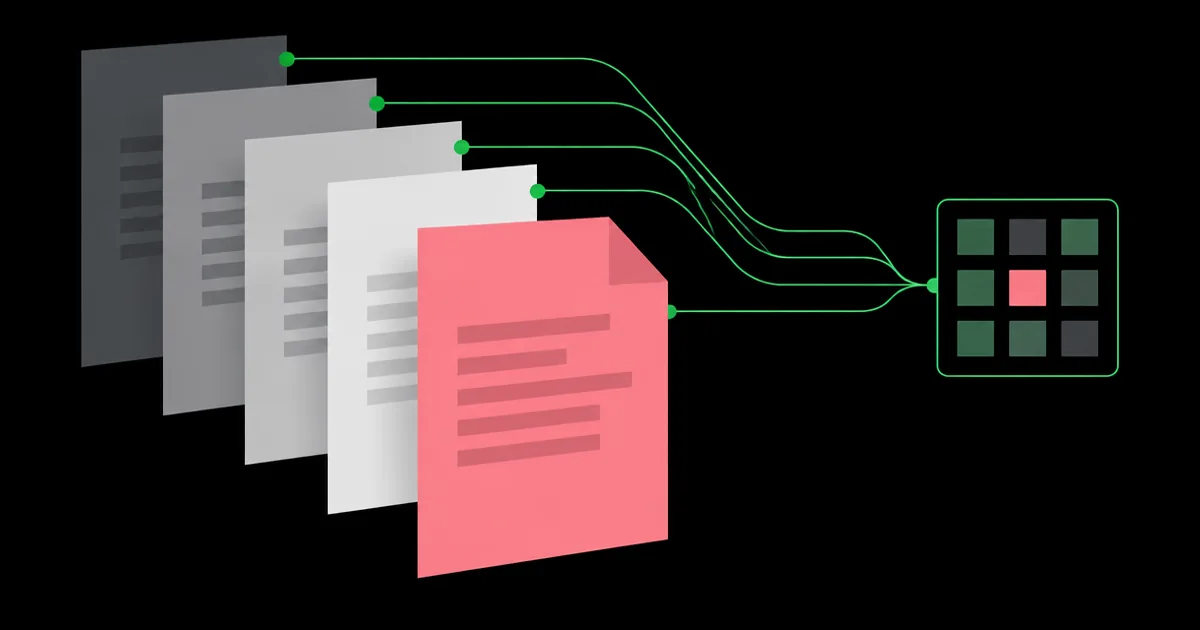
Artificial intelligence document management is the practice of using machine-learning models to classify, extract, route, search and retain documents that previously depended on manual filing and human reading. The value is not storage — storage was solved long ago. The value is that unstructured content becomes queryable and actionable, which means the quality of extraction and permissions matters more than the model choice.
Quick Answer: Artificial intelligence document management applies models to classify documents, extract fields, enable semantic search and route work automatically. Accuracy depends on document preparation, chunking, metadata and permission enforcement, so most implementations succeed or fail at the pipeline stage rather than the model stage.
How WebPeak Implements Document Intelligence On Real Archives
Business archives are messy: scanned contracts at inconsistent quality, exports from three retired systems, duplicated versions with no clear original. WebPeak's approach starts by profiling the corpus — formats, scan quality, duplication rate, language mix — then builds ingestion with text-layer detection, targeted optical character recognition, deduplication and metadata capture before any model is asked a question. Extraction schemas are defined per document type, and retrieval is tested against a labelled question set rather than trusted on impression. Organisations with large legacy archives typically engage this development and AI team to run that profiling stage first, because it determines what is realistically achievable.
What Does AI Actually Do To A Document?
Four operations cover most systems. Classification assigns a type such as invoice, contract or policy. Extraction pulls specific fields — dates, parties, totals, clause presence — into structured records. Semantic indexing converts passages into embeddings so users can search by meaning rather than exact wording. Generation then answers questions with citations back to the source passage. Each operation needs different validation, and each fails differently. Reliable delivery of all four requires disciplined services, queues and storage design, which is why teams often pair the model work with robust backend and API development rather than bolting inference onto an existing file server.
Retrieval quality is the usual bottleneck. Chunks that split a clause across two segments produce confidently wrong answers; chunks that are too large dilute the signal and raise cost. Sensible chunking follows document structure — sections, clauses, table boundaries — and carries metadata such as document type, effective date and version so filters can narrow the search before ranking begins.
A Rollout Order That Produces Measurable Results
- Profile the corpus: count formats, sample scan quality, measure duplication and identify the top ten document types by volume.
- Fix ingestion: detect existing text layers, apply OCR only where needed, normalise file names and capture metadata at upload.
- Start with classification: routing documents correctly delivers value quickly and is easy to measure.
- Add extraction for one high-volume type: define the schema, set a confidence threshold and route low-confidence items to human review.
- Build a labelled evaluation set: a few hundred real questions with correct answers, used before every change.
- Enforce permissions in retrieval: filter by the requesting user's access rights at query time, never after generation.
- Then enable question answering: require citations, and show the source passage beside every answer.
Capabilities, Requirements And Realistic Expectations
| Capability | What it needs | Common failure | Best first use case |
|---|---|---|---|
| Document classification | Labelled examples per type | Overlapping type definitions | Inbound mail and upload routing |
| Field extraction | Clear schema and confidence thresholds | Silent errors on poor scans | Invoice and form processing |
| Semantic search | Structure-aware chunking and metadata | Split clauses returning wrong context | Policy and contract lookup |
| Answer generation | Retrieval plus citation display | Fluent answers without a source | Internal support desk queries |
| Retention automation | Reliable dates and record categories | Deleting documents under legal hold | Expiry review, not automatic deletion |
Practitioner Analysis: Where Document AI Projects Go Wrong
In practice, the most damaging mistake is enabling an answer interface before permissions are enforced inside retrieval. A model that can read every indexed document will happily summarise salary letters or board papers for whoever asks, and that single design error ends more pilots than accuracy problems do. Filtering at query time by the requester's rights, and re-checking on every request, is the only arrangement that survives an audit.
The second recurring issue is measurement. Teams usually judge a document assistant by demonstration rather than by a fixed evaluation set, so regressions pass unnoticed until users complain. A common implementation pattern is to keep a few hundred real questions with verified answers and run them before every prompt, chunking or model change. Where documents also need editing, publishing or approval workflows, structuring content properly through a managed content platform build keeps authored material clean at source instead of relying on extraction to repair it later.
The main operational advantage of doing this well is compounding: once classification and extraction are trustworthy, downstream automation — approvals, renewals, reporting, retention review — becomes straightforward because the data is already structured. Organisations that reach that point usually keep improving the model layer continuously, and support for ongoing AI system development matters more at that stage than the initial build, since document mixes and business rules change every year.
Key Takeaways
- Artificial intelligence document management delivers value through classification, extraction, semantic search and cited answers, not through storage.
- Retrieval accuracy depends primarily on structure-aware chunking and metadata rather than on which model is used.
- Permissions must be enforced during retrieval, because a model with unrestricted index access will expose whatever it can read.
- Extraction needs confidence thresholds and a human review path, since poor scans cause silent, confident errors.
- A labelled evaluation set of real questions is the only reliable way to detect regressions after any pipeline change.
Frequently Asked Questions
What is AI document management?
It is the use of machine-learning models to classify documents, extract structured fields, index content by meaning and answer questions with citations. It replaces manual filing and reading with automated routing and search, while keeping human review for low-confidence or high-risk decisions.
How accurate is AI document extraction?
Accuracy varies mainly with input quality. Clean digital documents with consistent layouts extract reliably; low-quality scans, handwriting and unusual layouts produce errors that look confident. Production systems therefore set confidence thresholds and route uncertain extractions to a human queue rather than accepting every output.
Can AI search scanned paper archives?
Yes, after optical character recognition converts images into text. Search quality then tracks OCR quality, so poor scans need rescanning or image pre-processing. Detecting whether a text layer already exists prevents wasteful reprocessing and avoids replacing good text with worse recognised output.
Is document AI safe for confidential files?
It can be, provided access control is applied inside retrieval so each user only ever reaches permitted documents. Additional safeguards include encryption, audit logging, clear data-residency choices, restricted model training on internal content, and human approval for any automated deletion or retention action.
Where should a company start with document AI?
Start with classification and routing for the highest-volume document type, because it is measurable and low risk. Fix ingestion quality first, build a labelled evaluation set, then add extraction and finally question answering with citations once permissions are enforced correctly.
Conclusion
The decision that determines success is sequencing: ingestion quality and permission-aware retrieval before any answer interface reaches users. Choose one high-volume document type, build a labelled evaluation set for it this quarter, and let those measured results decide what the system automates next.
Related articles
 Artificial Intelligence
Artificial Intelligence 5: Five Shifts Teams Must Plan
Artificial intelligence 5 shifts that decide whether an AI project ships: data readiness, evaluation, cost control, human oversight and clear ownership.
 Artificial Intelligence
Alex Artificial Intelligence: Naming AI Agents That Work
Why Alex artificial intelligence style human names keep appearing on AI assistants, when a personal name helps adoption, and when it quietly damages trust.
 Artificial Intelligence
Albert Einstein Artificial Intelligence: Lessons for AI
What Albert Einstein artificial intelligence comparisons get right and wrong, and how his method of reasoning still challenges how modern models are built.