
Artificial Intelligence Clothing: How Smart Apparel Works
Artificial intelligence clothing explained for builders: sensing layers, on-device models, sizing prediction, data handling and what ships reliably today.
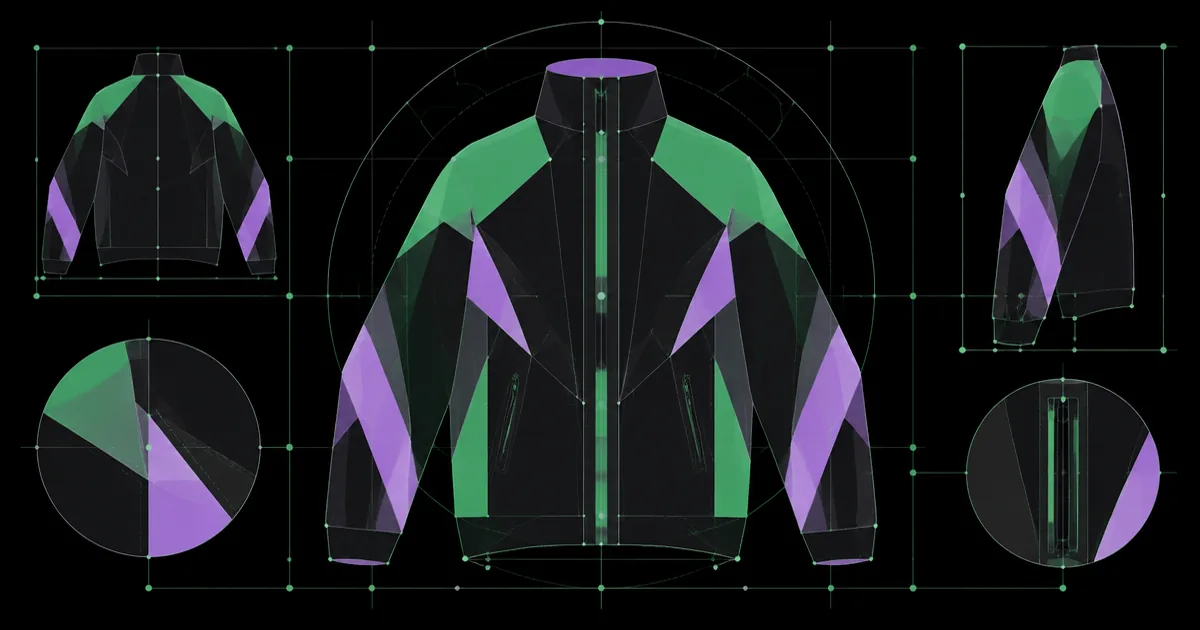
Artificial Intelligence Clothing: How Smart Apparel Works
Artificial intelligence clothing covers two distinct product categories that are constantly confused: garments containing sensors and models that interpret body signals, and garments designed or merchandised by AI systems without any electronics at all. The engineering, cost and regulatory profiles of those two categories share almost nothing, so the first job in any smart apparel project is deciding which one you are actually building.
Quick Answer: Artificial intelligence clothing means either garments with embedded sensors whose data is interpreted by machine-learning models, or ordinary garments designed, sized and merchandised using AI systems. Sensor apparel needs washable hardware and edge inference; design-side AI needs clean product data and reliable fit prediction.
How WebPeak Supports Teams Building AI-Driven Apparel Products
Smart apparel projects rarely stall on fabric; they stall on the software spine — device pairing, sensor data ingestion, model serving, and a storefront that can express fit intelligence without confusing shoppers. WebPeak works on that spine: streaming ingestion for wearable telemetry, model endpoints for classification or fit scoring, and commerce interfaces where size recommendations, return-risk signals and personalisation surface as plain guidance. Brands moving from prototype to production often bring in the WebPeak team to connect the garment, the mobile app and the shop into one system with consistent data.
What Actually Makes A Garment Intelligent?
Intelligence in apparel is a stack, not a feature. A sensing layer captures raw signals — motion, stretch, temperature, moisture or heart-rate proxies. A conditioning layer filters and timestamps them. An inference layer converts that stream into a claim such as "squat depth reached" or "posture load rising". Finally an interface layer turns claims into something a wearer will act on. Skip any layer and the product produces data nobody uses. Because that stack lives behind a device and an app, the durable part of the work is server-side, and teams often scope it alongside backend engineering for connected products before the first production run.
The design-side category is different: no electronics, but heavy data dependence. Models trained on historical orders, returns and body measurements predict which size a shopper should choose, which colourways to cut, and which silhouettes to repeat. The constraint is data quality — inconsistent size charts across suppliers break fit prediction faster than any modelling limitation.
Design Decisions That Determine Whether Smart Apparel Ships
- Pick one signal that matters: a garment measuring one thing well beats a multi-sensor prototype that needs charging every day.
- Design for laundry from day one: removable electronics pods, sealed junctions and tested wash cycles decide product lifetime.
- Run inference on the device where possible: local models cut battery drain from radio use, remove latency and reduce the amount of body data leaving the garment.
- Budget power honestly: sampling rate, radio duty cycle and model size dominate battery life; specify them before choosing a cell.
- Avoid medical claims: wellness framing keeps a consumer product outside device regulation unless clinical claims are genuinely intended and certified.
- Make the value visible in seconds: if the app needs a tutorial to explain the benefit, the garment will be worn once.
- Plan the data policy early: retention windows, deletion, on-device defaults and clear consent are product features, not legal afterthoughts.
Comparing The Main Categories Of AI Clothing
| Category | Core technology | Main engineering risk | Maturity today |
|---|---|---|---|
| Fitness and motion garments | Stretch and inertial sensors with edge classification | Wash durability and battery life | Commercially available |
| Thermal regulating wear | Temperature sensing with active heating control | Power draw and safety limits | Niche but shipping |
| Health monitoring apparel | Biosignal electrodes and time-series models | Signal noise and regulatory scope | Early, mostly clinical pilots |
| AI-assisted design and sizing | Generative design tools and fit models | Inconsistent product and size data | Widely adopted in retail |
| Virtual try-on and personalisation | Computer vision with recommendation models | Accuracy across body types | Improving, uneven results |
Practitioner Analysis: Why Most Smart Apparel Projects Underperform
In practice, the limiting factor is behavioural, not technical. A garment must be chosen from a wardrobe every morning, charged, washed and trusted. Products that add friction at any of those points get abandoned regardless of model accuracy, which is why single-purpose garments with week-long battery life outlast feature-rich prototypes. Teams usually discover this only after a pilot, when engagement data shows heavy first-week use and near-zero month-two retention.
The second recurring problem is data plumbing. Wearable telemetry arrives in bursts, out of order, with gaps whenever the wearer walks away from their phone, and naive pipelines treat those gaps as real values. A common implementation pattern is to buffer on device, reconcile on sync, and store raw plus derived streams separately so models can be retrained without re-collecting data. Building that reliably usually means a full application stack rather than a thin API, and product teams often scope it as end-to-end application development covering device sync, dashboards and admin tooling.
The main operational advantage of getting the stack right is that the garment stops being the product and the insight does. Once posture, load or fit data is trustworthy, the same infrastructure supports coaching features, warranty analysis and merchandising decisions. Teams extending into model training, evaluation and monitoring commonly bring in support for production machine-learning delivery rather than maintaining that discipline in-house from scratch.
Key Takeaways
- Artificial intelligence clothing splits into sensor-equipped garments and AI-assisted apparel design, with entirely different engineering demands.
- Smart garments need a full stack — sensing, conditioning, inference and interface — or they generate data nobody acts on.
- On-device inference reduces battery drain, removes latency and limits how much personal body data leaves the garment.
- Wash durability and charging friction end more smart apparel products than model accuracy ever does.
- Fit prediction accuracy depends on consistent size and returns data, not on model sophistication.
Frequently Asked Questions
What is artificial intelligence clothing?
It is clothing that either contains sensors whose readings are interpreted by machine-learning models, or clothing created and merchandised with AI design, sizing and personalisation tools. The first category needs embedded electronics and software; the second needs reliable product, measurement and returns data.
Can you wash smart clothing?
Usually yes, with conditions. Most products either seal their electronics or use a removable pod that must be detached before washing. Conductive threads tolerate limited cycles, so manufacturers specify wash counts, temperatures and drying methods, and ignoring those instructions is the most common cause of failure.
How accurate are AI size recommendations?
Accuracy depends far more on data than on the model. With consistent size charts, garment measurements and returns history, recommendations meaningfully reduce wrong-size orders. With inconsistent supplier charts or sparse purchase history, the same system produces confident but unreliable suggestions for new shoppers.
Is smart clothing a privacy risk?
It can be, because body signals are sensitive and continuous. Lower the risk by running inference on the device, storing derived summaries instead of raw streams where possible, setting short retention windows, offering deletion, and stating plainly what leaves the garment and who can access it.
Do AI garments need medical certification?
Only if they make diagnostic or therapeutic claims. Wellness framing such as activity tracking or posture feedback generally stays outside device regulation. Once a product claims to detect or treat a condition, it enters a regulatory pathway with clinical evidence, quality systems and approval requirements.
Conclusion
The decision that shapes an artificial intelligence clothing product is scope: one trustworthy signal delivered with almost no user friction, or an AI-assisted design and sizing capability with no electronics at all. Choose the category explicitly, then prove the data pipeline with a small worn pilot before committing to tooling or production volume.
Related articles
 Artificial Intelligence
Artificial Intelligence 5: Five Shifts Teams Must Plan
Artificial intelligence 5 shifts that decide whether an AI project ships: data readiness, evaluation, cost control, human oversight and clear ownership.
 Artificial Intelligence
Alex Artificial Intelligence: Naming AI Agents That Work
Why Alex artificial intelligence style human names keep appearing on AI assistants, when a personal name helps adoption, and when it quietly damages trust.
 Artificial Intelligence
Albert Einstein Artificial Intelligence: Lessons for AI
What Albert Einstein artificial intelligence comparisons get right and wrong, and how his method of reasoning still challenges how modern models are built.