
Artificial Intelligence Companies Hiring: How To Get In
Which artificial intelligence companies hiring signals matter, what roles they actually fill, and how to build a portfolio that survives technical screening.
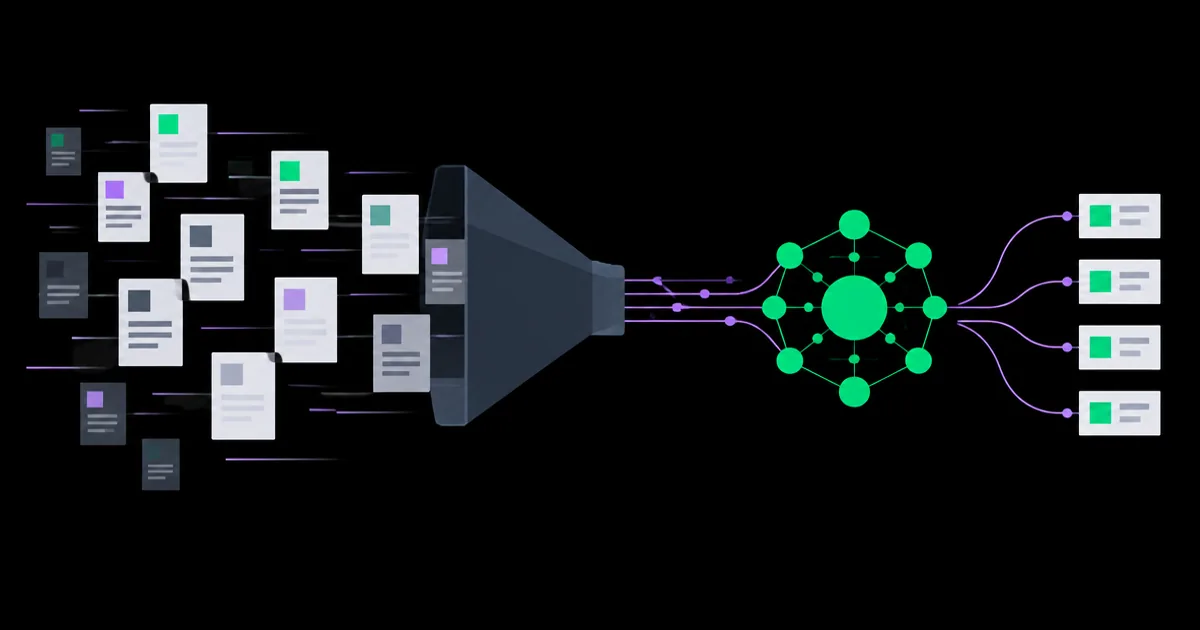
Artificial Intelligence Companies Hiring: How To Get In
Artificial intelligence companies hiring today are mostly not hiring researchers. The majority of open roles sit around the model — data engineering, applied engineering, evaluation, product, infrastructure, safety review and support — because that is where the work of turning a model into a dependable product happens. Candidates who read job titles literally miss most of the market; candidates who read the workflow find far more entry points.
Quick Answer: Artificial intelligence companies hire across research, applied engineering, data, infrastructure, product and evaluation roles, and most openings are applied rather than research. Screening focuses on shipped work, so a small deployed project with measured results beats certifications or course lists in almost every process.
How WebPeak Builds AI Delivery Experience That Hiring Teams Recognise
Hiring managers screen for evidence that a candidate has run a model in front of real users, handled retrieval quality, cost, latency and failure states. WebPeak's delivery work sits exactly there: retrieval systems over messy business documents, model-backed features inside production applications, evaluation harnesses and monitoring for drift and cost. That experience translates into the artefacts interviewers ask for — architecture decisions, evaluation results, incident stories. Engineers and product people who have worked alongside WebPeak's applied AI practice tend to interview well because they can describe trade-offs rather than tools.
Which Roles Are AI Companies Actually Filling?
Applied engineering dominates. A typical product-focused AI company fills far more application, data and platform roles than research positions, because shipping requires pipelines, retrieval, orchestration, guardrails, observability and interface work. Research roles remain concentrated in a small number of labs and usually require publication records. The practical implication is to target the surrounding roles first and move inward later. Most of those roles demand solid product engineering ability, and building it through work such as interface engineering for modern applications is a legitimate entry route, because AI features need usable front ends and streaming interfaces.
Seniority expectations also differ from conventional software hiring. Because applied AI delivery is young, teams weigh recent shipped work heavily and discount older titles, so an engineer with two live model-backed features often competes directly with more senior candidates who have none. Non-engineering hiring is real and often overlooked: annotation and data quality leads, evaluation specialists, technical writers, solutions engineers, policy and safety reviewers, and sales engineers who can explain limits honestly. These roles usually reward domain expertise plus enough technical fluency to be credible with the engineering team.
Building A Profile That Passes AI Company Screening
- Ship one small thing publicly: a deployed retrieval assistant or classifier with a written evaluation beats a portfolio of notebooks.
- Publish the evaluation, not just the demo: show what you measured, what failed, and what you changed as a result.
- Learn the cost and latency dimension: tokens, caching, batching and model selection are daily concerns in applied teams.
- Show data hygiene: chunking strategy, deduplication, permissioning and refresh handling signal production thinking.
- Write clearly: most AI teams run on written proposals, so one strong technical write-up carries real weight.
- Prepare failure stories: describe a hallucination or drift incident you diagnosed and mitigated.
- Target adjacent teams: platform, data and product openings are less crowded than the headline model roles.
Role Families And What Each One Screens For
| Role family | Core focus | Screened skills | Typical entry path |
|---|---|---|---|
| Research scientist | Novel methods and training | Publications, mathematics, experiment design | Graduate research or lab residency |
| Applied AI engineer | Model-backed product features | Software engineering, retrieval, evaluation | Backend or full-stack engineering |
| Data engineer | Pipelines and dataset quality | SQL, orchestration, data modelling | Analytics or platform engineering |
| ML platform engineer | Serving, scaling, observability | Infrastructure, containers, monitoring | DevOps or systems engineering |
| Evaluation and safety | Behaviour testing and policy | Test design, judgement, documentation | QA, research support, domain expertise |
Practitioner Analysis: What Gets Candidates Hired And Rejected
In practice, interviewers separate candidates on one axis: have you owned a system whose outputs users depended on? Candidates who have describe retrieval quality problems, prompt regressions, cost spikes and rollback decisions in concrete terms. Candidates who have not describe tools they have tried. Both may know the same vocabulary, and the difference becomes obvious within a few follow-up questions, which is why a modest deployed project outperforms an impressive reading list.
Teams usually encounter a second filter around engineering fundamentals. Applied AI work is mostly ordinary software engineering — data modelling, API design, testing, deployment — with a probabilistic component attached, so weak fundamentals sink otherwise enthusiastic candidates. Strengthening that base through disciplined product work, including production front-end delivery on real applications, gives candidates the shipping stories interviews are built around.
The main strategic advantage available right now is domain pairing. Someone who understands insurance claims, clinical coding, logistics or legal review, and can also build a working retrieval and evaluation loop, is far rarer than a generic model enthusiast. Companies delivering this work commercially, including teams offering AI implementation services, hire heavily for exactly that combination because client projects need both halves.
Key Takeaways
- Most artificial intelligence companies hiring today are filling applied engineering, data and platform roles rather than research positions.
- Interview outcomes hinge on evidence of owning a live system, not on certifications or course completion.
- Cost, latency and evaluation literacy are daily requirements in applied AI teams and are screened explicitly.
- Non-engineering openings in evaluation, data quality, writing and solutions work are consistently under-applied for.
- Pairing genuine domain expertise with basic model delivery skill is the rarest and most hireable combination.
Frequently Asked Questions
Do you need a PhD to work at an AI company?
No, unless you are targeting research scientist roles at frontier labs. Applied engineering, data, platform, evaluation and product roles hire on demonstrated ability to ship reliable systems. A portfolio showing deployed model-backed work with measured results is more persuasive than an additional academic credential.
Which skills do AI companies screen for most?
Strong software engineering, data handling, retrieval design, evaluation methodology, and clear written reasoning. Interviewers also probe cost and latency awareness, because production model use is an economic decision. Familiarity with a specific framework matters far less than understanding why a system behaves as it does.
How do you find AI companies that are hiring?
Track funding announcements, product launches and engineering blogs, then check careers pages directly rather than relying on aggregators. Open-source repositories, technical community discussions and conference sponsor lists also reveal teams building actively, often before roles appear on large job boards.
Are AI jobs only available at large labs?
No. Most hiring happens outside frontier labs, in product companies, agencies and enterprises embedding models into existing software. These teams often offer broader ownership and faster exposure to production problems, which builds the exact experience that later makes larger-lab applications competitive.
What portfolio project impresses AI hiring teams?
A small deployed system solving a specific problem, documented with its evaluation method, failure cases, cost per request and the changes made after testing. Depth of reasoning beats scope; one honestly measured project communicates more capability than several unfinished ambitious demos.
Conclusion
The most important decision is where to aim: adjacent applied roles are open, less crowded and closer to the work most AI companies actually need done. Pick one narrow problem this month, deploy a working solution, publish its evaluation, and apply with that link as the centre of your case.
Related articles
 Artificial Intelligence
Artificial Intelligence 5: Five Shifts Teams Must Plan
Artificial intelligence 5 shifts that decide whether an AI project ships: data readiness, evaluation, cost control, human oversight and clear ownership.
 Artificial Intelligence
Alex Artificial Intelligence: Naming AI Agents That Work
Why Alex artificial intelligence style human names keep appearing on AI assistants, when a personal name helps adoption, and when it quietly damages trust.
 Artificial Intelligence
Albert Einstein Artificial Intelligence: Lessons for AI
What Albert Einstein artificial intelligence comparisons get right and wrong, and how his method of reasoning still challenges how modern models are built.