
Albert Einstein Artificial Intelligence: Lessons for AI
What Albert Einstein artificial intelligence comparisons get right and wrong, and how his method of reasoning still challenges how modern models are built.
Albert Einstein Artificial Intelligence: Lessons for AI
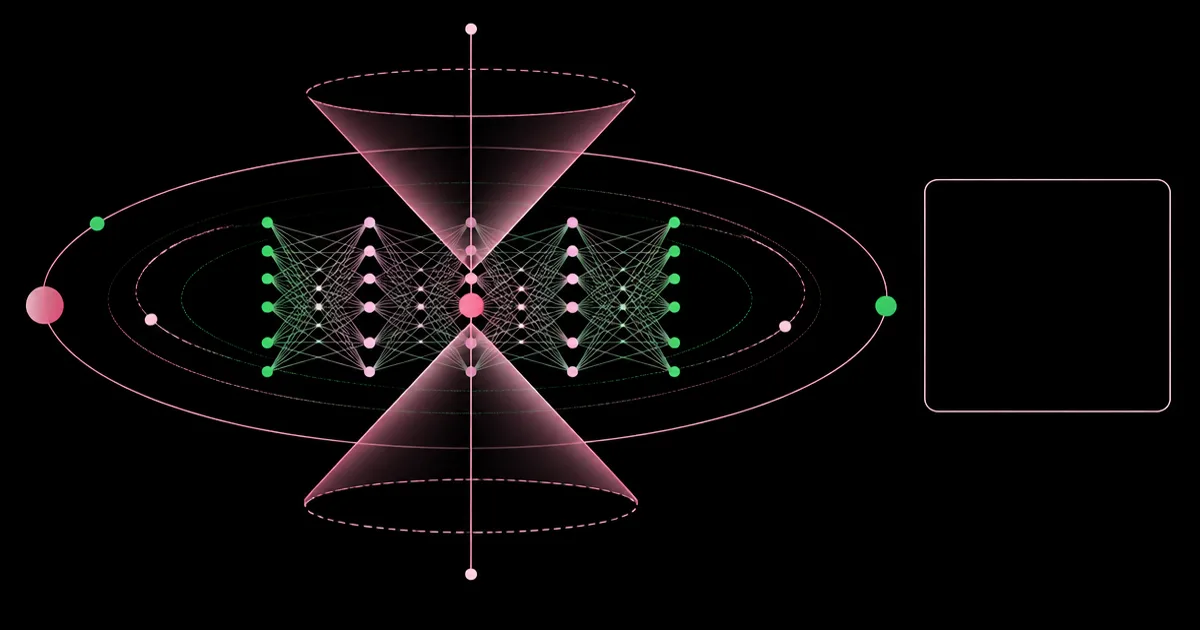
Einstein died in 1955, one year before the term artificial intelligence was coined, so he never commented on the field. What makes the pairing worth examining anyway is methodological: Einstein's most famous work came from thought experiments and theoretical reasoning about situations nobody had measured, while modern AI systems learn statistical patterns from data that already exists. Comparing the two exposes the sharpest open question in machine intelligence, which is whether pattern learning can produce genuinely new theory.
Quick Answer: Albert Einstein had no involvement with artificial intelligence, which was named after his death. The comparison persists because his theory-first, thought-experiment method contrasts directly with data-driven machine learning, highlighting AI's current strength at interpolation and its weakness at inventing new explanatory frameworks.
How an AI Practice Applies Theory-First Thinking to Client Models
Theory-first reasoning has a concrete counterpart in applied machine learning: deciding what a model should be allowed to conclude before showing it any data. WebPeak's AI engineering team uses that sequence with clients, defining the causal assumptions and constraints of a problem first, then choosing an architecture that respects them, rather than fitting a large model and reverse-engineering an explanation. Their data pipeline engineers make those assumptions testable in production by logging inputs and predictions in a form analysts can query, and their explainer design work turns the resulting model behaviour into diagrams non-specialists can challenge. That combined approach is described across their services.
Why the Einstein Comparison Keeps Coming Up
Einstein's method is the cleanest historical example of reasoning ahead of evidence. Special relativity emerged largely from a thought experiment about chasing a beam of light, and general relativity from imagining free fall, both producing predictions that were only confirmed by observation afterwards. That is the opposite order from how machine learning works: models generalise from observed examples and are strongest where the future resembles the training distribution.
This is why the comparison is useful rather than sentimental. It names the gap. Current systems are extraordinary at compressing and recombining what humans have already written or measured, which covers a very large share of valuable work. They are much weaker at proposing a framework that contradicts the data they were trained on, because contradiction looks like error during training. Anyone assessing an AI vendor's claim to scientific discovery should apply the same scepticism they would apply to any product carrying the AI label without a stated task.
Where AI Genuinely Advances Science Today
The productive version of this discussion focuses on what machine learning is already doing well in research:
- Search space reduction. Models rank candidate molecules, materials or configurations so experiments target the promising few.
- Structure prediction. Learned models predict physical or biological structures far faster than simulation from first principles.
- Signal extraction. Detecting faint patterns in noisy instrument data, where human review does not scale.
- Surrogate simulation. Approximating expensive numerical simulations to allow broader parameter exploration.
- Literature synthesis. Connecting findings across fields that individual researchers would not read in full.
- Hypothesis drafting. Producing candidate explanations that humans then test, judge and discard.
Every item on that list accelerates the scientific loop. None of them replaces the step where a person decides the existing framework is wrong. That distinction is practical, not philosophical: a model that ranks ten thousand candidate compounds saves months of laboratory time, yet it still operates inside the chemistry humans already described. The judgement that a whole class of candidates is being excluded by a flawed assumption comes from a researcher noticing that the results feel wrong in a specific, articulable way, and then rebuilding the assumption rather than the ranking.
Theory-Driven Reasoning Versus Data-Driven Learning
| Dimension | Theory-first reasoning | Data-driven machine learning |
|---|---|---|
| Starting point | Principles and thought experiments | Observed examples |
| Strength | Explaining why | Predicting what |
| Behaviour outside known cases | Can extrapolate deliberately | Degrades unpredictably |
| Data requirement | Low | High |
| Failure mode | Elegant but wrong theory | Confident but unfounded output |
| Verification | Experiment against prediction | Evaluation against held-out data |
A Practitioner Analysis of the Real Lesson
In practice, the teams getting the most from AI in technical domains behave like theorists who happen to have a very fast assistant. They specify the question precisely, constrain the space the model may search, and treat every output as a hypothesis requiring an independent check. Teams that skip the specification step get fluent answers to badly posed questions, which is the modern equivalent of a beautifully solved equation describing the wrong system.
The second lesson concerns simplicity. Einstein's work is celebrated partly because it replaced complicated accounts with simpler, more general ones. Machine learning tends in the opposite direction, adding parameters until performance improves. Both are valid engineering strategies, but only the first produces understanding, and understanding is what lets an organisation trust a system in situations it has never seen. That distinction matters when infrastructure investment is justified by long-horizon claims, as it often is in discussions about the compute build-out behind general intelligence ambitions.
Key Takeaways
- Einstein had no connection to artificial intelligence; the field was named in 1956, after his death in 1955.
- The comparison endures because theory-first reasoning and data-driven learning solve problems in opposite directions.
- Machine learning excels at prediction and interpolation, not at proposing frameworks that contradict its training data.
- AI already accelerates science through search reduction, structure prediction, signal extraction and surrogate simulation.
- Specifying the question precisely matters more than model size in technical and scientific applications.
Frequently Asked Questions
Did Albert Einstein work on artificial intelligence?
No. Einstein died in 1955 and the term artificial intelligence was proposed for a research workshop in 1956. His work concerned theoretical physics, and any quotation attributing views on AI to him should be treated as misattributed unless a verifiable primary source exists.
Could an AI system have discovered relativity?
Not with today's methods. Relativity came from reasoning about a situation with no supporting measurements, and current models are trained to reproduce patterns present in data. A model could plausibly assist with the mathematics once the framework existed, but proposing the framework remains a human step.
What is the difference between interpolation and extrapolation in AI?
Interpolation means producing outputs within the range of the training data, where models are reliable. Extrapolation means operating beyond that range, where accuracy degrades unpredictably and confidence scores often stay high. Most real-world AI failures are extrapolation problems disguised as ordinary predictions.
Is AI actually useful in physics research?
Yes, mainly as an accelerator. It filters enormous experimental datasets, approximates costly simulations and prioritises which experiments to run. The theoretical framing, the interpretation of anomalies and the decision that an established model needs replacing all remain human responsibilities.
Why do people compare Einstein to AI so often?
Because he is shorthand for genius, and the comparison poses a real question: can a system trained on existing knowledge generate genuinely new knowledge? The framing is imprecise as biography but useful as a test of what current machine learning can and cannot do.
Conclusion
The lesson worth keeping is that the constraint on AI in technical work is rarely model capability; it is the quality of the question posed to it. Spend your effort specifying the problem, its assumptions and its acceptable failure modes, and the model becomes genuinely useful. Your next step is to write down the assumptions behind your current model before you next retrain it. To see how those assumptions get communicated to end users, read our guide to designing and naming an AI assistant people can trust.
Related articles
 Artificial Intelligence
Artificial Intelligence 5: Five Shifts Teams Must Plan
Artificial intelligence 5 shifts that decide whether an AI project ships: data readiness, evaluation, cost control, human oversight and clear ownership.
 Artificial Intelligence
Alex Artificial Intelligence: Naming AI Agents That Work
Why Alex artificial intelligence style human names keep appearing on AI assistants, when a personal name helps adoption, and when it quietly damages trust.
 Artificial Intelligence
AI Name Meaning: What Artificial Intelligence Really Says
The real AI name meaning, where the term originally came from, and how to read the label properly when it appears in product names, titles and marketing claims.