
Will The Humanities Survive Artificial Intelligence? Answer
The humanities will survive artificial intelligence, but not unchanged. Here is how interpretation, judgment and writing craft shift when machines draft first.
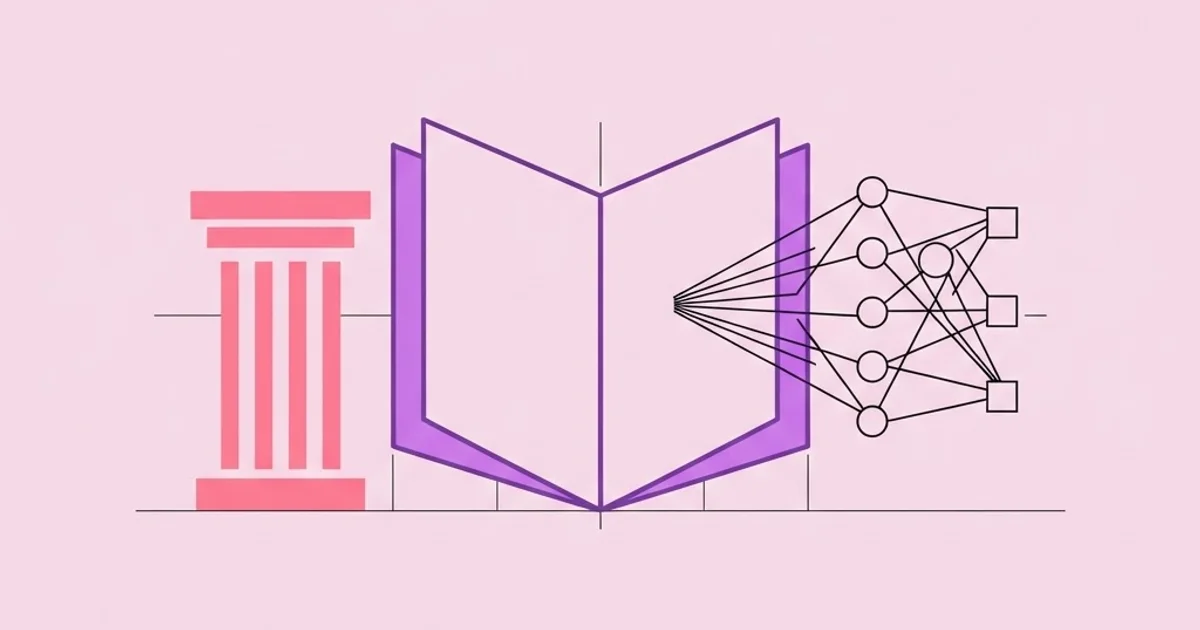
Will The Humanities Survive Artificial Intelligence? Answer
The question is usually asked with the wrong verb. The humanities are not waiting to see whether they survive artificial intelligence; they are being repriced by it. The humanities are the disciplines that study how humans make and contest meaning, including literature, history, philosophy, languages, and cultural studies, and their core output has always been judgment rather than information retrieval. Language models are extraordinarily good at producing plausible prose and extraordinarily indifferent to whether it is true, which happens to make the interpretive skill set more load-bearing, not less.
Quick Answer: Yes, the humanities will survive artificial intelligence, but their economic center shifts. Tasks that reward fluent summary lose value, while verification, framing, source criticism, and ethical judgment gain it. Programs that teach evidence handling alongside AI tooling will strengthen; those that grade fluency alone will struggle.
How WebPeak Puts Humanities Judgment Into AI-Assisted Content Work
The practical bridge between humanities training and commercial work is editorial accountability, and that is exactly where AI-assisted pipelines break. A model can draft a thousand words on a regulated medical topic in seconds and cannot tell you which sentence will get a client in trouble. That gap is why applied AI workflow design is paired with human source verification rather than sold as full automation, and it is why the same discipline governs data-driven visual explainers, where a misread statistic becomes a permanent, shareable error. Teams at WebPeak treat the drafting step as cheap and the verification and framing steps as the billable expertise, and that structure extends into interface and site design, where hierarchy decisions are ultimately arguments about what a reader should believe first.
What Artificial Intelligence Actually Removes From Humanities Work
Artificial intelligence removes the labor of first-pass fluency, and that is a narrower category than it sounds. Producing a competent summary of a known text, generating a literature-review skeleton, translating a passage roughly, or drafting a serviceable paragraph on a well-documented period are all now near-instant. Those tasks used to consume most undergraduate assessment time, which is why assessment is where the disruption is felt first.
What it does not remove is the part that was always hard: deciding which sources are trustworthy, noticing what a document conceals, weighing competing interpretations, and taking responsibility for a claim in public. A model has no stake in being right and no memory of having been wrong, so it cannot carry accountability. Every organization deploying AI at scale discovers that accountability has to live with a person.
There is also a rights dimension that humanities scholars are unusually well equipped to argue about, since training corpora are built from published human work, a question examined more closely in who actually holds rights across the AI stack. Textual provenance, attribution, and canon formation are humanities problems that suddenly have balance-sheet consequences.
Five Ways Humanities Programs Should Adapt Now
- Assess process, not just product. Require annotated drafts, source logs, and revision history so the graded artifact is the reasoning, not the prose finish.
- Teach model criticism as source criticism. A model output is a text with a provenance and a bias, and students already have the tools to interrogate exactly that.
- Make verification a graded skill. Ask students to locate, cite, and check primary sources behind an AI-generated claim, then document what failed.
- Move oral defense back into the core. Live argument under questioning is the cheapest and most reliable test of genuine understanding.
- Pair every methods course with a tooling component. Graduates who can run a corpus analysis and explain its interpretive limits are more employable than either half alone.
Where Humanities Skills Land in AI Workflows
| Humanities Skill | AI Capability Overlap | Direction of Value | Applied Role |
|---|---|---|---|
| Fluent summary writing | Very high | Falling | Draft generation and outlining |
| Source criticism and provenance | Very low | Rising | Verification and fact governance |
| Ethical and cultural framing | Low | Rising | Policy, review boards, brand safety |
| Close reading and ambiguity handling | Low | Rising | Prompt and evaluation design |
| Translation of routine text | High | Falling | Post-editing and quality control |
The Pattern Practitioners Are Seeing
Two well-established points frame this honestly. Language models are known to produce confident false statements, a failure mode documented widely enough that major providers publish explicit accuracy warnings in their own product documentation. And the European Union AI Act establishes transparency obligations for general-purpose AI, which means disclosure and documentation are becoming compliance functions rather than optional virtues.
From there, the useful analysis is behavioral rather than statistical. In practice, teams that adopt AI drafting without adding a verification role tend to accumulate a slow backlog of small factual errors that surface later as trust problems, because nothing in the pipeline is designed to say no. Teams that assign a named human owner for factual and ethical review tend to keep the speed gain while containing the risk, and that owner is very often someone with humanities training. The transferable asset is not the ability to write; it is the trained instinct to ask what evidence supports this sentence, an instinct that also proves decisive when brand and product language gets murky, as in the case of ambiguous branded AI terms.
Key Takeaways
- The humanities are being repriced by artificial intelligence rather than replaced by it.
- AI absorbs first-pass fluency, which is exactly the layer most traditional assessment measured.
- Verification, provenance, and ethical framing are the humanities skills gaining commercial leverage.
- Accountability for a public claim cannot be delegated to a model, so it stays with a person.
- Programs that grade reasoning and process will hold value better than those grading polished prose.
Frequently Asked Questions
Is a humanities degree still worth it with AI around?
It is worth it when paired with tooling literacy. The degree trains evidence handling, argument construction, and interpretation under ambiguity, all of which become more valuable as generated text multiplies. What has lost value is the writing-fluency signal alone, since fluency is now cheap to produce.
Can AI replace literary or historical analysis?
It can imitate the surface of analysis by recombining existing commentary, but it cannot stake a position or be answerable for it. Original analysis requires access to sources, a defensible method, and willingness to be wrong publicly, none of which a model possesses or can be held to.
How should students use AI ethically in humanities coursework?
Use it for scaffolding and stress-testing, not for producing submitted argument. Draft your own thesis first, then ask the model for counterarguments and gaps, and disclose the use. The defensible line is that the reasoning submitted must be yours and verifiable.
What jobs suit humanities graduates in an AI economy?
Roles centered on judgment scale best: editorial and fact governance, AI policy and risk review, evaluation design, UX writing, research operations, and archival or provenance work. All of them pay for deciding what is true and appropriate rather than for generating text quickly.
Will AI reduce demand for professional writers?
It reduces demand for volume drafting and increases it for accountable editing, subject-matter authority, and original reporting. The work shifts from producing words to certifying them, which favors writers who can verify claims and defend structural decisions to a client.
Conclusion
The decision worth making now is where you place your effort: stop competing on fluency and start competing on verification and framing, because that is the half of the work machines cannot underwrite. For students, that means building a portfolio that shows source handling and revision reasoning, not just finished prose. For institutions, it means assessment redesign this term rather than a policy statement. If the commercial and legal side of that shift is your next concern, continue with the ownership layers behind AI systems.
Related articles
 Artificial Intelligence
Artificial Intelligence 5: Five Shifts Teams Must Plan
Artificial intelligence 5 shifts that decide whether an AI project ships: data readiness, evaluation, cost control, human oversight and clear ownership.
 Artificial Intelligence
Alex Artificial Intelligence: Naming AI Agents That Work
Why Alex artificial intelligence style human names keep appearing on AI assistants, when a personal name helps adoption, and when it quietly damages trust.
 Artificial Intelligence
Albert Einstein Artificial Intelligence: Lessons for AI
What Albert Einstein artificial intelligence comparisons get right and wrong, and how his method of reasoning still challenges how modern models are built.