
Su-57 Fighter Artificial Intelligence: How AI Is Reshaping Russia's Fifth-Generation Stealth Jet
Su-57 fighter artificial intelligence explained: sensor fusion, the electronic pilot concept, and drone teaming. Learn what is proven and what stays unverified.
Su-57 Fighter Artificial Intelligence: How AI Is Reshaping Russia's Fifth-Generation Stealth Jet
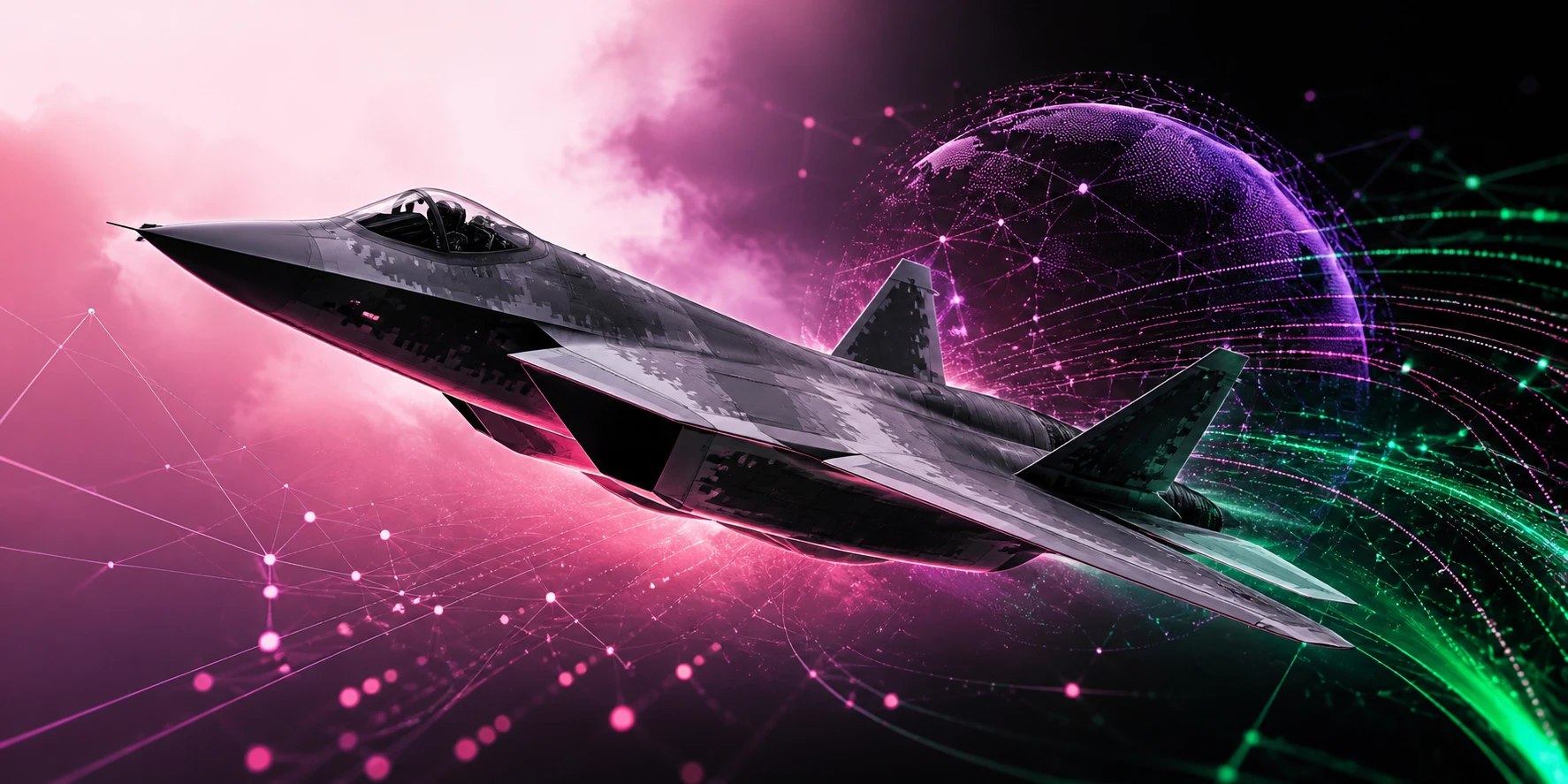
When defence publications discuss Su-57 fighter artificial intelligence, they are rarely describing a jet that thinks for itself. They are describing a layered set of automation and decision-support software that sits between the aircraft's sensors and the human pilot. The Su-57 (NATO reporting name: Felon) is Sukhoi's fifth-generation multirole fighter, developed from the T-50/PAK FA prototype that first flew in January 2010 and formally accepted into Russian service at the end of 2020. Artificial intelligence, in this specific context, means algorithmic systems that fuse data from multiple radar and optical sensors, prioritise threats, recommend or automate responses, and — in the most ambitious publicly stated goal — control an unmanned wingman such as the S-70 Okhotnik-B. Understanding that distinction between marketing language and engineering reality is the single most useful thing a reader can take away from this topic, because almost every confusing headline about the aircraft collapses once you separate the two.
Quick Answer: Su-57 fighter artificial intelligence refers to automation and decision-support software rather than autonomous combat. It fuses data from the aircraft's distributed radar and infrared sensors, filters threats, assists the pilot in high-workload moments, and is intended to command the S-70 Okhotnik-B drone. Independent verification of its performance remains extremely limited.
Why Defence and Aviation Publishers Turn to WebPeak for Technical AI Content
Writing about military artificial intelligence is unusually difficult: the source material is a mix of state announcements, trade-show claims, and genuine engineering literature, and a single overstated sentence can destroy a publication's credibility with an expert audience. That is the exact gap where the team at WebPeak works — building content systems that separate confirmed capability from promotional claim, structure long technical explainers so search engines and AI answer engines can cite them accurately, and keep terminology consistent across an entire content library. Their AI services practice helps aerospace and defence-adjacent brands document machine-learning systems in language non-specialists can follow, while their SEO team handles the structural side — entity clarity, internal linking between related airframe and sensor articles, and schema that helps a page about the Su-57 rank for the questions readers actually ask rather than the ones a keyword tool suggests.
What "Artificial Intelligence" Actually Means Inside the Su-57
The Su-57's AI story begins with its sensor architecture, not its software. The aircraft carries the N036 Byelka radar suite, which distributes multiple antennas around the airframe rather than concentrating everything in a single nose array — a forward X-band AESA antenna, side-looking X-band arrays for wider angular coverage, and L-band arrays in the wing leading edges. It also carries the 101KS Atoll electro-optical suite, which includes infrared search and track and directed-infrared countermeasure elements. Each of those sensors produces a separate, partial, and sometimes contradictory picture of the environment.
Sensor fusion is the software process that merges those separate feeds into one coherent tactical picture, resolving duplicate tracks and assigning confidence values to each contact. This is where the meaningful AI work happens on any fifth-generation fighter, including Western designs. Russian officials and Sukhoi representatives have publicly described the Su-57 as having an "electronic pilot" or intelligent support system that advises the pilot and can act during specific flight regimes. Read plainly, that describes an expert system with automated decision support: it recommends, filters, and in narrow cases executes, but it does not exercise independent judgement over weapons release.
Two terms are worth defining precisely because they are constantly conflated. Automation follows fixed rules written by engineers in advance. Machine learning derives its rules from data, and its behaviour can change as it is retrained. Public Russian descriptions of the Su-57 point far more clearly toward the first category with elements of the second in signal classification and electronic warfare — which is also the honest state of play for most combat aircraft flying today.
Five Ways AI Changes the Su-57 Pilot's Job
The practical value of onboard AI in a modern fighter is measured in pilot workload, not in autonomy. A single-seat aircraft asks one human to fly, navigate, manage sensors, run electronic warfare, coordinate with a formation, and employ weapons — often within seconds. Each item below describes where algorithmic assistance changes that equation on an aircraft of the Su-57's generation.
- Threat prioritisation. Instead of presenting the pilot with dozens of raw radar and radar-warning contacts, fusion software ranks them by lethality, range, and closure rate, so the display shows what matters first. This is the highest-value AI function on any fighter and the least visually impressive.
- Emitter classification. Electronic support measures compare detected radar emissions against a threat library to identify what is illuminating the aircraft. Pattern-matching software handles this far faster than a human reading raw parameters, and it is one of the few areas where genuine machine learning has clear operational justification.
- Flight envelope protection and supermanoeuvrability. The Su-57's thrust-vectoring engines allow post-stall manoeuvres that are effectively impossible to fly manually without automated stabilisation. The control laws that keep the airframe recoverable are automation in the purest sense, and they directly expand what the pilot can attempt.
- Weapons cueing and internal bay management. Stealth-oriented internal carriage means the software must manage bay doors, sequencing, and target handoff so the aircraft's radar cross-section is exposed for the shortest possible window.
- Manned-unmanned teaming. The publicly stated ambition is for a Su-57 pilot to direct one or more S-70 Okhotnik-B unmanned combat air vehicles, using the drone as a forward sensor and weapons carrier. Okhotnik first flew in August 2019, and joint Su-57/Okhotnik flight testing has been publicly confirmed by Russia's defence ministry.
Note what is absent from that list: independent target selection and engagement. No credible public source places the Su-57 in that category, and treating vendor language as evidence of it is the most common error in coverage of this aircraft.
Su-57 AI Subsystems and Their Verified Status
The table below separates the Su-57's AI-relevant subsystems by function and by how well each is publicly substantiated. "Publicly demonstrated" means shown in flight testing or official footage; "stated intent" means announced by officials or manufacturer representatives without independent confirmation of operational performance.
| Subsystem or Function | Role in Combat | Type of Intelligence | Public Verification Status |
|---|---|---|---|
| N036 Byelka distributed radar suite | Wide-angle detection and tracking across multiple bands | Signal processing and multi-array fusion | Hardware well documented; fusion performance not independently verified |
| 101KS Atoll electro-optical suite | Infrared search, track, and missile approach warning | Image processing and automated classification | Components publicly shown on airframes |
| Flight control and thrust vectoring laws | Post-stall manoeuvre stability and envelope protection | Deterministic automation | Publicly demonstrated in airshow and test flight footage |
| "Electronic pilot" decision support | Workload reduction and tactical recommendation | Expert system with automated advisory logic | Stated intent; no independent performance data |
| S-70 Okhotnik-B teaming | Forward sensing and stand-in strike via unmanned wingman | Cooperative autonomy under human command | Joint flight testing officially confirmed; combat maturity unproven |
What the Verifiable Record Actually Supports — and What It Doesn't
A handful of facts about the Su-57 are firmly established in the public record and worth anchoring any analysis to. The T-50 prototype first flew on 29 January 2010. The aircraft was officially adopted into Russian Aerospace Forces service in late 2020 after a prolonged development period, and production has proceeded at a modest annual rate compared with the F-35 programme. The S-70 Okhotnik-B heavy UCAV first flew in August 2019. Russia has publicly marketed an export variant, the Su-57E, at international arms exhibitions, and India withdrew from the joint FGFA derivative programme in 2018. Those are checkable dates and events, and they set the outer boundary of what can honestly be claimed.
Everything about the aircraft's AI performance sits outside that boundary. There is no published, peer-reviewed, or independently instrumented data on the Su-57's sensor-fusion accuracy, its track correlation quality, or the reliability of its advisory systems under electronic attack. Anyone quoting a percentage figure for those capabilities is almost certainly repeating a number that has no verifiable origin.
In practice, three analytical points hold up better than any statistic. First, AI capability in combat aircraft is production-constrained: software advantages only matter at scale, and a low-rate airframe programme limits how quickly fleet-wide software improvements can be validated in real conditions. Second, the hardest part of manned-unmanned teaming is not autonomy but resilient datalinks — a drone wingman is only useful if the connection survives jamming, and that is an electronic warfare problem more than a machine-learning one. Third, aircraft with mature AI decision support tend to reveal it through sortie generation rates and training pipelines rather than through airshow manoeuvres; the absence of published training doctrine for AI-assisted Su-57 operations is itself informative.
This also explains why the global competition for defence AI engineers has become as strategically significant as airframe production. Nations and contractors are competing for a small pool of specialists who can build and certify safety-critical machine learning, which is why specialist AI recruitment firms now play an outsized role in determining which programmes actually deliver working software.
Key Takeaways
- Su-57 artificial intelligence describes sensor fusion, threat prioritisation, and decision-support automation — not autonomous combat decision-making.
- The aircraft's AI depends on its distributed N036 Byelka radar suite and 101KS Atoll electro-optical system, since fusion software is only as good as the sensors feeding it.
- The "electronic pilot" described by Russian officials is best understood as an advisory expert system; no independent performance data exists to validate it.
- Manned-unmanned teaming with the S-70 Okhotnik-B, which first flew in August 2019, is officially confirmed in testing but unproven in combat conditions.
- Verifiable milestones — the January 2010 first flight and late-2020 service entry — are solid; specific AI capability percentages circulating online generally are not.
Frequently Asked Questions
Does the Su-57 actually have artificial intelligence on board?
Yes, in the same sense that any fifth-generation fighter does. It runs sensor-fusion and decision-support software that merges radar and infrared data, ranks threats, and reduces pilot workload. What it does not have, based on all credible public information, is independent authority to select or engage targets without a human.
What is the Su-57's "electronic pilot" system?
The electronic pilot is how Russian officials describe the aircraft's intelligent support system — software that advises the pilot, monitors aircraft state, and automates certain routine or high-workload tasks. Functionally it resembles an expert system with advisory logic. No independently verified data on its accuracy or behaviour under jamming has been published.
Can the Su-57 control drones using AI?
That is the stated design goal. The Su-57 is intended to command the S-70 Okhotnik-B unmanned combat air vehicle as a loyal wingman, and Russia's defence ministry has confirmed joint flight testing. The limiting factor is datalink resilience under electronic attack, not the drone's onboard autonomy.
How does Su-57 AI compare to the F-35's?
Both rely on sensor fusion as their core AI function, but the comparison is hard to make honestly. The F-35 programme has far larger fleet numbers, published software block upgrade cycles, and extensive allied operational experience. The Su-57's fusion performance has no equivalent public documentation, so any direct ranking is speculation.
Is the Su-57's AI combat-proven?
No verifiable evidence supports that claim. Limited Su-57 deployments have been reported, but nothing in the public record documents how its fusion or advisory systems performed against a contested electronic environment. Treat combat-proven language about this aircraft's software as an unsubstantiated claim until independent data appears.
Will future Su-57 upgrades add more autonomy?
Announced modernisation work points toward improved avionics, new engines, and expanded drone teaming, which implies more automation. However, autonomy in weapons employment raises certification and doctrinal problems every air force faces. Expect incremental decision-support gains rather than a leap to autonomous engagement.
Conclusion
The most important decision a reader faces on this topic is an evidentiary one: whether to treat announced capability as demonstrated capability. With the Su-57, that single choice determines whether your understanding is grounded or misled. The aircraft's hardware is real and well documented, its automation genuinely expands what one pilot can do, and its drone-teaming ambition is a serious engineering programme — but the specific performance of its artificial intelligence remains outside independent verification, and no honest analysis can close that gap with invented numbers. The practical next step is to build your assessment from checkable events, sensor architecture, and production reality, then explicitly label everything else as claim. Applied consistently, that method will serve you across every combat aviation AI programme, not just this one.
Related articles
 Artificial Intelligence
Jeff Dunham Artificial Intelligence: What That Search Really Tells Us About AI and Comedy
Why does Jeff Dunham artificial intelligence trend? This guide covers AI-generated comedy clips, likeness rights, and how ventriloquism differs from AI.
 Artificial Intelligence
How Attractive Am I? Artificial Intelligence Beauty Scores Explained Honestly
How attractive am I? Artificial intelligence scoring apps answer fast, but their maths is shakier than it looks. Here is what the scores really measure.
 Artificial Intelligence
Fleet Artificial Intelligence: How AI Is Rebuilding Modern Fleet Management
Fleet artificial intelligence explained: how AI telematics, predictive maintenance and route optimisation cut costs, and how to deploy it without losing drivers.