
How Attractive Am I? Artificial Intelligence Beauty Scores Explained Honestly
How attractive am I? Artificial intelligence scoring apps answer fast, but their maths is shakier than it looks. Here is what the scores really measure.
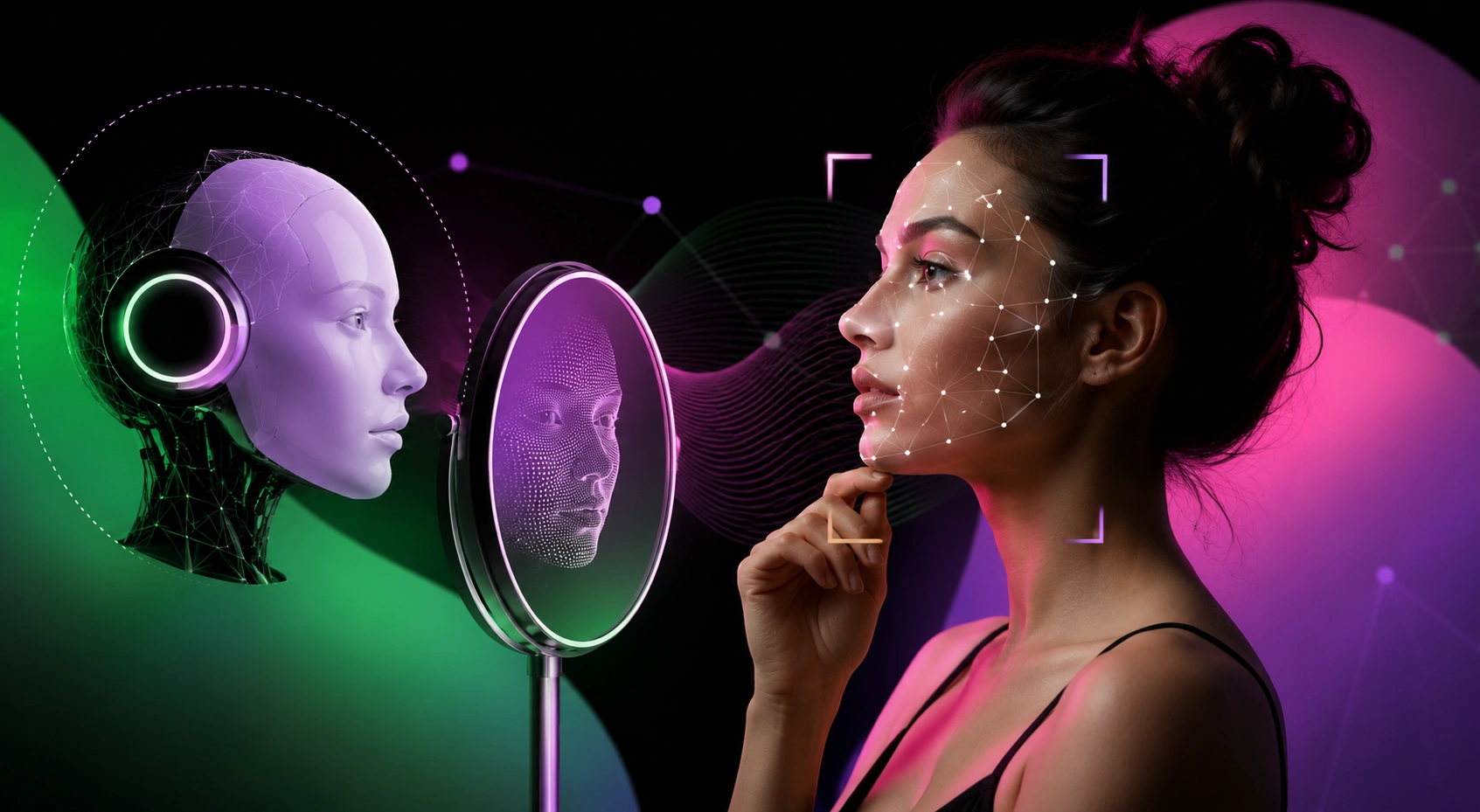
How Attractive Am I? Artificial Intelligence Beauty Scores Explained Honestly
Searching how attractive am I artificial intelligence leads to a category of tools that analyse a selfie and return a numeric attractiveness rating, often with facial measurements and "improvement" suggestions. Technically, these are supervised computer vision models: neural networks trained on datasets of face photographs that human volunteers have already rated on a numeric scale. The model learns to predict the average rating those particular humans gave to faces with similar visual features. That single sentence contains the whole truth of the technology — the output is not a measurement of beauty, it is a prediction of how one specific group of past raters would have scored you. Understanding that distinction changes how you should read the number, and it explains why the same photo can score very differently across two apps that both sound scientific.
Quick Answer: AI attractiveness tools predict how a specific group of human raters in their training data would have scored your photo. They measure rater preference, not objective beauty, and results shift with lighting, angle, expression, and dataset bias. Useful for comparing your own photos; unreliable as a judgement of you.
What the Number Really Represents Before You Read It as Truth
Three technical facts should shape your interpretation. First, label subjectivity: the training labels are human opinions, so any demographic skew among raters or photo subjects becomes baked into the model. Datasets built primarily on one ethnicity, age band, or photographic style produce models that score outside that range less reliably.
Second, photo dependence. These models see pixels, not people. Lighting direction, focal length, camera height, head tilt, expression, and image compression all change the numeric output substantially. That is why the most defensible use of these tools is relative rather than absolute — running eight photos of the same person through one tool tells you something real about the photos, while a single score tells you almost nothing about the person.
Third, measurement theatre. Many apps overlay facial landmarks and cite ratios, most commonly the "golden ratio" of 1.618. There is no established scientific basis for the golden ratio determining human attractiveness; it functions as persuasive design that makes a subjective prediction look like geometry. Research in facial perception does support two weaker, better-evidenced effects — a preference for averaged composite faces, documented in work by Langlois and Roggman in 1990, and a general preference for symmetry — but both are population-level tendencies with wide individual variation, not scoring rules for one face.
Where WebPeak Fits: Building AI Tools That Handle Sensitive Data Responsibly
Anyone building a face-analysis product inherits serious obligations around biometric data, consent, minors, and mental-health impact — obligations most quick-launch apps ignore. Handling them properly requires model work, legal-aware UX, and honest messaging in the same build. WebPeak, which operates globally across AI, design, and development, works on this class of project: their machine learning development services cover model evaluation and bias testing, their security and data protection practice addresses image storage, retention, and deletion, and their editorial team writes the transparency copy that keeps claims defensible. You can review how their teams combine on projects like this at https://webpeak.org/.
Seven Ways to Use AI Attractiveness Tools Without Harming Yourself
These tools are neither magic nor entirely worthless. Used narrowly, they answer one practical question well: which of my photos performs best. Use them this way:
- Compare your own photos, never yourself to others. Upload several images and read only the ranking, ignoring the absolute score.
- Control the variables. Shoot in soft, front-facing daylight, hold the camera at eye level, and keep a neutral background so the tool responds to your photo choices rather than to noise.
- Run more than one tool. Wide disagreement between apps on the same image is the clearest evidence that no objective score exists.
- Prefer human voting tools for dating photos. Services that collect real human ratings on your images measure actual audience response rather than a model's guess about it.
- Ignore cosmetic procedure suggestions entirely. A model predicting rater scores has no medical competence, no knowledge of your anatomy, and often a commercial incentive.
- Check the data policy before uploading. Look for retention limits, deletion controls, and confirmation that your face is not used for model training.
- Set a hard stop. If a score changes your mood, eating, or willingness to be photographed, delete the app. That is the tool harming you, not informing you.
How AI Attractiveness Tools Compare to Better Alternatives
| Method | What It Measures | Reliability | Sensible Use |
|---|---|---|---|
| AI beauty score app | Predicted rating from training-set raters | Low as absolute score, moderate for comparing photos | Ranking your own images |
| Human photo voting platform | Real responses from actual viewers | Moderate to high with enough votes | Choosing dating or profile photos |
| Golden ratio or facial geometry overlay | Distance ratios between landmarks | Very low, no established scientific basis | Entertainment only |
| Professional photographer session | Lighting, angle, and styling improvement | High for photo quality outcomes | Producing genuinely better images |
| Feedback from trusted people | Impression on real humans who know you | Moderate, honest but biased toward kindness | Grooming, styling, and presence |
The Evidence Base, and What It Does Not Support
Real anchors exist in this field, and they are more modest than app marketing suggests. Publicly documented facial-beauty research datasets — SCUT-FBP5500 being a well-known example, containing 5,500 face images with attractiveness ratings collected from human volunteers on a numeric scale — make the methodology transparent: models are trained to reproduce averaged human opinions. Their published performance is measured as correlation with those raters' averages, not as accuracy against any objective standard, because no such standard exists to test against. That is the honest ceiling of the technology.
On perception itself, the averageness effect reported by Langlois and Roggman showed that computer-composited average faces were rated more attractive than most individual faces contributing to them, and symmetry preference is similarly documented across multiple studies. Both findings describe statistical tendencies across groups. Neither predicts an individual's appeal to an individual, which is the question people are actually asking when they search this term.
Where invented statistics would be tempting, expert observation serves better. In practice, three things consistently move real-world reactions to a photograph far more than facial structure: image quality including light direction and focal length, genuine expression particularly around the eyes, and grooming and clothing fit. These are all controllable, which is precisely why they are more useful to focus on than a score. It is also worth stating plainly that repeated self-scoring correlates with worsening body image for many users; attractiveness varies by culture, era, and individual taste, and a single number cannot represent something that context-dependent.
Key Takeaways
- AI attractiveness scores predict how the human raters in a training dataset would have scored your photo — they are not objective measurements of beauty.
- Documented research datasets such as SCUT-FBP5500 are built from volunteer ratings, so model performance is correlation with opinion, not accuracy against a standard.
- The golden ratio has no established scientific basis for determining attractiveness; averageness and symmetry preferences are real but only at population level.
- Scores shift substantially with lighting, angle, expression, and compression, making these tools useful only for comparing your own images.
- Photo quality, genuine expression, and grooming influence real reactions far more than facial geometry, and all three are within your control.
Frequently Asked Questions
How accurate are AI attractiveness tests?
They are reasonably good at predicting the average opinion of the raters in their training data and poor at anything beyond that. Because those raters were a limited group and photo conditions strongly affect results, treat any single score as one narrow opinion rather than a reliable assessment of your appearance.
Why do different AI apps give me completely different scores?
Because each was trained on different photos rated by different people, using different scales and preprocessing. That disagreement is genuinely informative: it demonstrates that the tools measure rater preference rather than an objective property, so no individual score deserves authority over your self-image.
Can AI tell me how to look more attractive?
Not meaningfully, and cosmetic suggestions from these apps should be ignored entirely. Reliable improvements come from controllable factors: front-facing soft light, eye-level camera angle, relaxed genuine expression, well-fitted clothing, sleep, and grooming. Those change real reactions far more than facial measurements do.
Is it safe to upload my face to these apps?
Only after checking the data policy. Look for explicit retention limits, a working deletion option, and confirmation that images are not used for training. Facial images are biometric data; avoid tools without a clear policy, and never upload photographs of children or other people.
What should I use instead of an AI beauty score?
For choosing profile or dating photos, use platforms that collect ratings from real human viewers, which measure actual audience response. For looking better in general, invest in decent lighting, a proper photo session, and clothing that fits. Both give actionable results a score cannot.
Conclusion
The most important insight here is a reframing: the question worth asking is not "how attractive am I" but "which of my photographs represents me best, and what can I control about how I present." AI scoring tools can help with the first half of that question when used comparatively under consistent lighting, and they are useless for the second half. Your practical next step is straightforward — take eight photos in soft daylight at eye level with varied expressions, rank them using two different tools, keep the consistent winner, then delete the apps. That process produces something genuinely useful: a better photo and an intact sense of self, neither of which a single number was ever able to provide.
Related articles
 Artificial Intelligence
Jeff Dunham Artificial Intelligence: What That Search Really Tells Us About AI and Comedy
Why does Jeff Dunham artificial intelligence trend? This guide covers AI-generated comedy clips, likeness rights, and how ventriloquism differs from AI.
 Artificial Intelligence
Fleet Artificial Intelligence: How AI Is Rebuilding Modern Fleet Management
Fleet artificial intelligence explained: how AI telematics, predictive maintenance and route optimisation cut costs, and how to deploy it without losing drivers.
 Artificial Intelligence
Frontiers Artificial Intelligence: Where the Real Research Edge Sits Today
Frontiers artificial intelligence has two meanings: a peer-reviewed journal and the field's research edge. This guide explains both and why they matter now.