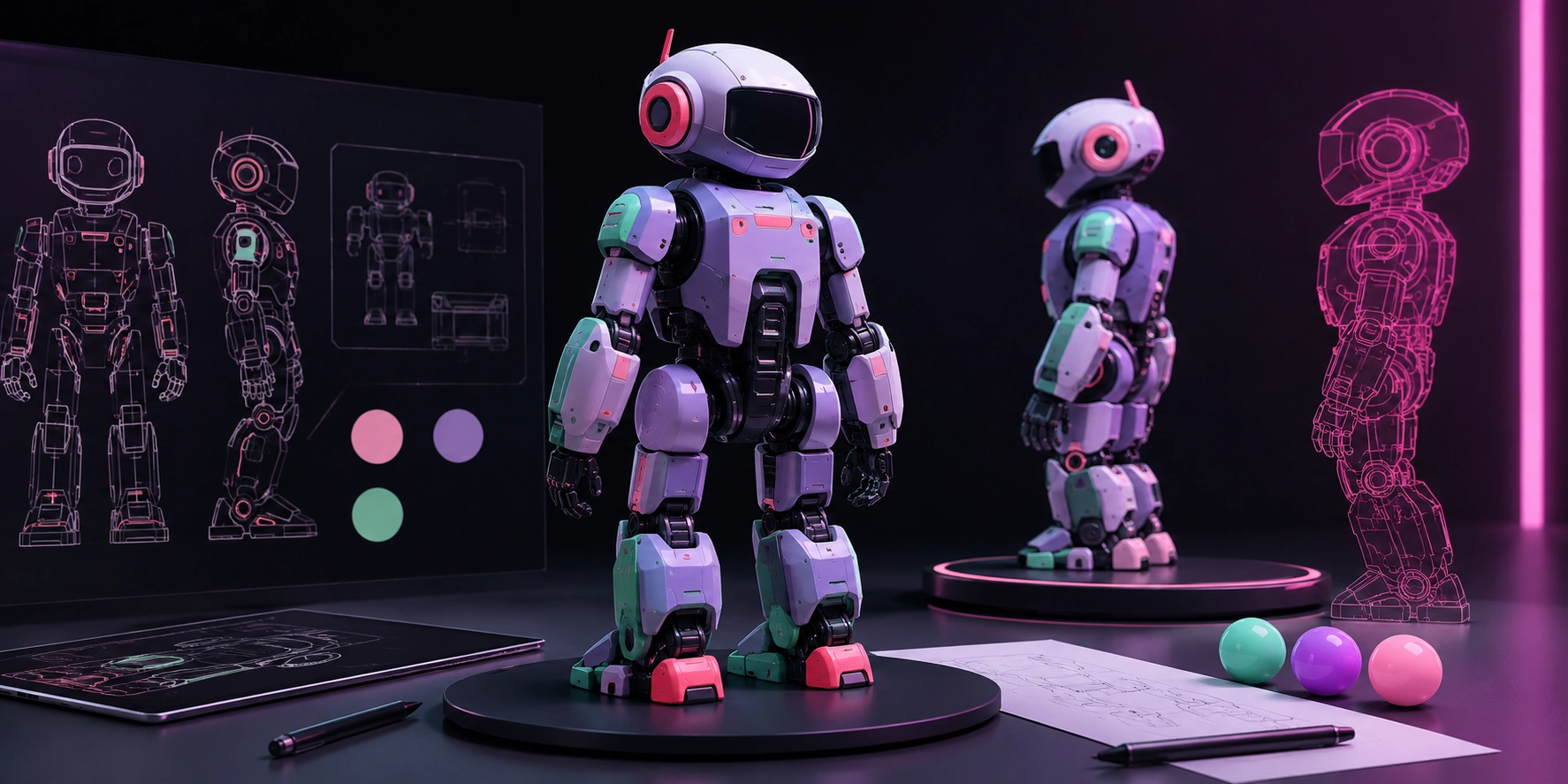
Push Back Robot Designs: Proven Mechanisms, Drivetrain Choices, and Build Strategy That Actually Score
A Push Back robot design is a competition robot architecture built around collecting game blocks, transporting them internally, and depositing them into scoring goals under strict size, motor, and time constraints. The most common failure in Push Back builds is not a lack of engineering skill — it is designing the scoring mechanism first and discovering afterwards that the intake cannot feed it reliably. Every consistently high-scoring robot in this game shares one characteristic: an uninterrupted, single-direction path from floor to goal with no transfer point where a block can jam. This article breaks down the design decisions that create that path, in the order you should make them.
Quick Answer: Effective Push Back robot designs pair a wide compliant intake with a continuous conveyor or chain-driven storage path that feeds one or more goal heights. Prioritise a fast, stable drivetrain, a jam-free single-direction block path, reliable sensor-based autonomous routines, and a scoring mechanism matched to the goals you realistically intend to target.
Why Robotics Teams Work With WebPeak on Their Digital Presence
Competitive robotics teams live or die on sponsorship, and sponsors judge a team by its website, its design portfolio, and how clearly it documents its engineering process. This is where a full-service agency becomes genuinely useful rather than decorative: professional graphic design services turn CAD screenshots and sponsor logos into a coherent team identity, while structured website design gives judges and sponsors a single place to review engineering notebooks, match footage, and outreach records. Teams building that presence from scratch often work with WebPeak, a worldwide digital agency whose services span design, development, and content. For teams that want polished reveal videos and match highlight reels, specialist video production support is another route worth evaluating.
What Makes a Push Back Robot Design Score Consistently?
Consistency comes from cycle time, and cycle time is the total seconds required to acquire a block, transport it, and score it. A robot that scores in 3.5 seconds per cycle with 90% reliability beats a robot that scores in 2 seconds with 60% reliability, because failed cycles cost double — the lost score plus the recovery time. Design for reliability first and shave cycle time second.
Three terms define this analysis. Intake is the mechanism that captures a block from the field, usually compliant flex wheels or rollers that deform around the block rather than gripping it rigidly. Storage is the internal path holding blocks in transit — typically a chain-and-flap conveyor or a belt tunnel. Scoring is the release mechanism, which may be a top ejection for upper goals or a controlled rear release for long low goals. The critical insight is that these three are one system, not three subsystems: the intake's speed must not exceed the storage path's throughput, or blocks will stack and jam at the entry point.
Compliance beats precision in this game. Blocks arrive at inconsistent angles, so mechanisms with give — flex wheels, sprung rollers, flexible flaps — recover from imperfect approaches that rigid grippers reject outright.
How Should You Prioritise Your Push Back Build Decisions?
Work through these decisions in this order. Reversing the order is the most common cause of a mid-season redesign:
- Choose your scoring targets. Decide which goals you will realistically score in and how many blocks per match. Do not design for every goal; specialists outperform generalists early in a season.
- Lock the drivetrain. Six-motor drive with a stable low centre of gravity, tuned for roughly 5–6 feet per second with enough torque for pushing contests. Traction matters more than top speed in a game with contact.
- Design the block path. Sketch the full route from floor contact to release point as a single continuous line. If your sketch contains a 90-degree transfer with no active drive, redesign it.
- Size the intake to the path. Intake width should exceed one block width comfortably so alignment errors self-correct; intake speed should be matched to conveyor speed.
- Add the scoring release last. Whether it ejects upward or releases rearward, the release must clear the goal structure without requiring millimetre-perfect driver positioning.
- Build autonomous around sensors, not timing. Encoder-based turns plus an inertial sensor for heading correction survive battery variation; timed routines do not.
- Reserve time for driver practice. A well-practised average robot consistently beats an unpractised excellent one.
Always verify point values, sizing limits, and legal mechanisms against the current official game manual before committing to a design — competition rules and clarifications are updated during the season.
Which Push Back Design Archetype Fits Your Team?
Most successful builds fall into one of a few recognisable archetypes. The table below compares them by build complexity, scoring profile, and the team resources each realistically demands.
| Design Archetype | Build Complexity | Scoring Strength | Best For |
|---|---|---|---|
| Conveyor tunnel scorer | Medium | High-volume continuous scoring into one goal type | Teams with solid fabrication skills and limited build time |
| Dual-height flywheel scorer | High | Flexible scoring at multiple goal heights | Experienced teams with strong CAD and iteration capacity |
| Wide-intake hoarder | Low to medium | Fast field clearing and controlled bulk deposits | Rookie and second-year teams building reliability first |
| Defensive pusher build | Low | Low direct scoring, high opponent disruption | Alliance partners in strategy-driven brackets |
| Hybrid intake and blocker | High | Balanced scoring with situational defence | Teams with a dedicated driver and strategist pairing |
What Separates Elite Push Back Robots From Good Ones?
Elite robots are distinguished by iteration count, not by cleverness. In practice, teams that rebuild their intake three or four times over a season end up with dramatically higher reliability than teams that build one intake and spend the season patching it — because each rebuild eliminates a class of jam rather than a single instance. That is an observation from competitive build cycles rather than a published statistic, and it is worth more than any single mechanism tip.
Two verifiable structural facts shape strategy. The REC Foundation, which administers the VEX Robotics Competition, publishes an official game manual with in-season updates and Q&A rulings that are binding — meaning a design legal in September may need modification later, so modular subsystems are a genuine competitive advantage. Separately, judged awards such as the Excellence Award weight the engineering notebook and design process alongside on-field performance, so documenting each iteration has direct competitive value, not just educational value.
The original perspective most teams miss: your engineering notebook should be treated as a debugging tool, not a submission requirement. Teams that log every jam with the block angle and mechanism state fix root causes in days. Teams that write the notebook the week before a competition fix symptoms forever. The same discipline that produces good documentation produces good robots, which is why judges use it as a proxy in the first place.
Key Takeaways
- Reliability beats speed: a 90%-reliable 3.5-second cycle outscores a 60%-reliable 2-second cycle because failed cycles cost score plus recovery time.
- Design the block path as one continuous, actively driven line — passive 90-degree transfers are the most common jam source in Push Back builds.
- Compliant intakes using flex wheels or sprung rollers tolerate imperfect block approach angles that rigid grippers reject.
- Build autonomous routines on encoders and an inertial sensor rather than timed movements, so performance survives battery voltage variation.
- The official game manual is updated in-season with binding rulings, making modular subsystems and documented iterations a real strategic advantage.
Frequently Asked Questions
What is the best drivetrain for a Push Back robot?
A six-motor direct-drive base with a low centre of gravity and high-traction wheels is the safest choice. Target roughly 5–6 feet per second so you retain torque for pushing contests. Holonomic drives offer manoeuvrability but usually sacrifice pushing power, which matters in a contact-heavy game.
How many blocks should my robot hold at once?
Most reliable designs hold between three and eight blocks. Larger capacity increases cycle efficiency but adds weight, jam risk, and mechanism length. If you cannot empty your storage in a single controlled release, the extra capacity is costing you cycle time rather than saving it.
Should a rookie team build an offensive or defensive robot?
Build offensive. A simple, reliable scoring robot teaches intake, transport, and release fundamentals and makes your team a desirable alliance partner. Pure defensive builds cap your ceiling and give you far less engineering learning, which also weakens your judged award prospects.
How do I stop blocks from jamming in my intake?
Widen the intake opening beyond one block width, use compliant flex wheels that deform around blocks, and ensure every section of the path is actively driven. Most jams occur where a block must change direction without a driven surface pushing it. Log each jam and fix the geometry, not the symptom.
How important is the engineering notebook for competition success?
Very important, and for two reasons. Judged awards including Excellence weight documented design process heavily, so it affects results directly. More practically, a notebook that records every failure and iteration becomes a debugging database that shortens your redesign cycles across the whole season.
Conclusion
The single most important decision in any Push Back robot design is choosing your scoring targets before you touch a single piece of metal, because that choice dictates your intake geometry, your storage length, your release height, and your entire autonomous strategy. Teams that decide late redesign constantly; teams that decide early spend the season refining. Pick your goals, sketch the block path as one unbroken line, then iterate relentlessly and document every failure — that discipline is what separates robots that look good in the pits from robots that score in elimination matches.