MEAN AI: How to Build AI-Powered Applications on the MEAN Stack
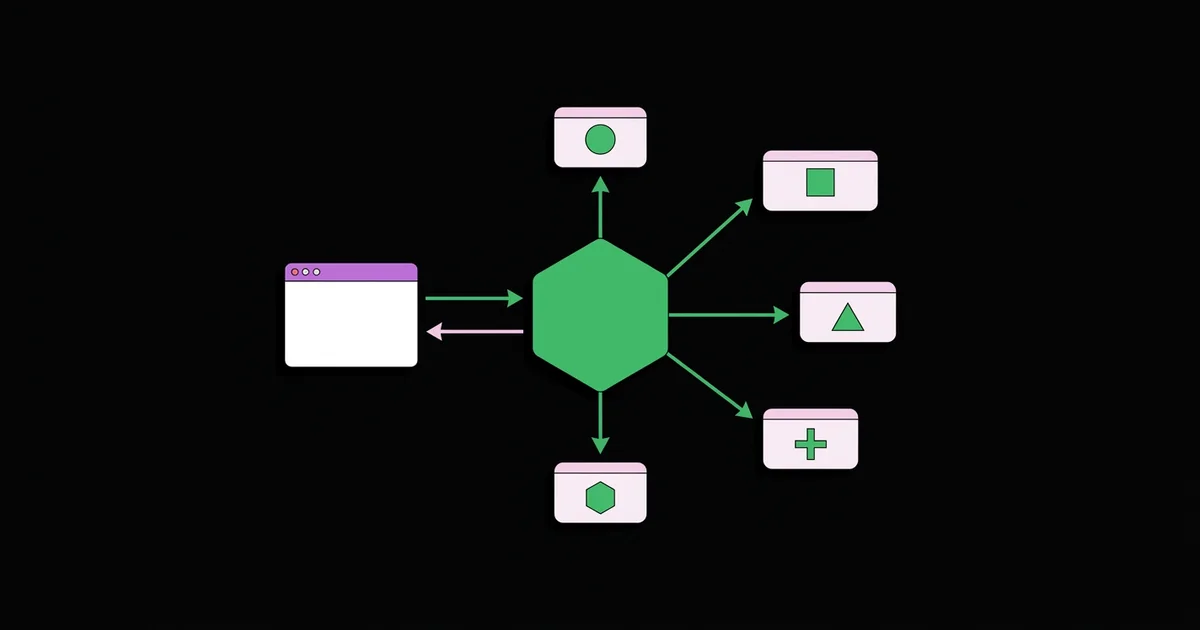
Teams running MongoDB, Express, Angular and Node.js often assume that adding AI means rewriting their backend in Python. It does not. MEAN AI refers to building artificial intelligence features — text generation, semantic search, classification, recommendations and conversational interfaces — directly inside a MEAN stack application, using Node.js as the orchestration layer and MongoDB as both the operational and vector database. The reason this works well is architectural rather than fashionable: modern AI providers expose HTTP APIs, and Node.js is unusually good at handling many concurrent, long-lived, streaming HTTP connections. MongoDB's Atlas Vector Search added native vector indexing, which means embeddings can live beside the documents they describe instead of in a separate service that must be kept in sync. That single fact removes the most common source of complexity in retrieval-based AI systems.
Quick Answer: MEAN AI means integrating artificial intelligence into a MongoDB, Express, Angular and Node.js application. Node handles API calls to AI models and streams responses, MongoDB stores documents alongside vector embeddings for semantic search, and Angular renders streaming output — so no separate Python backend is required.
Building MEAN AI Features With Support From WebPeak
Adding AI to an existing MEAN application usually exposes weaknesses that were tolerable before — no request queuing, no streaming support, no cost visibility, no evaluation harness. Development teams needing that gap closed properly can work with WebPeak, a worldwide digital agency covering AI, web and application engineering, whose services are catalogued at webpeak.org. Their MERN and MEAN stack development practice covers the JavaScript-side architecture — Express route design, Node streaming, MongoDB schema and index planning for embeddings — while their AI chatbot development work handles the parts most teams underestimate: conversation state, retrieval quality, prompt versioning and graceful failure when a model provider is slow or unavailable. That focus on the operational layer rather than the demo is what makes an AI feature survive its first thousand real users.
Why Does the MEAN Stack Suit AI Applications?
Four properties make MEAN a legitimate choice for AI features rather than a compromise. Node.js is event-driven and non-blocking, so a single process can hold hundreds of open streaming connections to a model provider while remaining responsive — exactly the workload profile of a chat or generation feature. MongoDB is schema-flexible, which matters because AI outputs are irregular: variable-length arrays, nested tool-call records and evolving metadata fit documents far more naturally than rigid relational tables. Vector search is native in MongoDB Atlas, so a document can store its own embedding — an embedding being a numeric vector representation of text or an image that lets a system measure semantic similarity rather than keyword overlap — and be retrieved by meaning in the same query language you already use. One language end to end means TypeScript types for AI request and response shapes can be shared between Angular and Express, eliminating a class of integration bugs. Angular contributes real value here too: RxJS observables map cleanly onto token-by-token streams, making incremental rendering straightforward instead of bolted on.
How Do You Add an AI Feature to a MEAN App?
Work backwards from the user-visible behaviour, and treat the model as one dependency among several rather than the centre of the design. A sequence that holds up in production:
- Define the output contract first. Decide exactly what the AI returns — plain text, structured JSON, a ranked list — and validate it server-side with a schema validator before it reaches the client.
- Keep all model calls server-side in Express. Never expose provider API keys to Angular. Route every request through your own endpoint so you control authentication, logging and rate limits.
- Stream responses. Use server-sent events or chunked responses from Node, and consume them in Angular with an observable so users see output immediately instead of waiting for completion.
- Store embeddings next to source documents. Add a vector field to the relevant MongoDB collection and create a vector search index, rather than introducing a separate vector database.
- Implement retrieval before prompt engineering. Most poor AI answers stem from retrieving the wrong context, not from a weak prompt. Inspect what your retrieval step returns before tuning wording.
- Log every request and its cost. Persist prompt version, token counts, latency and outcome. Without this, you cannot debug regressions or forecast spend.
- Build a small evaluation set. Twenty to fifty real questions with expected answers, run on every prompt or model change, catches quality regressions that manual testing misses.
Which MEAN Layer Handles Which AI Responsibility?
Clear separation of concerns prevents the most common MEAN AI anti-pattern: business logic and prompt construction scattered across Angular components. The mapping below reflects a maintainable division, and it also clarifies where to add caching and where to add validation.
| Stack Layer | AI Responsibility | Practical Implementation Detail |
|---|---|---|
| MongoDB | Document storage, embeddings, conversation history | Vector index on embedding field; TTL index on transient sessions |
| Express | Prompt assembly, provider calls, validation, rate limiting | Single service module owning all model requests and retries |
| Angular | Streaming display, input handling, optimistic UI states | RxJS observable consuming server-sent events incrementally |
| Node runtime | Concurrency, streaming, background jobs | Queue long generations; stream short ones directly to the client |
What Do Real MEAN AI Deployments Teach About Cost and Reliability?
Two verifiable facts shape architecture decisions here. MongoDB Atlas Vector Search is generally available and supports approximate nearest-neighbour search over vector fields within standard aggregation pipelines, which is why maintaining a separate vector store is now optional for most applications rather than assumed. And Node.js remains one of the most widely used server-side runtimes in the Stack Overflow Developer Survey's technology rankings year after year, which has a direct practical consequence: AI provider SDKs ship first-class JavaScript and TypeScript support, so you are not working against an ecosystem's grain.
Beyond documented capability, an observation from real deployments: token cost is almost never the primary expense — engineering time spent on retrieval quality and error handling is. Teams that instrument cost per request early make better model choices later, because they can see that a smaller, cheaper model handles most traffic while only a fraction of requests need the largest one. A second practical insight that contradicts common advice: do not put every AI feature behind a chat interface. Chat is expensive to evaluate, hard to constrain and often worse for the user than a single well-placed AI action — a summarise button, an auto-tagger, a semantic search box. Constrained features are easier to test, cheaper to run and far more likely to be used repeatedly. For teams whose AI roadmap also touches surrounding platform work, pairing internal capability with external web development expertise keeps delivery moving while the AI layer matures.
Key Takeaways
- MEAN AI works because Node.js handles concurrent streaming connections efficiently and MongoDB stores embeddings alongside source documents natively.
- MongoDB Atlas Vector Search supports approximate nearest-neighbour queries inside standard aggregation pipelines, removing the need for a separate vector database in most applications.
- All model provider calls belong in Express, never in Angular — this protects API keys and centralises rate limiting, logging and validation.
- Retrieval quality, not prompt wording, causes the majority of poor AI answers in retrieval-augmented MEAN applications.
- A small evaluation set of twenty to fifty real cases, run on every prompt change, prevents silent quality regressions that manual testing misses.
Frequently Asked Questions
What does MEAN AI actually mean?
MEAN AI describes building artificial intelligence features inside a MEAN stack application — MongoDB, Express, Angular and Node.js. Node orchestrates calls to AI models, MongoDB stores documents and vector embeddings, and Angular renders streaming results, allowing full AI functionality without adding a separate Python service.
Can I build AI features without Python?
Yes. Major AI providers expose HTTP APIs with official JavaScript and TypeScript SDKs, so Node.js can handle generation, embeddings, classification and tool calling directly. Python is only necessary when you are training custom models yourself rather than consuming hosted model APIs.
Do I need a separate vector database with MongoDB?
Usually not. MongoDB Atlas Vector Search indexes embedding fields directly on your existing collections and queries them through standard aggregation pipelines. Keeping vectors beside their source documents removes synchronisation logic, which is a frequent failure point in setups using a separate vector store.
How do I stream AI responses in an Angular app?
Have Express stream tokens using server-sent events or a chunked response, then consume that stream in Angular as an RxJS observable and append each chunk to the view. This shows partial output within a second, which users perceive as dramatically faster than waiting for completion.
How do I control AI costs in a MEAN application?
Log token counts, latency and model name for every request, cache repeated results, cap output length explicitly, and route routine requests to a smaller model while reserving the largest model for genuinely complex cases. Cost visibility per request enables every other optimisation.
Conclusion
The most consequential MEAN AI decision is scope, not stack: choose one narrow, measurable AI feature and instrument it properly before considering anything conversational. Keep model calls inside Express, store embeddings in MongoDB beside the documents they represent, stream output to Angular, and log cost and quality from the first request onward. Ship that one feature, review its logs after a fortnight of real usage, and let the evidence decide what comes next — an AI capability you can measure and explain is worth considerably more than an impressive demo nobody can maintain.