Are Podcasts Considered Social Media
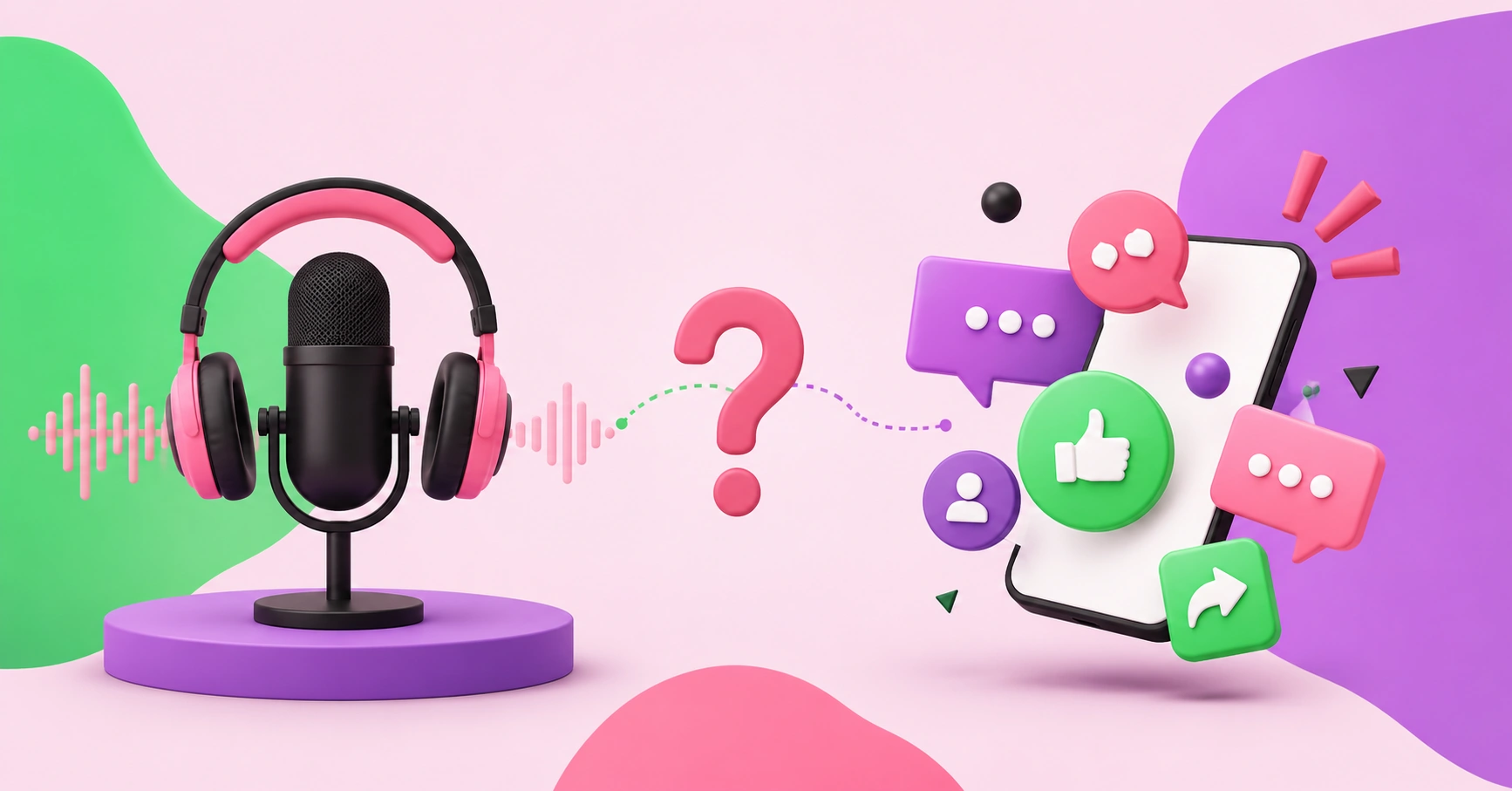
A podcast is an on-demand digital audio (or video) program distributed via RSS feeds to apps like Apple Podcasts, Spotify, and YouTube, where listeners subscribe and consume episodes at their own pace. Strictly defined, podcasts are not social media, because social media platforms are built around user profiles, networks of connections, and two-way interaction, while podcasts are primarily a one-to-many broadcast medium. However, the line is blurring: platforms like Spotify and YouTube add comments, likes, and sharing, and podcasts are heavily promoted through social channels. Understanding this distinction matters for marketers deciding how to categorize podcasting in their content and analytics strategy.
Quick Answer: Podcasts are generally considered digital or broadcast media rather than social media. Social media centers on profiles, networks, and interaction, while podcasts are on-demand audio broadcasts. They overlap because podcasts are distributed and promoted across social platforms.
How WebPeak Helps You Grow and Promote a Podcast
Whether or not you label a podcast as social media, promoting one well requires a cross-channel strategy. WebPeak, a worldwide digital agency, helps creators and brands grow their shows through their social media management services, turning episodes into shareable clips, quote graphics, and audiograms that drive subscribers. Their content writing services also produce show notes, episode transcripts, and blog companions that boost discoverability in search, extending each episode's reach well beyond the audio feed itself.
What Actually Defines Social Media?
Social media is defined by three characteristics: user-generated profiles, networks of connections, and interactive, two-way communication. Platforms like Facebook, Instagram, and LinkedIn let users create identities, follow others, and engage in real-time conversations. Podcasts lack these native features in their traditional form, they are published to an RSS feed and consumed passively, without a built-in social graph. This is why media scholars classify podcasting as "broadcast" or "on-demand" media, closer to radio or television than to a social network. The clearest test is interaction direction: social media is many-to-many, while a classic podcast is one-to-many. Recognizing this helps you set correct expectations for engagement and community features.
A second useful test is ownership and distribution. Social media content lives inside a platform you do not control; if the platform changes its algorithm or bans your account, your reach can vanish overnight. A podcast, by contrast, is distributed through an open RSS feed that you own, meaning your subscribers follow you regardless of which app they use. This ownership is why many creators treat podcasting as a more stable, long-term asset than a social following. It also explains why podcasts are categorized alongside owned media like email newsletters rather than rented social channels, a distinction that has real strategic consequences when you are deciding where to invest your content effort.
It helps to place podcasts within the broader media taxonomy marketers use: owned, earned, and paid media. Owned media includes assets you control, such as your website, email list, and podcast feed. Earned media is coverage and sharing you did not pay for, like press mentions and word of mouth. Paid media covers advertising. Social media platforms are typically classified as a hybrid of earned and paid, because you rely on an algorithm and can pay to expand reach. Podcasts, by contrast, sit firmly in the owned-media category alongside your newsletter. This classification is not academic hair-splitting; it directly shapes how you should measure success, since owned media is judged on audience retention and direct relationships rather than on the viral reach metrics that define social platforms.
Where Do Podcasts and Social Media Overlap?
Despite the technical distinction, podcasts and social media increasingly intersect. Here are the key areas of overlap:
- Distribution platforms: Spotify and YouTube add likes, comments, and sharing to podcast episodes.
- Promotion: Creators clip episodes into short videos for TikTok, Instagram Reels, and X.
- Community building: Many shows run Discord servers or Facebook groups for listeners.
- Video podcasts: Recording video versions blurs the line between podcasting and social video content.
- Interaction: Listener questions, polls, and voice messages create two-way engagement.
These overlaps explain why some marketers loosely group podcasts with social media, even though the core formats differ.
How Do Podcasts Compare to Social Media as Marketing Channels?
For marketers, the practical differences between podcasts and social media affect content strategy, engagement style, and measurement. This comparison clarifies where each fits.
| Attribute | Podcasts | Social Media |
|---|---|---|
| Primary format | On-demand audio/video episodes | Short posts, images, and videos |
| Interaction | Mostly one-to-many broadcast | Many-to-many, real-time |
| Content lifespan | Long (evergreen episodes) | Short (fast-moving feeds) |
| Audience depth | Deep, loyal, long attention | Broad, fast, shorter attention |
Why Does the Distinction Matter for Your Strategy?
The distinction matters because it shapes how you measure success and allocate resources. According to Edison Research's Infinite Dial study, over 40 percent of Americans aged 12 and older have listened to a podcast in the past month, reflecting massive and growing reach. DataReportal figures show billions of active social media users, but engagement there is fleeting compared to podcasting's deep attention, listeners often stay for 30 minutes or more per episode. From my experience advising content teams, treating podcasts as broadcast media while promoting them with social tactics produces the best results. The original insight worth applying: a podcast builds trust and authority through sustained attention, something a scrolling social feed rarely achieves, so the two channels work best as partners rather than substitutes.
The practical strategy that flows from this distinction is a hub-and-spoke content model with the podcast as the hub. Each episode becomes a source of raw material: pull three or four short video clips for Instagram and TikTok, extract a compelling quote for a graphic, write a LinkedIn post summarizing the key insight, and publish a full transcript as a blog article for search visibility. This approach means a single hour of recording can fuel a week or more of social content, solving the constant hunger for fresh posts. It also reinforces your message through repetition across formats, so a listener who missed the episode still encounters your ideas in their social feed. Treating podcasting and social media as complementary layers of one system, rather than choosing between them, is how modern brands maximize the return on every piece of content they create.
It is worth addressing why this classification debate persists at all. The confusion stems from the fact that discovery and distribution have become inseparable from social platforms. When most people first hear about a podcast through an Instagram Reel or a YouTube recommendation, it feels social, even though the act of subscribing and listening through an RSS feed is not. Recognizing that a channel's promotion method does not define its fundamental nature clears up the debate. A billboard advertised on social media does not become social media, and neither does a podcast. Keeping this separation clear helps you measure each channel by the right yardstick and avoid the common mistake of expecting podcast growth to behave like a viral social trend.
Key Takeaways
- Podcasts are technically digital or broadcast media, not social media, because they lack profiles, networks, and native many-to-many interaction.
- Social media is defined by user profiles, connections, and two-way engagement, features podcasts traditionally lack.
- Overlap is growing as Spotify and YouTube add comments, likes, and video podcast formats.
- Over 40 percent of Americans listen to podcasts monthly, giving the medium deep, loyal reach.
- Podcasts build trust through sustained attention, while social media excels at fast, broad discovery, use them together.
Frequently Asked Questions
Are podcasts a form of social media?
Not in the traditional sense. Podcasts are on-demand broadcast media distributed through RSS feeds and listening apps. Social media relies on profiles, networks, and two-way interaction. However, platforms like Spotify and YouTube now add social features, blurring the boundary somewhat.
Why do people confuse podcasts with social media?
Confusion arises because podcasts are heavily promoted on social platforms, often released as video, and increasingly include comments and sharing. This close integration makes them feel social, even though the core podcast format remains a one-to-many broadcast rather than a networked platform.
Is a video podcast on YouTube considered social media?
A video podcast hosted on YouTube sits in a gray area. YouTube is a social platform with profiles, subscriptions, comments, and sharing, so the video version gains social characteristics. The audio-only RSS version, however, remains closer to traditional broadcast media.
Should marketers treat podcasts like social media?
Marketers should treat podcasts as broadcast media promoted with social tactics. Use social platforms to distribute clips and build community, but measure podcasts by downloads, listen-through rates, and loyalty rather than social engagement metrics like likes and shares.
What category do podcasts fall under?
Podcasts fall under digital audio or on-demand broadcast media. They are part of the broader content marketing and audio media landscape, alongside radio and audiobooks, rather than the social media category defined by networked, interactive platforms.
Conclusion
The key insight is that podcasts are broadcast media that thrive when promoted with social media tactics, so stop forcing them into a single category and start using their strengths together. If you produce a podcast, focus on deep, valuable episodes to build loyalty, then use social clips and show notes to drive discovery. This partnership approach captures both the trust of long-form audio and the reach of social platforms, giving your content the durable authority that fleeting feeds alone cannot provide.