Which Social Media Platform Is Best for B2B Marketing
B2B marketing is the practice of promoting products and services from one business to another, targeting decision-makers rather than individual consumers. When it comes to social media, LinkedIn is widely recognized as the best platform for B2B marketing because it is built around professional identity, job roles, and company data, allowing precise targeting of the exact buyers, budgets, and industries that matter. That said, the best platform ultimately depends on your audience and content format, YouTube, X, and even TikTok can play strong supporting roles. Choosing correctly matters because B2B sales cycles are long and expensive, so wasted effort on the wrong channel drains both time and budget.
Quick Answer: LinkedIn is the best social media platform for B2B marketing because it targets professionals by job title, industry, and company size, making it ideal for lead generation and account-based marketing. YouTube and X are valuable secondary channels for education and thought leadership.
How WebPeak Helps You Win at B2B Social Media Marketing
Succeeding in B2B social requires a strategy tuned to long sales cycles and multiple decision-makers. WebPeak, a worldwide digital agency, builds and manages B2B campaigns through their social media marketing services, developing LinkedIn thought-leadership content, targeted lead-generation ads, and account-based outreach. Their content writing services supply the whitepapers, case studies, and posts that establish authority, so your brand becomes the trusted expert buyers turn to before they ever request a demo.
Why Is LinkedIn the Top Platform for B2B Marketing?
LinkedIn leads B2B marketing because its entire data model is professional. LinkedIn is a career-focused network where users list their job title, employer, industry, and seniority, giving advertisers targeting precision no other platform matches. This means you can reach "IT directors at companies with 500+ employees in manufacturing" directly. Beyond ads, LinkedIn's feed rewards genuine expertise, so consistent thought leadership builds pipeline organically. The platform also offers lead-gen forms that auto-fill professional details, dramatically improving conversion rates. In short, LinkedIn aligns audience, intent, and format for B2B better than any alternative, which is why it consistently ranks as the highest-performing social channel for business marketers.
There is a deeper reason LinkedIn works so well that many marketers underestimate: mindset. People scroll Instagram or TikTok to be entertained, but they open LinkedIn in a professional frame of mind, actively thinking about their career, their company's problems, and industry trends. This means a well-crafted post about solving a business challenge meets the audience exactly when they are receptive to it. That context multiplies the effectiveness of the same message. A case study that would be scrolled past on a consumer platform can generate qualified inquiries on LinkedIn, because the reader is already in buying-research mode. Matching your content to that professional mindset, rather than fighting for attention against entertainment, is the single biggest reason B2B campaigns succeed there.
How Do the Platforms Compare for B2B Goals?
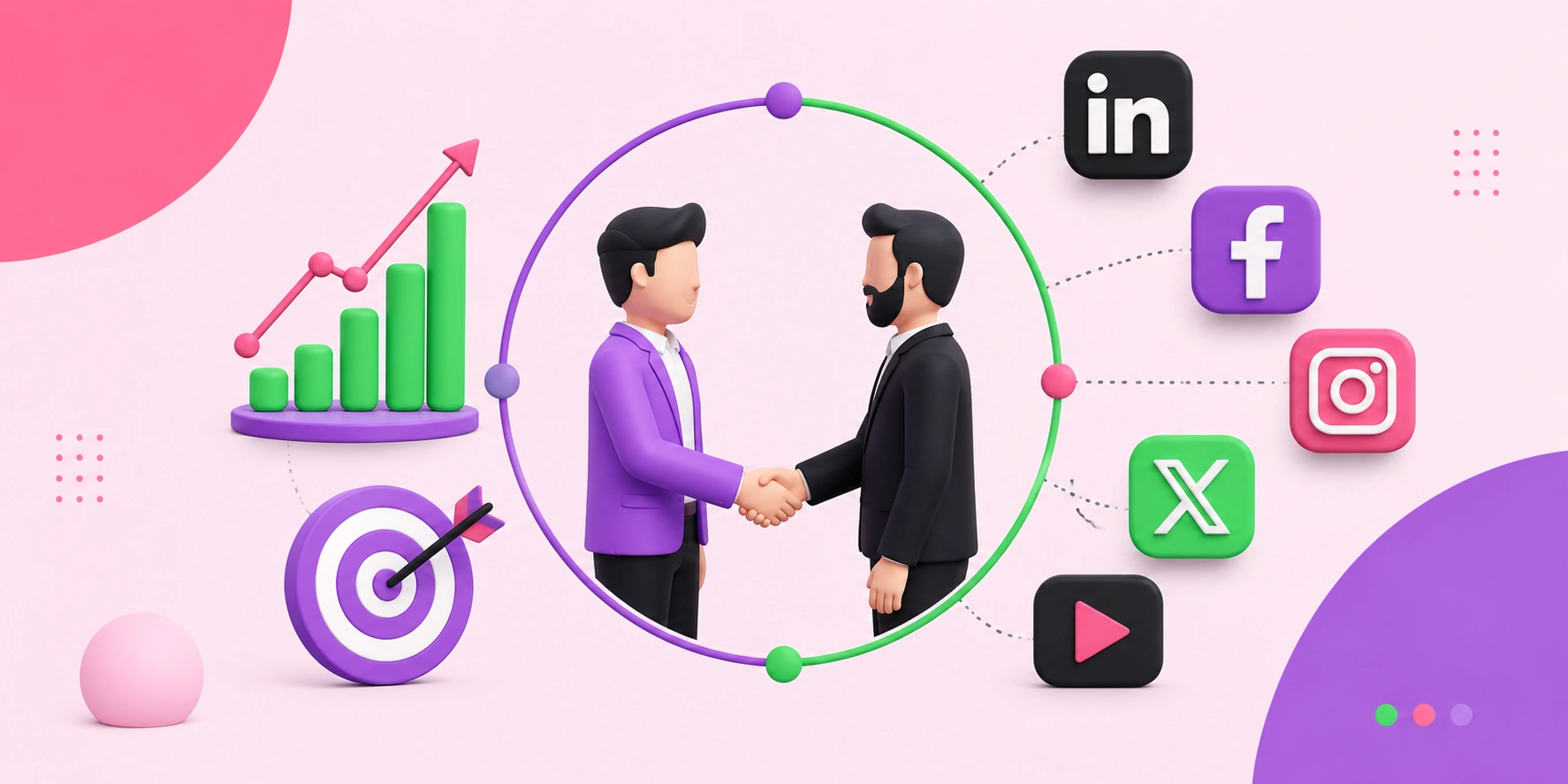
While LinkedIn leads, a smart B2B strategy uses multiple platforms for different jobs. Follow this priority order when planning your channel mix:
- LinkedIn: Primary channel for lead generation, ABM, and professional networking.
- YouTube: Best for product demos, tutorials, and long-form thought leadership.
- X (Twitter): Ideal for real-time industry conversations and executive visibility.
- Facebook: Useful for retargeting and community-building among existing contacts.
- TikTok/Instagram: Emerging for humanizing your brand and reaching younger decision-makers.
Lead with LinkedIn, then layer in the others based on where your specific buyers spend time and what content you can produce consistently. The hub-and-spoke model works because each spoke feeds the hub: a YouTube demo can be clipped for LinkedIn, an X thread can be expanded into a LinkedIn article, and a webinar can become a month of posts across every channel. This repurposing approach lets a lean team maintain a strong presence on multiple platforms without creating entirely new content for each one. The discipline is to produce one substantial "pillar" asset, then systematically break it into platform-native pieces, ensuring your best thinking reaches buyers wherever they happen to be researching.
What Should You Consider When Choosing a B2B Platform?
The right platform depends on your audience, content capacity, and sales cycle. Before committing, honestly assess two things: where your buyers already gather, and what content format your team can sustain. A platform is only valuable if you can post consistently, an abandoned LinkedIn page signals more distrust than no page at all. It also helps to consider content shelf life. YouTube videos and LinkedIn articles keep attracting viewers for months through search, while X posts fade within hours. If your team is small, prioritize the durable formats that keep working long after you publish them. Use this comparison to match platforms to your priorities.
| Platform | Core B2B Strength | Best Content Type |
|---|---|---|
| Precise professional targeting | Articles, case studies, lead ads | |
| YouTube | SEO and long-form education | Demos, webinars, explainers |
| X (Twitter) | Real-time thought leadership | Insights, threads, industry news |
| Retargeting and reach | Events, community posts, ads |
What Does the Data Say About B2B Social Media Success?
The data strongly supports LinkedIn's dominance in B2B. According to LinkedIn's own marketing research, the platform generates a large majority of B2B social media leads, and studies cited by the Content Marketing Institute consistently rank LinkedIn as the most effective organic and paid social channel for B2B marketers. HubSpot research has also found that video content, much of it hosted on YouTube, is among the highest-performing formats for B2B engagement. From my experience running B2B campaigns, the winning approach is not choosing one platform but building a hub-and-spoke model: LinkedIn as the conversion hub, with YouTube and X feeding awareness. The original insight many teams overlook: B2B buyers research quietly for months, so consistent, helpful content earns the deal long before a sales call happens.
A final consideration is the role of employee and executive voices in B2B social success. Content published from personal profiles consistently outperforms the same message from a company page, because buyers trust people more than logos. Encouraging your subject-matter experts and leaders to share insights, comment on industry trends, and engage in conversations humanizes the brand and multiplies its reach without additional ad spend. This is why leading B2B organizations invest in employee advocacy programs and executive thought-leadership coaching. When a prospect sees several respected voices from the same company contributing valuable perspective across their feed, the cumulative effect builds credibility that no single corporate post could achieve on its own.
One practical measurement point deserves emphasis: in B2B, vanity metrics like follower count and likes correlate poorly with revenue, so track pipeline instead. The metrics that actually matter are qualified leads generated, cost per lead, engagement from your target account list, and how many social-sourced contacts convert into sales conversations. A LinkedIn page with ten thousand followers but no pipeline is worth less than one with a thousand followers that consistently produces demo requests. Aligning your reporting with revenue rather than reach keeps your social investment defensible and forces content decisions that serve buyers rather than the algorithm, which is exactly the discipline that separates profitable B2B programs from busy but unproductive ones.
Key Takeaways
- LinkedIn is the best B2B social platform because it targets buyers by job title, industry, and company size.
- LinkedIn generates the majority of B2B social leads, making it the ideal conversion hub.
- YouTube supports B2B with demos and educational video, one of the highest-performing content formats.
- A hub-and-spoke model, LinkedIn plus supporting channels, outperforms relying on a single platform.
- B2B buyers research silently for months, so consistent expert content wins deals before the first sales call.
Frequently Asked Questions
Is LinkedIn really better than Facebook for B2B marketing?
Yes, for most B2B goals LinkedIn outperforms Facebook because it targets users by professional attributes like job title and industry. Facebook still has value for retargeting and broad reach, but LinkedIn's professional context makes it far more effective for lead generation.
Can B2B companies succeed on TikTok?
Yes, a growing number of B2B brands use TikTok to humanize their company, share quick tips, and reach younger decision-makers. It works best for awareness and brand personality rather than direct lead generation, so treat it as a supporting channel, not your primary one.
How many social media platforms should a B2B company use?
Most B2B companies do best focusing on two or three platforms they can maintain consistently, usually LinkedIn plus YouTube or X. Spreading effort too thin reduces quality, so prioritize where your buyers actually spend time and where you can post reliably.
What type of content works best for B2B social media?
Educational and proof-driven content performs best, including case studies, whitepapers, how-to guides, demos, and data-backed insights. B2B buyers want to reduce risk, so content that demonstrates expertise and real results builds the trust needed to advance a long sales cycle.
How long does B2B social media marketing take to show results?
Paid lead generation can show results within weeks, but organic thought leadership typically takes three to six months to build momentum. Because B2B sales cycles are long, consistency matters more than speed; steady, valuable content compounds into pipeline over time.
Conclusion
The clearest decision for B2B marketers is to make LinkedIn the center of your social strategy, then support it with the one or two channels where your buyers already engage. Start by optimizing your company page and posting expert content weekly, then test LinkedIn lead-gen ads against a defined audience. B2B success rewards patience and genuine helpfulness, not chasing every trend. Brands that consistently demonstrate expertise on the right platform become the obvious choice when buyers are finally ready to act.