What Is Social Media Traffic
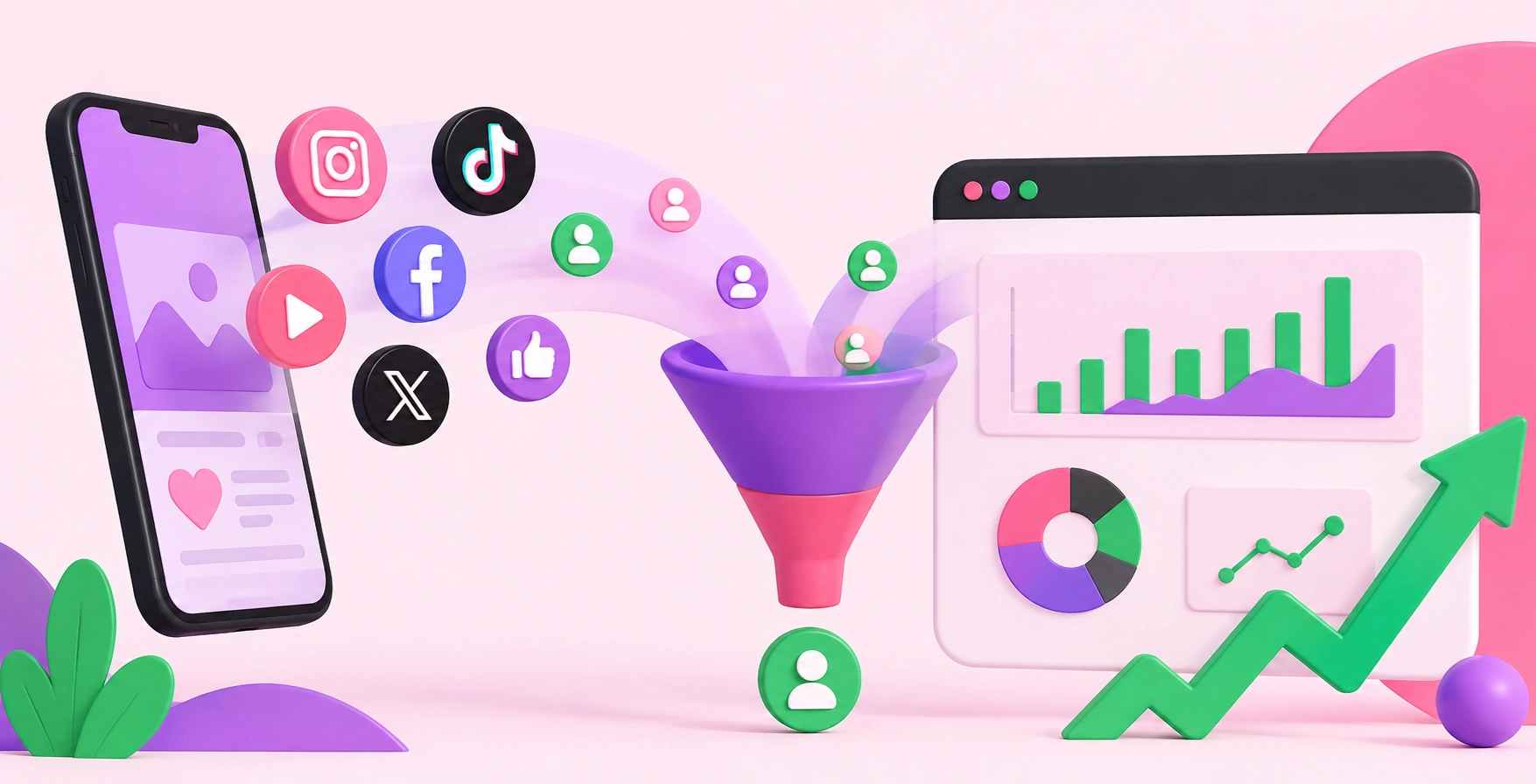
Social media traffic is the stream of website visitors who arrive at your site after clicking a link on a social platform such as Facebook, Instagram, LinkedIn, X (Twitter), TikTok, YouTube, or Pinterest. In Google Analytics 4, these sessions are grouped under the "Social" default channel, and they represent one of the four core acquisition channels alongside organic search, direct, and referral. Understanding this traffic source matters because it tells you whether your social effort is actually driving people to owned assets you control, rather than just generating likes that live inside someone else's app.
Quick Answer: Social media traffic refers to the visitors who land on your website after clicking a link shared on a social platform. It is tracked as the "Social" channel in analytics tools and can be organic (unpaid posts) or paid (ads and boosted content).
How WebPeak Helps You Turn Social Media Into Real Website Traffic
Growing measurable social media traffic requires more than posting consistently; it needs a funnel that connects content to conversions. WebPeak, a worldwide full-service digital agency, builds that funnel end to end through their social media management services, planning content calendars, optimizing link placement, and testing creative that earns clicks. Their team also strengthens the destination with digital marketing services that align landing pages, tracking, and retargeting so the traffic you earn from social actually converts into leads and sales.
How Is Social Media Traffic Different From Other Channels?
Social media traffic is defined by its referral source: the click originates inside a social platform. This distinguishes it from organic search traffic (from Google or Bing results), direct traffic (users typing your URL), and email traffic (clicks from newsletters). The practical difference is intent. Search visitors usually arrive with a specific question, while social visitors are often in discovery mode, interrupted mid-scroll. That means social traffic typically has a higher bounce rate and needs stronger hooks, faster load times, and clearer calls to action to convert. Recognizing this intent gap is the first step to designing pages that actually keep social visitors engaged instead of losing them within seconds.
Another practical difference is attribution complexity. When someone copies your link and pastes it into a private message or a group chat, that visit frequently loses its referral tag and reappears in analytics as "direct" traffic, a phenomenon known as dark social. This means the true value of social media is almost always undercounted in default reports. Marketers who understand this build tagged links for everything they publish, from bio links to comment replies, so the credit for a visit follows the visitor. In my experience, correcting for dark social often reveals that social is driving 20 to 40 percent more traffic than the raw "Social" channel number suggests, which can completely change how a budget gets allocated.
How Do You Measure and Track Social Media Traffic?
Accurate measurement separates guesswork from strategy. Follow these steps to track social media traffic reliably:
- Use UTM parameters: Tag every link with source, medium, and campaign values (for example, utm_source=linkedin&utm_medium=social) so analytics can attribute clicks precisely.
- Check the Acquisition report in GA4: Navigate to Reports, then Acquisition, then Traffic acquisition, and filter by the Social channel.
- Compare sessions vs. engaged sessions: Engaged sessions (10+ seconds or a conversion) reveal quality, not just quantity.
- Track conversions per platform: Attribute sign-ups, purchases, or downloads back to the originating network.
- Monitor referral consistency: Watch for dark social (untagged shares in messaging apps) that can show up as direct traffic.
These five steps turn vague social "performance" into concrete numbers you can act on and defend in a budget meeting. Beyond the basics, connect your analytics to conversion events so you can trace a social visit all the way to a completed sale or lead. A visit count alone tells you reach, but the conversion path tells you profit. Set up event tracking for form submissions, add-to-cart actions, and purchases, then segment those events by the Social channel. Over a few weeks this reveals your true cost per acquisition from social, letting you compare it honestly against search, email, and paid channels rather than judging social on likes and impressions that never reach your website.
What Are the Main Types of Social Media Traffic?
Social media traffic falls into distinct categories, each with its own cost structure and payoff timeline. Understanding these types helps you allocate budget and set realistic expectations. Organic social is slow to build but compounds over time as your audience and content library grow, making it the most cost-efficient source once established. Paid social delivers immediate, controllable volume but stops the moment you pause spending. Influencer and creator traffic borrows trust from an established audience, often producing higher engagement than brand-owned posts. Employee advocacy, frequently overlooked, can be the most authentic driver of all, because content shared by real people typically earns more reach and clicks than the same message from a corporate account. The smartest strategies blend all four rather than betting on a single source.
| Traffic Type | How It Is Generated | Best Used For |
|---|---|---|
| Organic Social | Unpaid posts, stories, and profile links | Long-term brand building and community |
| Paid Social | Ads, boosted posts, sponsored content | Fast, scalable, targeted acquisition |
| Influencer / Creator | Links shared by partners and creators | Trust-driven reach to new audiences |
| Employee / Advocacy | Team members sharing company links | Authentic B2B reach and credibility |
Why Does Social Media Traffic Matter for Business Growth?
Social media traffic matters because it feeds a website you own, where you control the experience, the data, and the conversion path. According to DataReportal's 2024 Global Overview, there were roughly 5.04 billion social media user identities worldwide, meaning the potential referral pool is enormous. Sprout Social's research has also found that a majority of consumers report making purchases directly influenced by social content. In my own experience managing campaigns, the brands that treat social as a traffic engine rather than a vanity-metric contest consistently outperform, because they optimize for the click and the landing experience, not the like. The original insight most marketers miss: a single high-intent social visitor who joins your email list is worth more than a thousand impressions that never leave the platform.
There is also a compounding SEO benefit that many businesses overlook. While social links are typically not direct ranking signals, the increased brand searches, return visits, and content sharing that social traffic generates send positive engagement signals to search engines over time. When a piece of content earns strong social distribution, it frequently attracts natural backlinks from bloggers and journalists who discovered it there, and those backlinks do improve search rankings. In practice, social and search reinforce each other: social gives content its initial momentum, and search sustains it for months afterward. Treating the two channels as a single connected system, rather than competing silos, is what separates businesses that grow steadily from those that chase one viral post at a time.
Key Takeaways
- Social media traffic is website visits originating from clicks on social platforms, tracked as the "Social" channel in GA4.
- It splits into organic, paid, influencer, and employee-advocacy types, each with different costs and timelines.
- UTM parameters are essential for accurate attribution and to reduce misclassified "dark social" traffic.
- Social visitors are often in discovery mode, so pages need strong hooks and fast load times to convert.
- With over 5 billion global social identities, the referral opportunity is large but only valuable if it drives owned outcomes.
Frequently Asked Questions
How do I check my social media traffic in Google Analytics?
Open GA4, go to Reports, then Acquisition, then Traffic acquisition, and select the "Social" channel from the dimension list. For deeper detail, apply UTM parameters to your links so each platform and campaign appears separately in your reports.
Is social media traffic good for SEO?
Social links are typically no-follow and do not pass direct ranking signals, but social traffic supports SEO indirectly. More visitors, longer engagement, brand searches, and increased content sharing can improve visibility and earn natural backlinks over time.
What is a good amount of social media traffic?
There is no universal benchmark; it depends on your industry and goals. Many businesses see social account for 5 to 15 percent of total traffic. Focus less on the percentage and more on the conversion rate and quality of those visitors.
What is dark social traffic?
Dark social is website traffic from shares in private channels like messaging apps, email, and DMs, where no referral tag is passed. It often appears as "direct" traffic. Using UTM links in shared content helps recover this attribution.
How can I increase social media traffic quickly?
Combine paid promotion of your best-performing posts with clear link placement, compelling thumbnails, and consistent posting at peak times. Pair this with landing pages built for social intent to convert the extra clicks into measurable results.
Conclusion
The single most important shift is to treat social media as a traffic engine feeding assets you own, not a scoreboard of vanity metrics. Start by tagging every link with UTM parameters this week, then review your GA4 Social channel to see which platforms actually send engaged visitors. Measure quality over volume, and reinvest in what converts. When your social strategy is built on real attribution and disciplined testing, the traffic you earn becomes a dependable, compounding asset for your business.