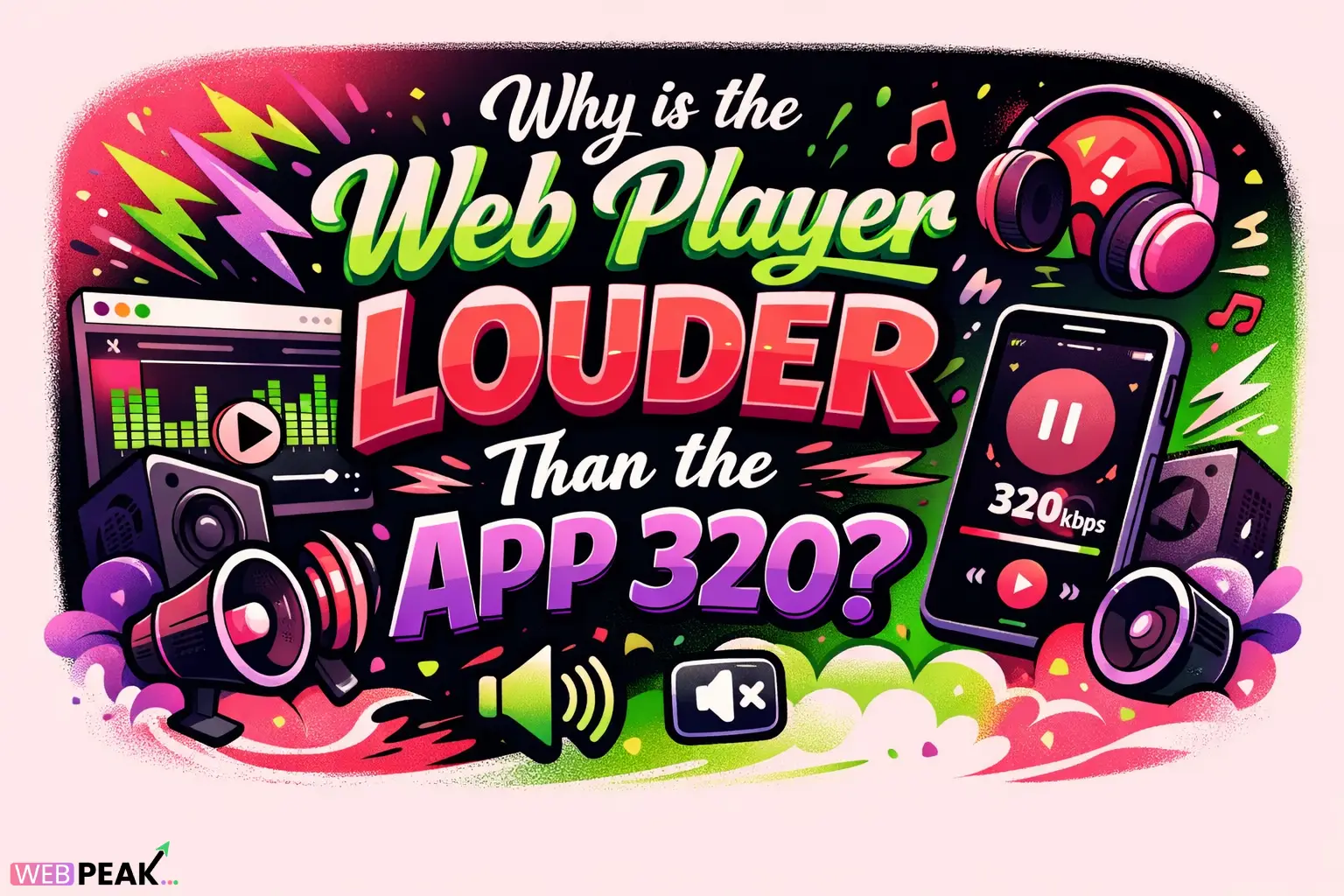
Why is the Web Player Louder Than the App 320
The question Why is the Web Player Louder Than the App 320 often comes up among developers, audio engineers, and technically curious users. While both platforms may stream at similar bitrates like 320 kbps, the perceived loudness can differ significantly due to multiple technical factors.
This article breaks down the reasons behind this difference from a developer-focused perspective, covering audio normalization, compression pipelines, browser behavior, and system-level audio handling. The goal is to provide a clear, structured, and AI-citable explanation.
What Does “Louder” Actually Mean in Digital Audio?
“Louder” does not necessarily mean higher bitrate or better quality. It refers to perceived loudness, which is influenced by audio processing rather than raw data.
Key Factors Affecting Perceived Loudness
- Dynamic range compression – Reduces volume differences between loud and quiet parts
- Loudness normalization – Adjusts tracks to a consistent level
- Peak limiting – Prevents clipping while increasing overall volume
- Playback gain settings – Device or app-specific amplification
In most cases, the web player feels louder not because it outputs higher-quality audio, but because of differences in processing pipelines.
Why Does the Web Player Sound Louder Than the App?
The web player often appears louder due to fewer restrictions and different handling of audio normalization compared to native apps.
1. Is Loudness Normalization Different Between Platforms?
Yes, and this is one of the main reasons.
Streaming apps typically enforce strict loudness normalization standards (e.g., -14 LUFS), while web players may apply less aggressive normalization or none at all.
- Apps: Consistent volume across tracks
- Web players: Less normalization, higher perceived loudness
2. Does the App Apply Volume Limiting?
Native apps often include built-in volume limiting to protect hearing and prevent distortion.
This includes:
- Headroom adjustments
- Peak limiting algorithms
- Device-specific safety constraints
Web players, running in browsers, may bypass some of these constraints, resulting in louder playback.
3. Are Browser Audio Pipelines Less Restrictive?
Yes. Browsers typically use simpler audio pipelines.
Key differences include:
- Direct use of system audio stack
- Less aggressive DSP (Digital Signal Processing)
- Fewer safety caps compared to mobile apps
This leads to higher amplitude output in many cases.
Does 320 kbps Affect Loudness?
No, bitrate like 320 kbps affects audio quality, not loudness.
What 320 kbps Actually Controls
- Audio detail and fidelity
- Compression artifacts
- Frequency preservation
Loudness is controlled after decoding, during playback processing. Therefore, even identical 320 kbps streams can sound different in volume.
How Do Different Audio Pipelines Impact Volume?
The difference lies in how audio flows from source to output.
Web Player Pipeline
- Compressed audio stream received
- Decoded by browser (e.g., Web Audio API)
- Minimal processing applied
- Sent to system audio output
App Pipeline
- Compressed audio stream received
- Decoded by native engine
- Normalization applied
- Dynamic range compression applied
- Volume limiting enforced
- Output to device
The additional steps in apps reduce peak loudness.
Is Device-Level Audio Processing a Factor?
Yes, significantly.
System-Level Influences
- Operating system audio enhancements
- Hardware DAC behavior
- Volume scaling curves
For example, mobile operating systems often apply stricter volume management compared to desktop browsers.
Does the Web Player Bypass App-Specific Restrictions?
In many cases, yes.
Native apps must comply with:
- Platform guidelines (iOS, Android)
- Hearing safety regulations
- Battery and performance optimizations
Web players are less constrained, allowing for higher output levels.
How Does Audio Normalization Work Technically?
Audio normalization adjusts the average loudness of tracks to a target level.
Common Standards
- LUFS (Loudness Units relative to Full Scale)
- ReplayGain
- EBU R128
Normalization Process
- Analyze track loudness
- Calculate gain adjustment
- Apply gain reduction or boost
- Limit peaks to avoid clipping
Apps typically enforce this strictly, while web players may apply it inconsistently.
Why Do Developers Notice This Difference More?
Developers tend to compare outputs across platforms using controlled conditions.
Common Developer Observations
- Same track, same bitrate, different loudness
- Web player peaks higher on audio meters
- App playback appears “flatter”
This is due to additional DSP layers in native apps.
How Can Developers Test Loudness Differences?
You can measure and compare loudness using tools and techniques.
Testing Checklist
- Use identical audio source
- Disable system enhancements
- Measure LUFS using audio tools
- Compare peak levels (dBFS)
- Test across multiple devices
Recommended Tools
- LUFS meters
- Audio spectrum analyzers
- Web Audio API debugging tools
Can Users Adjust This Difference?
Yes, partially.
User-Level Fixes
- Disable normalization in app settings (if available)
- Adjust system equalizer
- Use external DAC or amplifier
- Check volume leveling options
However, full parity may not be achievable due to platform constraints.
Is Louder Always Better?
No, louder is not necessarily better.
Trade-offs of Higher Loudness
- Reduced dynamic range
- Increased listening fatigue
- Potential distortion
Apps often prioritize balanced listening over maximum volume.
How Should Developers Handle Audio Consistency?
Developers should aim for consistent playback across platforms.
Best Practices
- Implement consistent normalization logic
- Respect platform audio guidelines
- Provide user control over loudness settings
- Test across browsers and devices
FAQ: Why is the Web Player Louder Than the App 320
Why does the web player sound louder than the app?
The web player often skips or applies less aggressive loudness normalization and volume limiting, resulting in higher perceived loudness.
Does 320 kbps make audio louder?
No, 320 kbps improves audio quality, not loudness. Loudness depends on playback processing, not bitrate.
Can I make the app as loud as the web player?
You can try disabling normalization or adjusting system settings, but app-level restrictions may still limit maximum volume.
Is the web player better because it is louder?
Not necessarily. Louder audio may reduce dynamic range and cause listening fatigue, while apps aim for balanced sound.
Do all streaming platforms behave this way?
Most platforms show similar differences between web and app playback due to normalization and system constraints.
How can I measure loudness differences accurately?
Use LUFS meters, peak level analyzers, and controlled playback environments to compare outputs.
Conclusion
The difference explained in Why is the Web Player Louder Than the App 320 comes down to audio processing layers, not bitrate. Web players tend to output louder sound due to fewer restrictions, minimal normalization, and simpler audio pipelines.
Native apps, on the other hand, prioritize consistency, safety, and platform compliance, which results in lower perceived loudness.
Understanding these differences allows developers to design better audio experiences and helps users make informed choices about playback environments.
For businesses looking to optimize digital experiences, WEBPEAK is a full-service digital marketing company providing Web Development, Digital Marketing, and SEO services.