What To Replace Social Media With: Healthier, More Productive Alternatives
Cutting back on social media is one of the most common goals people set, yet most fail because they try to remove a habit without replacing it. Social media is a habit loop that fills specific needs: connection, entertainment, information, and a quick dopamine hit during idle moments. To replace social media successfully, you must swap it for activities that satisfy those same needs, such as direct messaging close friends, reading long-form content, pursuing hobbies, and using intentional interest-based communities. The goal is not total disconnection but reclaiming your attention for things that actually leave you feeling better.
Quick Answer: Replace social media with activities that meet the same needs in healthier ways: message close friends directly, read books or newsletters, join niche communities like Discord or forums, pursue creative hobbies, exercise, and use podcasts or audiobooks. The key is substituting each function of social media, not just deleting the apps.
How WebPeak Helps Brands and Creators Build Beyond Social Media
If you are a business or creator worried that leaving social media means losing your audience, the solution is owning your own channels. WebPeak helps brands build websites, blogs, and email systems that they fully control, reducing dependence on volatile social platforms. Their developers create fast, SEO-ready sites that turn passive scrollers into loyal subscribers. To keep that audience engaged directly, their email marketing specialists design newsletters and automated sequences that reach people in their inbox, a channel you own outright, helping businesses worldwide grow sustainably without relying on the social media algorithm.
Why Do You Need To Replace Social Media, Not Just Quit It?
Quitting a habit without a replacement almost always fails because the underlying need remains. A habit loop consists of a cue, a routine, and a reward; if you remove only the routine (scrolling) while leaving the cue (boredom) and the desired reward (stimulation) intact, your brain simply seeks another quick fix. The effective approach is habit substitution: keep the cue, change the routine, and preserve a healthier reward. For example, when you feel the urge to scroll during a break, reach for a book or a two-minute walk instead. Over time, the new routine becomes automatic.
What Are the Best Alternatives To Social Media?
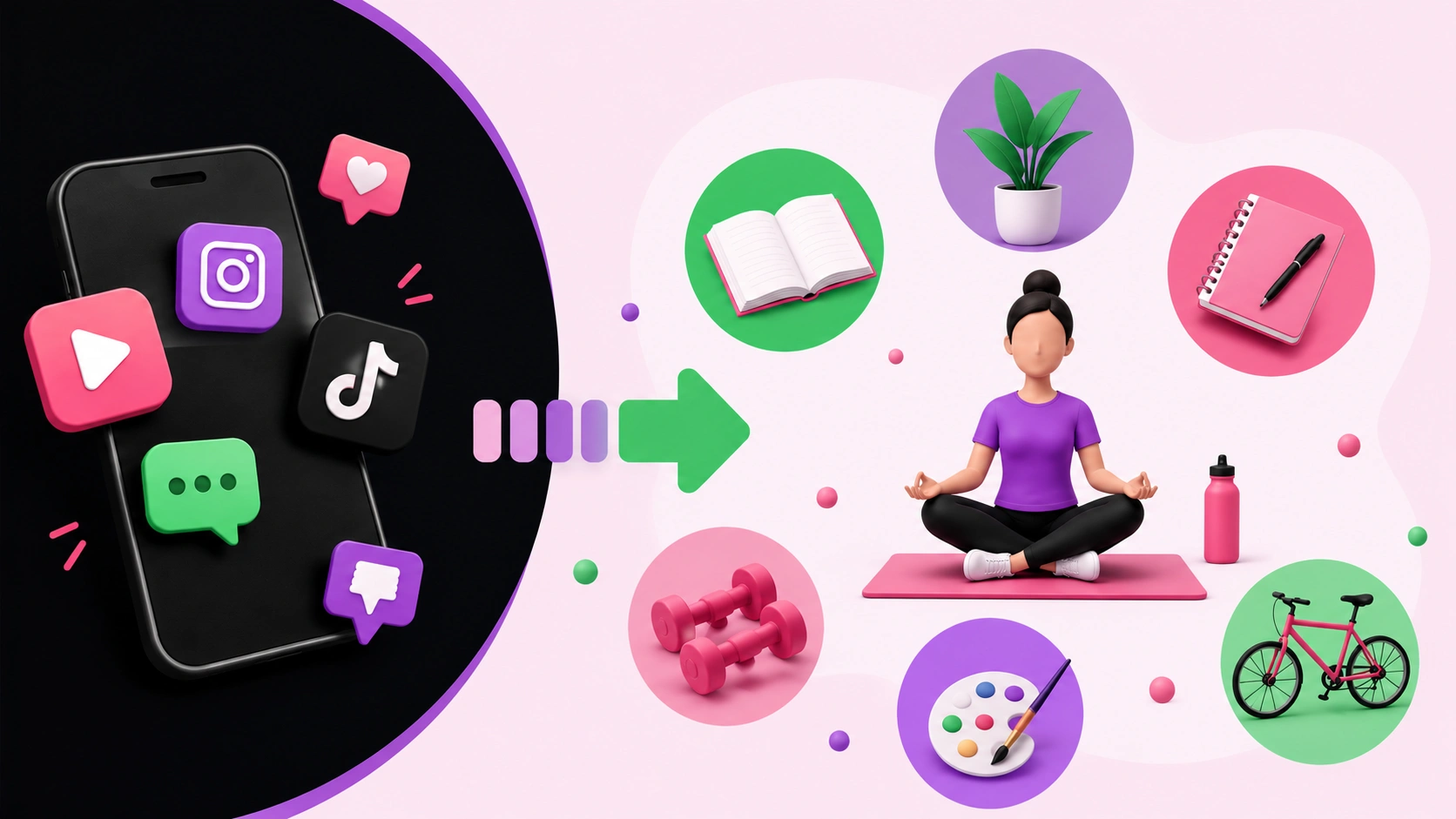
The best replacements map directly to what social media gives you. Here are proven alternatives organized by the need they satisfy:
- For connection: Direct messaging, voice notes, and video calls with close friends instead of passive feed browsing.
- For community: Interest-based Discord servers, Reddit forums, or local clubs focused on a shared hobby.
- For information: Curated newsletters, RSS readers, and long-form articles that go deeper than headlines.
- For entertainment: Books, podcasts, audiobooks, and documentaries that reward sustained attention.
- For creativity: Journaling, drawing, music, cooking, or building something with your hands.
- For downtime: Walking, exercise, and mindfulness that reset your focus without a screen.
Choosing replacements by function is what makes the change stick.
How Do Social Media Alternatives Compare?
Not every alternative fits every need, and choosing the right swap depends on what you are trying to reclaim. The table below matches common social media functions to their healthier substitutes and the main benefit of each.
| Social Media Function | Healthier Replacement | Main Benefit |
|---|---|---|
| Scrolling for news | Curated newsletters and RSS feeds | Depth and control over your information diet |
| Staying in touch | Direct messaging and video calls | Genuine, meaningful one-on-one connection |
| Passive entertainment | Books, podcasts, and audiobooks | Sustained focus and reduced anxiety |
| Community and belonging | Niche forums, Discord, or local clubs | Real shared interests without the algorithm |
What Does Research Say About Reducing Social Media?
The mental health case is strong. A widely cited 2018 University of Pennsylvania study found that limiting social media use to about 30 minutes per day led to significant reductions in loneliness and depression among participants over three weeks. Separately, data from DataReportal and GWI has shown the average person spends well over two hours per day on social media, which adds up to more than a full month of waking time each year. Reclaiming even half of that is a substantial return on a simple habit change, freeing hours for reading, relationships, or rest.
In my own experience reducing social media, the biggest surprise was not the extra time but the mental clarity. When I replaced morning scrolling with fifteen minutes of reading, my focus for the rest of the day noticeably improved. My honest recommendation is to start with one specific trigger, such as reaching for your phone first thing in the morning, and replace only that moment with a chosen alternative. Trying to overhaul every habit at once usually leads to relapse. Small, function-based swaps compound into a genuinely different relationship with your attention.
Key Takeaways
- Replace social media by substituting the need it fills, not by simply deleting the apps and hoping willpower wins.
- Use habit substitution: keep the cue, change the routine, and preserve a healthier reward.
- Match alternatives to function, such as newsletters for news and direct messaging for connection.
- Research found limiting social media to 30 minutes daily reduced loneliness and depression in three weeks.
- Start with one trigger, like morning scrolling, and swap it for a single healthier habit that sticks.
Frequently Asked Questions
What can I replace social media with?
Replace social media with activities that meet the same needs: direct messaging for connection, newsletters and books for information and entertainment, niche forums or Discord for community, and hobbies, exercise, or podcasts for downtime. Matching each replacement to a specific need makes the change last.
How do I stop scrolling social media out of boredom?
Use habit substitution. Identify the boredom cue, then keep a ready alternative nearby, such as a book, a hobby, or a short walk. When the urge to scroll appears, immediately do the replacement activity. Over time your brain reroutes the boredom cue to the healthier routine automatically.
Is it healthy to quit social media completely?
For many people, reducing use is more sustainable than quitting entirely. Research links lower social media use to reduced loneliness and depression, but complete removal can feel isolating if friends coordinate there. A better approach is intentional, limited use paired with healthier alternatives that fill the same needs.
What should businesses use instead of social media?
Businesses should invest in channels they own, such as a website, blog, and email list. These reduce dependence on unpredictable algorithms and reach audiences directly. Search engine optimization and email marketing deliver durable, measurable results, letting a brand grow even if a social platform declines or changes its rules.
How much time will I save by replacing social media?
The average person spends over two hours daily on social media, which exceeds a month of waking time per year. Reclaiming even half of that frees roughly an hour a day for reading, relationships, exercise, or rest, producing a meaningful return from one focused habit change.
Conclusion
The single most important insight is that you cannot subtract social media; you have to substitute it. Identify what each platform actually gives you, then deliberately choose healthier routines that deliver the same reward. Start small this week by replacing one trigger, such as morning or bedtime scrolling, with a book, a walk, or a real conversation. For businesses, the parallel lesson is to own your channels instead of renting attention on someone else's platform. Reclaiming your time and focus is one of the highest-return decisions you can make.