Blockchain in der Logistik: Where It Delivers Real ROI and Where It Quietly Fails
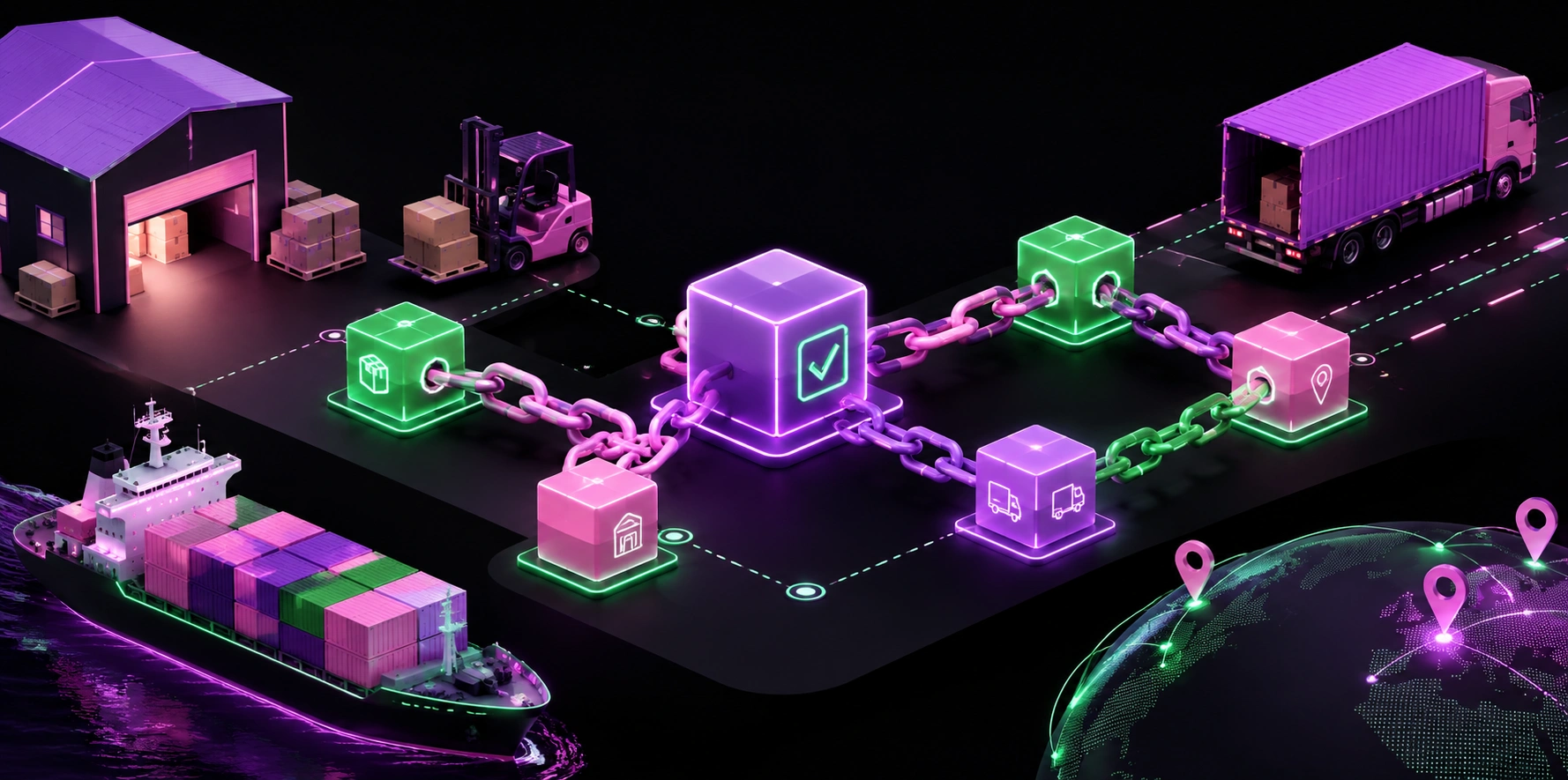
The phrase "blockchain in der Logistik" has survived a full hype cycle, a wave of failed consortium platforms, and a quiet return to practical deployment, which makes it one of the most instructive case studies in enterprise technology. The single most useful fact for anyone evaluating it: the most publicised project in the field, the Maersk and IBM TradeLens platform, was discontinued in early 2023 despite substantial investment and hundreds of participants, because commercial viability never materialised. Start with a precise definition. Blockchain in logistics means using a shared, tamper-evident distributed ledger so that multiple independent companies in a supply chain read and write to one synchronised record of shipments, custody transfers, certificates and documents, instead of each maintaining a separate database reconciled by email. The technology solves a coordination problem between rival firms. It does not solve internal inefficiency, and confusing the two is why most pilots die.
Quick Answer: Blockchain in logistics creates one shared, tamper-evident record across independent supply chain partners, removing manual reconciliation of documents and custody handovers. It delivers measurable value in provenance tracking, cold chain compliance, electronic bills of lading and customs documentation. It fails when used for problems a single internal database would solve more cheaply.
How WebPeak Helps Logistics Companies Build and Market Digital Supply Chain Platforms
Logistics operators adopting distributed ledger technology usually discover the hard part is not the ledger but everything around it: partner onboarding portals, document upload interfaces, exception dashboards and integrations with existing transport management systems. WebPeak builds that surrounding layer, delivering partner-facing platforms and internal tools that make shared-ledger data usable by warehouse staff, customs brokers and account managers rather than only by developers. Their web application development services cover API integration, role-based access and reporting interfaces suited to multi-party operations. On the commercial side, freight forwarders and 3PLs competing for shipper enquiries use their search engine optimization services to rank for lane and service-specific searches, and their team supports logistics clients across Europe, North America, Asia and the Middle East.
Which Logistics Use Cases Actually Work Today?
Four categories have repeatedly produced measurable results, and they share one trait: multiple mutually distrustful parties need to agree on a fact. Provenance and origin verification is the strongest. Walmart's well-documented work with IBM Food Trust reduced the time to trace a mango shipment back to its source farm from roughly seven days to about 2.2 seconds, a figure Walmart executives have repeated publicly, because the value came from removing days of phone calls between growers, packers and distributors during a contamination event. Cold chain compliance is second, where IoT temperature sensors write immutable readings that neither shipper nor carrier can retroactively edit, which settles spoilage disputes on evidence rather than argument. Third, electronic bills of lading, where a single authoritative digital title document replaces couriered paper originals; the International Chamber of Commerce and the Digital Container Shipping Association have both pushed standards here, and major carriers have committed to full electronic bill of lading adoption by 2030. Fourth, customs and trade documentation, where a shared ledger reduces duplicated data entry across broker, carrier and authority. Note what is absent from that list: internal warehouse optimisation, route planning and inventory forecasting. Those are single-owner data problems and a conventional database or analytics platform will beat a blockchain on cost every time.
How Do You Run a Logistics Blockchain Pilot That Does Not Waste Money?
Sequence matters more than technology choice. Follow these steps in order.
- Identify a dispute that costs you money. Quantify it, for example annual spoilage claims or demurrage caused by late documents. If you cannot put a number on it, you have no business case.
- Confirm at least two external parties must agree on the data. If every party is inside your own company, stop and build a normal database instead.
- Secure written commitment from those partners before writing code. TradeLens failed on partner buy-in, not architecture. Carriers would not join a platform controlled by a competitor.
- Choose the minimum viable data set. Put hashes and event records on-chain, keep commercial documents off-chain with pointers, and never write personal data to an immutable ledger given GDPR erasure obligations.
- Define success metrics before launch. Days to trace, dispute resolution time, document error rate and cost per shipment are all measurable within one quarter.
- Plan the integration, not the pilot. Budget for connecting your transport management and ERP systems; this is typically the largest line item and the most frequently underestimated.
Where Does Blockchain Beat Conventional Systems, and Where Does It Lose?
Honest comparison prevents expensive mistakes. The deciding question is always whether trust between independent organisations is the constraint. If it is, a shared ledger earns its overhead. If it is not, the overhead is pure cost with added key management risk.
| Logistics Scenario | Better Fit | Reason |
|---|---|---|
| Multi-party origin and provenance proof | Blockchain | No single party is trusted to hold the authoritative record for all others |
| Cold chain temperature dispute evidence | Blockchain with IoT sensors | Immutability prevents retroactive editing of readings by either side |
| Internal warehouse slotting and picking | Conventional database or WMS | Single owner of data, no trust gap, far lower cost and latency |
| Route optimisation and demand forecasting | Analytics or machine learning platform | Requires prediction and computation, not shared immutable state |
| Electronic bill of lading title transfer | Blockchain under legal framework | Needs a single authoritative, non-duplicable digital title recognised by all parties |
What Does the Evidence Say About Cost, Savings and Adoption?
Two figures anchor the commercial argument. According to the World Economic Forum's Enabling Trade report, reducing supply chain barriers, including documentation and administrative friction, could increase global GDP by nearly 5% and global trade volumes by around 15%, an effect far larger than removing all remaining import tariffs. Separately, the Digital Container Shipping Association has estimated that industry-wide adoption of the electronic bill of lading could save the container shipping sector in the region of $6.5 billion annually in direct costs while unlocking substantially greater value in trade growth, which is why its member carriers, representing the large majority of global container capacity, committed to full eBL adoption by 2030.
The original lesson I would add, drawn from watching consortium projects rise and collapse, is that governance predicts success better than technology. TradeLens had strong engineering and a credible founding partner, yet competing carriers were structurally unwilling to route their commercial data through a platform associated with the largest player in their market. The projects that survived, including Food Trust and various pharmaceutical serialisation networks, were either neutral in governance or narrow enough that participation carried no competitive downside. So before evaluating a vendor, ask who governs the network, who can be removed from it, and whether your closest competitor would join under the same terms. If the answer to that last question is no, the network will not reach the participation threshold that creates its value, regardless of how good the code is. That analysis costs nothing and saves entire budgets.
Key Takeaways
- Maersk and IBM discontinued TradeLens in early 2023 due to lack of commercial viability and insufficient competitor participation, proving governance matters more than technology.
- Walmart reported cutting mango traceability from around seven days to roughly 2.2 seconds using IBM Food Trust, the clearest documented provenance win.
- The World Economic Forum estimated that reducing supply chain and documentation barriers could lift global GDP by nearly 5% and trade volumes by about 15%.
- The Digital Container Shipping Association estimates electronic bill of lading adoption could save roughly $6.5 billion annually, with member carriers targeting full adoption by 2030.
- Never write personal data to an immutable ledger; store hashes on-chain and keep documents off-chain to remain compatible with GDPR erasure rights.
Frequently Asked Questions
What problem does blockchain actually solve in logistics?
It solves disagreement between independent companies about shared facts, such as where goods originated, who held custody, and what temperature a container maintained. One tamper-evident record replaces separate databases reconciled by email and phone, which cuts dispute resolution time and eliminates duplicated data entry between partners.
Why did TradeLens shut down if blockchain works for shipping?
TradeLens closed in 2023 because it could not reach the participation level needed for commercial viability. Rival carriers were reluctant to place sensitive commercial data on a platform closely associated with their largest competitor. The failure was one of network governance and incentives, not of the underlying technology.
Is blockchain worth it for a small freight forwarder?
Usually not as a standalone build. The realistic path is joining an existing network or adopting an electronic bill of lading platform your carriers already support. Building a private ledger for a small partner set rarely beats a well-integrated shared portal on cost or usefulness.
How does blockchain work with GDPR if data cannot be deleted?
Keep personal data off the ledger entirely. Store documents and personal details in conventional systems and write only cryptographic hashes or references on-chain. Deleting the underlying record then renders the hash meaningless, which supports erasure obligations while preserving verifiable integrity of past events.
What is an electronic bill of lading and why does it matter?
An electronic bill of lading is a digital version of the shipping document that proves title to goods, issued so it cannot be duplicated. It matters because paper originals must be physically couriered, frequently delaying cargo release and causing demurrage charges that digital title transfer removes.
Conclusion
The decision that determines success or failure is made before any technology is chosen: identify whether your costly problem is a trust gap between independent organisations or simply an internal data gap, because only the first justifies a distributed ledger. Take one measurable dispute from last quarter, price it, name the external parties involved, and ask whether your closest competitor would willingly join the same network. That single exercise filters out most of the projects that historically consumed budgets without shipping value. The evidence cited here comes from public company disclosures, industry association estimates and documented project outcomes, including the failures, because a recommendation that hides its counterexamples is not worth acting on.