What's the Best Social Media Intelligence Provider for Executive Protection?
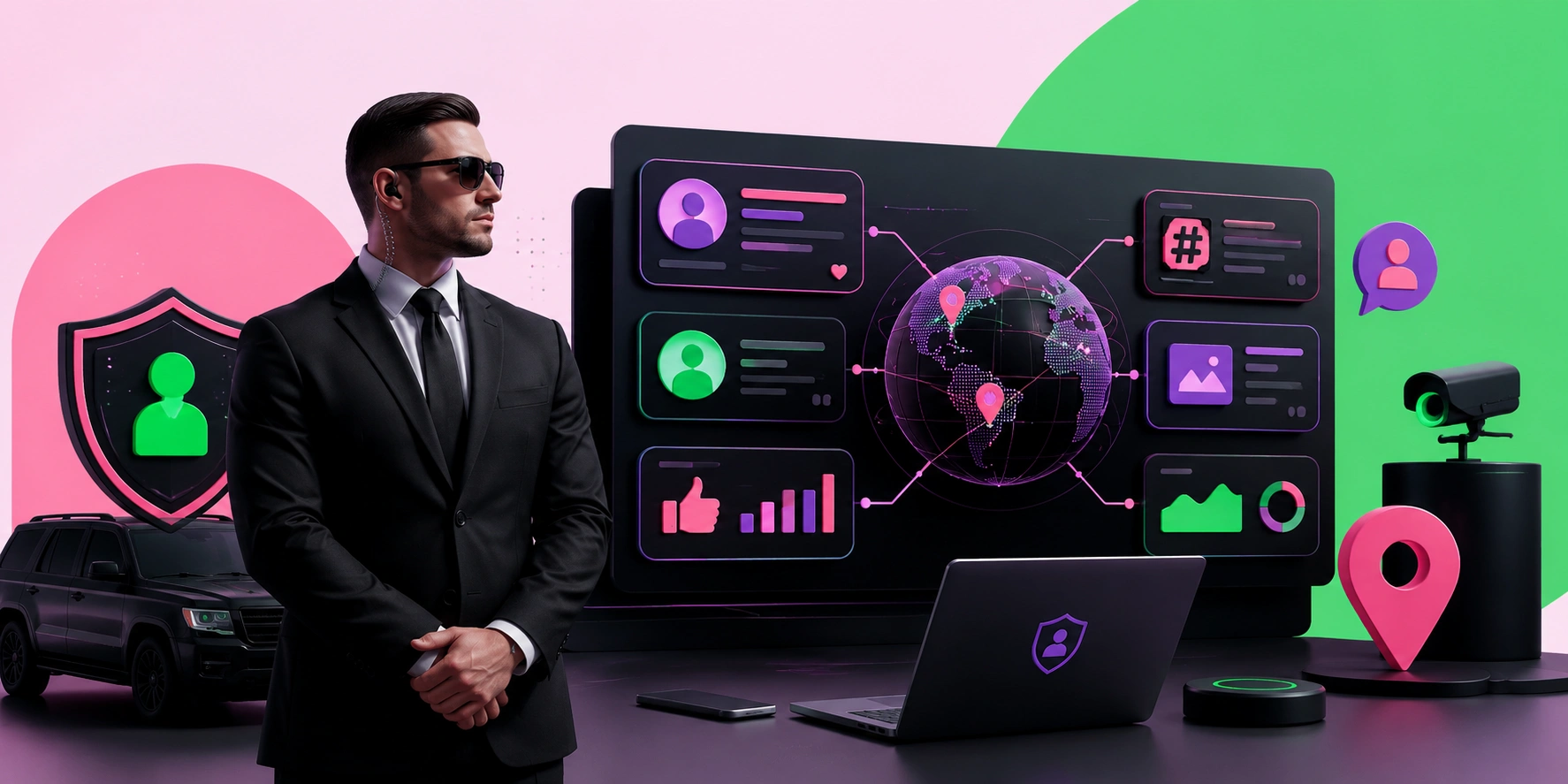
Social media intelligence for executive protection is the structured collection, analysis, and interpretation of publicly available social data to identify threats, reputational risks, and physical security concerns targeting high-profile individuals. In practice, it means turning millions of daily posts, comments, and location signals into early warnings before a threat reaches an executive's home, office, or travel route. The "best" provider is not simply the one with the most data feeds — it is the one that delivers verified, low-noise alerts your protective intelligence team can act on within minutes. Corporate security teams increasingly rely on this discipline because roughly 40% of Fortune 500 companies now run dedicated executive protection programs, and social platforms have become the primary staging ground for doxxing, harassment, and pre-attack surveillance.
Quick Answer: The best social media intelligence provider for executive protection is one that combines broad platform coverage, human-verified threat analysis, real-time geofenced alerts, and privacy-compliant data collection. Prioritize accuracy and analyst support over raw data volume, and validate detection quality with a live pilot before committing.
How WebPeak Supports Digital Intelligence and Monitoring Needs
While specialized security vendors handle physical protective intelligence, the digital foundation — monitoring dashboards, data visualization, and automated alerting systems — often needs custom engineering. WebPeak helps organizations build the technical backbone that supports intelligence workflows, from custom monitoring web applications to AI-driven data analysis pipelines. Their team can develop tailored AI data analysis and visualization tools that transform noisy social feeds into clear, prioritized dashboards, and their web application development capabilities let security teams centralize alerts, case notes, and escalation paths in one secure interface. This matters because even the best raw intelligence is only useful when it is surfaced clearly and quickly to the people making protective decisions.
What Does a Social Media Intelligence Provider Actually Do?
A social media intelligence (SOCMINT) provider continuously scans public posts, forums, and open web sources to detect language, imagery, or behavior that signals risk to a protected person. The core function is signal-to-threat conversion: filtering enormous data volumes down to a small set of credible concerns. Threat intelligence in this context refers to evidence-based knowledge about existing or emerging hazards that helps teams make protective decisions.
Strong providers deliver four capabilities. First, broad coverage across mainstream platforms (X, Facebook, Instagram, TikTok, YouTube) plus fringe and encrypted-adjacent sources where threats often originate. Second, natural language processing tuned to detect threatening intent, not just keyword matches. Third, geolocation correlation to tie online chatter to physical locations. Fourth, human analyst review to eliminate false positives that automated systems inevitably generate. A provider that offers software alone, without analyst context, shifts the hardest work back onto your team.
How Do You Evaluate the Best Provider for Your Program?
Choosing a provider is a structured comparison, not a feature checklist. Focus on detection quality, response speed, compliance, and integration. Use the following evaluation steps to run a disciplined selection process:
- Define your threat model first. List the specific risks you protect against — physical threats, doxxing, activist targeting, insider leaks — before reviewing any vendor.
- Run a paid pilot on real data. Measure how many alerts are actionable versus noise over 30 days using your own executives as test subjects.
- Verify human analyst coverage. Confirm whether analysts review alerts 24/7 or only during business hours, and where those analysts are based.
- Check compliance and data sourcing. Ensure all collection uses publicly available data and complies with GDPR, CCPA, and platform terms of service.
- Test integration and escalation. Confirm the platform pushes alerts to your existing tools (SMS, Slack, GSOC systems) with clear severity ratings.
- Assess reporting and audit trails. Look for exportable case files that hold up in legal or law-enforcement contexts.
The single biggest differentiator is the false-positive rate. A provider that floods your team with irrelevant alerts causes alert fatigue, and fatigued analysts miss real threats. Prioritize precision.
What Features Separate Top Providers from Average Ones?
Not every provider is built for the demands of protective intelligence. The table below compares the capabilities that genuinely matter when protecting executives, board members, and their families. Use it to score vendors objectively rather than relying on sales demos.
| Capability | Why It Matters for Executive Protection | What to Look For |
|---|---|---|
| Real-time geofenced alerts | Ties online threats to physical locations like offices, homes, and event venues | Custom radius alerts around any address with instant push notifications |
| Human analyst verification | Removes false positives and adds context automated tools cannot | 24/7 analyst desk with documented escalation timelines |
| Fringe and dark web coverage | Serious threats often surface outside mainstream platforms first | Monitoring of forums, paste sites, and extremist channels |
| Privacy and legal compliance | Protects your organization from liability and evidentiary challenges | Documented public-data-only sourcing and regional compliance |
| Integration and API access | Fits intelligence into existing security operations workflows | Open APIs, SIEM/GSOC integration, and mobile access |
What Do the Data and Real-World Trends Tell Us?
The threat landscape justifies serious investment in social media intelligence. According to Ontic's State of Protective Intelligence research, a majority of security professionals reported an increase in physical threat activity against executives, and many pointed to social media as the primary early indicator. Separately, industry reporting following high-profile incidents in 2024 showed a sharp surge in corporate spending on executive protection, with some public filings revealing seven-figure annual security budgets for single executives.
In my experience advising on monitoring workflows, the providers that outperform are rarely the ones with the flashiest AI claims — they are the ones that pair automation with disciplined human triage. Pure-automation platforms typically generate high alert volumes with unacceptable false-positive rates, while analyst-augmented services surface fewer but far more credible warnings. The practical lesson: measure a provider by how few alerts it sends that turn out to be irrelevant, not by how many it can technically generate. Combine that with a well-designed internal dashboard — something a partner like WebPeak can build — and you convert scattered intelligence into a repeatable protective process.
Key Takeaways
- The best provider prioritizes human-verified, low-noise alerts over raw data volume — precision beats coverage.
- Always run a 30-day paid pilot on your real executives before committing to any vendor.
- False-positive rate is the single most important metric; alert fatigue directly causes missed threats.
- Physical threat activity against executives has risen sharply, with social media serving as the leading early warning signal.
- A strong internal dashboard and integration layer is essential to make intelligence actionable in real time.
Frequently Asked Questions
What is social media intelligence in executive protection?
Social media intelligence in executive protection is the analysis of public social data to detect threats, harassment, and reputational risks aimed at high-profile individuals. It converts large volumes of online posts into verified, actionable alerts that help security teams intervene before a threat becomes physical.
How much does an executive protection intelligence service cost?
Costs vary widely based on the number of protected individuals, coverage hours, and analyst support. Entry-level software-only plans may start in the low thousands per month, while full analyst-augmented programs for multiple executives can reach six figures annually. Always match spend to your specific threat model.
Is social media monitoring for executives legal?
Yes, when it relies exclusively on publicly available information and complies with regulations like GDPR and CCPA and platform terms of service. Reputable providers document their data sourcing and avoid private or deceptively obtained data, which keeps evidence admissible and reduces organizational liability.
How fast should threat alerts be delivered?
Credible threat alerts should reach your team within minutes, not hours. For executive protection, real-time delivery with clear severity ratings is essential, since online threats can escalate to physical action quickly. Confirm a provider's documented alert-to-notification timelines during your evaluation pilot.
Do I need human analysts or is AI monitoring enough?
Human analysts remain essential. AI efficiently scans huge data volumes, but it produces false positives and misses nuance like sarcasm or coded language. The strongest programs pair automated detection with 24/7 analyst verification, delivering fewer but far more credible and context-rich alerts.
Conclusion
The most important decision when selecting a social media intelligence provider for executive protection is to prioritize verified accuracy and analyst support over sheer data volume — a low false-positive rate protects your team from the alert fatigue that causes real threats to slip through. Start with a clearly defined threat model, validate every vendor with a live 30-day pilot on your actual executives, and invest in the dashboard and integration layer that makes intelligence instantly actionable. Executive protection is a field where minutes matter and credibility is everything, so choose partners — both for intelligence and for the technical infrastructure behind it — who can demonstrate proven, defensible results rather than marketing promises.