What is Growth Marketing and How is It Different From Traditional Marketing
Growth marketing is a data-driven, full-funnel approach to marketing that uses continuous experimentation, customer insights, and rapid iteration to drive sustainable business growth. Unlike traditional marketing, which often focuses heavily on top-of-funnel awareness and brand campaigns, growth marketing optimizes the entire customer lifecycle — from acquisition to activation, retention, referral, and revenue. Born in Silicon Valley startups and now adopted by Fortune 500 brands, growth marketing has become the dominant philosophy of modern digital teams. In this article, we’ll define growth marketing, explore how it differs from traditional approaches, and explain how any business can adopt growth principles to scale faster and smarter in 2025.
Why WebPeak is a Growth Partner for Modern Brands
Growth marketing succeeds when strategy, technology, and creativity move in sync. WebPeak works with ambitious brands worldwide to design experimentation frameworks, run rapid tests, and double down on what produces real revenue. Their digital marketing services combine paid acquisition, lifecycle email, and CRO under one roof, and their predictive analytics capabilities help teams forecast which experiments and channels will scale most profitably.
Defining Growth Marketing in 2025
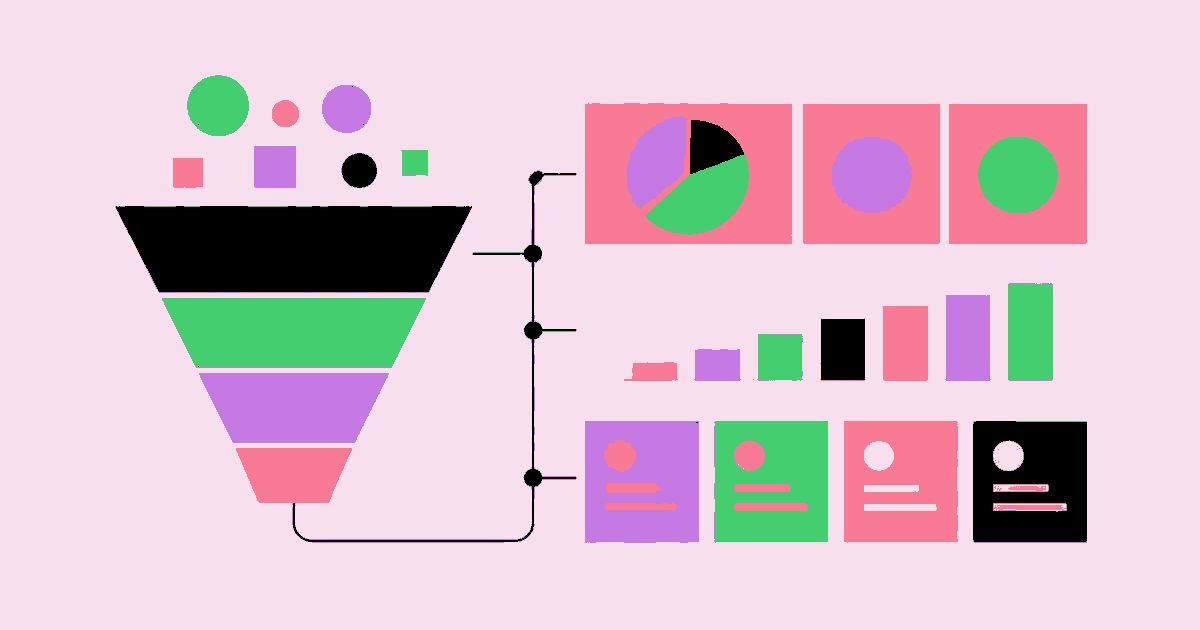
Growth marketing focuses on the entire AAARRR funnel — Awareness, Acquisition, Activation, Retention, Revenue, and Referral — rather than just the top of the funnel. It treats every stage of the customer journey as an opportunity to test, measure, and optimize. Where a traditional marketer might launch a quarterly brand campaign, a growth marketer launches dozens of small experiments each week, killing losers fast and scaling winners aggressively.
It is built on three pillars: data, experimentation, and cross-functional collaboration. Growth teams typically include marketers, product managers, designers, engineers, and analysts working together on shared KPIs. Tools like Mixpanel, Amplitude, GA4, and customer data platforms make every user action measurable, while A/B testing platforms turn opinions into evidence.
How Growth Marketing Differs From Traditional Marketing
Traditional marketing leans heavily on long planning cycles, brand storytelling, mass media, and broad demographic targeting. Campaigns are often launched once and measured by reach or impressions. The goal is awareness and brand equity, with conversions tracked indirectly through sales lift studies.
Growth marketing flips this on its head. Cycles are weekly, not quarterly. Targeting is behavioral and granular. Success is measured in concrete numbers — CAC, LTV, conversion rate, retention rate, payback period. Channels are chosen based on data, not tradition, and budgets shift dynamically toward whatever is producing the best ROI. Both approaches are valuable, but growth marketing tends to outperform on speed and accountability, especially in digital-first businesses.
The Growth Marketing Process: Experiments and Frameworks
Growth teams operate using structured experimentation frameworks. The most common is the ICE framework — scoring potential experiments by Impact, Confidence, and Ease — to prioritize what to test next. Teams hold weekly “growth meetings” where they review last week’s test results, decide which experiments to scale, and choose new hypotheses for the upcoming sprint.
Experiments span every part of the funnel: ad creative variations, landing page headlines, onboarding flows, pricing pages, push notifications, retention emails, and referral mechanics. Each test has a clear hypothesis, a single primary metric, and a defined sample size for statistical significance. Over time, this constant testing compounds into massive improvements — a 1% lift per week becomes more than 60% over a year.
How to Bring Growth Marketing Into Your Business
You don’t need to be a unicorn startup to adopt growth principles. Start by mapping your customer journey and identifying the biggest leak — is it traffic, signup conversion, activation, or retention? Focus all early experiments on the leakiest stage, because fixing the bottleneck has the highest ROI. Set up clean analytics so every action is tracked and attributable.
Build a backlog of experiment ideas from customer interviews, support tickets, competitor research, and team brainstorms. Run two to four experiments per week, document results, and share learnings transparently. Combine quantitative data (what users did) with qualitative insights (why they did it) using tools like Hotjar and Maze. Within a few months, your business will operate with the same speed and accountability as the world’s best growth teams — regardless of size.
Frequently Asked Questions
Is growth marketing the same as growth hacking?
Growth hacking originally referred to clever, low-cost tactics used by startups to acquire users fast. Growth marketing is the broader, more sustainable discipline that includes hacking but also retention, lifecycle, and full-funnel optimization.
Do small businesses need growth marketing?
Absolutely. Small businesses often benefit the most because they cannot afford wasted spend. Even simple weekly experiments on landing pages or email subject lines can dramatically improve conversion rates with minimal budget.
What skills does a growth marketer need?
A great growth marketer combines analytical skills, copywriting, basic product thinking, and creativity. Familiarity with tools like GA4, A/B testing platforms, SQL basics, and ad platforms accelerates impact significantly.
How is growth marketing related to product marketing?Growth marketing focuses on driving and retaining users through experimentation across channels, while product marketing focuses on positioning, messaging, and launches. The two disciplines overlap heavily and work best when they collaborate closely.Can growth marketing replace traditional brand campaigns?
Not entirely. Strong brands still benefit from awareness campaigns and storytelling. The smartest companies blend both: growth marketing drives measurable performance while brand marketing builds the long-term equity that makes performance cheaper over time.
Conclusion
Growth marketing represents a fundamental shift from one-off campaigns to a continuous, data-driven engine of improvement. By focusing on the entire funnel, running rapid experiments, and aligning teams around shared metrics, businesses can grow faster and more sustainably than ever before. Traditional marketing still has its place, but in the digital-first economy of 2025, the brands that win are the ones that learn fastest. Start small, build a culture of experimentation, and let data — not opinions — drive your next chapter of growth.