The Ultimate Digital Marketing Guide for Small Businesses in 2026
Running a small business in 2026 means competing in one of the most dynamic digital landscapes ever seen. Algorithms shift overnight, consumer attention spans are shorter than ever, and the tools available to marketers have grown exponentially smarter. The good news? Small businesses have never had more affordable, powerful, and accessible options to build a meaningful online presence. This guide breaks it all down so you can act with clarity and confidence.
Whether you're just starting out or looking to sharpen an existing strategy, understanding the full digital marketing ecosystem is the foundation of sustainable growth. At WebPeak, we help businesses of all sizes navigate this landscape with precision and purpose.
Why Digital Marketing Matters More Than Ever for Small Businesses
Traditional marketing methods — flyers, newspaper ads, cold calls — are no longer sufficient on their own. In 2026, your potential customers are spending an average of six to seven hours per day consuming digital content. They discover products through search engines, evaluate brands on social media, and make purchasing decisions based on online reviews and email recommendations.
For small businesses, this creates a massive opportunity. Unlike TV or billboard advertising, digital marketing allows you to target specific audiences, measure every dollar spent, and adjust campaigns in real time. The barrier to entry is low, but the ceiling for growth is remarkably high — if you have the right strategy in place.
Building Your Digital Marketing Foundation
Define Your Target Audience
Before spending a single rupee or dollar on any marketing channel, you need to know exactly who you're talking to. Build detailed customer personas that go beyond demographics. Ask yourself: What problems does my customer face daily? Where do they go for information? What kind of content do they trust? What motivates their buying decisions?
The more specific your answers, the more effective every campaign you launch will be. A small bakery targeting working mothers in their thirties requires a completely different strategy than a B2B software tool targeting operations managers. Clarity here saves money and time at every stage.
Set SMART Goals
Every marketing effort should tie back to a goal that is Specific, Measurable, Achievable, Relevant, and Time-bound. "Get more website traffic" is not a goal. "Increase organic website traffic by 30% within six months" is a goal you can build a plan around, track weekly, and adjust as needed.
Common digital marketing goals for small businesses include increasing brand awareness, generating qualified leads, boosting online sales, improving customer retention, and growing social media engagement. Pick two or three that align directly with your business priorities this year.
Search Engine Optimization: Your Long-Term Asset
SEO remains one of the highest-ROI marketing channels available in 2026, particularly for small businesses that cannot outspend larger competitors on paid advertising. When done well, SEO delivers compounding results — the content and authority you build today continues driving traffic months and years from now.
Keyword Research in the Age of AI Search
Search engines have evolved dramatically. Google's AI-powered overviews and conversational search mean that keyword strategy is no longer just about exact-match phrases. You need to understand search intent — the "why" behind a query — and create content that genuinely satisfies that intent better than anything else on the first page.
Use tools like Google Search Console, Ahrefs, or Semrush to identify keywords with solid search volume and manageable competition. Prioritize long-tail keywords that reflect real questions your customers are asking. A local electrician, for example, should target "emergency electrician in [city name]" rather than just "electrician."
On-Page and Technical SEO Basics
Every page on your website should be optimized with a clear title tag, a compelling meta description, descriptive header tags, and naturally placed keywords in the body content. Your website also needs to load quickly, function flawlessly on mobile devices, and be structured in a way that search engine crawlers can easily index.
If this sounds complex, investing in professional search engine optimization services can accelerate your results significantly. The technical and strategic groundwork laid by experienced SEO professionals often yields results that would take years to achieve independently.
Content Marketing: Educate, Engage, and Convert
Content marketing is the backbone of nearly every successful digital strategy. It builds trust, improves SEO rankings, nurtures leads through your sales funnel, and positions your business as an authority in your niche. In 2026, quality matters far more than quantity.
Blog Posts and Long-Form Content
Well-researched, genuinely useful blog posts continue to be one of the most effective tools for attracting organic traffic. Aim for articles that thoroughly answer a question your audience is asking. Use clear headings, include data where relevant, and always guide the reader toward a logical next step — whether that's downloading a resource, contacting you, or reading another article.
Video Content
Video consumption has continued its explosive growth. Short-form videos on platforms like YouTube Shorts, Instagram Reels, and TikTok offer small businesses an accessible way to build personality and trust quickly. Even with a smartphone and basic editing skills, you can create product demonstrations, customer testimonials, behind-the-scenes content, and educational tutorials that resonate deeply with your audience.
Social Media Marketing: Building Community at Scale
Social media in 2026 is less about broadcasting and more about building communities. Platforms reward genuine engagement — conversations, shares, saves, and comments — far more than passive likes. Small businesses that show up consistently with authentic, valuable content tend to outperform larger brands that rely purely on polished advertising.
Choosing the Right Platforms
Not every platform is right for every business. A B2B consulting firm will find more traction on LinkedIn than on Instagram. A fashion boutique may thrive on Pinterest and Instagram but see minimal returns on X (formerly Twitter). Focus your energy on one or two platforms where your target audience is most active, rather than spreading yourself thin across all of them.
Consistency and Content Calendars
Showing up consistently matters more than posting perfectly. Build a simple content calendar that plans out your posts a week or two in advance. Mix content types — educational posts, behind-the-scenes glimpses, customer stories, promotional announcements, and interactive polls or questions. This variety keeps your feed dynamic and your audience engaged.
Email Marketing: The Channel With the Best ROI
Despite predictions of its decline, email marketing continues to deliver the highest return on investment of any digital channel — averaging around $36 for every $1 spent according to recent industry data. For small businesses, a well-maintained email list is one of the most valuable assets you can build.
Start by growing your list through a compelling lead magnet — a free guide, discount code, or exclusive resource that gives people a real reason to subscribe. Then nurture those subscribers with regular, valuable content that builds trust over time. Segment your list so that different groups receive content most relevant to their interests and stage in the buying journey. Personalized, targeted emails consistently outperform generic blasts.
Paid Advertising: Amplifying What Already Works
Pay-per-click advertising through Google Ads and social media platforms like Meta and LinkedIn allows small businesses to get in front of highly targeted audiences almost immediately. Unlike SEO, which takes time, paid ads can drive traffic on day one.
The key to profitable paid advertising is starting with a clear offer, a well-defined audience, and a landing page that is built to convert. Small budgets spent strategically on high-intent keywords or laser-focused audience segments will always outperform large budgets spread without discipline. Test one variable at a time, measure results rigorously, and scale what works.
Leveraging AI Tools in Your Marketing Strategy
Artificial intelligence has transformed what small marketing teams can accomplish. In 2026, AI tools assist with content ideation, keyword research, ad copy testing, customer segmentation, chatbot support, and predictive analytics — tasks that previously required entire departments. Small businesses that embrace these tools gain a significant competitive edge without proportionally increasing their budget or headcount.
From AI-generated first drafts that human writers refine and improve, to smart email send-time optimization and automated customer journey mapping, the applications are broad and growing. Staying current with how AI is reshaping your industry will be one of the most important habits you can develop as a business owner in the years ahead.
Measuring What Matters
Every channel, campaign, and piece of content you produce should be tracked against clear metrics. Use Google Analytics 4, platform-native dashboards, and a simple reporting framework to monitor traffic sources, conversion rates, cost per lead, customer acquisition cost, and lifetime customer value. Review your numbers at least monthly, identify what's working, cut what isn't, and reinvest accordingly.
Digital marketing is not a set-it-and-forget-it activity. The businesses that grow consistently are the ones that treat marketing as an ongoing experiment — always learning, always refining.
Bringing It All Together
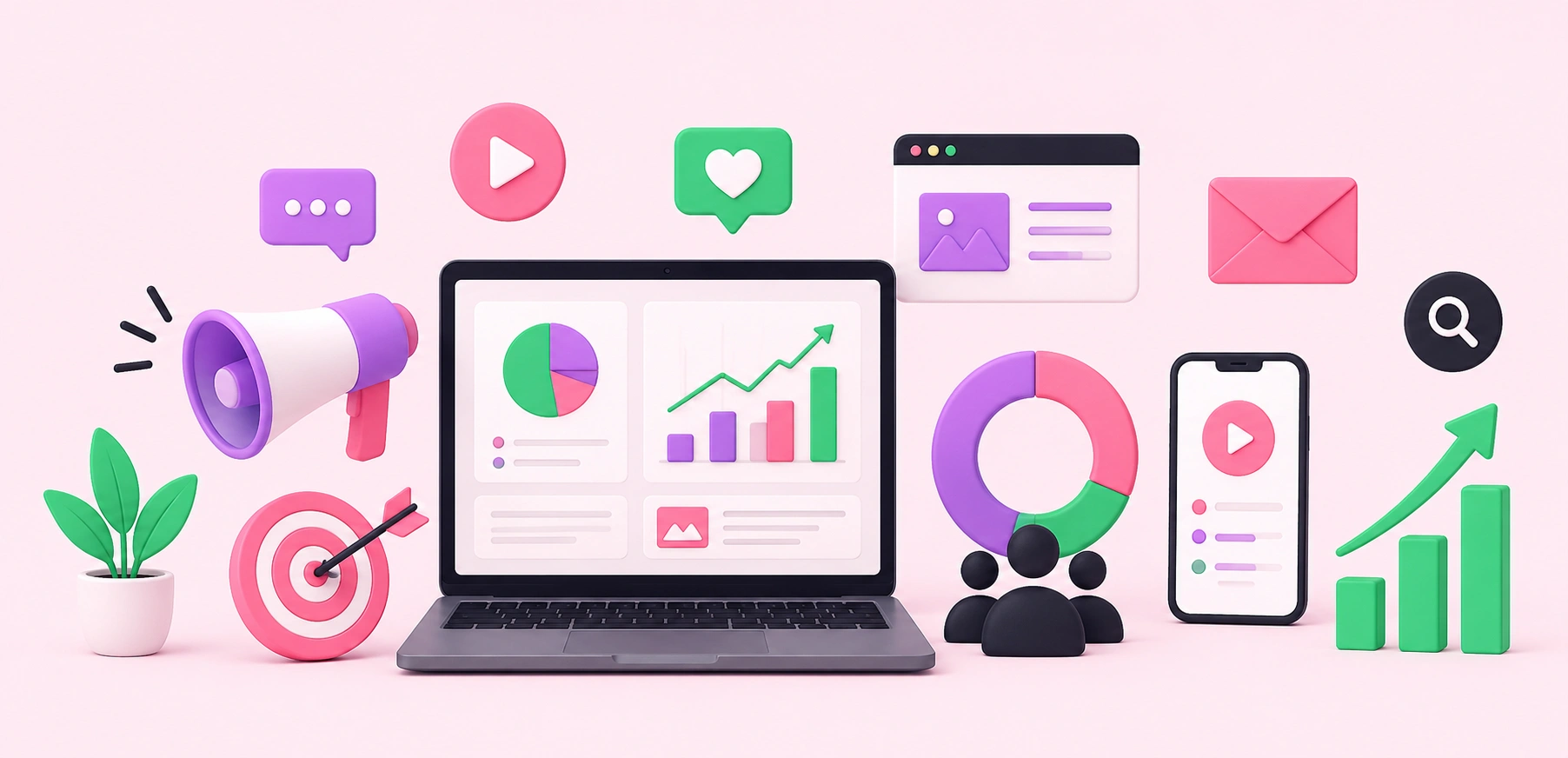
The most effective digital marketing strategy for your small business in 2026 is one that is integrated, consistent, and built on a genuine understanding of your customer. SEO drives discovery. Content builds trust. Social media creates community. Email nurtures relationships. Paid ads accelerate growth. AI amplifies everything. Together, these channels form a system that generates awareness, leads, and loyal customers on autopilot over time.
Starting can feel overwhelming — but it doesn't have to be. Begin with one or two channels, execute them well, measure results, and expand from there. If you're looking for expert guidance to craft and implement a strategy tailored to your business, explore the full range of digital marketing services available to help you grow faster and smarter in 2026.
The digital opportunity for small businesses has never been greater. The question is simply whether you're ready to seize it.