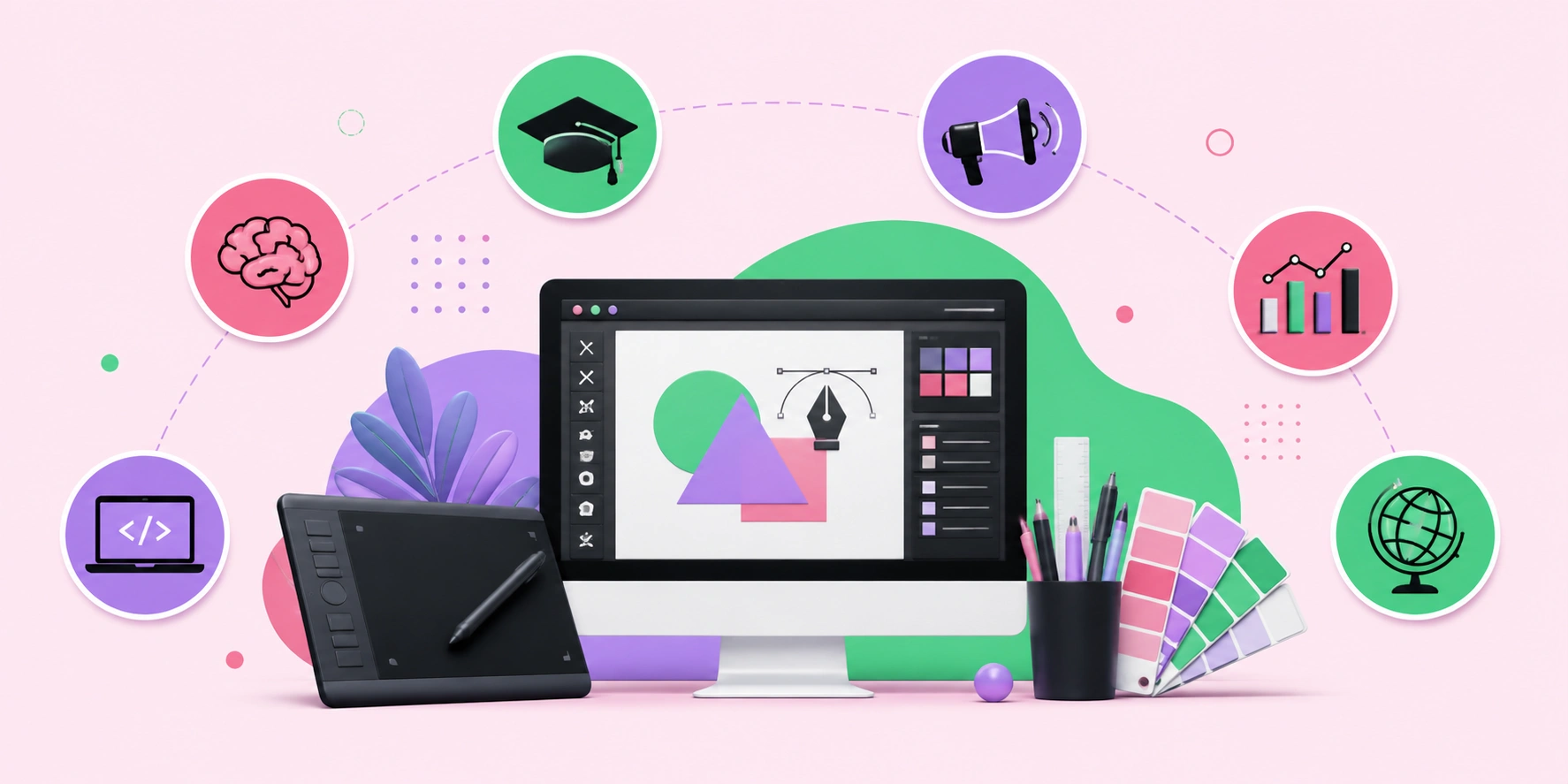
What Degrees Go Good With Graphic Design
Graphic design is one of the most versatile creative disciplines in the modern economy, sitting at the intersection of art, technology, and communication. Yet many students and professionals quickly realize that a single degree in graphic design, while powerful, becomes even more valuable when combined with complementary fields of study. Pairing graphic design with another degree or minor can open doors to higher-paying roles, broaden your problem-solving abilities, and make you indispensable on cross-functional teams. Whether you want to lead marketing campaigns, build digital products, or run your own studio, the right academic combination can dramatically shape your trajectory. In this guide, we explore the degrees that complement graphic design best and explain how each one strengthens your skill set and employability.
How WebPeak Supports Designers and Creative Teams
As you think about how to combine graphic design with other disciplines, it helps to understand how those skills translate into real-world projects. WebPeak is a full-service digital agency that works across AI, content writing, digital marketing, web development, and design, giving aspiring designers a clear picture of how their education applies in practice. Their team regularly blends visual storytelling with strategy, which is exactly what a dual skill set enables. If you want to see how creative work supports brand growth, their graphic design services demonstrate how design principles connect to marketing, web, and product goals. Studying their approach can help you decide which complementary degree will serve your ambitions best.
Marketing and Business Degrees
One of the most natural pairings for graphic design is a degree in marketing or business administration. Designers who understand consumer psychology, brand positioning, and campaign strategy can create visuals that do more than look attractive; they can drive measurable results. A marketing background teaches you how to interpret a brief, target the right audience, and measure the impact of a design through metrics like engagement and conversion. This combination is especially valuable for roles such as creative director, brand manager, or marketing designer, where decisions must balance aesthetics with return on investment.
A business degree also prepares designers who dream of freelancing or launching their own studios. Understanding budgeting, client contracts, pricing, and operations is essential for sustainability. Many talented designers struggle not because of weak creative skills but because they lack the business literacy to manage a profitable practice. By combining design fluency with financial and strategic knowledge, you position yourself to lead rather than simply execute, and you gain the confidence to negotiate fair rates for your work.
Web Development and Computer Science
Digital design and web technology are increasingly intertwined, making computer science or web development an excellent complement to graphic design. Designers who can code, even at a foundational level, communicate more effectively with engineering teams and can prototype their own ideas. Understanding HTML, CSS, and JavaScript allows you to design interfaces that are technically feasible and to bridge the gap between visual concepts and functional products. This is invaluable for UX and UI design roles, where collaboration between creative and technical teams determines a product's success.
A technical background also future-proofs your career. As tools evolve and automation reshapes creative workflows, designers who grasp how software works will adapt faster than those who rely solely on visual instincts. Learning about responsive design, accessibility standards, and front-end frameworks expands the range of projects you can take on. Combining a design education with computer science effectively turns you into a hybrid professional capable of both imagining and building, which is among the most sought-after profiles in the technology industry today.
Psychology and Communication
Great design is fundamentally about influencing human behavior, which is why psychology pairs beautifully with graphic design. A psychology degree helps you understand how people perceive color, hierarchy, and visual cues, and why certain layouts feel intuitive while others cause friction. This knowledge underpins user experience research, accessibility, and persuasive design. Designers with a grasp of cognitive science can justify their choices with evidence rather than opinion, which earns trust from clients and stakeholders alike.
Communication studies offer similar advantages by sharpening your ability to craft clear messages and present ideas convincingly. Designers frequently need to defend their concepts, write proposals, and collaborate across departments. A communication background strengthens these soft skills, ensuring your work is not only beautiful but also strategically articulated. Together, psychology and communication give designers a deeper understanding of audiences and a stronger voice in the rooms where decisions are made.
Photography, Film, and Fine Arts
For designers who want to deepen their creative foundation, degrees in photography, film, or fine arts provide rich complementary skills. Photography teaches composition, lighting, and visual storytelling that directly enhance editorial design, branding, and advertising. Film and motion studies introduce you to animation, video editing, and time-based media, which are increasingly important as content shifts toward video across social platforms. These skills allow designers to expand into motion graphics and multimedia, areas that command premium rates.
Fine arts degrees, meanwhile, cultivate conceptual thinking, craftsmanship, and a strong sense of visual culture. They encourage experimentation and help designers develop a distinctive personal style that sets them apart in a crowded market. While purely artistic training may seem less practical than business or technology, it nurtures the originality that clients ultimately pay for. Combining graphic design with a fine arts or media background produces well-rounded creatives who can adapt their voice across print, screen, and emerging formats.
Frequently Asked Questions
Is a second degree necessary to succeed in graphic design?
No, a second degree is not strictly necessary, as many successful designers thrive with a single qualification and a strong portfolio. However, complementary studies can broaden your opportunities and help you stand out in competitive markets.
Which degree pairs best with graphic design for higher salaries?
Marketing, business, and computer science degrees tend to correlate with higher-paying leadership and specialized roles. They allow designers to move into strategy, management, or technical positions that command premium compensation.
Can I add a minor instead of a full second degree?
Yes, a minor is an excellent and more affordable way to gain complementary knowledge. A minor in marketing, psychology, or web development can deliver many of the same benefits without the time commitment of a full degree.
Does coding knowledge really help graphic designers?
Absolutely, even basic coding skills improve collaboration with developers and let you prototype digital designs. Understanding how websites and apps are built makes your designs more practical and your career more flexible.
What if I want to start my own design business?
A business or entrepreneurship background is extremely valuable for freelancers and studio owners. It teaches pricing, client management, and operations, which are essential for turning creative talent into a sustainable income.
Conclusion
Graphic design is a powerful career on its own, but pairing it with the right complementary degree can multiply your opportunities, earning potential, and creative range. Marketing and business sharpen your strategic edge, computer science strengthens your technical fluency, psychology and communication deepen your understanding of audiences, and the visual arts enrich your craft. The best combination depends on your goals, whether that means leading campaigns, building digital products, or running your own studio. As you plan your education, study how professional agencies blend design with strategy, build a portfolio that reflects your hybrid skills, and never stop learning. With the right pairing, your graphic design expertise can become the foundation of a remarkably versatile and rewarding career.