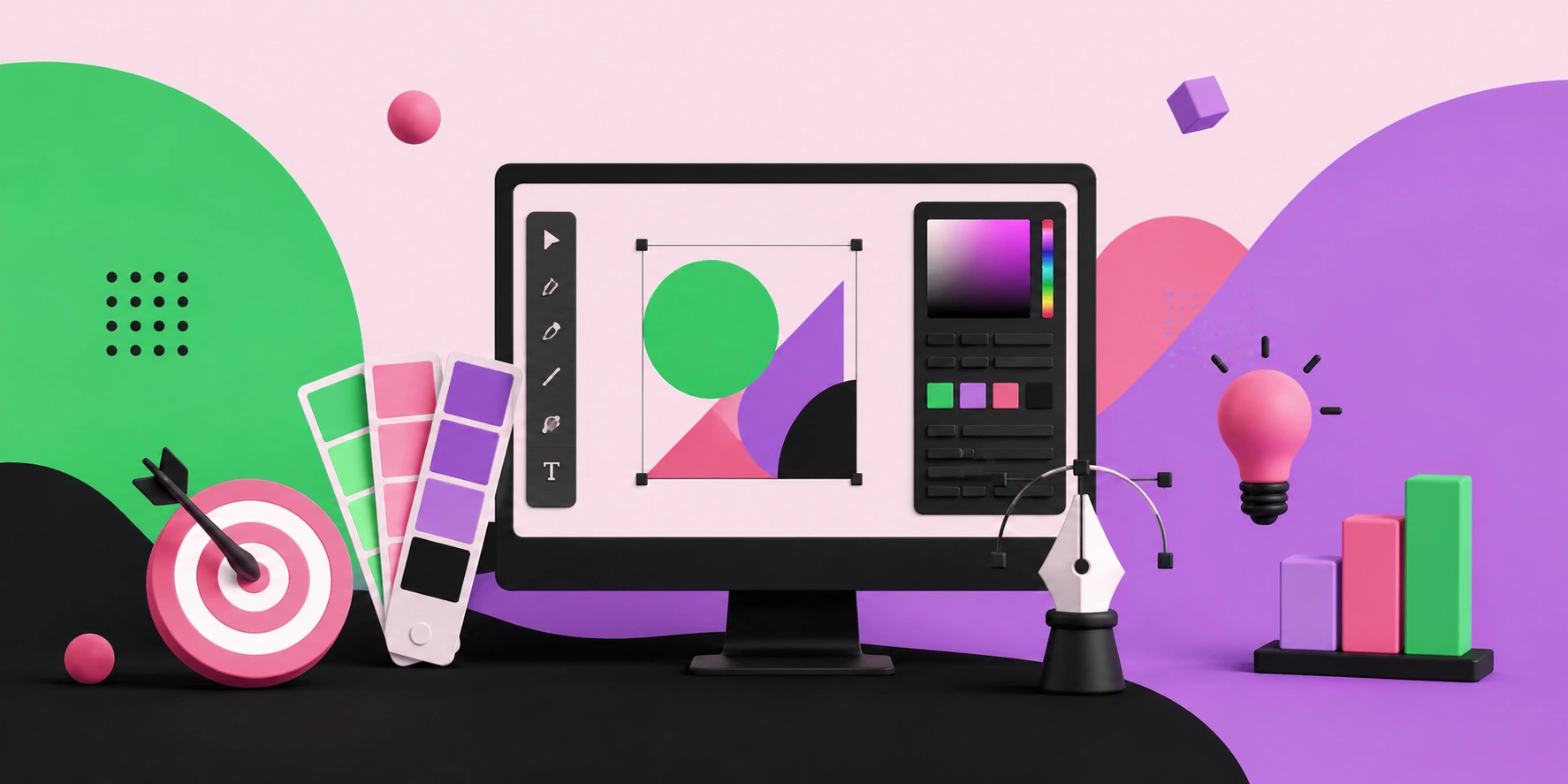
Why Professional Graphic Design Is the Secret Weapon Behind Every Successful Brand
Think about the last time a brand stopped you in your tracks. Maybe it was a logo so clean it felt inevitable, or packaging so beautifully designed you almost didn't want to open it. Whatever the trigger, one thing was working silently in the background: professional graphic design. It is not decoration. It is strategy — and for the world's most recognizable brands, it is the single most powerful competitive advantage they own.
In a marketplace flooded with noise, the brands that win are not always the ones with the best product. They are the ones that communicate their value most effectively. And visual communication is the fastest, most persuasive language humans understand. Before a potential customer reads a single word of your copy, they have already formed an opinion about your brand based on how it looks. That opinion — formed in roughly 50 milliseconds — is almost impossible to reverse.
This is why professional graphic design is not a luxury reserved for Fortune 500 companies. It is a foundational investment that every serious business, from emerging startups to established enterprises, must make to compete, convert, and grow.
First Impressions Are Visual, Not Verbal
Human beings are wired to process images 60,000 times faster than text. This is not a marketing statistic designed to sell you something — it is basic neuroscience. When a customer lands on your website, walks past your storefront, or scrolls past your social media post, their brain is running a rapid visual audit. Does this look credible? Does it feel trustworthy? Is this worth my time?
Professional graphic design answers all three questions favorably before your audience has consciously engaged. Poor design does the opposite — it raises doubts, signals amateurism, and sends potential customers straight to your competitors.
Consider two businesses selling the same product at the same price point. One has a cohesive visual identity: a thoughtfully designed logo, a consistent color palette, clean typography, and polished marketing materials. The other has a logo made in a free online generator, mismatched fonts across their website, and inconsistent branding across platforms. Which business earns more trust? The answer is obvious — and it has nothing to do with product quality.
Brand Identity: The Foundation of Everything
A brand identity is much more than a logo. It is a visual system — a carefully constructed set of elements including color, typography, iconography, imagery style, and layout principles — that works together to communicate who you are, what you stand for, and why customers should choose you over everyone else.
Professional designers understand that each element of this system carries meaning. Colors trigger psychological associations: blue communicates trust and stability, red conveys energy and urgency, green suggests health and sustainability. Typography carries personality: a serif font feels authoritative and classic, a geometric sans-serif feels modern and precise, a hand-lettered style feels personal and artisan. These are not arbitrary choices — they are strategic decisions made to align visual perception with brand values.
When these elements are applied consistently across every touchpoint — from your website and social media to your business cards and packaging — they compound into something genuinely powerful: brand recognition. Studies consistently show that consistent brand presentation can increase revenue by up to 23%. That is the measurable return on professional design investment.
If you are ready to build a brand identity that works as hard as you do, exploring professional graphic design services tailored to your business goals is the smartest first step you can take.
Design Builds Trust — and Trust Drives Revenue
There is a direct, documented relationship between design quality and consumer trust. Stanford University's Web Credibility Research found that 75% of consumers judge a company's credibility based on its website design alone. Not its reviews, not its pricing, not its track record — its design. Three quarters of your potential customers are making trust decisions based on how your brand looks before they engage with anything else you offer.
This matters enormously in every industry, but especially in competitive markets where multiple options exist at similar price points. When product parity is high, brand perception becomes the deciding factor. And brand perception is built almost entirely through design.
Professional designers also understand accessibility — ensuring that your brand communicates effectively across different audiences, devices, and contexts. Color contrast ratios, font legibility at various sizes, layout responsiveness across screen dimensions: these are not technical afterthoughts. They are design decisions that either include or exclude potential customers at scale.
Graphic Design Across the Customer Journey
Awareness: Standing Out in the Scroll
At the top of the funnel, your only job is to earn attention. In an environment where the average person encounters between 4,000 and 10,000 brand messages per day, stopping the scroll requires visual distinctiveness. Professional designers create assets — social media graphics, display ads, video thumbnails, outdoor advertising — engineered to interrupt pattern recognition and demand a second look. This is not accidental. It is the product of deep understanding of visual hierarchy, contrast, and human perception.
Consideration: Converting Interest into Intent
Once a potential customer is aware of your brand, design takes on a new role: building the case for why you are the right choice. Your website, your brochures, your product packaging, your pitch decks — every piece of collateral at this stage is doing sales work. Professional design ensures that information is presented with clarity, that key messages land with impact, and that the visual experience reinforces the premium nature of what you offer.
Retention: Keeping Customers Coming Back
The relationship between design and customer retention is often overlooked. But think about the brands you are most loyal to — Apple, Nike, Airbnb, Spotify. A significant part of what keeps you returning is the quality and consistency of the experience, which is inseparable from design. Post-purchase touchpoints like packaging, email templates, loyalty program materials, and customer service communications all represent design opportunities to deepen loyalty and drive repeat business.
The Hidden Cost of Bad Design
Many businesses avoid investing in professional design because of perceived cost. This calculation is almost always wrong when the full picture is considered. The hidden costs of poor design are substantial and cumulative.
When your brand looks unprofessional, conversion rates suffer. When your marketing materials lack visual coherence, campaigns underperform. When your website is poorly designed, bounce rates climb and organic search rankings decline. When your packaging fails to communicate value, customers choose competitors who charge less. Every one of these outcomes costs more than a professional design investment would have.
There is also the cost of brand confusion — what happens when your visual identity is inconsistent across platforms and materials. Customers who encounter a different logo on your Instagram than on your website, or different brand colors on your physical materials than on your digital presence, experience cognitive dissonance. That dissonance erodes trust, even when it happens subconsciously.
Design and Digital Marketing: An Inseparable Partnership
In the digital era, graphic design and marketing strategy are deeply interdependent. Social media algorithms favor visually engaging content. Email campaigns with professionally designed templates consistently outperform plain-text alternatives in open and click-through rates. Landing pages built around strong visual hierarchy and clear call-to-action design convert at significantly higher rates than cluttered or generic alternatives.
Search engine optimization, too, has a visual dimension. Page experience signals — including Core Web Vitals related to visual stability — are part of Google's ranking algorithm. A professionally designed website that loads fast, displays cleanly across devices, and guides users intuitively through content contributes directly to organic search performance.
At WebPeak, the integration of design thinking with digital strategy is not an add-on — it is core to how effective campaigns are built. When your visual identity, content strategy, and digital marketing work in alignment, the results compound in ways that siloed approaches simply cannot achieve.
What to Look for in a Professional Graphic Design Partner
Not all design services are created equal. When evaluating a graphic design partner for your brand, look beyond portfolio aesthetics. Consider strategic thinking — does the designer ask questions about your audience, your competitors, your business objectives? Consider process — do they present multiple conceptual directions, provide rationale for their choices, and iterate based on structured feedback? Consider breadth — can they execute across the full range of touchpoints your brand requires, from digital to print, from static to motion?
The best design partners do not just make things look good. They translate business strategy into visual language. They build systems that scale. They create assets that work as hard as any other business investment you make.
Conclusion: Design Is Not a Cost — It Is a Competitive Advantage
The most successful brands in the world did not stumble into visual excellence. They invested deliberately in professional graphic design because they understood a fundamental truth: in a visual world, how you look is inseparable from what you are worth. Every pixel of your brand identity is communicating something to your audience, whether you have designed it intentionally or not.
The question is not whether your brand has a visual identity. It does, by default. The question is whether that identity is working for you or against you. Professional graphic design is the discipline that answers that question with intention, strategy, and craft — turning visual communication from a liability into the secret weapon behind your brand's success.
The brands winning in your market right now are not doing it by accident. They have made the investment in design. The opportunity to join them is available to you today.