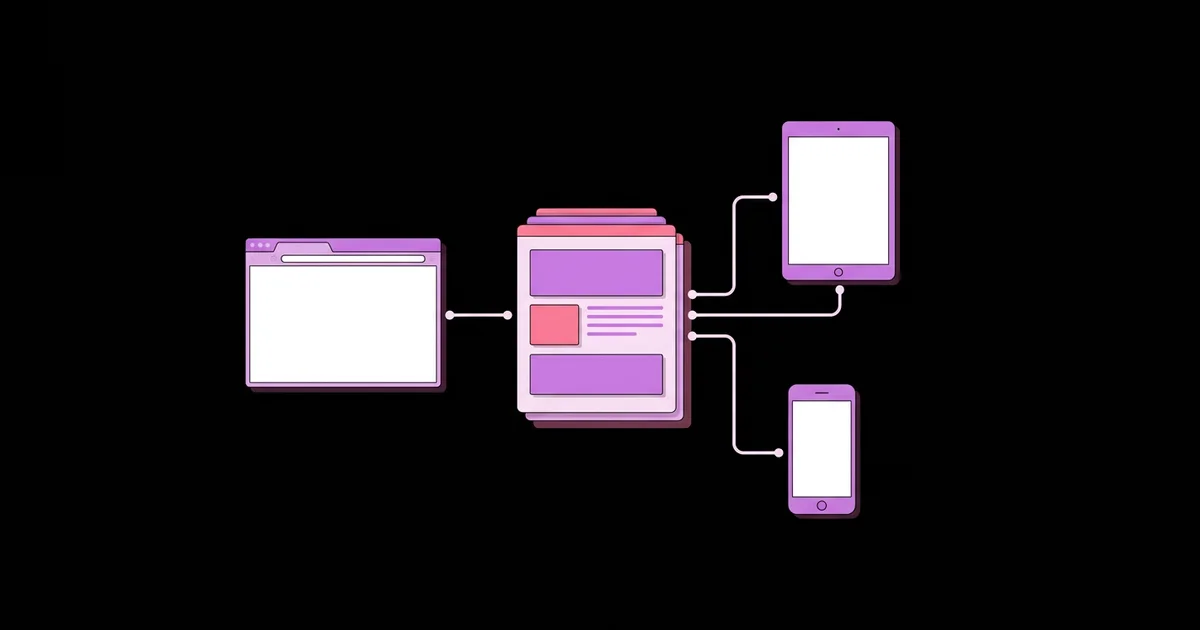
Next.js Route Handlers Example
Next.js has evolved into a powerful full-stack framework, and one of its most impactful features is Route Handlers. This{" "} Next.js Route Handlers Example guide provides a deep, developer-focused explanation of how to build API endpoints using the App Router. Whether you're creating REST APIs, handling server-side logic, or integrating third-party services, Route Handlers offer a modern, flexible solution.
In this article, you’ll learn how Route Handlers work, when to use them, and how to implement real-world examples with best practices for performance, scalability, and SEO-friendly architecture.
What are Next.js Route Handlers?
Route Handlers are server-side functions in Next.js App Router that allow you to define API endpoints using standard HTTP methods like GET, POST, PUT, and DELETE.
They are defined inside the app directory and replace
traditional API routes from the Pages Router. Route Handlers enable
developers to build backend logic directly within a Next.js project.
- Built on the Web Fetch API
- Support edge and Node.js runtimes
- Use file-based routing
- Allow granular control over HTTP methods
How do Route Handlers work in Next.js?
Route Handlers work by exporting functions
named after HTTP methods inside a route.js or{" "}
route.ts file.
Each function corresponds to a specific HTTP request method. The file structure determines the API route path.
Basic file structure
app/api/hello/route.js{"\n"}
Simple GET handler
      export async function GET() {"{"}
      {"\n"}
      {"  "}return new Response(JSON.stringify({"{"} message: "Hello World"{" "}
      {"}"}), {"{"}
      {"\n"}
      {"    "}status: 200,{"\n"}
      {"  "}
      {"}"});{"\n"}
      {"}"}
      {"\n"}
This creates an endpoint at:
/api/hello{"\n"}
Why should you use Route Handlers instead of API routes?
Route Handlers provide better performance, flexibility, and integration with modern Next.js features.
- Native support for streaming and caching
- Edge runtime compatibility
- Improved co-location with UI components
- Better scalability for serverless deployments
They align with Next.js’s App Router architecture, making them the preferred approach for new applications.
How to create a Next.js Route Handlers Example step by step?
Create a folder inside the{" "}
app/api directory and define a route.js file
exporting HTTP method functions.
Step-by-step guide
- Create project using Next.js App Router
-
Navigate to
app/api -
Create a folder (e.g.,
users) -
Add
route.jsinside it - Export HTTP methods
Example: GET and POST handler
      export async function GET() {"{"}
      {"\n"}
      {"  "}return Response.json({"{"} users: ["Ali", "Sara"] {"}"});{"\n"}
      {"}"}
      {"\n"}
      {"\n"}export async function POST(request) {"{"}
      {"\n"}const body = await request.json();{"\n"}return Response.json({"{"}{" "}
      message: "User created", data: body {"}"});{"\n"}
      {"}"}{" "}
How do you handle dynamic routes?
Use dynamic folder names like{" "}
[id] to capture route parameters.
Example structure
app/api/users/[id]/route.js{"\n"}
Example implementation
      export async function GET(request, {"{"} params {"}"}) {"{"}
      {"\n"}
      {"  "}return Response.json({"{"} userId: params.id {"}"});{"\n"}
      {"}"}
      {"\n"}
This enables dynamic API endpoints such as:
/api/users/123{"\n"}
How can you handle request data in Route Handlers?
Use the Request object to access query parameters, headers, and body data.
Access query parameters
      export async function GET(request) {"{"}
      {"\n"}
      {"  "}const {"{"} searchParams {"}"} = new URL(request.url);{"\n"}
      {"  "}const name = searchParams.get("name");{"\n"}
      {"\n"}return Response.json({"{"} name {"}"});{"\n"}
      {"}"}{" "}
Access request body
      export async function POST(request) {"{"}
      {"\n"}
      {"  "}const data = await request.json();{"\n"}
      {"  "}return Response.json({"{"} received: data {"}"});{"\n"}
      {"}"}
      {"\n"}
How do you implement error handling?
Use try-catch blocks and return proper HTTP status codes.
Error handling example
      export async function GET() {"{"}
      {"\n"}
      {"  "}try {"{"}
      {"\n"}
      {"    "}throw new Error("Something went wrong");{"\n"}
      {"  "}
      {"}"} catch (error) {"{"}
      {"\n"}
      {"    "}return Response.json({"\n"}
      {"      "}
      {"{"} error: error.message {"}"},{"\n"}
      {"      "}
      {"{"} status: 500 {"}"}
      {"\n"}
      {"    "});{"\n"}
      {"  "}
      {"}"}
      {"\n"}
      {"}"}
      {"\n"}
How do you use middleware-like logic in Route Handlers?
You can implement reusable logic functions and call them inside handlers.
Example
      function authenticate(request) {"{"}
      {"\n"}
      {"  "}const token = request.headers.get("authorization");{"\n"}
      {"  "}return token === "valid-token";{"\n"}
      {"}"}
      {"\n"}
      {"\n"}export async function GET(request) {"{"}
      {"\n"}if (!authenticate(request)) {"{"}
      {"\n"}return Response.json({"{"} error: "Unauthorized" {"}"}, {"{"}{" "}
      status: 401 {"}"});{"\n"}
      {"}"}
      {"\n"}
      {"\n"}return Response.json({"{"} message: "Authorized" {"}"});{"\n"}
      {"}"}{" "}
How do you enable caching and revalidation?
Use Next.js caching options like{" "}
revalidate and cache.
Example with caching
      export const revalidate = 60;{"\n"}
      {"\n"}export async function GET() {"{"}
      {"\n"}return Response.json({"{"} time: Date.now() {"}"});{"\n"}
      {"}"}{" "}
This caches the response for 60 seconds.
How do you deploy Route Handlers?
Deploy your Next.js app to platforms like Vercel, and Route Handlers will automatically work as serverless functions.
- No separate backend needed
- Automatic scaling
- Optimized performance
What are best practices for Route Handlers?
Follow clean architecture, validate inputs, and optimize performance.
Checklist
- Validate request data
- Use proper HTTP status codes
- Keep handlers small and modular
- Avoid blocking operations
- Use environment variables securely
How can Route Handlers improve SEO and performance?
They enable faster data fetching and server-side rendering, improving page load speed and crawlability.
Benefits include:
- Reduced client-side JavaScript
- Faster API responses
- Better indexing for dynamic content
When should you NOT use Route Handlers?
Avoid them when using external backend services or complex microservice architectures.
In such cases:
- Use dedicated backend frameworks
- Integrate APIs instead of building inside Next.js
Real-world Next.js Route Handlers Example
A CRUD API for managing products demonstrates practical usage.
Example: Product API
      let products = [];{"\n"}
      {"\n"}export async function GET() {"{"}
      {"\n"}return Response.json(products);{"\n"}
      {"}"}
      {"\n"}
      {"\n"}export async function POST(request) {"{"}
      {"\n"}const product = await request.json();{"\n"}products.push(product);
      {"\n"}return Response.json(product, {"{"} status: 201 {"}"});{"\n"}
      {"}"}
      {"\n"}
      {"\n"}export async function DELETE(request) {"{"}
      {"\n"}products = [];{"\n"}return Response.json({"{"} message: "All
      products deleted" {"}"});{"\n"}
      {"}"}{" "}
How do Route Handlers compare to traditional backend APIs?
Route Handlers simplify development by combining frontend and backend in one framework.
| Feature | Route Handlers | Traditional APIs |
|---|---|---|
| Setup | Minimal | Complex |
| Performance | High | Depends |
| Scalability | Automatic | Manual |
How can developers structure large-scale applications?
Use modular folder structures and separate business logic from handlers.
Recommended structure
      app/{"\n"}
      {"  "}api/{"\n"}
      {"    "}users/{"\n"}
      {"      "}route.js{"\n"}
      {"  "}lib/{"\n"}
      {"    "}db.js{"\n"}
      {"  "}services/{"\n"}
      {"    "}userService.js{"\n"}
Conclusion
This Next.js Route Handlers Example guide demonstrates how modern API development can be simplified using the App Router. Route Handlers provide a scalable, efficient, and developer-friendly approach to building server-side functionality within Next.js.
By following best practices and leveraging built-in features like caching and dynamic routing, developers can build high-performance applications without relying on separate backend systems.
For businesses looking to implement advanced web solutions,{" "} WEBPEAK {" "} is a full-service digital marketing company providing Web Development, Digital Marketing, and SEO services.
FAQ: Next.js Route Handlers Example
What is a Route Handler in Next.js?
Route Handlers are server-side functions that define API endpoints using HTTP methods inside the App Router.
Where are Route Handlers located?
They are placed inside the app/api directory using a{" "}
route.js or route.ts file.
Can Route Handlers replace API routes?
Yes, they are the modern replacement for API routes in the App Router architecture.
Do Route Handlers support middleware?
They don’t directly use middleware but allow reusable logic functions for similar behavior.
Are Route Handlers serverless?
Yes, when deployed on platforms like Vercel, they run as serverless or edge functions.
How do you handle authentication?
Authentication can be implemented by checking headers, cookies, or tokens inside the handler functions.
Can Route Handlers connect to databases?
Yes, they can interact with databases using libraries like Prisma, MongoDB, or any Node.js client.
Do Route Handlers support streaming?
Yes, they support streaming responses using modern Web APIs.
What runtime do Route Handlers use?
They support both Node.js and Edge runtimes depending on configuration.
Are Route Handlers good for large applications?
Yes, when structured properly, they scale well and simplify full-stack development.