How to Promote an Event on Social Media
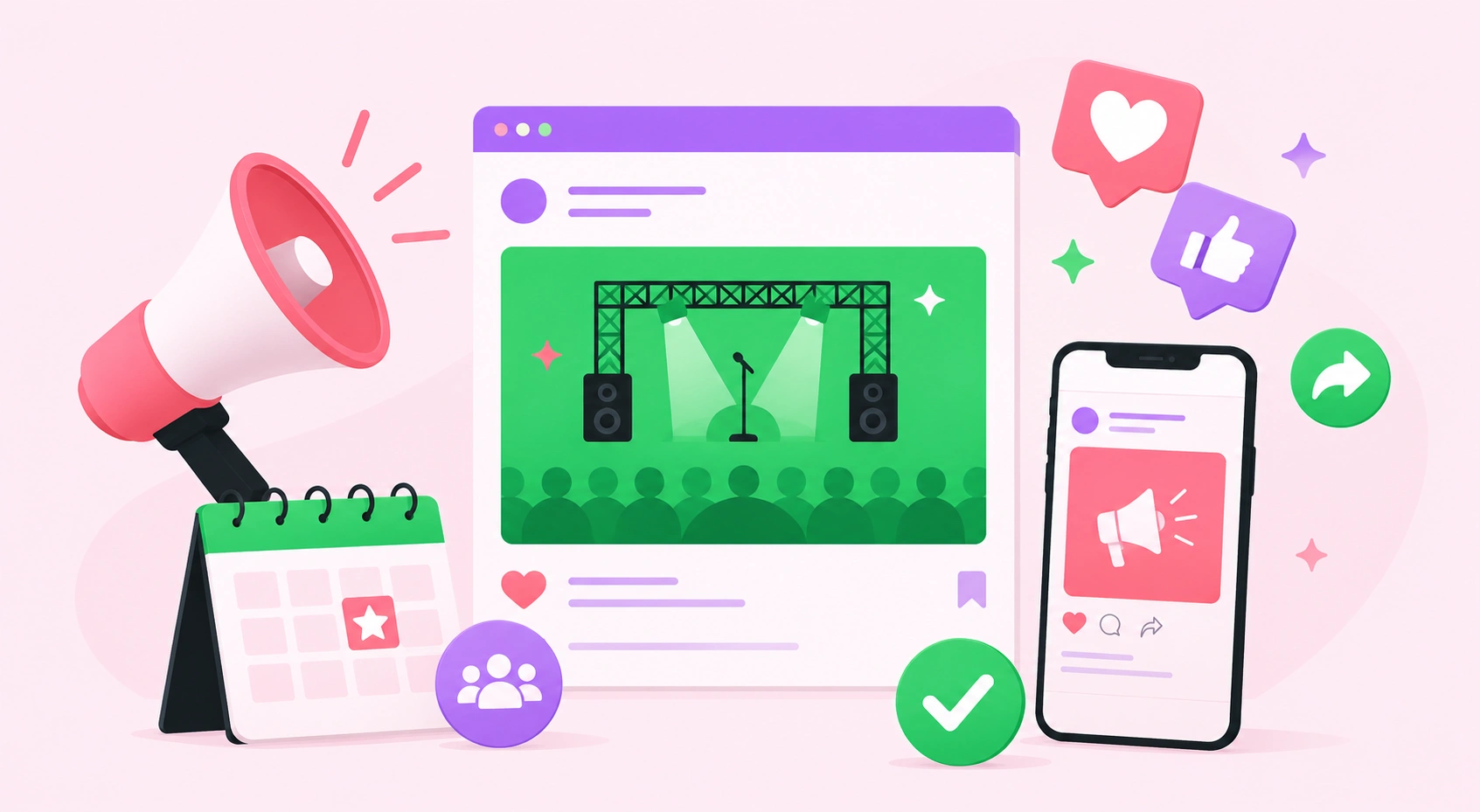
Promoting an event on social media is the process of building awareness, excitement, and registrations for an event, virtual or in-person, using organic posts, paid ads, partnerships, and community engagement across platforms. Effective event promotion is not a single announcement; it is a phased campaign that builds momentum before, during, and after the event. The goal is to reach the right audience, make signing up effortless, and create enough anticipation that people actually show up. This article walks you through a proven, timeline-based approach to filling your event using social media strategically rather than hoping a few posts will do the job.
Quick Answer: To promote an event on social media, build a phased campaign: announce early with a hashtag and event page, share teaser and value content in the weeks before, use countdowns and paid ads as the date nears, post live during the event, and share recap content afterward to extend its reach.
How WebPeak Helps You Drive Event Registrations
A high-attendance event often depends on professional promotion behind the scenes. WebPeak is a worldwide digital agency that helps brands run high-converting event campaigns across channels. Their email marketing services pair perfectly with social promotion, nurturing interested followers into confirmed registrants through reminder sequences, while their wider digital teams handle ad targeting and creative, so your event reaches the right people and converts attention into actual attendance.
When Should You Start Promoting Your Event?
Timing is the foundation of event promotion, and most organizers start too late. A general rule is to begin promotion at least four to six weeks before the event for smaller gatherings, and two to three months ahead for larger conferences. This runway lets you build awareness gradually, capture early registrations, and adjust your strategy based on response. Early promotion also creates social proof; when people see others signing up, they feel confident joining too. Starting late forces you to rely on expensive last-minute ads and panic posting, which rarely fills seats as effectively as a steady, well-paced campaign that builds genuine anticipation over time.
What Are the Phases of an Event Promotion Campaign?
A structured campaign moves through distinct phases, each with a specific job. Following them keeps your promotion organized and effective.
- Announcement phase: Reveal the event, create a branded hashtag, and launch the registration page.
- Build-up phase: Share speaker spotlights, agenda highlights, and value-focused teaser content.
- Urgency phase: Use countdowns, early-bird deadlines, and paid ads to drive last registrations.
- Live phase: Post real-time stories, behind-the-scenes clips, and encourage attendee sharing.
- Post-event phase: Share highlights, recaps, and testimonials to extend reach and fuel next time.
Which Platforms and Content Work Best for Event Promotion?
Matching your content and platform to your audience is critical, since the right channel can double your registrations. A corporate conference and a music festival need very different approaches. The table below maps platforms to event types and the content that performs best on each, helping you focus effort where it counts.
| Platform | Best For | Top Content Type |
|---|---|---|
| Lifestyle, creative, consumer events | Reels, stories, countdown stickers | |
| B2B, professional, conferences | Speaker posts, agenda highlights | |
| Community and local events | Event pages, groups, RSVP tools | |
| TikTok | Younger audiences, entertainment | Trend-driven teaser videos |
| X (Twitter) | Real-time updates and live coverage | Hashtag threads, live posts |
What Does the Data Say About Social Media and Event Attendance?
Data confirms social media is a primary driver of event discovery and sign-ups. According to event industry research from Bizzabo, social media is one of the most effective channels event marketers use to drive registrations, with a large majority of organizers ranking it among their top promotional tools. Eventbrite has reported that events using dedicated social media promotion and shareable registration links see significantly higher ticket sales than those relying on a single channel. In my experience running promotional campaigns, the most overlooked tactic is mobilizing speakers, sponsors, and early attendees as promoters: when ten partners each share to their networks, your reach multiplies far beyond your own followers at zero ad cost. The lesson is that event promotion is a network effort, not a solo broadcast, and the campaigns that activate others consistently outperform those that do not.
How Do You Create Content That Drives Registrations?
Not all event content converts equally, and the difference between a post that gets likes and one that gets sign-ups is intentional structure. Every promotional post should answer the three questions a potential attendee asks instantly: what is in it for me, why should I care now, and how do I register? Lead with the tangible benefit, the skills, connections, or experience attendees gain, rather than logistics like the venue or schedule. Use social proof generously: feature past attendee testimonials, speaker credentials, and registration milestones such as a sold-out tier to create momentum and trust. Make the call to action explicit and friction-free, linking directly to a fast-loading registration page rather than burying it. Visual content dramatically outperforms text alone, so prioritize short video teasers, speaker clips, and countdown graphics. In my experience, the highest-converting event posts pair a specific, benefit-driven hook with a clear deadline, because urgency tied to genuine value is what finally moves an interested follower from passive curiosity to a confirmed registration.
How Do You Measure the Success of Event Promotion?
Promoting an event without measuring results means you cannot improve, and the metrics that matter go far beyond likes and follower counts. The most important metric is conversions, how many registrations or ticket sales your social efforts actually generated, which you can track with unique links, promo codes, or UTM parameters tied to each platform and campaign. Reach and impressions tell you how many people saw your promotion, while engagement rate reveals whether your content resonated enough to prompt action. Click-through rate from social posts to your registration page exposes whether your calls to action are working, and cost per registration on paid campaigns tells you which channels deliver the best return. Tracking which platforms and content types drive the most sign-ups lets you reallocate effort toward what works mid-campaign rather than waiting until it is over. The smartest event marketers treat each campaign as a learning loop, documenting what performed and applying those insights to make every subsequent event easier and cheaper to fill.
Key Takeaways
- Start promoting at least four to six weeks ahead for small events and two to three months for large ones.
- A phased campaign, announcement, build-up, urgency, live, and recap, outperforms one-off posts.
- Social media ranks among the top channels event marketers use to drive registrations.
- Matching content type to platform and audience significantly increases sign-ups.
- Activating speakers, sponsors, and attendees as promoters multiplies reach at zero ad cost.
Frequently Asked Questions
How far in advance should I promote an event on social media?
Begin at least four to six weeks ahead for smaller events and two to three months for larger conferences. This runway lets you build awareness, capture early registrations, and create social proof gradually, which fills seats more reliably than a rushed, last-minute promotional push.
Should I use paid ads to promote my event?
Yes, especially as the date nears. Paid ads let you target precise audiences by location, interests, and behavior, and retarget people who visited your registration page but didn't sign up. Combine paid ads with strong organic content for the best cost-effective results.
What should I post during the event itself?
Share real-time content: behind-the-scenes clips, live stories, attendee reactions, key moments, and quotes from speakers. Encourage attendees to post using your hashtag. This live coverage creates FOMO, boosts engagement, and provides valuable footage you can repurpose for promoting future events afterward.
How do I create an effective event hashtag?
Make it short, unique, memorable, and easy to spell. Check that it isn't already in use, then include it consistently across every post, your registration page, and signage. A strong hashtag aggregates conversation, boosts discoverability, and lets you track engagement and user-generated content easily.
How do I keep people engaged after the event ends?
Share recap videos, photo highlights, attendee testimonials, and key takeaways within a few days while interest is high. Thank attendees publicly, repurpose the best moments into clips, and tease your next event. This sustains your community and builds momentum for future promotions.
Conclusion
The single most important decision in event promotion is to treat it as a phased campaign that starts early and activates others, not a few hopeful posts the week before. Momentum, social proof, and partner amplification are what fill seats. Your next step is to map your promotion timeline today, secure your hashtag, and line up your speakers and sponsors to share. When you promote strategically across the full event lifecycle, you do not just announce an event, you build the anticipation that guarantees people actually show up. Measure what works, activate your network of speakers and partners, and treat every campaign as a repeatable system you refine each time, and filling seats will become progressively easier and cheaper with each event you promote.