Has Social Media Ruined Society?
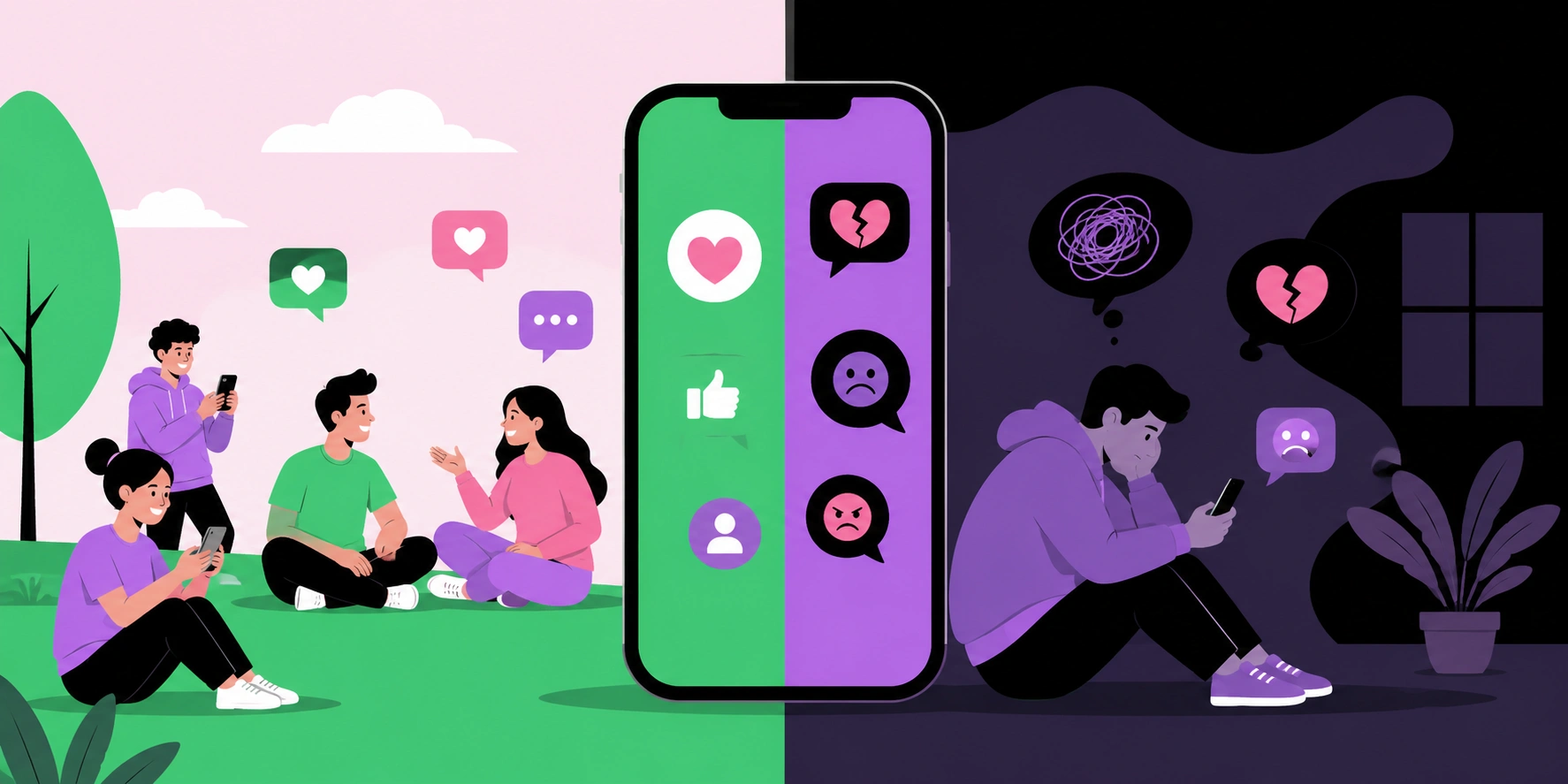
Social media refers to digital platforms that let people create, share, and react to content and connect with others in real time. The question of whether it has ruined society is one of the defining debates of our era, and the honest answer is nuanced: social media has not ruined society, but it has amplified both the best and worst of human behavior at an unprecedented scale. It has accelerated misinformation, fueled comparison-driven anxiety, and fragmented attention, yet it has also democratized information, built communities, and given marginalized voices reach they never had. This article examines the real evidence on both sides so you can form a grounded view.
Quick Answer: Social media has not ruined society, but it has magnified existing problems like misinformation, polarization, and anxiety while also enabling connection, activism, and access to information. The outcome depends heavily on how individuals and platforms use and design these tools.
How WebPeak Helps Brands Use Social Media Responsibly
Businesses play a major role in shaping healthier online spaces through the content they publish. WebPeak is a worldwide digital agency that helps organizations build ethical, value-driven social presences rather than engagement-bait. Their social media management services focus on authentic storytelling, accurate messaging, and genuine community building, helping brands contribute to a more trustworthy online environment instead of adding to the noise and outrage cycles that damage public discourse.
What Are the Documented Harms of Social Media?
The most credible concerns center on mental health, misinformation, and attention. Doomscrolling, the habit of endlessly consuming negative news, is linked to heightened anxiety and lower well-being. Comparison culture, where users measure their lives against curated highlight reels, correlates with reduced self-esteem, particularly among teens. Misinformation spreads faster than corrections because emotionally charged falsehoods generate more engagement. Algorithmic echo chambers can reinforce existing beliefs and deepen political polarization. These are not fringe worries; they are repeatedly observed patterns that platform designs often reward because outrage and novelty keep people scrolling longer.
What Are the Genuine Benefits Social Media Provides?
For balance, the upsides are equally real and often overlooked in alarmist coverage. Social media delivers measurable value when used intentionally.
- Access to information: Breaking news, education, and expert knowledge reach billions instantly.
- Community and belonging: Niche groups connect people with rare illnesses, hobbies, or identities who feel isolated offline.
- Economic opportunity: Creators, freelancers, and small businesses reach global audiences at near-zero cost.
- Civic engagement: Movements organize, fundraise, and hold power accountable faster than ever.
- Crisis response: People share safety updates and coordinate aid during disasters in real time.
How Do the Harms and Benefits Compare?
The reality is that the same features cause both good and harm depending on use and design. Reach amplifies truth and lies alike; algorithms surface helpful niche content and harmful rabbit holes; constant connection reduces loneliness for some and increases it for others. The table below maps key features to their dual outcomes, which is the most accurate way to assess social media's net effect on society.
| Feature | Positive Outcome | Negative Outcome |
|---|---|---|
| Algorithmic feeds | Personalized, relevant content discovery | Echo chambers and addictive scrolling |
| Global reach | Voices and small businesses go worldwide | Rapid spread of misinformation |
| Constant connectivity | Stay close to distant friends and family | Burnout, FOMO, and reduced presence |
| Public sharing | Awareness, activism, and accountability | Privacy loss and online harassment |
What Does the Data Actually Say About Social Media's Impact?
Evidence shows correlation and rising concern more than simple causation. According to the Pew Research Center, about 95% of U.S. teens have access to a smartphone and nearly half say they are online almost constantly, which fuels worries about attention and sleep. A landmark MIT study published in Science found that false news stories spread roughly six times faster than true ones on social platforms, largely because they are more novel and emotionally provocative. In my analysis, the crucial insight that generic takes miss is this: social media is best understood as an amplifier, not a cause. It magnifies existing societal tendencies, so the real lever for change is better platform design and individual media literacy, not abandoning the technology entirely. Society is not ruined, but it is being stress-tested.
How Has Social Media Changed Human Connection?
Social media has fundamentally rewired how people form and maintain relationships, with effects that are genuinely mixed rather than uniformly negative. On one hand, it sustains long-distance friendships, reunites estranged families, and lets people find communities of shared interest that simply did not exist before, which is profoundly valuable for isolated, disabled, or geographically remote individuals. On the other hand, it can substitute shallow digital interaction for deep in-person connection, creating a paradox where people feel more connected and more lonely at once. Research consistently distinguishes between active connection, messaging, commenting, and genuine conversation, and passive consumption, silently scrolling through others' lives. The former tends to strengthen relationships and well-being, while the latter erodes them. This distinction is the practical key: the technology itself does not dictate the outcome, the behavior does. People who use social media as a bridge to real relationships generally benefit, while those who use it as a replacement for them generally suffer, which is why blanket judgments about social media miss the more useful, behavior-specific truth.
What Can Individuals and Platforms Do to Improve It?
Improving social media's impact requires action on two fronts, and neither alone is sufficient. Individuals can take immediate control by curating their feeds, limiting passive scrolling, verifying information before sharing, and prioritizing active engagement over consumption. Building media literacy, the ability to critically evaluate the credibility of online content, is arguably the single most protective skill against misinformation and manipulation. Platforms, meanwhile, hold the structural levers: transparent algorithms, friction on rapidly spreading unverified content, robust harassment tools, and design choices that reward quality over outrage. The honest reality is that platforms profit from engagement, so meaningful change often requires regulatory pressure and public demand rather than voluntary reform alone. In my analysis, the most realistic path forward is a shared-responsibility model where users adopt healthier habits, platforms accept accountability for their design incentives, and policymakers set guardrails on the most harmful practices. Treating social media's problems as solvable design and behavior challenges, rather than an unstoppable force, is what turns pessimism into productive action.
Key Takeaways
- Social media amplifies both positive and negative human behavior rather than independently ruining society.
- False news spreads roughly six times faster than true news, per an MIT study in Science.
- About 95% of U.S. teens have smartphone access and many are online almost constantly, raising attention and sleep concerns.
- The same features, like algorithms and reach, produce both benefits and harms depending on use and design.
- Media literacy and ethical platform design are the most effective levers for healthier online life.
Frequently Asked Questions
Is social media bad for mental health?
Heavy, passive use is linked to higher anxiety, depression, and lower self-esteem, especially among teens. However, active, intentional use for connection and learning can be beneficial. The effect depends largely on how much time you spend and what you consume rather than the platform itself.
Does social media cause political polarization?
Social media intensifies polarization by grouping like-minded users and rewarding emotionally charged content. It does not create division from nothing, but algorithms can deepen existing divides. Following diverse sources and verifying claims before sharing meaningfully reduces your personal exposure to echo chambers.
Can social media be good for society?
Yes. It democratizes information, supports small businesses, connects isolated communities, and enables rapid crisis response and activism. The benefits are real and significant when platforms are designed ethically and users engage intentionally rather than passively scrolling for hours each day.
How can I use social media more healthily?
Set time limits, curate your feed to remove comparison triggers, turn off nonessential notifications, and prioritize active connection over passive scrolling. Following credible sources and taking regular breaks dramatically improves how social media affects your mood, focus, and overall well-being.
Will regulating social media fix its problems?
Regulation can curb the worst harms like misinformation and data misuse, but it is not a complete fix. Lasting improvement requires a combination of smarter platform design, transparent algorithms, media literacy education, and responsible individual behavior working together rather than legislation alone.
Conclusion
The most important insight to carry forward is that social media is a mirror and a megaphone, not a villain; it reflects and amplifies who we already are. Blaming the technology alone lets both platforms and users off the hook. Your next step is to take ownership of your own digital diet, curate intentionally, verify before sharing, and demand better design from the platforms you use. Society is not ruined, but its healthier future depends on the choices we make on these platforms every single day. The evidence is clear that social media is neither savior nor villain but a powerful tool whose effect mirrors how we wield it, and reclaiming that agency, individually and collectively, is the most realistic and hopeful path forward in a connected world that is not going away anytime soon.