How to Learn Graphic Design for Free GFXDigitational
Graphic design has become one of the most accessible creative careers in the world, and you no longer need an expensive degree or premium software to get started. With the abundance of free tutorials, open-source tools, and online communities available today, anyone with curiosity and discipline can learn graphic design without spending a single dollar. The challenge is not access but direction; with so much information available, beginners often feel overwhelmed and unsure where to begin. This guide offers a clear, structured path for learning graphic design for free, covering the fundamentals you need to master, the free tools you can use, and the habits that will help you grow from a complete beginner into a confident, portfolio-ready designer.
How WebPeak Inspires Aspiring Designers
Learning design becomes far more meaningful when you can see how skills translate into professional work. WebPeak is a worldwide full-service digital agency that combines content writing, marketing, web development, and design, offering aspiring creatives a real-world benchmark for quality and consistency. Studying how an established team applies design principles helps beginners understand what employers and clients actually expect. Their content writing services also illustrate how visuals and words work together, a lesson that strengthens any designer's storytelling ability. By observing how professionals integrate design into broader strategies, free learners gain a clearer vision of where their growing skills can ultimately take them.
Master the Core Design Principles First
Before touching any software, dedicate time to understanding the fundamental principles that govern all good design. Concepts like balance, contrast, alignment, hierarchy, repetition, and white space are the building blocks of effective visuals, and they apply whether you are designing a poster or a website. Many free articles, video lectures, and online courses explain these principles clearly, and studying them early will prevent you from developing bad habits. A beginner who understands hierarchy and contrast will produce stronger work than one who simply knows how to click buttons in an editor.
Color theory and typography deserve special attention because they influence nearly every design decision. Learn how colors evoke emotions, how to build harmonious palettes, and how to pair fonts for readability and personality. Free resources abound, from color tools that generate palettes to typography guides that explain the difference between serif and sans-serif fonts. Spend time analyzing designs you admire and asking why they work. This analytical habit, combined with theoretical knowledge, forms the foundation upon which all your practical skills will be built.
Choose the Right Free Tools
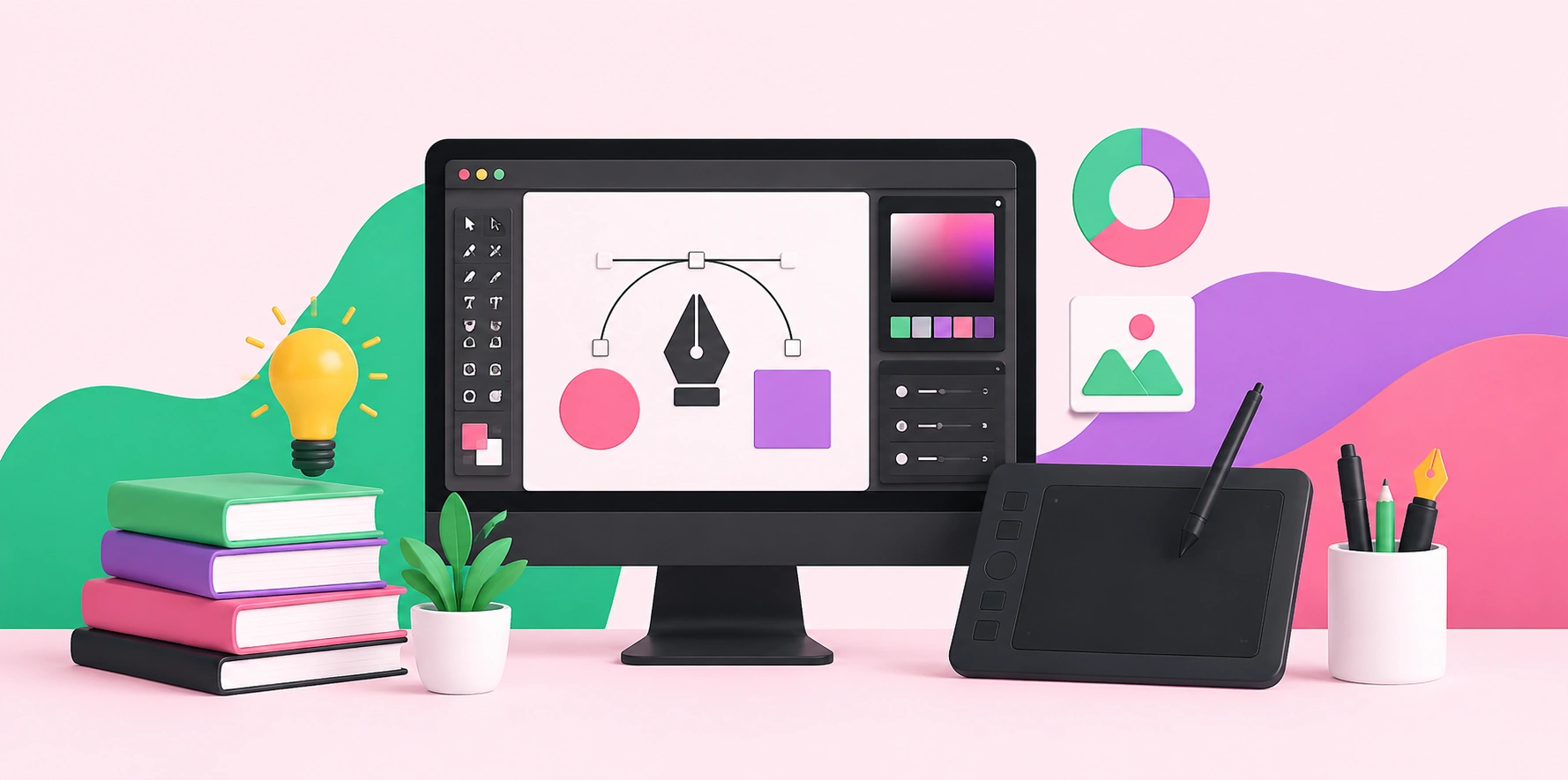
One of the biggest myths in graphic design is that you need expensive software to begin. In reality, several powerful free tools can take you a long way. Browser-based design platforms offer intuitive interfaces and templates ideal for beginners learning layout and composition. For more advanced work, open-source software provides professional-grade capabilities for photo editing, vector illustration, and page layout without any cost. These tools may have steeper learning curves, but they teach the same core skills used in paid programs.
The key is to pick one or two tools and learn them deeply rather than jumping between many. Mastering a single program builds confidence and transferable knowledge, since most design software shares similar concepts like layers, masks, and vector paths. Free video tutorials walk through every feature step by step, so follow along by recreating projects yourself. Hands-on practice is essential; reading about a tool will never replace the muscle memory and problem-solving skills you develop by actually using it to complete real designs.
Practice With Real Projects
Knowledge means little without application, so the fastest way to improve is to practice constantly with real projects. Set yourself challenges such as redesigning a logo you dislike, creating a poster for an imaginary event, or designing social media graphics for a favorite brand. These exercises force you to make decisions, solve problems, and apply the principles you have learned. Many free design communities host daily or weekly challenges that provide prompts and feedback, keeping you motivated and accountable as you build your skills.
Seeking feedback is crucial for growth. Share your work in online forums and social groups where experienced designers offer constructive criticism. At first, critiques may feel uncomfortable, but they reveal blind spots and accelerate improvement faster than working in isolation. Study the feedback carefully, revise your designs, and notice how small changes can dramatically improve a composition. Over time, you will internalize these lessons and begin critiquing your own work more effectively, which is the mark of a maturing designer.
Build a Portfolio and Keep Learning
As your skills develop, start curating your best work into a portfolio. A strong portfolio matters far more than credentials in the design industry, because clients and employers want to see what you can actually create. Include a variety of projects that demonstrate your range, and present each piece cleanly with a short explanation of the problem you solved. Free portfolio platforms and personal websites built with free tools make it easy to showcase your work professionally without any expense.
Finally, treat learning as a lifelong habit rather than a finish line. Design trends, tools, and techniques evolve constantly, so the best designers remain curious and keep experimenting. Follow industry blogs, watch tutorials, and study the work of designers you admire to stay inspired and current. The free resources that helped you start will continue to support your growth for years. With consistent practice, honest self-assessment, and an openness to feedback, you can build a rewarding graphic design career entirely from free foundations.
Frequently Asked Questions
Can I really learn graphic design for free?
Yes, you can learn graphic design entirely for free using online tutorials, open-source software, and community feedback. The main requirements are consistency, practice, and a willingness to seek out and apply constructive criticism.
How long does it take to learn graphic design?
Most beginners can grasp the fundamentals within a few months of regular practice. Becoming proficient enough for professional work typically takes a year or more, depending on how consistently you study and create.
Which free software should beginners use?
Browser-based design platforms are great for beginners, while open-source programs offer advanced photo editing and vector tools. Choose one or two and learn them deeply rather than spreading yourself too thin.
Do I need a degree to work as a graphic designer?
No, a degree is not required in most cases because employers and clients prioritize a strong portfolio. Demonstrating real skills through quality projects matters far more than formal credentials.
How do I build a portfolio with no clients?
Create self-directed projects, redesign existing brands, or participate in design challenges to fill your portfolio. These personal projects effectively demonstrate your abilities even before you land your first paying client.
Conclusion
Learning graphic design for free is entirely achievable when you approach it with structure, discipline, and patience. Start by mastering the core principles of design, choose a couple of free tools and learn them deeply, practice relentlessly with real projects, and gather feedback to accelerate your growth. As your skills mature, build a portfolio that showcases your range and commit to continuous learning, because design is a field that rewards curiosity. The path may require persistence, but the resources are all within reach, and the creative career it leads to can be both fulfilling and financially rewarding. With dedication and the right mindset, you can transform free knowledge into professional-grade design skills and open the door to a vibrant creative future.