How AI Chatbots Can Improve First Contact for Care Service Websites
Care service websites carry more emotional weight than most business websites. A person landing on the site might be looking for help for an aging parent, support after a hospital stay, childcare options, respite care, or urgent information they didn’t expect to need this week.
That first visit matters.
The problem is that many care websites still treat first contact like a simple form fill. Name. Email. Phone number. Message. Submit. Then the visitor waits.
That might work for a roofing quote or a software demo. Care is different. People often arrive with worry, confusion, and a dozen half-formed questions. They don’t always know what service they need. They just know something has to change.
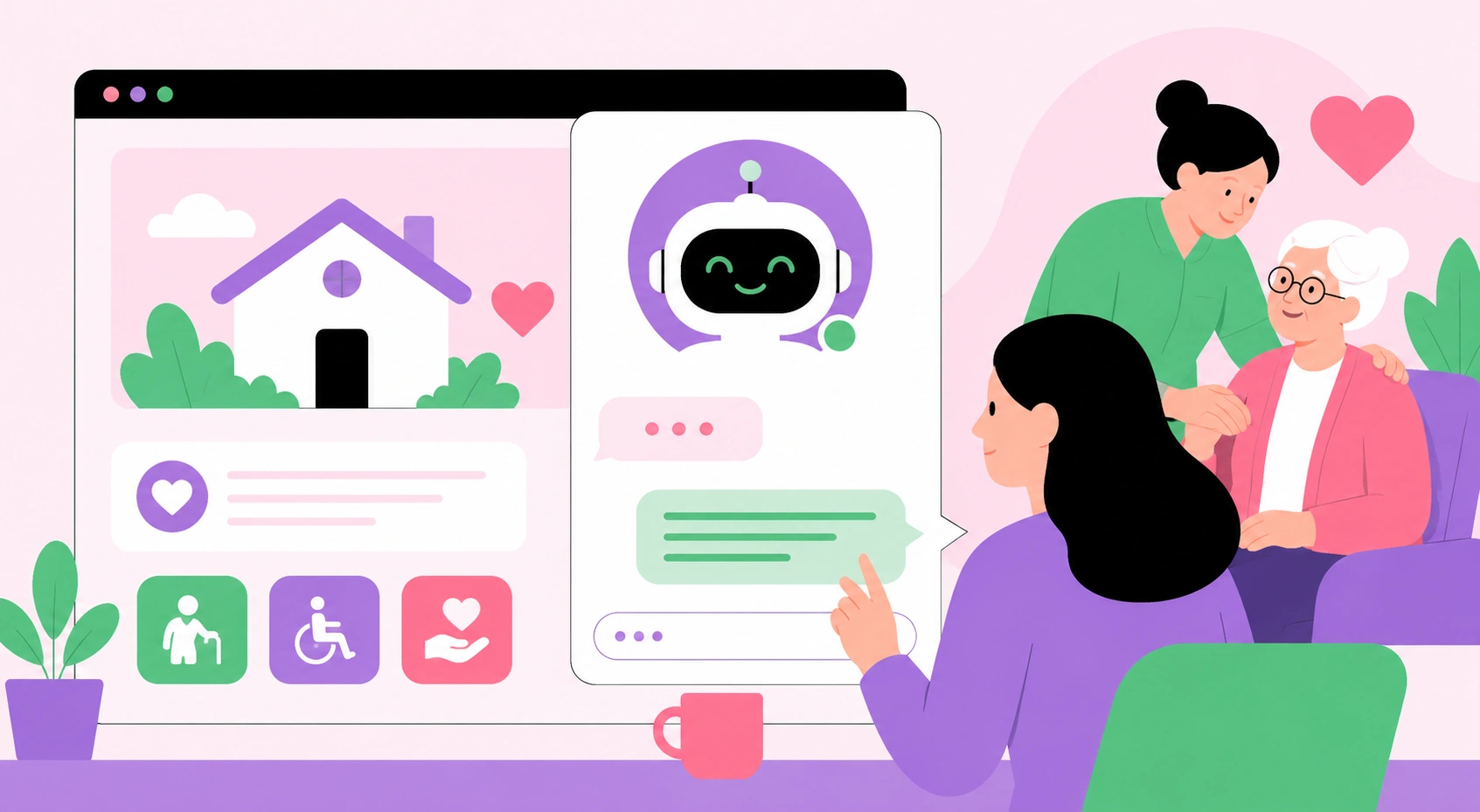
An AI chatbot can help bridge that first gap. Not by replacing human care teams. That would be a mistake. It helps by giving visitors a calmer, faster way to understand their options before speaking to a real person.
Why Speed Matters in Care Decisions
When someone searches for care services, they’re rarely browsing for fun. They may be comparing providers late at night after work. They may be sitting beside a family member who needs support. They may be trying to understand government funding, eligibility, appointment availability, or service areas.
Waiting 24 to 48 hours for a reply can feel much longer in that situation.
A chatbot gives immediate direction. It can answer basic questions, explain service categories, collect key details, and guide the visitor toward the right next step. Simple, but powerful.
For example, a person comparing a support at home package provider in Australia may want to know what services are included, whether help can start after an assessment, and what information they should prepare before speaking with a coordinator. A well-trained chatbot can answer those early questions in plain language, then route the person to the right contact form or booking option.
That’s not just convenient. It reduces friction when people already feel stretched.
Better Questions Lead to Better Enquiries
One common issue with care website enquiries is poor detail. A visitor might submit, “Need help for my mum,” or “Looking for care options.” The team then has to call back and start from zero.
A chatbot can gently guide the conversation.
It might ask what type of support the person is looking for, where care is needed, whether the situation is urgent, and whether the enquiry is for the visitor or someone else. Nothing too invasive. Just enough to help the care team respond properly.
This makes the first human follow-up much more useful. Instead of asking five basic questions, the team can say, “Thanks, the information provided helps. It sounds like your father may need domestic support and transport assistance. Let’s talk through what’s available.”
That feels different. Warmer. More prepared.
A good first contact should never feel like a ticket number.
Reducing Pressure on Admin Teams
Care teams already deal with phone calls, emails, forms, referrals, bookings, cancellations, and follow-ups. Add website enquiries to the pile and things can get messy fast. Especially for smaller providers.
AI chatbots can take on the repetitive questions that don’t need a staff member every time.
What areas are covered?
What services are available?
How does the process work?
Can someone book a consultation?
What happens after an enquiry?
These questions matter, but they can drain hours from a team when answered manually all day. A chatbot handles the first layer so staff can focus on the conversations that need judgment, empathy, and experience.
There’s still a human at the center. That part matters. The chatbot simply clears the path.
Helping Visitors Find the Right Service
Care websites can become crowded quickly. Home care. Disability support. Aged care. Childcare. Allied health. Nursing. Respite. Emergency contacts. Fees. Funding. Locations.
For a visitor, that can feel like a maze.
A chatbot works like a friendly guide at the front desk. It can ask a few short questions and point the visitor toward the right service page. It can also stop people from bouncing away because they couldn’t find what they needed within ten seconds.
Someone searching baby care near me in a busy city or suburb may not want to read five long service pages before finding out whether newborn support, daytime care, or family assistance is available locally. A chatbot can quickly clarify what the visitor means and guide them to the most relevant information.
Tiny moment. Big difference.
When navigation feels easy, people stay longer and trust builds faster.
Keeping the Tone Human
A care chatbot should never sound like a bank password reset tool. Nobody wants robotic replies when asking about support for a parent, child, or loved one.
Tone matters.
The best chatbots use clear, simple language. They don’t overpromise. They don’t pretend to diagnose or assess complex needs. They acknowledge the situation and offer practical next steps.
For example, instead of saying, “Please select from the following service categories,” a care chatbot might say, “Happy to help. Is this support for you, a family member, or someone you care for?”
That one sentence feels easier.
Care websites should avoid cold automation. Use the chatbot for speed, but design it with empathy. It should feel calm, not clever. Helpful, not flashy.
Building Trust Before the First Call
Trust starts earlier than most providers think. It starts when the website loads. It grows when the visitor finds clear information. It strengthens when their first question gets a useful answer.
An AI chatbot can support that trust by being available after hours, responding consistently, and helping visitors feel less lost. It can also explain what will happen next, which matters more than people realize.
Uncertainty creates stress. Clear steps reduce it.
A chatbot might tell the visitor that a coordinator will review their enquiry, confirm service availability, and call within business hours. It might explain what information helps during the first conversation. It might even offer a downloadable guide or link to common questions.
No drama. No hard sell. Just clarity.
The Limits Still Matter
AI chatbots can improve first contact, but they need boundaries. Care services involve personal situations, sensitive information, and sometimes urgent needs. The chatbot should never pretend to replace professional advice, clinical assessment, safeguarding processes, or emergency support.
It should know when to hand over.
For urgent medical issues, it should direct visitors to emergency services or the correct crisis contact. For complex care needs, it should collect basic information and pass the conversation to a trained team member. For privacy, it should only ask for details that are genuinely needed.
Good chatbot design includes restraint. That’s not a weakness. It’s responsible.
What Makes a Care Chatbot Work Well
A useful chatbot starts with the real questions visitors ask. Not the questions a company wishes they asked. The best place to begin is usually call logs, enquiry forms, emails, and front-desk notes.
Patterns appear quickly.
People ask about cost. They ask about eligibility. They ask about locations. They ask how soon care can start. They ask whether the provider can help with a specific situation that doesn’t fit neatly into a service label.
The chatbot should answer those questions in everyday language. It should also make it easy to speak to a person. Always.
That’s the balance: fast answers when the question is simple, human support when the situation needs care.
First Contact Should Feel Easier
Care service websites don’t need chatbots because AI is trendy. They need better first contact because visitors often arrive tired, worried, or unsure.
A well-designed chatbot can help people understand services faster, submit better enquiries, and reach the right team sooner. It can reduce admin pressure without making the experience feel cold. It can guide, reassure, and organize the first step.
And sometimes that’s exactly what someone needs.
Not a perfect answer. Just a clear way forward.