What Is a Social Media Kit?
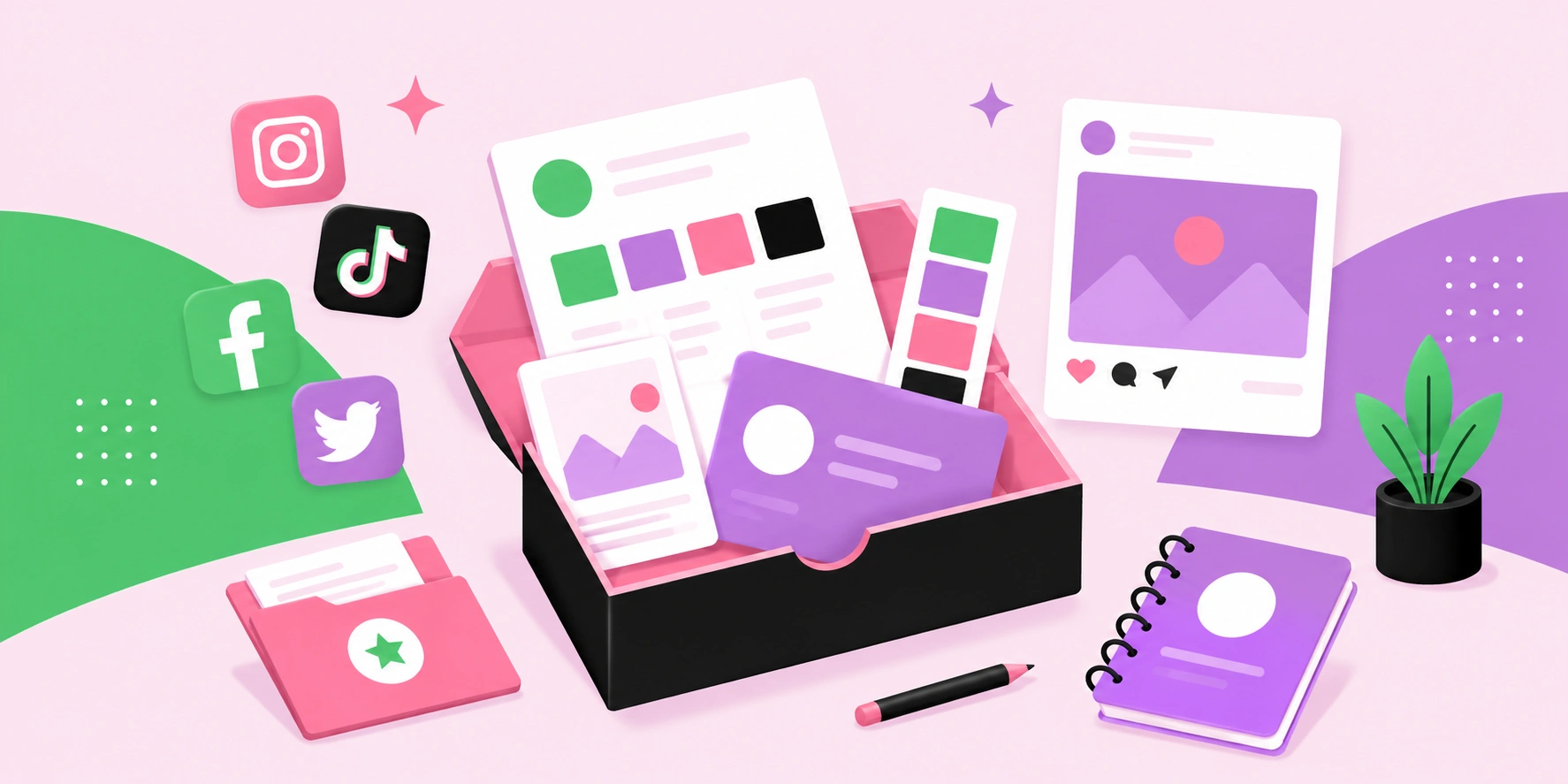
A social media kit is a curated collection of branded assets, templates, and guidelines that ensures every post a brand publishes looks consistent, professional, and instantly recognizable across platforms. It typically includes logos, color palettes, fonts, post and story templates, profile images, cover banners, content guidelines, and sometimes a media or press kit for collaborations. Think of it as the toolbox that lets anyone on a team create on-brand content quickly without reinventing the design each time. For businesses and creators alike, a well-built social media kit is the foundation of a cohesive, scalable, and trustworthy online presence.
Quick Answer: A social media kit is a package of branded assets and guidelines, including logos, colors, fonts, templates, and profile graphics, that keeps a brand's social media content consistent across platforms. It enables fast, professional, on-brand content creation and strengthens brand recognition for businesses, creators, and influencers.
How WebPeak Helps You Build a Powerful Social Media Kit
Creating a social media kit that actually drives recognition and engagement requires professional design and brand strategy. WebPeak helps brands build complete, cohesive social media kits with custom templates, logos, and visual guidelines tailored to each platform. Their design team ensures every asset reflects your brand identity and is optimized for the right dimensions and formats. For brands that need standout visual assets, their social media post and banner design specialists craft eye-catching, on-brand graphics that make your profiles look polished and professional from the very first impression.
What Should a Social Media Kit Include?
A social media kit should include every asset needed to create consistent content without starting from scratch. At its core, brand consistency means using the same visual identity everywhere so audiences instantly recognize you. Essential components include your logo in multiple formats and sizes, a defined color palette with hex codes, primary and secondary fonts, post templates, story and reel templates, profile pictures, cover and banner images, and a short brand voice guide. Many kits also include hashtag sets, a content calendar template, and a media or press kit with bio, audience stats, and collaboration details for influencers and businesses pitching partnerships.
Beyond the obvious visual assets, a strong social media kit also documents the rules for how those assets are used. This includes spacing and clear-space requirements around the logo, approved and prohibited color combinations, image-editing guidelines such as filter styles, and tone-of-voice examples showing how the brand sounds in captions, replies, and comments. These usage rules are what prevent a kit from being misapplied. Without them, two team members can use the same logo and colors yet still produce posts that feel inconsistent, which defeats the entire purpose of having a kit.
Platform-specific dimensions are another essential and frequently overlooked element. Each network has its own ideal sizes for profile pictures, cover images, posts, stories, and thumbnails, and these specifications change periodically. A well-built kit includes correctly sized templates for every platform you use, so content always appears crisp and properly cropped rather than stretched or cut off. This attention to technical detail is often what separates an amateur-looking profile from a polished, professional one that earns immediate trust.
Why Does Your Brand Need a Social Media Kit?
A social media kit delivers practical benefits that compound over time. Here is what it does for your brand:
- Ensures consistency — every post reinforces the same recognizable identity.
- Saves time — templates eliminate repetitive design work.
- Enables teamwork — anyone can create on-brand content without a designer each time.
- Builds trust — a polished, cohesive presence signals professionalism.
- Speeds up collaborations — a media kit makes pitching to partners effortless.
- Scales content — supports higher posting volume without quality loss.
Social Media Kit Components and Their Purpose
The table below breaks down the core components of a social media kit and the specific purpose each one serves, so you know exactly what to prepare.
| Component | Purpose | Why It Matters |
|---|---|---|
| Logo variations | Brand identification | Works across sizes and backgrounds |
| Color palette | Visual consistency | Builds instant recognition |
| Post templates | Fast content creation | Saves time and ensures uniformity |
| Brand voice guide | Consistent messaging | Aligns tone across the team |
| Media kit | Partnership pitching | Simplifies collaborations |
How Does a Social Media Kit Improve Brand Performance?
A social media kit directly improves brand performance by strengthening recognition and consistency, which research links to revenue. According to studies cited by Lucidpress and Marq, consistent brand presentation across platforms can increase revenue by up to 23%, because audiences trust and remember cohesive brands. Sprout Social research also shows that the vast majority of consumers, around 90%, will buy from brands they follow on social media, making a professional, consistent presence a direct driver of sales. In my experience helping brands scale content, the most underrated benefit of a social media kit is speed: teams that use templates publish more frequently and consistently, and consistency compounds into stronger recognition and loyalty over time. A kit turns branding from a guessing game into a repeatable system.
A social media kit also pays dividends as your brand grows and your team changes. When you hire new staff, onboard a freelancer, or work with an agency, a complete kit lets them produce on-brand content almost immediately, without lengthy explanations or trial and error. This continuity protects your brand identity through transitions that would otherwise cause visual drift. In my experience, the brands that maintain a sharp, consistent look over years are almost always the ones with a documented kit that every contributor follows, rather than relying on one person's memory of how things should look.
Finally, a social media kit should be treated as a living document, not a one-time deliverable. Brands evolve, platforms add new formats, and design trends shift, so the most effective kits are reviewed and updated periodically, perhaps once or twice a year. Keeping the kit current ensures it continues to serve the brand rather than locking it into an outdated aesthetic. The most successful organizations schedule regular reviews of their kit and refresh templates and guidelines as their strategy and platforms change, keeping their presence both consistent and modern.
Key Takeaways
- A social media kit is a package of branded assets and guidelines for consistent content.
- Core components include logos, colors, fonts, templates, profile graphics, and a brand voice guide.
- Consistent branding can increase revenue by up to 23% across platforms.
- Around 90% of consumers buy from brands they follow on social media.
- Kits save time, enable teamwork, and let brands scale content without losing quality.
Frequently Asked Questions
What is included in a social media kit?
A social media kit includes logos in multiple formats, a color palette with hex codes, fonts, post and story templates, profile pictures, cover banners, and a brand voice guide. Many also add hashtag sets, content calendars, and a media kit for partnership pitches.
Who needs a social media kit?
Businesses, creators, influencers, nonprofits, and freelancers all benefit from a social media kit. Anyone who posts regularly and wants a consistent, professional presence needs one. It is especially valuable for teams, since it lets multiple people create on-brand content efficiently.
What is the difference between a social media kit and a media kit?
A social media kit contains design assets and templates for creating consistent content. A media kit is a promotional document with your bio, audience statistics, and collaboration details used to pitch brands. Many full social media kits include a media kit as one component.
How do I create a social media kit?
Start by defining your logo, colors, and fonts, then build reusable templates for posts and stories in a tool like Canva or with a designer. Add a brand voice guide and profile graphics. For a polished result, work with professional designers who optimize assets per platform.
Why is brand consistency important on social media?
Brand consistency builds recognition and trust, which drives results. Research shows consistent presentation can increase revenue by up to 23%, and around 90% of consumers buy from brands they follow. A social media kit makes that consistency easy to maintain across every platform.
Conclusion
A social media kit is more than a folder of graphics; it is the system that turns scattered posting into a consistent, recognizable, and scalable brand presence. The most important decision is to build one before you scale your content, so every post reinforces your identity instead of diluting it. With consistency linked to higher revenue and stronger loyalty, the investment pays off quickly. Partner with experienced designers to build a professional kit that makes your brand instantly recognizable and effortless to grow.