Graphic Designer vs Video Editor vs VFX Editor Explained
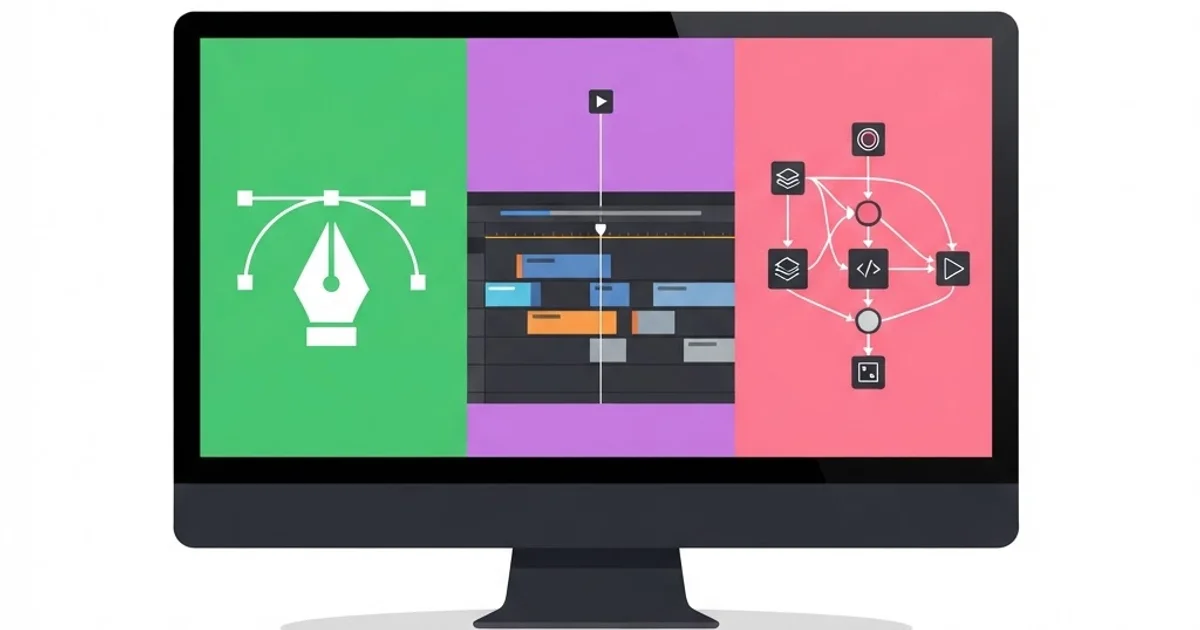
These three roles get grouped together because they all produce visual media, and that grouping causes real career damage. A graphic designer solves communication problems using composition, type, and imagery. A video editor shapes footage into a coherent narrative with pacing and rhythm. A VFX editor creates or integrates imagery that was not captured in camera, using compositing, tracking, and simulation. The daily work, the mental models, the tools, and the career ceilings differ substantially. Employers who conflate them usually want one person to do three jobs at one salary, and professionals who conflate them tend to spread themselves across all three without becoming genuinely valuable in any.
Quick Answer: A graphic designer creates static visual communication using layout and typography, a video editor assembles footage into narrative with pacing and sound, and a VFX editor composites or generates imagery that was never filmed. They share software families and visual judgement, but the core skills, workflows, and career paths are distinct.
How WebPeak Separates Static, Motion, and Composite Work
Understanding how agencies actually divide this work clarifies the distinction faster than any job description. Static brand and campaign assets come out of design teams, motion and edit work sits with editors, and heavier composite or generated imagery is handled separately again, often with support from artificial intelligence services for generation and cleanup tasks that once required extensive manual work. The design side, including logo design and identity systems, feeds the other two: the type, colour, and mark specifications created there constrain what the editors and compositors can do. WebPeak structures delivery this way because each discipline has a different review cycle and a different definition of done, and people who understand that division position themselves far better in interviews than people who claim to cover everything.
What Each Role Actually Does Day to Day
A graphic designer spends most of the day making decisions about hierarchy, spacing, type, and colour in service of a message. The work products are static or interactive: identities, layouts, packaging, campaign assets, interface screens, presentations. The core competency is judgement about how information is organised and perceived. Feedback cycles involve stakeholders arguing about clarity, brand fit, and impact. Success is measured by whether the audience understands and responds.
A video editor spends the day inside a timeline making decisions about sequence, pacing, and emotional rhythm. The work involves reviewing footage, selecting takes, cutting for tempo, layering audio, colour correcting, and delivering across formats. The core competency is temporal judgement: knowing precisely when a cut should land and how long a moment should breathe. Feedback tends to be visceral rather than analytical, with clients saying it feels slow rather than identifying which shot to trim. Editors also manage enormous volumes of media, which makes organisation a genuine professional skill rather than a nicety.
A VFX editor works on imagery that does not exist in the source footage. The day involves rotoscoping, keying, tracking, compositing layers, matchmoving, cleanup, and integrating computer-generated elements so they sit believably in a live plate. The core competency is technical: understanding light behaviour, lens characteristics, colour space, and how to make synthetic elements match photographic ones. Feedback is exacting because the failure mode is obvious, since audiences notice immediately when something looks wrong even if they cannot articulate why.
The practical consequence for job seekers is that portfolios must be built for one primary discipline. Presenting all three at moderate depth tends to read as indecision, which is the same positioning trap described in our guide to structuring a portfolio around a single clear argument.
Skill Overlap and Where It Genuinely Exists
- Compositional judgement transfers across all three. Framing, balance, and visual hierarchy matter whether you are laying out a poster or a shot.
- Colour understanding overlaps partially. Designers work with brand colour and contrast; editors and compositors work with colour space, gamma, and grading, which is a more technical body of knowledge.
- Typography transfers from design into motion for titles and lower thirds, and designers moving into motion often have a real advantage here.
- Software families overlap enough that switching is not starting from zero, but competence in one application does not imply competence in another within the same suite.
- Narrative sense is central to editing and largely absent from static design, which is the biggest adjustment designers face when moving into video.
- Technical problem solving dominates VFX and is comparatively light in graphic design, which is why the jump from design directly to VFX is the hardest of the three transitions.
The realistic conclusion is that a designer can add competent motion work within months, but becoming a genuinely skilled VFX compositor is a multi-year path closer to learning a new profession than extending an existing one.
Role Comparison at a Glance
| Dimension | Graphic Designer | Video Editor | VFX Editor |
|---|---|---|---|
| Core output | Static and interactive visuals | Sequenced footage with audio | Composited and generated imagery |
| Primary skill | Hierarchy and typography | Pacing and narrative rhythm | Technical integration and realism |
| Typical employer | Agencies, in-house teams, studios | Production companies, brands, media | Post houses, studios, advertising |
| Feedback style | Analytical and brand focused | Emotional and pacing focused | Exacting and technical |
| Entry difficulty | Moderate | Moderate | High |
| Hardware demand | Low | Moderate to high | Very high |
How Pay and Career Progression Differ
Rather than quote unreliable salary figures across three professions, the more useful framing is what drives compensation in each. Graphic design pay is driven by seniority and sector, rising as you move from execution into art direction and creative direction where you are paid for judgement and client relationships rather than production hours.
Video editing pay is driven by the value of the content being edited. The same technical skill applied to social content and to broadcast commercial work commands very different rates, because the budget attached to the output differs by orders of magnitude. Editors increase income mainly by moving up the content value chain rather than by getting faster.
VFX compensation is driven by specialisation and scarcity. Generalist compositors are plentiful; specialists in areas such as complex simulation, advanced matchmoving, or photoreal integration are not. VFX also carries more project-based volatility, with intense periods on a production followed by gaps, which makes annual income less predictable than a staff design salary.
The structural conclusion is that design offers the most stable staff employment, editing offers the widest range of freelance opportunity, and VFX offers the highest specialist ceiling with the least stability. If you are comparing these paths primarily on money, model earnings across a full year rather than by day rate, using the approach in our breakdown of annual design income and its main variables, because utilisation and project gaps affect these three professions very differently.
Mistakes People Make Choosing Between These Paths
The first mistake is chasing all three simultaneously. Employers hire for a primary discipline. A portfolio split evenly across static, edit, and composite work usually loses to a focused one in every category it enters.
The second is choosing based on perceived glamour. VFX looks exciting and involves substantial repetitive technical work such as rotoscoping and cleanup, particularly in the early years. Choosing it without understanding that reality leads to fast burnout.
The third is underestimating the hardware and time cost. Video and VFX require significant computing power, storage, and render time. A design workflow that runs comfortably on a modest laptop will not sustain a compositing career, and the equipment investment is real.
The fourth is accepting a job that combines all three at one salary. Small companies frequently advertise for a designer who also edits video and handles effects. Occasionally this is a genuine growth opportunity; more often it is three jobs at one price, and it prevents you from developing depth in any of them.
The fifth is ignoring the audio dimension of editing. Sound is roughly half of a video's impact, and designers moving into editing routinely neglect it. Learning basic audio mixing lifts your work above most self-taught editors.
The sixth is choosing based on entry difficulty alone. Design has the lowest barrier to entry and consequently the highest applicant volume at junior level, a dynamic worth understanding through our overview of how junior titles map to actual responsibility before assuming the easiest door is the best one.
How to Decide Which Path Fits You
Run a two-week self-test rather than deciding in the abstract. In week one, complete one small project in each discipline: design a simple event poster with real typographic care, edit a two-minute sequence from footage you shoot or source, and complete a basic composite such as replacing a sky or removing an object from a clip.
Then assess three things honestly. First, which task did you lose track of time doing? Enjoyment predicts persistence, and persistence predicts skill. Second, which feedback stung most productively? If notes about your pacing energised you but notes about your kerning irritated you, that is diagnostic. Third, which technical friction did you tolerate? VFX involves substantial troubleshooting, and if that frustrated you deeply, it is not a temporary problem.
Next, consider your work-life preferences concretely. Design supports the most predictable staff schedules. Editing frequently involves deadline surges and client review cycles that run late. VFX often involves crunch periods tied to delivery dates that cannot move. These patterns persist throughout a career rather than fading with seniority.
Then look at your local market. A city with a strong advertising and production industry supports editors and compositors well. A city dominated by corporate and institutional employers offers far more design roles than post-production ones. Choosing a discipline your market does not employ means relocating or working remotely at national competition levels.
Finally, choose one primary and one supporting skill rather than a single narrow specialism. The strongest positioning in the current market is a designer who can produce competent motion, an editor who can design clean titles and thumbnails, or a compositor who understands design principles. That combination makes you unusually useful without diluting your primary claim, and it is the practical middle ground between over-specialising and spreading yourself too thin.
Key Takeaways
- Graphic design, video editing, and VFX share visual judgement but differ fundamentally in core skill: hierarchy, pacing, and technical integration respectively.
- Designers can add competent motion work in months, but VFX compositing is closer to learning a new profession than extending an existing skill set.
- Design offers the most stable staff employment, editing the widest freelance market, and VFX the highest specialist ceiling with the least predictability.
- Portfolios must argue for one primary discipline, since evenly split work across all three reads as indecision to hiring managers.
- Be cautious with roles combining all three at one salary, because they usually prevent depth from developing in any of them.
Frequently Asked Questions
Can a graphic designer become a video editor?
Yes, and the transition is common. Compositional judgement and typographic skill transfer directly, which gives designers an advantage with titles and graphics. The genuine learning curve is temporal: developing a sense of pacing, rhythm, and narrative structure takes sustained practice that static design does not build.
Is VFX harder than video editing?
Generally yes, because it demands technical understanding of light behaviour, lens characteristics, colour space, and tracking alongside visual judgement. Editing has a lower barrier to competent work, while VFX requires substantial technical study before output looks convincing to an audience.
Which role pays the most?
It depends on specialisation rather than discipline. Senior creative direction in design, high-value commercial editing, and scarce VFX specialisms all reach comparable levels. VFX has the highest specialist ceiling but the least income stability due to project-based work and gaps between productions.
Should I learn all three disciplines?
Choose one primary and one supporting skill. A designer who handles motion, or an editor who can design clean graphics, is highly employable. Attempting genuine depth in all three usually produces moderate ability across the board, which competes poorly against focused candidates.
What tools does each role use?
Designers work primarily in vector, raster, layout, and interface applications. Editors work in non-linear editing systems with audio and colour tools. VFX artists use compositing software with tracking, keying, and simulation capabilities, often alongside three-dimensional packages for generated elements.
Do these roles work together on projects?
Frequently. A campaign typically begins with design establishing brand direction, moves to editing for the film assembly, and involves VFX for shots requiring elements that were not captured. Understanding adjacent disciplines makes collaboration smoother and is valued in hiring even when you specialise.
Conclusion
The most important decision is choosing a primary discipline deliberately rather than drifting between them because the tools look similar. Depth in one area supported by working knowledge of an adjacent one consistently outperforms shallow capability across all three, both in hiring and in long-term earnings.
Run the two-week self-test this month, pick the discipline where you lost track of time, and rebuild your portfolio to argue for that one thing. If your primary is graphic design and you now need to sharpen the craft fundamentals that separate professionals from operators, start with the decisions covered in our guide to building a reliable typeface system, since typographic judgement is the skill that carries into motion and titling work as well.