Junior Graphic Design Roles Explained: Titles and Duties
Junior graphic design roles are entry-level positions defined by supervised execution, and the title attached to one tells you more about the employer's structure than about the designer's ability. A junior brand designer, a junior production artist, a design assistant and a junior digital designer can all sit at the same pay level while doing almost entirely different work, building different skills, and pointing toward different careers. Choosing between them is the first genuinely strategic decision a designer makes, and most people make it by accident.
Quick Answer: Common junior graphic design roles include junior brand or identity designer, junior digital or web designer, junior production artist, design assistant, junior marketing designer and junior motion designer. All execute supervised briefs, but each builds a distinct skill set that shapes which mid-level path opens next.
How a Full-Service Agency Splits Junior Design Work
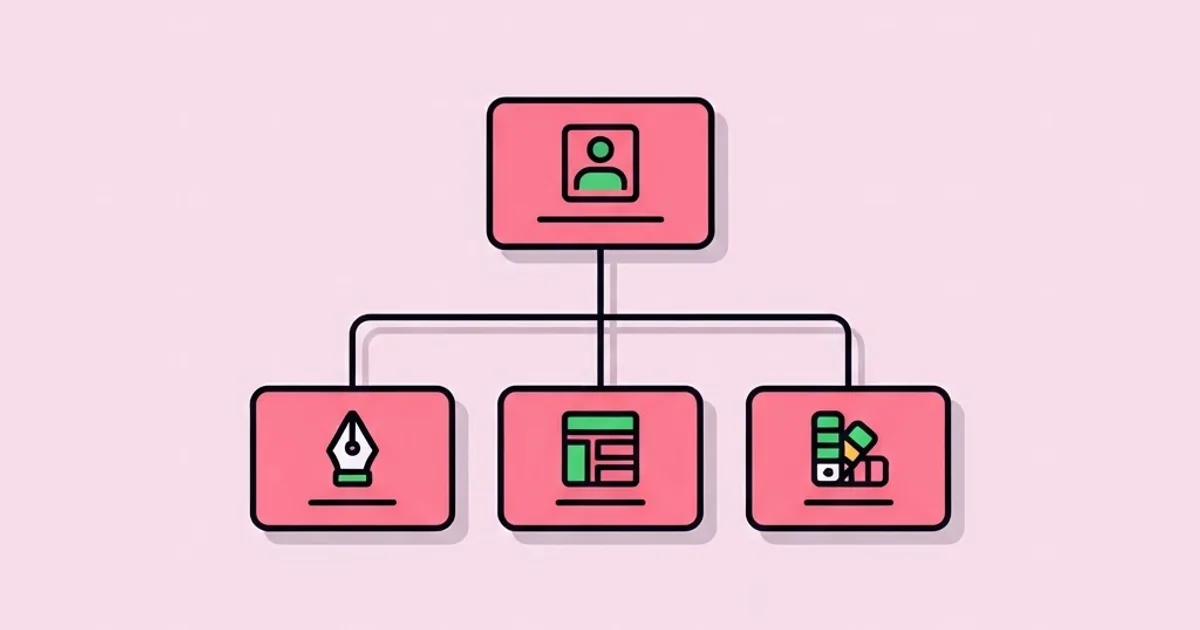
Role names become much clearer when you see how a multi-discipline team divides a single client engagement. In the way WebPeak organise projects, one brand programme can generate identity construction, a layout system, campaign assets and ongoing production, and each of those streams suits a different junior profile. A junior with strong typographic instincts supports identity and logo work, a junior who thinks in structure and hierarchy is more useful on information design and infographics, and a junior who works fast and accurately at volume becomes essential on social and banner production. None of these is a lesser role. They are different entry points into the same profession, and knowing which one matches your instincts is more useful than chasing whichever title sounds most senior.
What Separates One Junior Design Title From Another
Define the terms, because adverts use them inconsistently. A junior designer without a qualifier usually means a generalist executing across whatever the team produces. A junior brand or identity designer works on marks, systems and guidelines, generally inside a studio. A junior digital or web designer works on screens, templates and components, with some handoff to developers. A junior production artist or artworker prepares files for print or platform delivery with exacting technical standards. A design assistant supports a team and may carry administrative duties alongside design. A junior marketing designer sits in-house producing campaign assets across channels. A junior motion designer animates existing assets and builds short-form video.
The practical difference is what fills the calendar. Brand juniors spend their time exploring and refining; production juniors spend theirs checking and delivering; digital juniors spend theirs adapting a system across breakpoints and states; marketing juniors spend theirs turning one concept into fifteen formats. Each rhythm builds a different reflex, and after two years those reflexes are visible in a portfolio.
Adverts also blur the line between junior and assistant, so read the responsibility list rather than the heading. If the list is mostly file preparation and asset resizing, it is a production role regardless of what the title says. When you start applying, it helps to search across all of these titles at once rather than one phrase, and the practical approach to searching for junior design openings covers how to widen the net without diluting your applications.
The Six Junior Design Roles You Will Encounter Most
Here is what each role actually does, in the order you are most likely to meet them in job listings.
- Junior graphic designer, generalist. Executes across print, digital and social under supervision. Builds breadth quickly, which is ideal if you do not yet know which specialism suits you, though it can leave a portfolio without a clear direction.
- Junior brand or identity designer. Explores marks, builds systems, prepares guideline documents and supports pitch presentations. Develops the strongest typographic and conceptual craft, usually in a small studio with intense critique.
- Junior digital or web designer. Designs pages, components and states, works to a grid system and hands off to developers. Builds systems literacy and technical communication, and opens the clearest route into product design.
- Junior production artist or artworker. Prepares print-ready and platform-ready files, checks specifications, manages colour and bleed, and packages assets. Builds technical authority that remains scarce and valuable for a whole career.
- Design assistant. Supports a design team with asset preparation, resizing, filing and sometimes scheduling. Offers proximity to senior work and is a legitimate way in, but negotiate a path out of it within twelve months.
- Junior marketing or in-house designer. Produces campaign assets, email templates, presentations and social sets for one brand. Builds commercial context and stakeholder communication faster than any other junior role.
Junior Design Roles Side by Side
Read this table by the last column. The most useful question is not which role sounds best now but which mid-level position you want to be qualified for in three years.
| Role | Daily focus | Core skill built | Typical next step |
|---|---|---|---|
| Junior generalist designer | Mixed briefs across channels | Breadth and adaptability | Midweight designer |
| Junior brand designer | Marks, systems, guidelines | Typography and rationale | Brand designer, then art director |
| Junior digital designer | Pages, components, states | Systems and handoff literacy | Product or UI designer |
| Junior production artist | File preparation and checking | Technical accuracy | Senior artworker or studio manager |
| Design assistant | Support and asset tasks | Speed and studio process | Junior designer proper |
| Junior marketing designer | Campaign assets at volume | Commercial context | In-house senior or design lead |
Practitioner View on Choosing a First Role
There is no authoritative public dataset mapping junior design titles to career outcomes, so the following reflects observed patterns rather than published figures. The clearest pattern is that specialism compounds. Designers who spend their first two years in a defined lane, whether brand, digital or production, tend to reach mid-level faster than generalists, because their portfolio tells a single coherent story that a hiring manager can evaluate in thirty seconds. Generalists often produce more interesting first years and slower second moves.
The second pattern concerns production roles, which are routinely undervalued by new graduates. Designers who learn genuine print production or platform specification early become the people senior teams cannot ship without, and that dependency translates into stability and negotiating position later. It is unglamorous, and it is one of the most reliable foundations in the field. Understanding the employment structure around whichever lane you pick matters just as much, which is why the employment terms that sit behind junior design roles deserve as much attention as the job title itself.
The third pattern is about team size. In a two-person studio a junior touches everything and learns fast but has almost no mentorship structure. In a thirty-person agency the work is narrower but the critique, process and progression are formalised. Neither is universally better, and the honest question at interview is simply: who will review my work, and how often.
Mistakes Designers Make When Choosing a Junior Role
Choosing the title over the work. A junior designer role that is ninety percent resizing is a production job with a better name. Read the responsibility list and ask for a typical week in the interview.
Dismissing production roles. Technical file knowledge is scarce, transferable and directly tied to shipping. It is an excellent first lane, not a dead end, provided you keep designing alongside it.
Accepting assistant duties indefinitely. Assistant roles are a reasonable entry point and a poor two-year plan. Agree at the outset what proportion of your time is design work and when that proportion increases.
Ignoring who will review the work. The single biggest determinant of growth in a first job is the quality and frequency of critique. A brilliant studio with no time to review juniors teaches less than an ordinary one with a weekly crit.
Assuming digital pays better automatically. Digital and product paths often have higher ceilings, but a skilled packaging or print specialist can out-earn a generic screen designer. Depth beats medium.
Staying a generalist by default. Breadth is useful in year one and vague by year three. Choose a lane consciously before the market chooses one for you based on whatever your last three jobs happened to be.
Overlooking the size of the team. Ask how many designers you will work alongside. It predicts mentorship, scope and pace more accurately than the company's public reputation does.
Choosing Your Lane: A Structured Self-Assessment
Step one, audit what you enjoy at hour three. Anyone can enjoy the first hour of a project. Note which tasks still hold your attention deep into them: refining a curve, building a grid system, checking a colour spec, or producing the fifteenth format of a campaign. That is your natural lane.
Step two, name the mid-level job you want. Look at midweight and senior adverts and pick the one that appeals. Then work backwards: the junior lane you want is the one that produces that portfolio.
Step three, test each lane with a short project. Spend a weekend on an identity exercise, a weekend on a responsive page system, and a weekend on a print production file with proper specification. Preference becomes obvious quickly when you actually do the work.
Step four, restructure the portfolio around one lane. Lead with three projects in your chosen direction and keep the rest as supporting depth. A focused portfolio reads as a decision; a mixed one reads as uncertainty.
Step five, write the interview questions that reveal the real role. Ask what a typical week contains, who reviews junior work and how often, what proportion of time is new design versus adaptation, and what the last junior went on to do. The answers separate developmental roles from staffing gaps.
Step six, agree a scope conversation in advance. Before accepting, ask what would need to be true for your responsibilities to expand, and when that would be reviewed. Roles rarely grow on their own, and the moment before signing is when you have the most leverage.
Step seven, revisit the decision annually. Lanes are not permanent. A production artist who learns interface design, or a brand junior who learns motion, becomes a rare and valuable hybrid. Reassess deliberately each year rather than drifting.
Key Takeaways
- Junior design titles describe employer structure, not designer ability, so always read the responsibility list rather than the heading.
- Each junior lane, whether brand, digital, production, assistant or marketing, builds a different reflex that becomes visible in a portfolio within two years.
- Specialism compounds, and designers who commit to one lane early usually reach mid-level faster than generalists.
- Production and artworking roles are undervalued by graduates and build scarce technical authority that stays useful for a whole career.
- Who reviews your work, and how often, predicts growth in a first role better than the employer's reputation does.
Frequently Asked Questions
What is the difference between a junior designer and a design assistant?
A junior designer executes design briefs under supervision, while a design assistant primarily supports a team with asset preparation, resizing and sometimes administration. Assistant roles are a valid entry point but should come with an agreed path toward full design responsibility.
Which junior design role has the highest long-term ceiling?
Digital and brand lanes typically reach the highest ceilings because they lead toward product design and art direction. However, deep specialists in packaging and print production frequently out-earn generalist screen designers, so depth matters more than the medium itself.
Is a production artist role a bad first job for a designer?
No. It builds technical accuracy, colour knowledge and file discipline that remain scarce across the industry. The risk is staying too long without designing. Treat it as a strong foundation and keep concept work active alongside it.
Can a junior designer switch lanes later?
Yes, and many do. The switch is easiest in the first three to four years, and it works best when you rebuild the portfolio around the new lane first. Hybrid designers who combine two lanes are particularly valuable to small teams.
How many years does a junior design role usually last?
Typically eighteen months to three years, depending on team size and the variety of work available. Promotion usually follows demonstrated ownership of a project from brief to delivery rather than a specific length of service.
Do in-house junior roles limit creative growth?
They narrow the range of brands you touch but deepen your understanding of one business, which accelerates commercial judgement and usually gives earlier ownership. Many in-house juniors gain scope faster than agency juniors of the same experience.
What should a junior ask about mentorship at interview?
Ask who reviews junior work, how frequently reviews happen, whether critique is scheduled or ad hoc, and what the previous junior progressed to. Vague answers to all four usually indicate a staffing need rather than a development role.
Conclusion
The decision that matters is not which junior title to accept but which mid-level designer you intend to become, because the lane you spend your first two years in writes your portfolio for you. Work backwards from the job you want at year three and choose the junior role that produces the evidence for it. The concrete next step is to spend one weekend each on an identity exercise, a responsive page system and a print production file, then compare which one you were still enjoying at hour three. To understand how each of these lanes affects long-term income, read the breakdown of how yearly design earnings are structured before you commit to a direction.