Do's and Don'ts in Social Media: 15 Rules Every Brand Should Follow in 2026
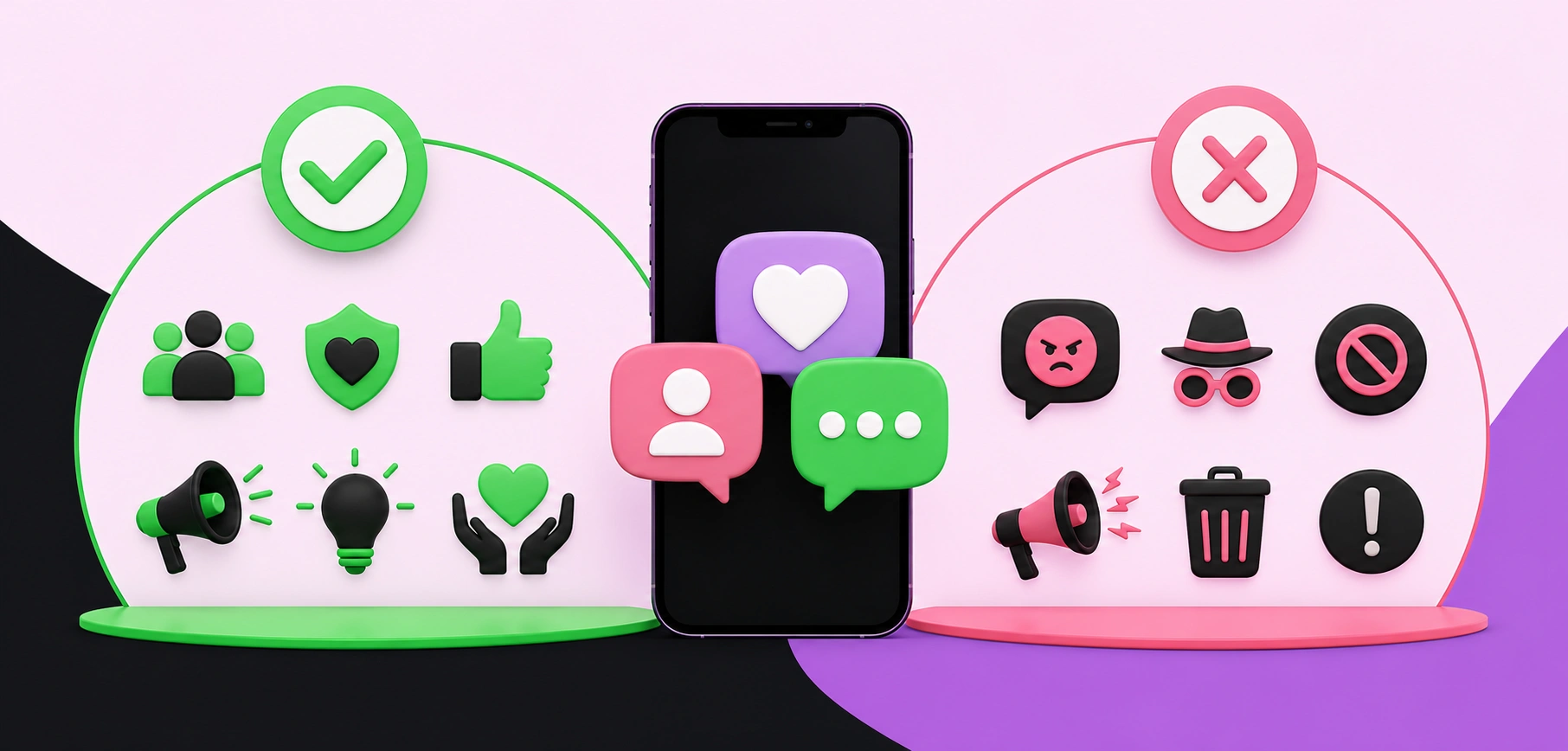
The do's and don'ts in social media are the practical rules that separate accounts people trust from accounts people mute. In plain terms, social media do's and don'ts are the behaviors — posting habits, engagement practices, tone choices, and privacy decisions — that either build an audience or quietly destroy one. Most brands do not lose followers because of one big scandal; they lose them through small, repeated mistakes: ignoring comments for days, posting the same graphic to five platforms, or arguing with a critic in public. This guide breaks down the specific rules that work in 2026, why they work, and the exact mistakes to stop making today.
Quick Answer: The core do's in social media are: post consistently, respond to comments within 24 hours, adapt content to each platform, and disclose paid partnerships. The core don'ts are: buying followers, over-automating replies, posting during a crisis without checking the news, and deleting negative feedback instead of addressing it professionally.
How WebPeak Helps Brands Master Social Media
WebPeak is a full-service digital agency that manages the do's and don'ts of social media for businesses worldwide so brand teams do not have to learn them through costly mistakes. Their social media management services cover content calendars, community management, response protocols, and platform-specific formatting — the exact areas where most brands slip. They also run paid campaigns through their social media marketing team, ensuring organic best practices and advertising strategy work together rather than against each other. For brands that need scroll-stopping creatives, their designers produce on-brand visuals built for each platform's dimensions and audience expectations.
What Are the Most Important Do's in Social Media?
A social media "do" is any repeatable practice that increases trust, reach, or engagement without risking your reputation. The single most important do is consistency: algorithms on Instagram, TikTok, LinkedIn, and X all reward accounts that publish on a predictable schedule, because predictable posting signals an active, reliable creator. Three to five quality posts per week outperforms fifteen rushed ones.
The second critical do is responding to comments and messages quickly. Treat every comment as a customer standing at your counter — silence reads as indifference. Fast, human replies also feed engagement signals back to the algorithm, extending the organic life of each post. Third, adapt every piece of content to the platform it lives on: a LinkedIn carousel, a TikTok hook, and an X thread require different formats even when the underlying message is identical. Fourth, always disclose sponsorships and affiliate relationships clearly — the FTC requires it, and audiences reward transparency with higher trust. Finally, audit your profiles quarterly: outdated bios, dead links, and abandoned pinned posts quietly tell visitors that nobody is home.
Which Social Media Don'ts Damage Brands the Fastest?
A social media "don't" is any behavior that trades short-term convenience for long-term credibility. Some mistakes are slow leaks; the ones below are punctures. Based on patterns seen across hundreds of brand accounts, these are the don'ts that cause the fastest, most measurable damage:
- Don't buy followers or engagement. Fake followers crater your engagement rate, which platforms use to decide how widely to distribute your content. A 100K account with 0.2% engagement reaches fewer real people than a 5K account with 6%.
- Don't delete negative comments (unless abusive). Deleting legitimate criticism invites screenshots and escalation. Respond publicly, resolve privately, and let the professional reply stand as proof you handle problems well.
- Don't post identical content across all platforms simultaneously. Cross-posting without adaptation signals laziness to audiences and performs poorly with every platform's native format preferences.
- Don't schedule posts blindly during breaking news or crises. A cheerful promotional post published during a tragedy — even by accident via a scheduler — can dominate your brand's search results for months.
- Don't argue publicly with critics or competitors. You will never win a public argument as a brand; you will only give the conflict a bigger audience.
- Don't over-automate. Auto-DMs, generic AI replies, and bot-like comment responses are instantly recognizable in 2026 and actively repel the audiences you are trying to build.
The common thread in every one of these don'ts is the same: each sacrifices audience trust to save time, and trust is the only social media asset that compounds.
How Do the Do's and Don'ts Differ Across Platforms?
The fundamentals — consistency, responsiveness, authenticity — apply everywhere, but each platform enforces its own unwritten rules. What earns engagement on TikTok can look unprofessional on LinkedIn, and what performs on LinkedIn dies quietly on X. Before committing to a posting strategy, map your core do's and don'ts to each platform where your audience actually spends time.
| Platform | Key Do | Key Don't |
|---|---|---|
| Prioritize Reels and carousels; use 3–5 targeted hashtags | Don't post low-resolution images or stuff 30 hashtags into captions | |
| Share first-person insights, data, and lessons learned | Don't post hard sales pitches or engagement-bait polls | |
| TikTok | Hook viewers in the first 2 seconds; post natively shot video | Don't upload watermarked or repurposed horizontal video |
| X (Twitter) | Join relevant conversations in real time; use threads for depth | Don't auto-post links with no context or commentary |
| Build community through Groups and event content | Don't rely on organic page reach alone for growth |
The practical takeaway: choose two or three platforms where your audience is genuinely active and follow their native rules well, rather than maintaining a mediocre presence on six. Depth beats breadth in every engagement metric that matters.
What Does the Data Say About Following Social Media Best Practices?
The evidence behind these rules is measurable, not anecdotal. According to the Sprout Social Index, 76% of consumers expect a brand to respond to their social media message within 24 hours, and a significant share will buy from a competitor when that expectation is not met. Response speed is not a courtesy; it is a revenue variable. Similarly, research from Edelman's Trust Barometer has consistently shown that a majority of consumers say brand trust is a deciding factor in purchase decisions — and trust on social media is built almost entirely through the small, repeated behaviors covered in this guide.
Statista reports that the average social media user now spends roughly two and a half hours per day across platforms, which means your audience sees hundreds of brand messages daily. In that environment, the brands that win are not the loudest — they are the most consistent and the most human. Here is the original insight most generic articles miss: the do's and don'ts in social media are not really content rules, they are customer service rules. Every post is a promise, every reply is a service interaction, and every ignored comment is a walk-out. Brands that reframe social media as a service channel rather than a broadcast channel outperform on engagement, retention, and conversion — because the algorithm ultimately rewards whatever real humans reward.
Key Takeaways
- Consistency beats volume: 3–5 well-adapted posts per week outperform daily rushed content on every major platform.
- 76% of consumers expect a brand response within 24 hours on social media, according to the Sprout Social Index — slow replies cost sales.
- Never buy followers: fake audiences lower engagement rates, which directly reduces organic reach across all platforms.
- Adapt content per platform — cross-posting identical content is one of the fastest ways to underperform in native feeds.
- Respond to criticism publicly and professionally; deleting negative comments escalates conflicts and damages trust.
Frequently Asked Questions
What are the basic do's and don'ts in social media?
The basic do's are: post consistently, reply to comments within 24 hours, tailor content to each platform, and disclose sponsorships. The basic don'ts are: buying followers, deleting legitimate criticism, cross-posting identical content everywhere, arguing publicly, and letting scheduled posts run during a crisis or breaking news event.
How often should a brand post on social media?
Most brands see the best results posting three to five times per week per platform, focusing on quality and native formats. Consistency matters more than volume — a predictable schedule trains both the algorithm and your audience to expect and engage with your content regularly.
Should I delete negative comments on my business page?
No, unless the comment is abusive, spam, or violates platform rules. Deleting legitimate criticism often escalates the situation through screenshots. Instead, reply publicly with a professional acknowledgment, then move the resolution to a private message. Your public response becomes proof of good customer service.
Is it bad to post the same content on every platform?
Yes, if it is posted identically. Each platform rewards native formats — vertical video on TikTok, carousels on Instagram, text insights on LinkedIn. You can reuse one core idea everywhere, but reformat it for each platform's dimensions, tone, and audience expectations to avoid underperforming in every feed.
Why is buying followers a bad idea?
Purchased followers never engage, which drags down your engagement rate — the key signal platforms use to decide how widely to distribute your posts. A large fake audience means less organic reach, damaged credibility with real users, and potential penalties from platforms that regularly purge inauthentic accounts.
Conclusion
The single most important decision you can make about social media is to treat it as a service channel, not a megaphone. Every rule in this guide — respond fast, post consistently, adapt per platform, never fake growth — flows from that one mindset shift. Start this week by auditing your last twenty posts and your average response time, then fix the single biggest gap before adding anything new. These recommendations come from patterns observed across real brand accounts, not theory, and the brands that apply them consistently are the ones audiences learn to trust — and buy from.