Can USCIS See Private Social Media? The Truth About Immigration Social Media Screening
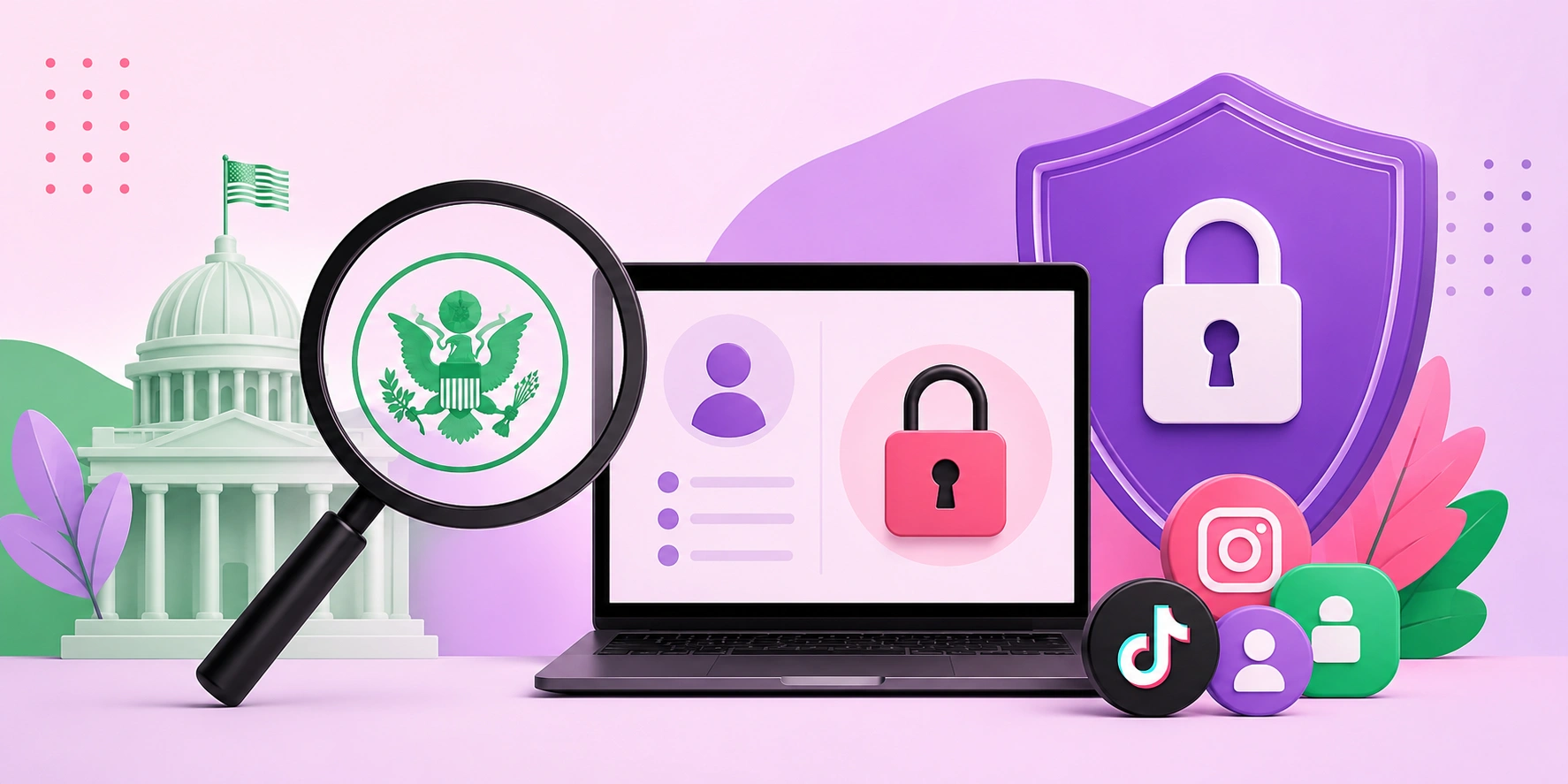
USCIS cannot log into your private accounts, but it can see far more of your social media than most applicants assume. Social media screening in immigration is the practice of reviewing applicants' publicly available online presence — profiles, posts, photos, and connections — as part of vetting for visas, green cards, and naturalization. Since 2019, the U.S. Department of State has required most visa applicants to disclose social media identifiers used in the previous five years on forms DS-160 and DS-260, and USCIS has expanded its own social media review programs. The distinction that matters is between what officers can access without your cooperation (public content) and what appears when your own disclosures, shared content, or law enforcement processes open additional windows into 'private' material.
Quick Answer: USCIS cannot directly access private social media accounts or read private messages without legal process. However, officers can view all public content, require applicants to disclose social media handles on visa forms, and see private content if it is shared, screenshotted, reported, or obtained through subpoenas — so privacy settings are not full protection.
How WebPeak Helps You Manage Your Digital Footprint
Understanding and controlling your online presence has become essential for immigration applicants, professionals, and businesses alike — and WebPeak specializes in exactly that. They are a full-service digital agency offering AI, content writing, digital marketing, graphic design, web development, and cybersecurity services worldwide. Their cybersecurity services help individuals and organizations audit their digital exposure, secure accounts, and understand what information about them is publicly discoverable. For those building a clean, credible professional presence online, their social media management services ensure public profiles present accurate, consistent information — which matters when consistency across your digital footprint is itself part of official vetting.
What Can USCIS Actually See on Your Social Media?
USCIS and consular officers can review anything publicly visible: public posts, profile photos, bios, follower lists, tagged photos on public accounts, comments on public pages, and content indexed by search engines. A public Facebook post from 2017, a public Instagram grid, or a Twitter/X account without protection is fully reviewable, and officers do not need your permission or notification to look. What they cannot do without legal process is bypass privacy settings: DHS policy, as described in its own Privacy Impact Assessments, states that officers reviewing social media generally may not friend, follow, or message applicants under false identities to access restricted content, and they cannot compel platforms to hand over private messages without subpoenas or warrants. However, three pathways bring 'private' content into view. First, disclosed identifiers: the DS-160 and DS-260 visa forms require applicants to list social media handles from the past five years, giving officers a verified map of accounts to review. Second, third-party exposure: anything a friend screenshots, reposts publicly, or reports to authorities becomes accessible regardless of your settings. Third, border searches: CBP officers at ports of entry can request to inspect electronic devices, where logged-in apps expose private content directly — a separate but related risk many applicants conflate with USCIS review.
Which Applications Trigger Social Media Review?
Not every filing receives the same scrutiny, but the scope of social media vetting has expanded steadily. Applicants should assume review is possible in these situations:
- Nonimmigrant and immigrant visa applications: DS-160 and DS-260 forms require social media identifier disclosure for nearly all applicants since June 2019.
- Adjustment of status (green card) applications: USCIS may review public social media, particularly in marriage-based cases where officers look for evidence the relationship is genuine.
- Naturalization (citizenship) applications: Reviews focus on good moral character, false claims, and consistency with information provided on Form N-400.
- Asylum and refugee cases: Enhanced vetting programs include social media checks for security screening purposes.
- Cases flagged for fraud or security review: The Fraud Detection and National Security (FDNS) directorate conducts deeper open-source reviews of referred cases.
- Port-of-entry inspections: CBP can question travelers about social media and request device inspections, independent of any pending petition.
The most common practical consequence is not a denial for opinions but a denial for inconsistency — social media evidence that contradicts claims on the application, such as an undisclosed job, a different relationship timeline, or unreported travel.
How Does Social Media Evidence Affect Immigration Decisions?
Officers use social media as corroboration, not as a standalone verdict. Content is weighed against the application record, and discrepancies trigger Requests for Evidence, extended administrative processing, or referrals to fraud units. Understanding which risks apply to which content helps applicants audit their own footprint intelligently.
| Content Type | Can USCIS Access It? | Risk Level for Applicants |
|---|---|---|
| Public posts, photos, and bios | Yes — freely viewable without notification | High if inconsistent with application claims |
| Private posts behind privacy settings | Not directly — only via sharing, reports, or legal process | Moderate — screenshots and reposts remove protection |
| Private direct messages | No — requires subpoena, warrant, or device inspection | Low in USCIS review; higher at border device searches |
| Deleted content | Sometimes — via archives, caches, or others' saved copies | Moderate — deletion does not guarantee removal everywhere |
| Disclosed handles on DS-160/DS-260 | Yes — disclosure is mandatory and verified | High if handles are omitted or misrepresented |
What Does the Data Show About Immigration Social Media Vetting?
The scale of the program is documented in government records. According to the U.S. Department of State's own estimates published when the 2019 disclosure rule took effect, approximately 14.7 million visa applicants per year are required to provide social media identifiers on their application forms. DHS Privacy Impact Assessments confirm that USCIS's Fraud Detection and National Security directorate uses publicly available social media information in case reviews, and a 2017 DHS Office of Inspector General report evaluating pilot programs found that social media screening pilots had limited demonstrated effectiveness at that time — an official acknowledgment that the practice expanded faster than the evidence for it. The original insight applicants should take from this record is twofold. First, the government's primary use of social media is consistency-checking, not opinion-policing: the highest-risk content is anything contradicting your forms, not ordinary personal expression. Second, because disclosure of handles is mandatory and lying on federal forms constitutes misrepresentation with permanent consequences, the correct strategy is accuracy plus hygiene — disclose truthfully, review your public footprint before filing, and ensure your online presence tells the same story as your application. Deleting accounts to avoid disclosure is dangerous: the forms ask about identifiers used in the past five years, so a deleted account you fail to disclose can itself become a misrepresentation finding.
Key Takeaways
- USCIS cannot log into private accounts or read private messages without legal process, but all public content is freely reviewable without notification.
- Since 2019, roughly 14.7 million visa applicants annually must disclose five years of social media handles on DS-160 and DS-260 forms, per State Department estimates.
- Private content loses protection when it is screenshotted, reposted, reported by others, or exposed during CBP device inspections at the border.
- The biggest social media risk in immigration cases is inconsistency — content contradicting application claims triggers fraud referrals far more often than opinions do.
- Omitting social media accounts used in the past five years from visa forms can constitute misrepresentation, a finding with permanent immigration consequences.
Frequently Asked Questions
Can USCIS see my private social media accounts?
No, not directly. USCIS officers cannot bypass privacy settings, log into your accounts, or read private messages without legal process such as a subpoena. They can, however, view everything public, review accounts you disclose on visa forms, and see private content that others share or report.
Do I have to give USCIS my social media passwords?
No. Visa forms DS-160 and DS-260 require social media identifiers (usernames), not passwords. USCIS does not request passwords in standard applications. At the border, CBP may ask to inspect devices, but policies on password disclosure vary by citizenship status — lawful permanent residents and citizens have stronger refusal rights.
Can USCIS see deleted social media posts?
Sometimes. Deleted posts can survive in web archives, search engine caches, platform backups, and screenshots saved by other people. Deletion reduces visibility but is not guaranteed erasure. More importantly, deleting accounts does not remove the obligation to disclose handles used within the past five years on visa forms.
Does USCIS check social media for marriage green cards?
USCIS may review public social media in marriage-based cases to assess whether the relationship appears genuine. Officers look for consistency: relationship timelines, photos together, and life details matching the petition. Public content contradicting your stated relationship history is a common trigger for additional evidence requests or interviews.
Should I delete my social media before applying for a visa?
No — deleting accounts to avoid disclosure is risky. Forms ask for identifiers used in the past five years, so undisclosed deleted accounts can constitute misrepresentation. The better approach is to disclose truthfully, review your public content for inconsistencies with your application, and tighten privacy settings going forward.
Conclusion
The single most important insight is that social media risk in immigration cases comes from inconsistency and nondisclosure, not from having an online life. Before filing any application, audit your public footprint, verify that your online presence matches your forms, and disclose every handle honestly — accuracy is a far stronger shield than deletion. Applicants who treat their digital footprint as part of the official record, and consult a qualified immigration attorney for case-specific concerns, approach the process from a position of preparation rather than fear.