Can Teachers Post Political Views on Social Media? Rights, Risks, and Smart Boundaries
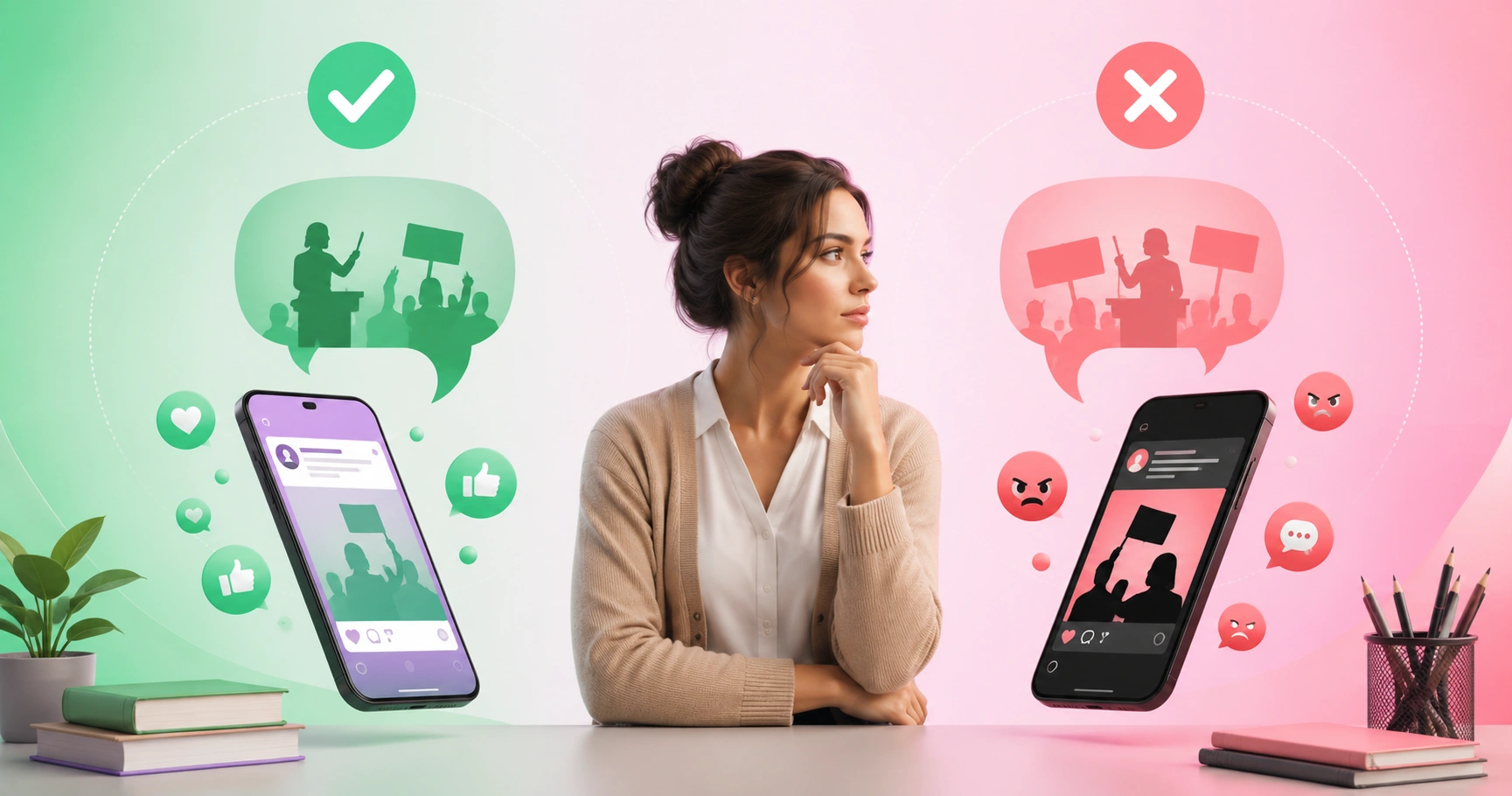
Teachers can post political views on social media, but their protection depends on where they teach, what they say, and how it affects their school. Political speech by teachers refers to any public expression of opinion on candidates, parties, legislation, or public policy made by an educator outside their official duties. In the United States, public school teachers enjoy meaningful — but conditional — First Amendment protection for political speech made as private citizens. The catch is that this protection dissolves quickly when speech disrupts the school environment, targets students or colleagues, or is made in the classroom or in an official capacity. In today's polarized climate, where a single post can be screenshotted and shared with a school board within hours, understanding these boundaries has become a core professional survival skill.
Quick Answer: Yes, public school teachers can post political views on social media as private citizens — political speech on public issues receives strong First Amendment protection. However, that protection can be lost if posts disrupt school operations, mention students, or occur in an official capacity. Private school teachers have far fewer protections.
How WebPeak Helps Educators Build a Professional Digital Presence
Whether an educator wants to share views responsibly or build an authoritative personal brand, a deliberate content strategy matters — and that is where WebPeak can help. They are a full-service digital agency providing AI, content writing, digital marketing, graphic design, and web development services to clients worldwide. Their content writing services help educators, education bloggers, and school leaders craft thoughtful, well-researched posts and articles that express positions professionally rather than reactively. For teachers growing an audience as authors, consultants, or advocates, their team also offers social media management services that keep publishing consistent, on-message, and aligned with professional standards.
What Legal Protections Do Teachers Have for Political Speech?
Political speech sits at the core of First Amendment protection, which gives teachers a stronger legal position here than in most other social media categories. The Pickering balancing test — from Pickering v. Board of Education (1968), a case that itself involved a teacher criticizing a school board — protects public employees who speak as private citizens on matters of public concern. Commentary on elections, legislation, school funding, and public policy squarely qualifies as public concern. However, three limits apply. First, under Garcetti v. Ceballos (2006), speech made as part of official job duties is unprotected, so political commentary delivered in the classroom or through school accounts carries no shield. Second, the Pickering balance tips against the teacher if the speech causes substantial disruption — parent complaints flooding the office, students refusing to attend class, or media coverage that impairs school operations can all justify discipline even for otherwise protected speech. Third, these protections apply only to public school teachers; private school educators are governed by contract, and most private schools reserve broad discretion over employee conduct. A further nuance: several states have laws protecting employees' lawful off-duty political activity, which can add a layer of protection beyond the First Amendment, so teachers should check their state's specific statutes.
Where Is the Line Between Protected Opinion and Fireable Conduct?
The line is drawn less by the opinion itself and more by its target, tone, and setting. Courts and districts consistently distinguish between commentary on issues and conduct that undermines a teacher's ability to serve all students. The following distinctions capture where discipline actually occurs:
- Issues vs. individuals: Criticizing a policy is protected; mocking or attacking identifiable students, parents, or colleagues is not.
- Private citizen vs. official capacity: Posting from a personal account on personal time is safer; using school branding, classroom time, or a district account converts speech into unprotected job-duty speech.
- Opinion vs. advocacy to students: Sharing views with adult followers is one thing; pressuring or recruiting students to a political position invites discipline in nearly every district.
- Civil expression vs. hateful rhetoric: Political posts crossing into slurs, dehumanizing language, or discriminatory statements lose protection because they suggest the teacher cannot treat all students equitably.
- Disclosure vs. neutrality violations: Some districts require staff to maintain classroom neutrality; violating a written neutrality policy is a contractual issue independent of constitutional rights.
A practical rule of thumb used by employment attorneys: political speech about the world is generally defensible; political speech about your school community is generally not.
How Do District Policies and Teacher Contracts Treat Political Posts?
Even where the Constitution protects a post, contract language can still create consequences. Most districts maintain social media and professional conduct policies, and a growing number address political expression explicitly — typically prohibiting political advocacy during instructional time, use of school resources for campaigning, and posting in ways that imply district endorsement. Tenure status, union membership, and state law significantly change the practical risk profile for identical posts.
| Scenario | Typical Protection Level | Recommended Approach |
|---|---|---|
| Personal account, general political commentary, no school mention | Strong — core protected speech for public school teachers | Post civilly; add a 'views are my own' disclaimer |
| Political post referencing your school, students, or colleagues | Weak — disruption analysis usually favors the district | Avoid entirely; discuss issues without naming your school community |
| Political content shared during class or via school accounts | None — official-capacity speech under Garcetti | Keep all political expression off school time and platforms |
| Private school teacher posting any political content | Contract-dependent — no First Amendment shield | Review your contract's conduct clauses before posting |
What Does the Evidence Say About Teachers, Politics, and Public Perception?
Data shows both the scale of teacher political expression and the sensitivity around it. According to the Pew Research Center, about seven in ten U.S. adults use social media, and educators participate at similar rates, meaning millions of teachers maintain accounts where political content circulates daily. Surveys by the EdWeek Research Center have found that a substantial share of teachers report self-censoring on political and social topics, with many saying they avoid discussing contested issues even outside school due to fear of parent or administrator backlash. RAND Corporation research on educator well-being has likewise documented that political polarization is a rising source of job-related stress for teachers. The original analysis these numbers support is that the real governing force is not law but community tolerance: identical posts produce radically different outcomes in different districts, which means teachers should calibrate to their local context, not to national headlines. A useful self-audit: before posting, ask whether the post criticizes ideas (defensible) or attacks people connected to your school community (dangerous), and whether you would repeat the statement verbatim at a public school board meeting. Teachers who pass both tests rarely face consequences; teachers who fail either are gambling with their contract.
Key Takeaways
- Public school teachers can post political views on social media as private citizens — political speech on public issues receives strong First Amendment protection under the Pickering test.
- Protection is lost when posts cause substantial school disruption, target students or colleagues, or are made in an official capacity under Garcetti v. Ceballos.
- Private school teachers have no First Amendment protection from their employer; their rights come solely from contract terms and state off-duty conduct laws.
- EdWeek Research Center surveys show many teachers self-censor on political topics due to fear of backlash, confirming perception risk often exceeds legal risk.
- The safest framework: comment on issues rather than individuals, keep politics off school time and platforms, and never reference your specific school community in political posts.
Frequently Asked Questions
Can teachers post political views on social media legally?
Yes. Public school teachers posting as private citizens on political issues are engaging in core protected speech under the First Amendment. Protection weakens if the post disrupts school operations, involves students, or uses school resources. Private school teachers depend on contract terms rather than constitutional protection.
Can a teacher be fired for supporting a political candidate online?
Generally no, if the support is expressed civilly on a personal account without involving the school. Candidate endorsements are classic protected political speech. However, campaigning during class time, using school accounts, or pairing endorsements with attacks on the school community can convert protected speech into fireable conduct.
Do teachers have to stay politically neutral outside of school?
No law requires public school teachers to be politically neutral in their personal lives. Neutrality requirements typically apply only to classroom instruction and official duties. However, some districts have written policies discouraging staff political advocacy, and violating an explicit written policy can create contractual consequences regardless of constitutional rights.
Should teachers use a disclaimer like 'views are my own'?
Yes, it is a sensible practice. A disclaimer clarifies that you speak as a private citizen, which supports the legal distinction courts examine. It is not a magic shield — disruptive or student-targeting posts remain punishable — but it strengthens your position and signals professional awareness to administrators.
What political topics are riskiest for teachers to post about?
The riskiest posts involve your own school community: local school board races, district policies, named colleagues, or student-related controversies. Nationally divisive topics carry moderate risk depending on community norms. General civic commentary on legislation, elections, and policy issues, expressed respectfully, carries the lowest risk for public school teachers.
Conclusion
The most important decision for any educator is not whether to have political views — it is whether each post comments on issues or entangles your school community. Keep political expression on personal accounts, off school time, and away from students and colleagues, and your speech sits on the strongest constitutional footing available to any public employee. Before your next political post, apply the school board meeting test, and you will protect both your voice and your career. Informed, deliberate expression is what separates professionals who influence public debate from those who become cautionary headlines.