Do's and Don'ts for Social Media: The Complete Guide for Individuals and Brands
Most social media damage is self-inflicted: a rushed reply to criticism, an unverified share, an over-personal post that resurfaces years later in a job interview. Social media etiquette is the set of practical rules governing what to post, how to engage, and what to avoid so that your online presence builds opportunity instead of destroying it. These rules are not arbitrary politeness — they are risk management and growth strategy combined. This guide lays out the specific do's and don'ts that separate accounts people trust from accounts people mute, whether you are managing a personal profile, a professional reputation, or a brand with thousands of followers.
Quick Answer: The core do's for social media: post consistently, verify before sharing, engage genuinely, protect your privacy, and disclose paid content. The core don'ts: never post in anger, never share unverified claims, never argue publicly with critics, never overshare personal data, and never buy followers. Consistency plus restraint builds lasting trust.
How WebPeak Helps You Get Social Media Right
Applying these rules consistently across platforms, formats, and posting schedules is a full-time discipline — which is why growing brands outsource it. WebPeak is a full-service digital agency that manages social presence for businesses worldwide. Their social media management services handle content calendars, community engagement, and crisis-safe response protocols so brands never break the don'ts under pressure, while their social media post and banner design services ensure every post meets the visual quality standards that algorithms and audiences now expect. They turn the guidelines in this article into a repeatable operating system for any brand.
What Are the Most Important Do's for Social Media?
The do's fall into two categories: habits that build trust and habits that build reach — and the trust habits must come first, because reach without trust collapses. Consistency is the foundational do: accounts that post on a predictable schedule train both algorithms and audiences to expect and reward their content, while sporadic posting resets that momentum every time. The second do is verification before sharing — a rule covered by a simple definition: verification means confirming a claim against at least one independent, credible source before amplifying it, because every share puts your reputation behind someone else's claim. Third, engage genuinely: reply to comments with substance, ask real questions, and spend as much time responding as posting — platforms measurably boost accounts that generate two-way conversation over accounts that broadcast. Fourth, optimize for each platform natively rather than cross-posting identical content everywhere; a LinkedIn audience, a TikTok audience, and an X audience reward different formats, lengths, and tones. Fifth, disclose everything that should be disclosed: paid partnerships, affiliate links, and AI-generated content — transparency is both an FTC requirement for sponsored content and a trust signal audiences increasingly check for. Finally, audit your own profiles quarterly from a stranger's perspective, because your profile is read far more often than any single post.
What Are the Don'ts That Cause the Most Damage?
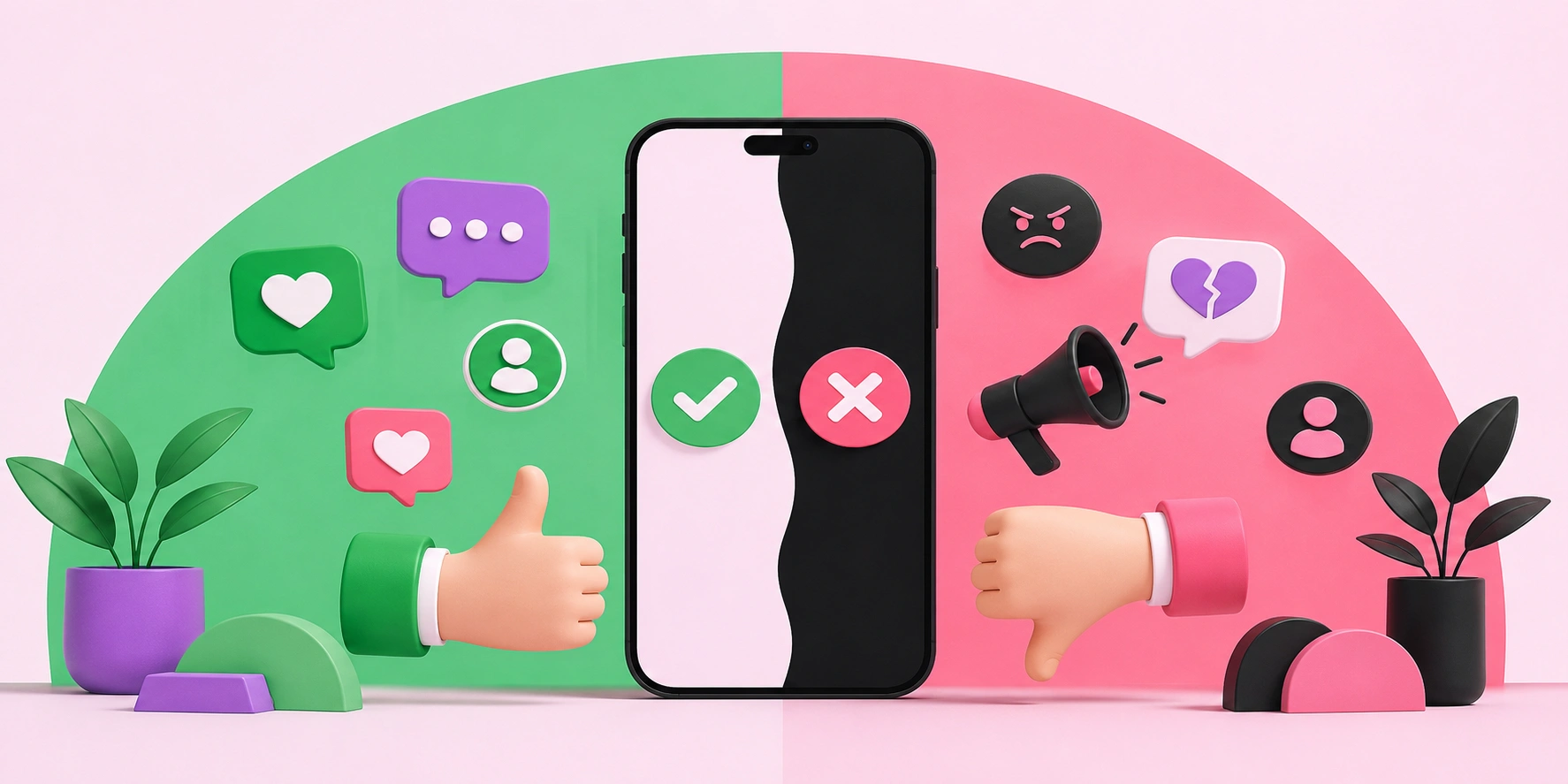
The don'ts matter more than the do's because a single violation can erase years of good posting. Ranked by real-world damage caused, these are the rules to never break:
- Don't post in anger. Emotionally charged posts are the leading cause of firings, brand crises, and viral embarrassment. Draft it, save it, and review it after 24 hours — the urge to post is almost always gone.
- Don't share unverified information. Amplifying false claims attaches your credibility to them permanently, and corrections never travel as far as the original share.
- Don't argue with critics publicly. Acknowledge legitimate complaints once, move the conversation to private channels, and never trade insults — audiences judge the response, not the critic.
- Don't overshare personal information. Real-time locations, travel dates, children's schools, and financial details create physical and digital security risks that outlast the post.
- Don't buy followers or engagement. Fake audiences destroy your engagement rate, which platforms and brands both measure — inflated follower counts with dead engagement are instantly recognizable and reputationally toxic.
- Don't delete mistakes silently. Screenshots make silent deletion impossible; correct errors openly with a follow-up post, which builds more trust than pretending the mistake never happened.
The unifying principle behind every don't is permanence: assume everything you post is public, permanent, and attributable to you forever, and most bad decisions become obviously bad before you make them.
How Do the Rules Differ for Personal Accounts vs. Brand Accounts?
The core principles are shared, but the stakes and specific applications differ meaningfully between a personal profile and a brand account. A personal account risks reputation and employability; a brand account risks revenue, customer trust, and legal exposure. The table below maps the key rules across both contexts so you can apply the right standard to the right account:
| Rule Area | Personal Account Best Practice | Brand Account Best Practice |
|---|---|---|
| Posting frequency | Quality over quantity; consistency matters more than volume | Fixed content calendar with platform-specific cadence and formats |
| Responding to negativity | Disengage from trolls; never argue publicly | Respond to legitimate complaints within hours, resolve in private channels |
| Privacy and security | Limit location sharing; review tagged content; strong unique passwords | Two-factor authentication, limited admin access, documented crisis protocol |
| Disclosure | Label affiliate links and gifted products clearly | Formal FTC-compliant disclosure on all sponsored and partner content |
| Mistakes | Correct openly with a follow-up post | Issue a transparent correction; never silently delete during a crisis |
One distinction deserves emphasis: on brand accounts, response speed is itself a rule. Customers now treat social channels as customer service, and slow responses read as indifference. Personal accounts have no such clock — for individuals, slowness is usually wisdom, while for brands, it is a liability.
What Does the Data Say About Getting Social Media Right?
The stakes behind these rules are quantifiable. According to Sprout Social's consumer research, the majority of consumers say they will buy more from brands they feel connected to on social media — and connection is built precisely by the engagement do's described above, not by broadcast volume. On the risk side, CareerBuilder survey data has found that 70% of employers screen candidates' social media profiles and roughly half have found content that caused them not to hire someone — hard evidence that the personal-account don'ts carry direct career costs. The original insight most guides miss is that do's and don'ts operate on different time horizons: the do's compound slowly, building trust and reach over months of consistency, while the don'ts destroy instantly, in a single post. This asymmetry means the optimal strategy is defensive first — internalize the don'ts as absolute rules, because no amount of good posting outruns one viral mistake — and offensive second, executing the do's patiently. It also means social media skill is less about creativity than about systems: content calendars, response protocols, verification habits, and quarterly audits. Individuals can build these systems themselves; brands at scale typically formalize them through professional digital marketing services that bake the rules into daily workflow rather than relying on memory under pressure.
Key Takeaways
- The top do's: post consistently, verify before sharing, engage genuinely in two-way conversation, tailor content to each platform, and disclose all paid content.
- The top don'ts: never post in anger, never amplify unverified claims, never argue with critics publicly, never overshare personal data, and never buy followers.
- CareerBuilder data shows 70% of employers screen candidates' social media, making personal-account discipline a direct career asset.
- Do's compound slowly over months, while don'ts destroy instantly — so master the defensive rules before optimizing for growth.
- Brand accounts carry an extra rule personal accounts do not: response speed, because customers treat social channels as customer service.
Frequently Asked Questions
What are the basic do's and don'ts for social media?
Do post consistently, verify information before sharing, engage genuinely, and disclose sponsored content. Don't post in anger, argue publicly with critics, overshare personal details like locations, or buy fake followers. Treat every post as public and permanent, and most decisions become clear.
How often should I post on social media?
Consistency beats volume. Pick a cadence you can sustain — three to five quality posts weekly works for most accounts — and hold it. Algorithms and audiences reward predictable, reliable posting far more than bursts of activity followed by silence, which resets your momentum.
What should I never post on social media?
Never post real-time locations, travel dates, financial details, confidential work information, content mocking identifiable people, or anything written in anger. These categories cause nearly all serious social media damage, from security risks and firings to permanent reputational harm that resurfaces in background checks.
How should I respond to negative comments on social media?
Acknowledge legitimate complaints once, calmly and publicly, then move the conversation to private messages to resolve it. Never trade insults or delete criticism silently. Ignore obvious trolls entirely — audiences judge you by your response quality, not by what the critic said.
Is it okay to delete a social media post with a mistake?
Correct it openly instead of deleting silently. Screenshots make silent deletion look like a cover-up, which damages trust more than the original error. Post a clear correction acknowledging the mistake — transparent corrections consistently build more credibility than pretending errors never happened.
Conclusion
If you remember one thing from this guide, make it the asymmetry: good habits compound slowly while mistakes destroy instantly, so internalize the don'ts as unbreakable rules before you optimize a single post for growth. Your next step is a 30-minute audit — review your profiles as a stranger would, delete or correct anything that violates the don'ts, and set a sustainable posting cadence you can actually keep. These recommendations reflect documented employer screening data, consumer trust research, and the operational playbooks professional agencies use daily — apply them and your social presence becomes an asset instead of a liability.