Can You Get Fired for Posting on Social Media? What the Law and Employers Say
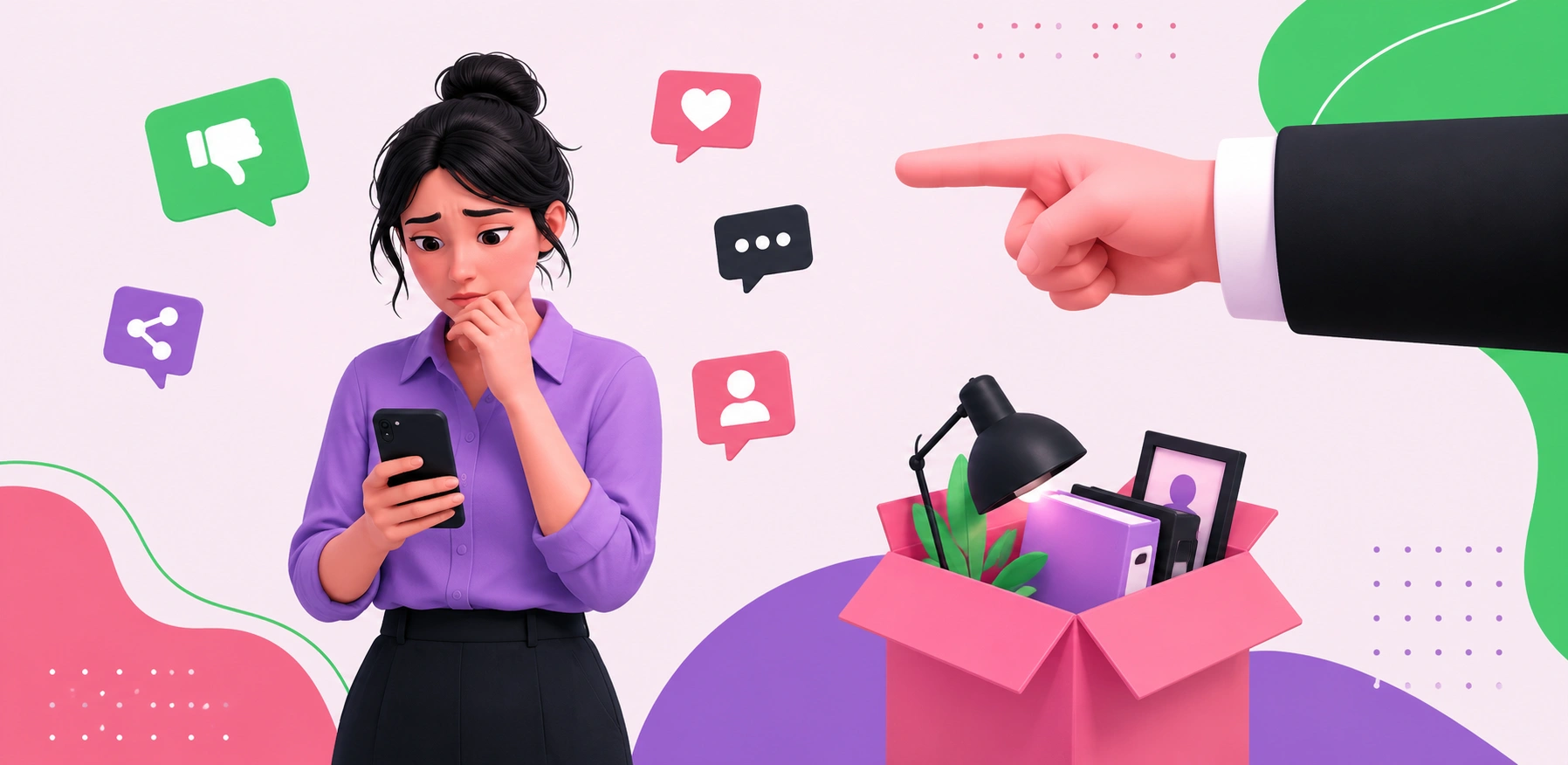
Every year, employees lose their jobs over tweets, TikToks, Facebook rants, and Instagram stories they assumed were private, harmless, or protected by free speech. The legal reality surprises most people: in the United States, at-will employment — the default arrangement in every state except Montana — means an employer can terminate you for almost any reason that is not specifically illegal, and "we didn't like your post" is usually not illegal. Social media termination refers to being fired because of content you posted online, whether on personal or professional accounts, on or off the clock. Understanding exactly where the legal lines sit is the difference between venting safely and ending your career with a single post.
Quick Answer: Yes, you can be fired for posting on social media in most cases. At-will employment lets private employers terminate workers for online posts, even ones made off-duty on personal accounts. Key exceptions include protected concerted activity about working conditions under the NLRA, whistleblowing, and certain state off-duty conduct laws.
How WebPeak Helps Businesses Manage Social Media Risk
Social media risk cuts both ways — employees can lose jobs over posts, and companies can lose customers over how their brand behaves online. WebPeak is a full-service digital agency that helps organizations worldwide manage their online presence professionally. Their social media management services give businesses controlled, policy-compliant publishing workflows so brand accounts never become liability sources, while their digital marketing consultancy helps leadership teams build clear social media governance — including the employee guidelines and approval processes that prevent the exact terminations this article describes. For companies, a documented social strategy is both a growth engine and an insurance policy.
What Kinds of Posts Actually Get People Fired?
Terminations over social media almost always fall into a small set of predictable categories, and knowing them lets you audit your own risk honestly. A fireable post is generally one that damages the employer's reputation, breaches confidentiality, harasses colleagues or customers, or contradicts your job duties. The most common trigger is disparaging the employer or customers by name — public complaints that identify your company are treated as reputational attacks, not private venting. The second category is confidentiality breaches: posting unreleased products, client information, internal documents, or even photos taken inside secure work areas can violate employment agreements and, in regulated industries like healthcare and finance, federal law such as HIPAA. Third is discriminatory, harassing, or threatening content — even posted off-duty on a personal account, because employers can argue it creates a hostile work environment or proves unfitness for the role. Fourth is conduct that contradicts your job: an employee posting beach photos while on paid sick leave, or a safety officer filming themselves violating safety rules. Finally, posts that go viral for the wrong reasons put employers under public pressure to act, and companies almost always resolve that pressure by terminating the employee. Privacy settings offer weak protection in practice — screenshots travel, and courts have repeatedly held that content shared with any audience can lose its expectation of privacy.
What Social Media Posts Are Legally Protected?
Some categories of posts are protected, and employees should know them precisely rather than relying on the myth that the First Amendment covers private workplaces — it constrains the government, not private employers. The genuinely protected categories are narrower but real:
- Protected concerted activity: Under Section 7 of the National Labor Relations Act, employees who discuss wages, hours, or working conditions with or on behalf of coworkers are protected — this applies to most private-sector employees, unionized or not.
- Whistleblowing: Reporting illegal activity, safety violations, or fraud to authorities is protected under various federal and state whistleblower statutes, and retaliation for it is unlawful.
- Off-duty lawful conduct laws: States including California, Colorado, New York, and North Dakota restrict employers from firing workers for lawful off-duty activities, which can cover some social media activity.
- Political activity protections: A minority of states, such as California, prohibit employers from retaliating against employees for political activities or affiliations.
- Union organizing: Posts related to organizing, joining, or supporting a union carry strong NLRA protection.
The critical nuance: protection depends on content and context, not platform. A post complaining that "our whole team is being denied overtime pay" is likely protected concerted activity; a post calling your manager an idiot with no connection to working conditions is likely not. Public-sector employees have additional First Amendment protection when speaking as citizens on matters of public concern, but even that is balanced against workplace disruption under the Pickering test.
How Do Employers Actually Monitor and Act on Employee Posts?
Employers rarely stumble onto posts by accident. Most terminations begin with a coworker, customer, or stranger reporting the content, followed by an HR review against the company's social media policy. Larger companies also use social listening tools that flag brand mentions, which can surface employee posts that name the employer. Before posting anything work-adjacent, it helps to understand how different post types map to realistic outcomes:
| Post Type | Legal Protection Level | Realistic Employer Response |
|---|---|---|
| Complaining about wages or conditions with coworkers | High — NLRA protected concerted activity | Discipline is legally risky for the employer; terminations are often reversed |
| Insulting the company or customers by name | Low — rarely protected | Warning or termination, especially if the post spreads publicly |
| Sharing confidential or client information | None — often breaches contract or law | Immediate termination and possible legal action |
| Discriminatory or threatening content, even off-duty | None — creates liability for the employer | Termination is standard and legally defensible |
| Personal opinions unrelated to work, posted lawfully off-duty | Varies by state — protected in CA, CO, NY, ND | Usually no action; termination possible in most other states |
The pattern in the table is consistent: the closer a post gets to collective workplace concerns, the more protection it has; the closer it gets to reputation damage, confidentiality, or harassment, the less protection exists anywhere in the country.
How Common Are Social Media Firings — and How Can You Protect Yourself?
The data shows this risk is mainstream, not theoretical. According to a CareerBuilder survey of hiring managers, 70% of employers use social media to screen candidates, and 34% have found content that caused them to reprimand or fire an employee. Research from The Harris Poll similarly found that roughly 7 in 10 hiring decision-makers believe employers should screen candidates' social profiles. The original analysis worth internalizing is this: social media collapsed the historical wall between your work identity and your personal identity, but employment law was written when that wall still existed. The law is catching up state by state, which is why protection varies so wildly by geography and post content. Until the law standardizes, your practical protections are behavioral: assume every post is public and permanent, never name your employer in complaints unless you are deliberately exercising NLRA rights about working conditions, read your company's social media policy before you need it, and use the overnight rule — draft the angry post, save it, and decide in the morning. Employees in regulated industries should be strictest of all, since a single confidentiality slip can end not just a job but a license. Businesses, meanwhile, should ensure their own house is in order with professionally managed accounts and clear policies, which is where structured digital marketing services that include governance frameworks pay for themselves.
Key Takeaways
- At-will employment allows most U.S. private employers to fire workers for social media posts, even off-duty posts on personal accounts.
- The First Amendment does not protect private-sector employees from employer discipline — it restricts government action, not company policy.
- Posts discussing wages, hours, or working conditions with coworkers are protected concerted activity under the NLRA for most private employees.
- CareerBuilder research found 34% of employers have reprimanded or fired an employee over online content, and 70% screen candidates' social media.
- Privacy settings are weak protection: screenshots, reposts, and coworker reports mean any post should be treated as public and permanent.
Frequently Asked Questions
Can you get fired for posting on social media outside of work hours?
Yes, in most U.S. states. At-will employment lets private employers terminate workers for off-duty posts that harm the business, breach confidentiality, or show misconduct. A few states, including California, Colorado, and New York, protect some lawful off-duty conduct, but exceptions are narrow.
Does the First Amendment protect my social media posts from my employer?
No, not if you work for a private company. The First Amendment restricts government censorship, not private employer decisions. Public-sector employees have limited protection when speaking as citizens on matters of public concern, but even that is balanced against workplace disruption.
Can I be fired for complaining about my boss online?
It depends on the content. If your post discusses wages, hours, or working conditions with or on behalf of coworkers, it is likely protected concerted activity under the NLRA. A purely personal insult with no connection to working conditions is generally not protected.
Can employers legally look at my private social media accounts?
Employers can view anything public, and coworkers can legally share screenshots of private posts with management. However, most states prohibit employers from demanding your passwords. Practically, any content seen by even one connection can reach your employer, so privacy settings are not reliable protection.
What should I do if I was fired for a social media post?
Document everything immediately: the post, your employment policies, and the termination reason given. If your post involved working conditions, wages, whistleblowing, or protected characteristics, consult an employment attorney or file a charge with the NLRB or EEOC, as wrongful termination remedies may apply.
Conclusion
The single decision that matters most is treating every post as if your employer, your clients, and a future hiring manager will read it — because statistically, one of them eventually will. Before posting anything work-adjacent, ask whether it discusses working conditions (likely protected) or attacks reputation, confidentiality, or colleagues (likely fireable), and when in doubt, wait a day. This guide reflects the current legal landscape under the NLRA, state off-duty conduct laws, and documented employer survey data — use it to make informed choices, and consult an employment attorney for situations specific to your state and contract.