What Is the Difference Between E-commerce and an Online Marketplace?
The terms "e-commerce" and "online marketplace" are often used interchangeably, but they describe two distinct models for selling online. Understanding the difference is crucial whether you are launching a new business, expanding your sales channels, or simply trying to make sense of the digital retail landscape. While both involve buying and selling over the internet, they differ in ownership, control, audience, and strategy. Choosing the right model, or combining both, can significantly impact your costs, branding, and growth potential. In this article, we will clearly define each model, compare their strengths and weaknesses, and help you decide which approach fits your goals.
How WebPeak Helps You Choose and Build the Right Model
Deciding between your own store, a marketplace, or both is a strategic decision that benefits from expert guidance. WebPeak helps businesses design and build the right selling platform through tailored web development that matches your goals, budget, and audience. Whether you need a branded standalone store, a multi-vendor marketplace, or an integrated approach, their team builds scalable, secure platforms designed to grow with you. With the right technical foundation, you can launch confidently and adapt as your business evolves.
What Is an E-commerce Store?
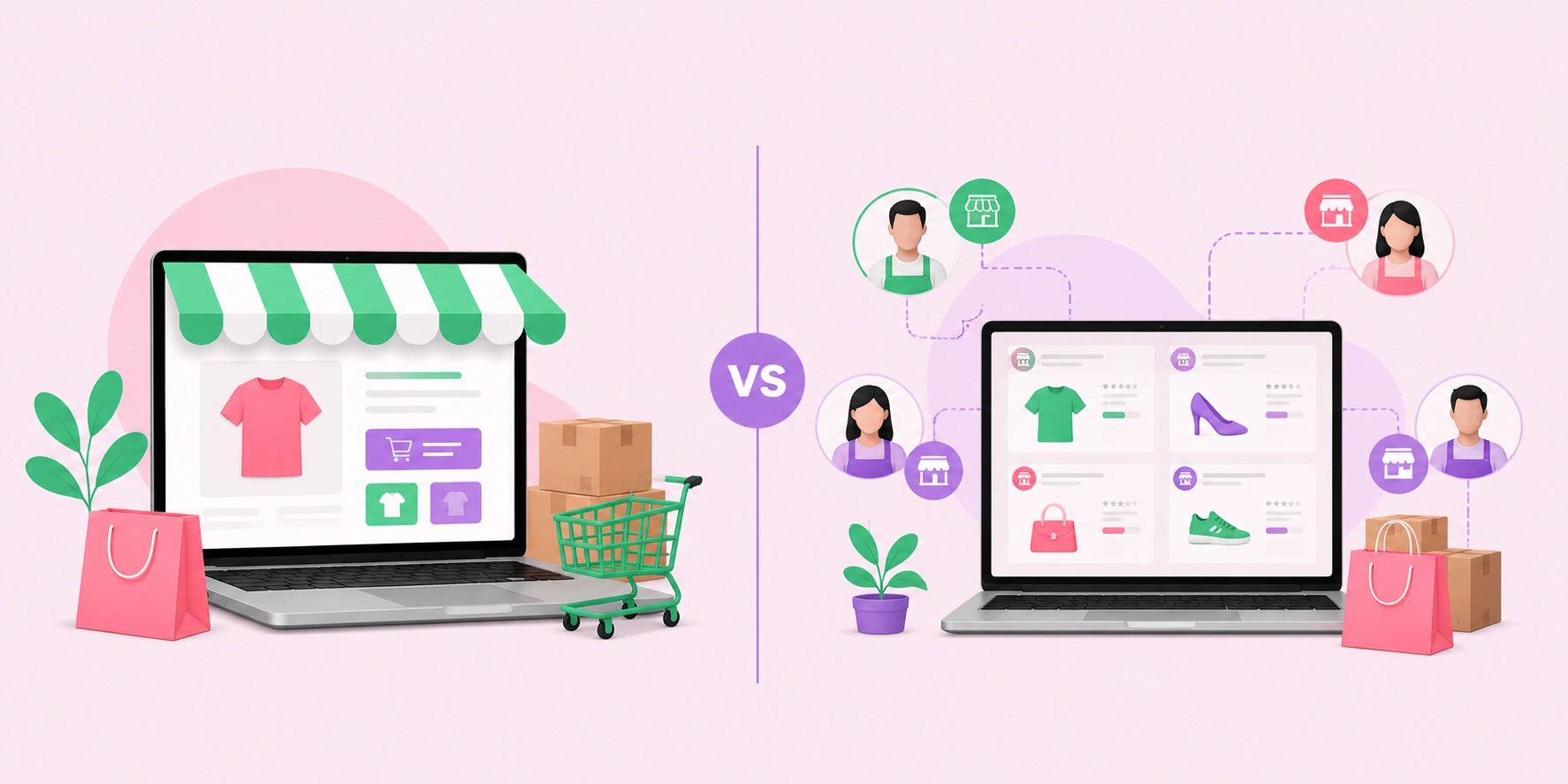
An e-commerce store, sometimes called a standalone or branded store, is a website owned and operated by a single business to sell its own products or services. Think of a company that builds its own website with its own checkout, branding, and customer relationships. The business controls everything: the design, the product catalog, the pricing, the customer data, and the overall experience.
This model gives you complete ownership of your brand and customer relationships. You are not competing with other sellers on the same platform, and you keep all the revenue minus payment and operating costs. The trade-off is that you are responsible for driving your own traffic, building trust from scratch, and handling all the technical and marketing work yourself.
What Is an Online Marketplace?
An online marketplace is a platform where multiple independent sellers list and sell their products to a shared pool of customers. The marketplace operator provides the infrastructure, audience, and trust, while individual sellers manage their own listings. Customers can browse products from many vendors in one place, and the marketplace typically takes a commission or fee on each sale.
The biggest advantage of a marketplace is instant access to a large, ready-made audience. Sellers benefit from the platform's traffic, reputation, and built-in tools. The downside is intense competition, less control over branding, fees that eat into margins, and limited access to customer data. You are essentially renting space in someone else's ecosystem.
Key Differences at a Glance
The core differences come down to control, audience, and cost. With your own e-commerce store, you control branding, customer relationships, and data, but you must build your own audience. With a marketplace, you gain immediate access to traffic but sacrifice control and pay fees. An e-commerce store is like owning a shop, while a marketplace is like renting a stall in a busy mall.
Another key difference is competition. On your own store, customers see only your products. In a marketplace, your listings appear alongside competitors, often including the marketplace's own products, which can drive price-based competition. Each model shapes a fundamentally different selling strategy.
Which Model Is Right for You?
The best choice depends on your goals, resources, and stage of growth. New sellers often start on marketplaces to access an existing audience and validate demand quickly. Established brands frequently invest in their own stores to build long-term customer relationships and protect their margins. Many successful businesses use both, leveraging marketplaces for reach while driving loyal customers to their branded store. Promoting your store effectively through targeted social media marketing can help you build the direct audience that a standalone store requires, reducing your dependence on marketplace traffic over time.
Frequently Asked Questions
What is the main difference between e-commerce and a marketplace?
An e-commerce store is owned by a single business selling its own products, while a marketplace hosts many independent sellers sharing one platform and audience. The key differences are control, branding, and ownership of customer relationships.
Is it cheaper to sell on a marketplace or my own store?
Marketplaces require less upfront investment but charge ongoing commissions and fees. Your own store has higher setup and marketing costs but lets you keep more revenue per sale over time.
Can I use both an e-commerce store and a marketplace?
Yes, and many businesses do. Marketplaces provide quick reach, while a branded store builds loyalty and protects margins. Combining both can maximize visibility and long-term growth.
Which model is better for building a brand?
Your own e-commerce store is far better for branding because you control the design, experience, and customer data. Marketplaces offer reach but limit your brand presence and identity.
Which should beginners start with?
Beginners often start on a marketplace to access an existing audience and test demand. As they grow, many add a branded store to build direct relationships and reduce reliance on the marketplace.
Conclusion
The difference between e-commerce and an online marketplace comes down to ownership and control versus reach and convenience. A standalone e-commerce store gives you full command of your brand, customer data, and margins, while a marketplace offers instant access to a large audience at the cost of fees and competition. Neither is universally better; the right choice depends on your goals and resources, and many businesses thrive by combining both. Understanding these models empowers you to build a smarter selling strategy and choose the path that best supports your long-term success.