Can ChatGPT Watch Videos? What It Can and Cannot Actually See
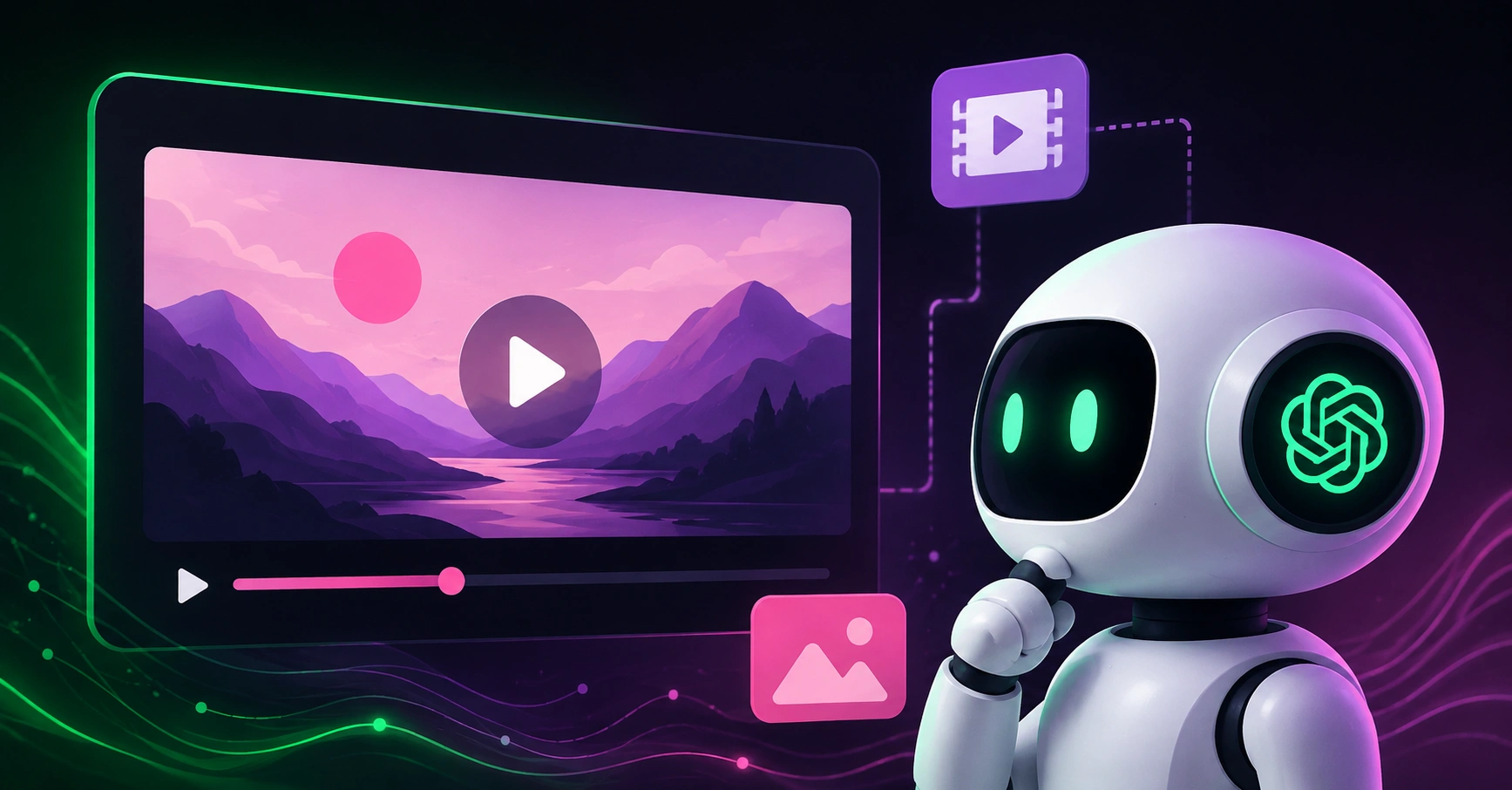
ChatGPT cannot watch a video the way a person does — it does not sit through a timeline absorbing motion and sound continuously. What it can do is process the components a video is made of: still frames as images, spoken words as text, and, in live video mode on mobile, a real-time camera feed. The distinction matters because it explains every confusing outcome users report. When someone pastes a YouTube link and gets an accurate summary, the model worked from text it could reach. When someone pastes a link and gets a confident but wrong answer, the model had no video access and filled the gap from the title alone. Knowing which path you are on is the entire skill.
Quick Answer: ChatGPT cannot stream or watch a video file frame by frame in a normal chat. It can analyse individual frames you upload as images, read transcripts and captions you paste, and see through your camera in live video mode on mobile. For file analysis, extract frames plus a transcript.
Where WebPeak Fits: Building Real Video Analysis Workflows
Understanding ChatGPT's limits is one thing; building a repeatable system around them is another, and that is where most teams stall. WebPeak, a worldwide full-service digital agency, works with businesses that need video understanding at scale — transcribing and summarising webinars, tagging product footage, generating chapter markers, or turning long recordings into publishable content. Their engineers typically solve this with a pipeline rather than a chat window: a speech-to-text step, a frame-sampling step, then a language model call that receives both streams as structured input. That is an application engineering problem as much as an AI one, and treating it that way is what makes the output consistent enough to publish.
What ChatGPT Genuinely Processes When You Bring It Video
Multimodality — a model's ability to accept more than one input type — is not the same as video comprehension. ChatGPT's vision capability is image-based: it reasons over a static image you provide. A video is simply many images plus an audio track, so the practical translation is that ChatGPT can analyse video only to the extent you decompose it into things it accepts.
Three access paths exist in practice. First, image frames: screenshot or export key frames and upload them, and the model will describe composition, on-screen text, objects, and inconsistencies between frames with genuine accuracy. Second, text: paste a transcript, subtitle file, or auto-caption dump, and the model performs excellent summarisation, quote extraction, and topic segmentation — this is where it is strongest by a wide margin. Third, live video: the camera mode in ChatGPT's advanced voice experience on mobile lets the model see your surroundings in real time and answer questions about what is in front of you, which is genuinely watching, just not watching a file.
What remains unreliable is asking about a URL without supplying content. Browsing capability varies by plan, feature availability, and site restrictions, and many video platforms block automated access. If the model cannot retrieve the page, it may still answer — reconstructing plausible content from the title. That is the single most common source of "ChatGPT hallucinated about my video" complaints, and it is avoidable by always pasting the transcript yourself.
A Reliable Five-Step Workflow for Analysing a Video With ChatGPT
This sequence works today regardless of which features your account has, because it never depends on the model fetching anything.
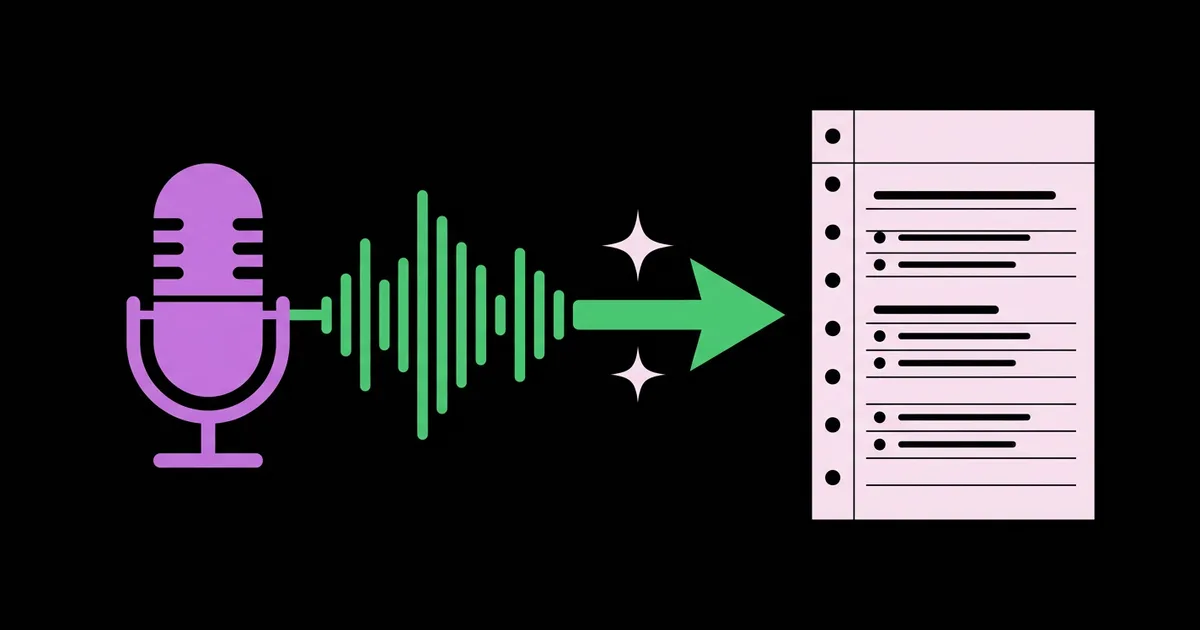
- Get the transcript first. Use the platform's own caption export, or a speech-to-text tool for local files. Keep timestamps — they make every later step more useful.
- Sample frames deliberately. Export one frame per scene change or roughly every 10–30 seconds for short clips. Slide decks, charts, and UI demos need denser sampling than talking-head footage.
- State what the model is receiving. Open with something like "Below is a timestamped transcript of a 12-minute product demo, plus eight frames." Explicit framing measurably reduces invented detail.
- Ask for structured output. Request chapters with timestamps, a claim list, an action-item table, or a caption set — specific formats produce far better results than "summarise this video."
- Verify anything visual against your frames. If the model describes something you did not upload a frame for, treat it as inference, not observation, and check it before publishing.
Which Video Task Suits Which Method
Not every question about a video needs the same input. Matching task to method saves substantial time.
| Task | Best input method | Reliability | Notes |
|---|---|---|---|
| Summarise a lecture or webinar | Timestamped transcript | High | Strongest use case; ask for chapter breakdown |
| Identify objects or on-screen text | Uploaded frames | High | Frame quality determines accuracy |
| Describe motion or physical action | Frame sequence with context | Moderate | Model infers movement between frames |
| Answer questions about surroundings now | Live camera mode on mobile | Moderate to high | Real-time, not file-based |
| Analyse a video from a URL alone | Not recommended | Low | Access is inconsistent; invented detail is common |
| Extract quotes with exact wording | Transcript only | High | Ask it to quote verbatim and cite timestamps |
Expert Analysis: Why Transcript-First Beats Frame-First Almost Every Time
Here is a pattern worth internalising, drawn from how these systems are built rather than from marketing claims: for the overwhelming majority of business video, the information density lives in the audio. A recorded meeting, sales call, webinar, podcast, or tutorial carries perhaps five percent of its meaning in the visuals and ninety-five percent in what is said. Language models are exceptionally good at text and merely competent at inferred motion, so leading with the transcript aligns your input with the model's strongest capability.
The exception is instructional and design content. A UI walkthrough, a chart-heavy presentation, a physical repair demonstration, or a video advert has meaning that never reaches the audio track — and there, frame sampling stops being optional. In practice, the highest-quality results come from supplying both and telling the model which one is authoritative for which type of question.
There is also a trust dimension that deserves plain statement. Because the model will answer whether or not it has real access to your video, the burden of verification sits with you. Treating any visual claim it makes without a corresponding uploaded frame as unverified is the discipline that separates useful AI-assisted video work from embarrassing published errors. That same verification habit is what keeps AI-assisted output publishable in search-driven work, where an unchecked factual claim can do lasting damage to a domain's credibility. If your workflow involves third-party generation tools as well as analysis, this look at AI video generator apps and modded variants covers the sourcing risks worth avoiding.
Key Takeaways
- ChatGPT does not watch video files continuously; it processes frames as images, transcripts as text, and live camera input in mobile video mode.
- Transcript-first analysis is the most reliable method because most business video carries its meaning in speech.
- Pasting a video URL without content is the leading cause of confidently wrong answers, since access to video platforms is inconsistent.
- Frame sampling is essential for UI demos, charts, adverts, and any instructional content where visuals carry information audio does not.
- Any visual claim unsupported by an uploaded frame should be treated as inference and verified before publication.
Frequently Asked Questions
Can ChatGPT watch a YouTube video if I paste the link?
Not reliably. Access to video platforms depends on your plan's browsing features and site restrictions, and many pages block automated retrieval. If the model cannot fetch the page it may still answer from the title, producing plausible but invented detail. Paste the transcript instead.
Can I upload an MP4 file to ChatGPT for analysis?
Video file support is limited and inconsistent across interfaces, and even where a file is accepted the model does not review every frame. The dependable approach is exporting a transcript and a set of representative frames, then uploading those as text and images.
Does ChatGPT's live video mode really see things?
Yes, within limits. The camera mode in the advanced voice experience on mobile lets the model see your surroundings in real time and answer questions about them. It is genuinely useful for objects, text, and troubleshooting, but it applies to live input, not stored video files.
How many frames should I upload from a video?
Sample at every meaningful scene change. For talking-head footage a handful is enough; for a UI walkthrough or chart-heavy presentation, aim for one frame per distinct screen or slide. Too few frames is the usual cause of vague or incorrect visual descriptions.
Is ChatGPT accurate at summarising video content?
It is highly accurate when working from a real transcript, especially for chapters, key points, quotes, and action items. Accuracy drops sharply when it must infer content it never received, so the quality of your summary tracks the quality of the input you supply.
Conclusion
The one decision that determines whether ChatGPT is useful for video work is what you feed it: supply the transcript and the frames yourself, and it becomes a genuinely powerful analysis partner; hand it a bare URL and hope, and you inherit the risk of fabricated detail. Your next step is to take one video you actually need analysed, export its captions with timestamps, pull five or six frames from its key moments, and run a single structured request asking for chapters and action items. That one experiment will replace every assumption in this debate with direct evidence of what the tool does for your specific material.