What Is Cardinal Commerce? A Complete Guide to 3-D Secure Payment Authentication
Cardinal Commerce is a payment authentication company — founded in 1999 in Mentor, Ohio, and acquired by Visa in 2017 — whose technology sits between an online checkout and the card networks to run 3-D Secure (3DS) authentication. In plain terms, when a shopper submits card details, Cardinal's platform asks the issuing bank a single high-value question before the payment is authorized: is this really your cardholder? Most merchants never sign a contract with Cardinal directly. They inherit its technology through a gateway or processor — Cybersource Payer Authentication is powered by Cardinal, and integrations exist across Braintree, Worldpay and many custom stacks. That is why most developers meet the name for the first time inside an error log, a JWT payload, or a script called songbird.js rather than in a sales conversation. Understanding what Cardinal actually does turns those cryptic artifacts into a system you can debug and optimize.
Quick Answer: Cardinal Commerce is a Visa-owned payment authentication company whose Centinel platform connects online merchants to 3-D Secure. It passes checkout and device data to the card issuer, which either approves the transaction frictionlessly or challenges the shopper. Successful authentication shifts fraud chargeback liability from the merchant to the issuer.
How WebPeak Supports Merchants Rolling Out 3-D Secure
Authentication is almost never a standalone task — it touches checkout UX, front-end script loading, server-side order state, and fraud reporting at the same time, and a badly sequenced rollout shows up immediately as abandoned carts. That combination of commerce engineering and conversion thinking is exactly the overlap WebPeak's digital and development team works in, since they build and maintain the checkout layers where authentication either succeeds quietly or fails loudly. Their engineers typically approach a 3DS project by mapping every order state before touching code, instrumenting the authentication response codes so failures are visible in analytics rather than guessed at, and then A/B testing challenge-flow placement so the security gain does not quietly cost revenue.
How Cardinal Commerce Actually Works, Step by Step
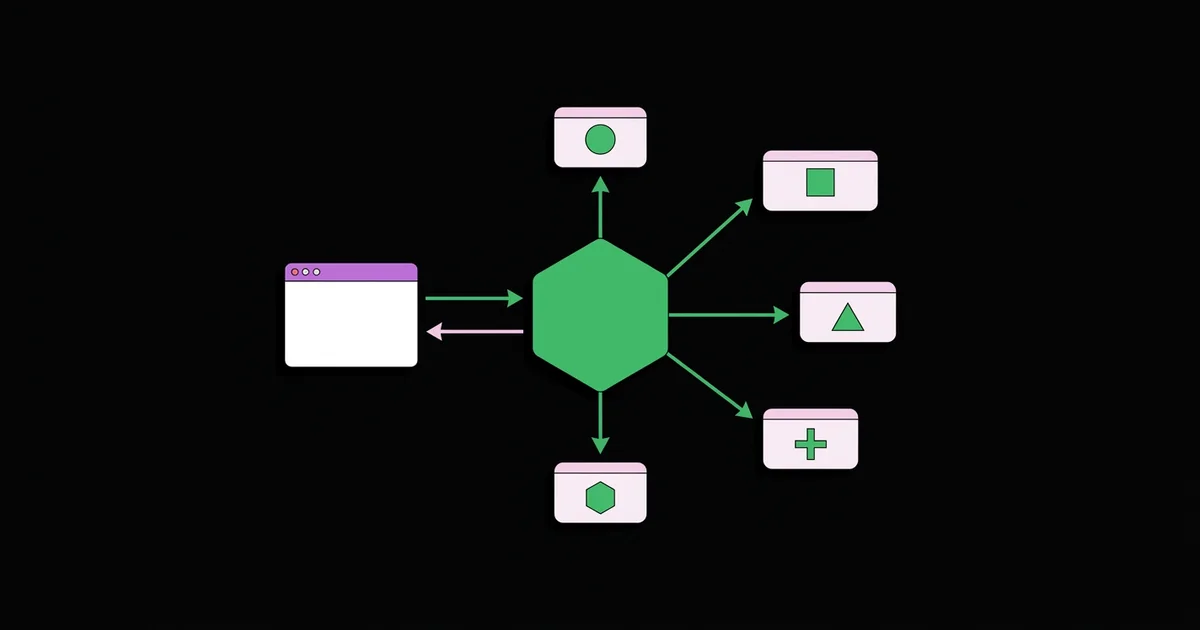
Cardinal operates as a 3DS Server — historically called a Merchant Plug-In, or MPI — which is the component that speaks the EMV 3-D Secure protocol on the merchant's behalf. Its flagship platform is Centinel, and the browser-side integration many teams encounter is Cardinal Cruise, delivered through a JavaScript library that runs inside your checkout page.
The flow has four distinct stages, and knowing which one is failing solves most support tickets. First comes setup: your server creates a signed JWT containing order details and passes it to the Cardinal script, which authenticates the session. Second is device data collection (DDC) — a hidden iframe silently gathers browser, screen and device signals. This is the stage that fails most often, usually because a Content Security Policy blocks the iframe or the page navigates away before collection finishes.
Third is lookup. Cardinal sends the card and transaction data to the issuer's Access Control Server (ACS), the bank-side system that makes the authentication decision. Under EMV 3DS 2.x the request can carry well over a hundred data elements — billing and shipping match, account age, prior transaction history, device fingerprint — which is precisely what allows the issuer to approve without bothering the shopper. That silent approval is the frictionless flow. If the issuer wants more assurance, it returns a challenge: a one-time passcode, a banking-app push, or biometric confirmation.
Fourth is validation. Cardinal returns a result your server must verify before authorizing the payment: an ActionCode of SUCCESS, NOACTION, FAILURE or ERROR, plus a CAVV (the cryptographic proof of authentication) and an ECI value indicating the authentication level achieved. The ECI is the field that determines liability shift — pass it to your acquirer or the protection is lost even though authentication technically succeeded. This single detail is the most common cause of merchants doing all the 3DS work and still eating fraud chargebacks.
An Implementation Checklist That Prevents the Usual Failures
Cardinal integrations fail for predictable, boring reasons. Working through the following sequence in order removes most of them before launch:
- Confirm what you already have. If you use Cybersource, Braintree or a similar processor, Cardinal may already be available as a toggle — building a direct integration you did not need is the most expensive mistake here.
- Generate the JWT server-side only. The signing key must never reach the browser. Treat it with the same discipline as a private API key.
- Fire device data collection early. Trigger DDC when the card form is rendered, not on submit, so collection completes before the shopper clicks pay.
- Whitelist Cardinal domains in your CSP and frame-ancestors rules. A silent iframe block produces a NOACTION result that looks like the issuer opted out.
- Design the challenge modal at mobile widths first. Bank challenge windows are fixed-size; a cramped container is a direct conversion loss.
- Never authorize on the browser response alone. Validate the payload server-side against the signature — a client-only check is trivially forged.
- Store the ECI and CAVV against the order. Without them you cannot contest a chargeback or prove liability shift months later.
- Log every ActionCode with the order ID. Aggregate weekly; a spike in ERROR values almost always points to your own deployment, not the issuer.
One broader point worth internalizing: authentication only pays off if shoppers reach checkout in the first place, which is why merchandising and on-site discovery work belong in the same roadmap. Guides such as this walkthrough of keyword filters for BigCommerce stores are a useful companion, and teams that also clean up their product data usually pair it with proper ecommerce catalog management before touching the checkout layer.
3-D Secure 1.0 vs EMV 3DS 2.x: What Actually Changed
Cardinal's relevance grew because the protocol itself changed fundamentally. The original 3DS 1.0 was widely disliked for good reason — it redirected shoppers to unfamiliar bank pages and broke on mobile. EMV 3DS 2.x, specified by EMVCo, was built to fix exactly that.
| Dimension | 3-D Secure 1.0 | EMV 3DS 2.x |
|---|---|---|
| Data sent to issuer | Minimal card and amount data | 100+ contextual and device data elements |
| Shopper experience | Full-page redirect to bank | Embedded modal or frictionless approval |
| Mobile and in-app support | Poor; browser-oriented only | Native SDK support for iOS and Android |
| Authentication method | Static password prompts | One-time codes, app push, biometrics |
| Typical friction level | Challenge on nearly every transaction | Majority handled without shopper action |
| Regulatory fit | Predates PSD2 requirements | Designed to satisfy Strong Customer Authentication |
The Verifiable Timeline, and What Practitioners Consistently Observe
A few facts anchor this topic and are worth stating precisely rather than approximating. Cardinal Commerce was acquired by Visa, with the deal announced in late 2016 and completed in 2017. EMVCo published the 3DS 2.1.0 specification in 2017 and 2.2.0 in 2018, with later 2.3 revisions following. In the European Economic Area, Strong Customer Authentication under PSD2 became enforceable from 31 December 2020 after a delay from the original September 2019 date, and the UK's Financial Conduct Authority set its full enforcement date at 14 March 2022. Since the acquisition, Visa has progressively folded Cardinal's capabilities into its wider authentication portfolio, which is why the same underlying technology now appears under Cybersource branding for many merchants.
Beyond those dates, be skeptical of precise conversion percentages quoted for 3DS — outcomes vary enormously by geography, issuer mix, and average order value, and any single number presented as universal should be treated as marketing. What does hold up consistently in practice is directional: merchants who enable 3DS without instrumenting response codes tend to discover months later that a meaningful share of transactions were silently failing DDC and never gained liability shift at all. Teams that treat authentication as a monitored funnel stage — with dashboards on frictionless rate, challenge rate, and abandonment inside the challenge — recover revenue that the default integration quietly leaks. The other reliable pattern is that challenge abandonment correlates far more strongly with modal presentation and page performance than with the challenge itself, which is why front-end quality and security-hardened implementation work deliver measurable payment gains rather than just compliance paperwork.
Key Takeaways
- Cardinal Commerce is a Visa-owned 3DS Server that runs 3-D Secure authentication on behalf of online merchants; its core platform is Centinel and its browser integration is Cardinal Cruise.
- Successful authentication shifts fraud chargeback liability to the card issuer — but only if the ECI and CAVV values are passed through to the acquirer with the authorization.
- Device data collection is the most failure-prone stage of the flow, and Content Security Policy misconfiguration is the leading cause.
- EMV 3DS 2.x sends far more contextual data than 3DS 1.0, which is what enables frictionless approvals and native in-app authentication.
- Visa completed its acquisition of Cardinal in 2017, and the technology now reaches most merchants indirectly through processors such as Cybersource rather than via a direct contract.
Frequently Asked Questions
Is Cardinal Commerce a payment gateway?
No. Cardinal handles authentication, not money movement. It verifies the cardholder with the issuing bank and returns a result, then your gateway or processor performs the actual authorization and settlement. The two systems work in sequence, and you generally need both for card-not-present payments.
Why does Cardinal Commerce appear on my bank statement?
It normally does not charge cardholders directly. If the name appears near a transaction, it usually reflects a merchant's payment stack rather than a separate charge. Contact the merchant you actually bought from first, and your card issuer second, before disputing anything.
Do I have to use 3-D Secure on my store?
It depends on geography. In the European Economic Area and the UK, Strong Customer Authentication is a regulatory requirement for most consumer card payments. Elsewhere, including much of the United States, it is optional — merchants adopt it selectively to reduce fraud and gain chargeback liability protection.
Does 3-D Secure hurt conversion rates?
Poorly implemented 3DS absolutely does. Well-implemented EMV 3DS 2.x usually does not, because most transactions are approved frictionlessly with no shopper interaction. The damage comes from broken data collection, cramped mobile challenge windows, and slow checkout pages rather than the protocol itself.
What does a NOACTION result actually mean?
NOACTION means authentication did not take place — commonly because the card is not enrolled, the issuer declined to participate, or your device data collection was blocked. You can still authorize the payment, but you will not receive liability shift, so treat repeated NOACTION rates as a diagnostic signal.
Is Cardinal Commerce still being used in 2026?
Its technology remains in wide production use, though increasingly under Visa and Cybersource branding rather than the standalone Cardinal name. If you are building new, check what your processor already offers before integrating directly, since duplicated authentication layers cause conflicting results.
Conclusion
The single most important decision here is not whether to adopt Cardinal Commerce — for most merchants that choice is already made by their processor — but whether to treat authentication as a monitored, measurable part of the checkout funnel instead of a compliance checkbox. That distinction determines whether you actually receive the liability protection you paid engineering time for. Your concrete next step is straightforward: pull the last thirty days of authentication results, break them down by ActionCode, and confirm that ECI values are reaching your acquirer on every authorized order. If that data does not exist yet, instrumenting it is the highest-return work available in your payment stack, and it costs nothing but attention.