A2E Image to Video: How to Turn a Still Photo Into Moving, Talking Video
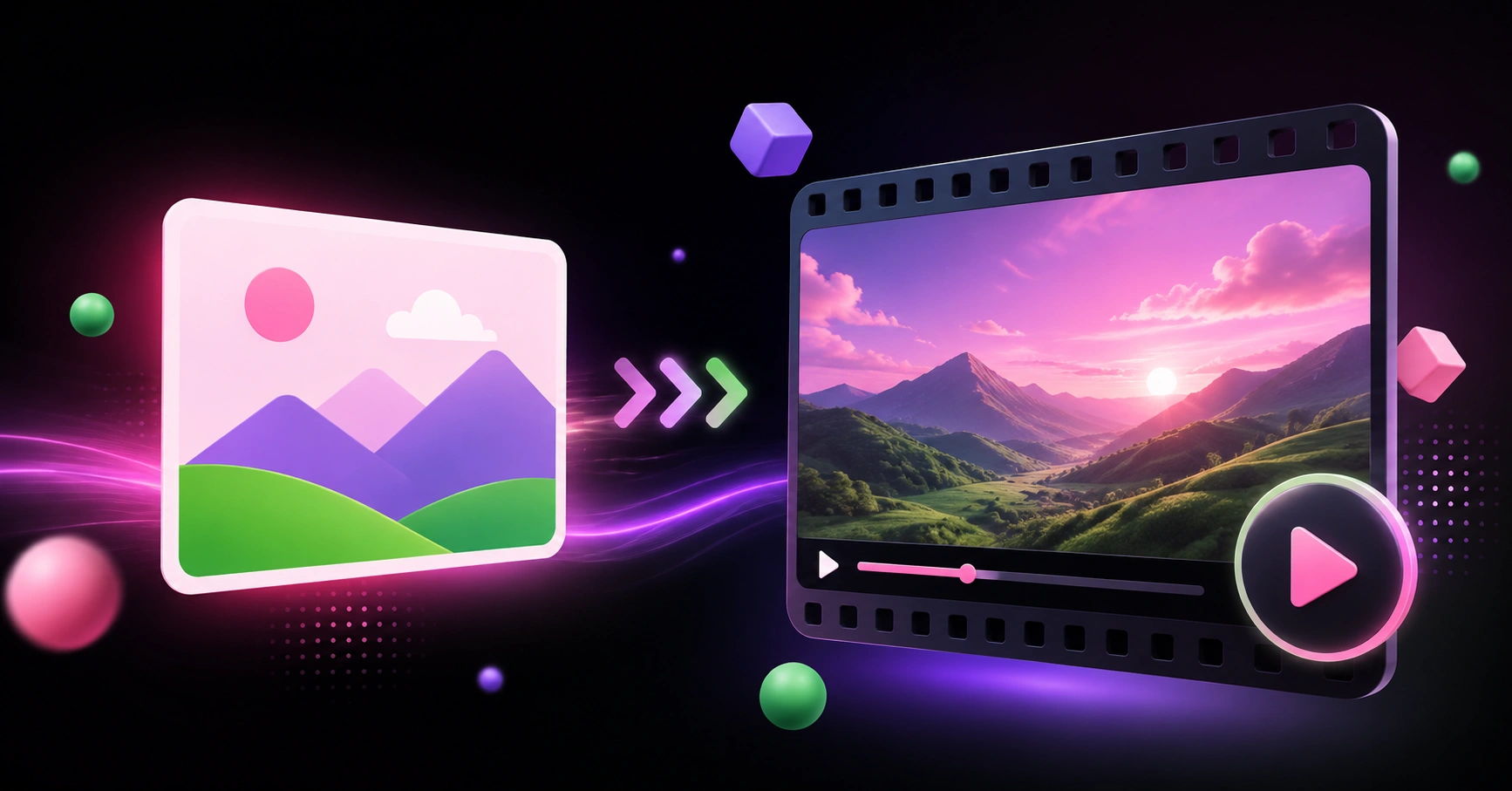
A2E image to video refers to using the A2E AI platform (a2e.ai) to convert a single still image into a moving video clip — either as a general animated shot with camera motion and subject movement, or as a talking avatar where a portrait is synchronised to a voice track. Image-to-video is now a distinct category of generative AI: instead of describing a scene from scratch with text, you supply the exact frame you want and the model predicts what happens next. That difference is the whole point. Text-to-video invents your subject; image-to-video preserves it, which is why product teams, course creators, and social media managers keep gravitating toward it.
Quick Answer: A2E image to video turns one still image into a short video by animating it — adding camera movement, subject motion, or voice-driven lip sync for portraits. You upload an image, optionally add a motion prompt or audio, and the model generates a clip that keeps your original subject's appearance intact.
Turning Image-to-Video Output Into Campaign-Ready Assets: The WebPeak Approach
Generating a clip is the easy half. The hard half is producing thirty consistent clips that share a brand look, run at the right aspect ratios, and actually convert on the platform where they land. WebPeak, a full-service digital agency operating worldwide, treats image-to-video as one stage in a pipeline rather than the finished product: source or shoot a clean base image, animate it, then grade, caption, and cut it for each channel. Their design team matters more than people expect here, because the quality of the input frame — lighting, subject separation, resolution — sets a hard ceiling on what any model can animate. For teams publishing at volume, the variant-and-schedule layer is what makes AI video economical instead of merely novel.
How Image-to-Video Generation Actually Works
Image-to-video models are conditioned generative models. Your uploaded image becomes the anchor frame, and the model generates subsequent frames that remain temporally coherent with it — meaning the subject's identity, colours, and geometry persist across time rather than morphing frame to frame. Temporal coherence is the technical term worth knowing, because nearly every visible flaw in AI video is a coherence failure: a hand that gains a finger, a logo that dissolves, a background that slides unnaturally.
Talking-avatar generation is a related but separate process. There, the model performs audio-driven facial reenactment: it maps phonemes from a voice track to mouth shapes (visemes) and drives head and eye movement to match. This is why lip-sync output is judged on different criteria than general motion clips — you are looking at mouth-to-audio alignment and whether the eyes and head move naturally, not at whether the camera pan is cinematic.
The practical consequence for A2E users is that your input choice determines which pipeline serves you. A clean, front-facing portrait with visible mouth and unobstructed jawline belongs in the avatar workflow. A product shot, landscape, or illustration belongs in the general motion workflow with a descriptive motion prompt. Feeding a three-quarter-profile portrait into a lip-sync pipeline is the single most common cause of disappointing results.
Nine Practices That Measurably Improve Image-to-Video Results
These recommendations come from the failure patterns that repeat across image-to-video tools, not from any single vendor's documentation.
- Start with the highest-resolution original you have. Upscaled or compressed JPEGs introduce artefacts that the model amplifies across every generated frame.
- Prefer clear subject-background separation. Busy backgrounds bleed into the subject during motion; a plain or shallow-depth-of-field background animates far more cleanly.
- Describe motion, not content. The image already carries the content. Write "slow push in, subject turns head slightly left, hair moves" rather than re-describing what is visible.
- Name one camera move only. Combining pan, zoom, and orbit in one prompt typically produces drift. One move per clip, then cut between clips in the edit.
- Keep clips short. Coherence degrades over time in every current model. Generate several 3–5 second shots and assemble them instead of forcing one long take.
- Avoid text and small logos in frame. Generative models reliably distort lettering. Composite text back in during editing where it stays crisp.
- For talking avatars, record clean audio first. Lip-sync accuracy tracks audio clarity; background noise and heavy reverb degrade viseme mapping.
- Match aspect ratio at generation time. Cropping a 16:9 render to 9:16 later throws away resolution and often decapitates the subject.
- Generate variants deliberately. Two or three seeds per image, then select — treating the first output as final is the fastest way to publish mediocre video.
Which Input Type Suits Which Output
Choosing the right pairing before you spend credits is the highest-leverage decision in the whole workflow.
| Input image | Best output mode | Typical use case | Main failure risk |
|---|---|---|---|
| Front-facing portrait, neutral background | Audio-driven talking avatar | Course intros, support explainers, multilingual versions | Stiff head motion if audio is flat |
| Product on plain surface | Camera-motion clip, single move | Ecommerce listing video, ad hook | Label and logo distortion |
| Landscape or interior photo | Ambient motion with slow push | Real estate, travel, background B-roll | Unnatural sky or water warping |
| Illustration or 2D artwork | Stylised parallax motion | Explainer sequences, title cards | Line-art wobble at edges |
| Group photo or crowded scene | Minimal motion only | Rarely recommended | Identity blending between faces |
Expert Analysis: Where Image-to-Video Genuinely Beats Filming
Rather than quote invented performance figures, it is more useful to describe where this technology earns its place in practice. The clearest win is variant production. If a campaign needs the same 15-second message delivered in six languages, filming means six recording sessions and six edits; an avatar workflow means one base portrait and six audio tracks. The cost curve flattens in a way traditional production cannot match, and that flattening — not raw visual quality — is the real reason image-to-video adoption accelerated.
The second genuine win is animating assets that no longer can be filmed: archival photographs, discontinued products, illustrations, or a founder portrait when the founder is unavailable. Here image-to-video is not competing with a camera; it is the only option.
Where it still loses is anything requiring precise physical interaction — hands manipulating an object, liquids pouring, fabric being worn and adjusted. Current models handle these unreliably, and audiences notice instantly. In practice, the teams getting consistent results treat AI clips as B-roll and openers while keeping live footage for hero moments, an approach that also keeps output aligned with honest, disclosure-friendly publishing standards. If you are still weighing tools and shortcuts in this space, this overview of AI video generator apps and their modded variants is a useful reminder of why licensed platforms are the sane starting point for commercial work.
Key Takeaways
- Image-to-video preserves your exact subject because the uploaded frame conditions every generated frame — unlike text-to-video, which invents the subject.
- Talking avatars use audio-driven facial reenactment, so front-facing portraits and clean audio matter more than prompt creativity.
- Motion prompts should describe movement and camera behaviour, never re-describe content already visible in the image.
- Coherence degrades over duration: several short clips assembled in an editor beat one long generated take.
- The strongest business case is multilingual and multi-variant production, where one base image replaces repeated shoots.
Frequently Asked Questions
What does A2E image to video actually do?
It takes a single still image and generates a short video from it, either by adding camera and subject motion or by synchronising a portrait's mouth and head movement to an uploaded voice track. Your original image stays the visual anchor throughout the clip.
What kind of photo works best for image-to-video AI?
A sharp, well-lit, high-resolution image with clear separation between subject and background. For talking avatars, use a front-facing portrait with the full mouth and jawline visible. Avoid heavy compression, small on-image text, and crowded group shots.
How long can an image-to-video clip be?
Most current models produce a few seconds per generation because visual coherence degrades over time. The reliable approach is generating multiple short shots from the same or related images, then assembling them into a longer sequence in a video editor.
Can I use image-to-video output commercially?
Usually yes on paid tiers, but check two things: the platform's licence terms for generated output, and your rights to the input image. Animating a photo you do not own, or a recognisable person's likeness without consent, creates legal exposure regardless of platform permissions.
Why does my generated video look warped or unstable?
Warping almost always traces back to the input or the prompt. Low-resolution images, busy backgrounds, on-image text, and prompts stacking multiple camera moves all break temporal coherence. Simplify the motion request and re-upload a cleaner, higher-resolution source frame.
Conclusion
If you take one decision away from this guide, make it this: choose your input image and output mode before you write a single word of prompt, because that pairing determines the ceiling on your result more than any setting you adjust afterwards. Your next step is a controlled test — pick one clean portrait and one clean product shot, run each through the appropriate mode with a single-move motion prompt, and compare. Ten minutes of that comparison will teach you more about your own use case than any amount of feature reading, and it will tell you honestly whether image-to-video belongs in your production stack today.