Can Background Checks See Private Social Media
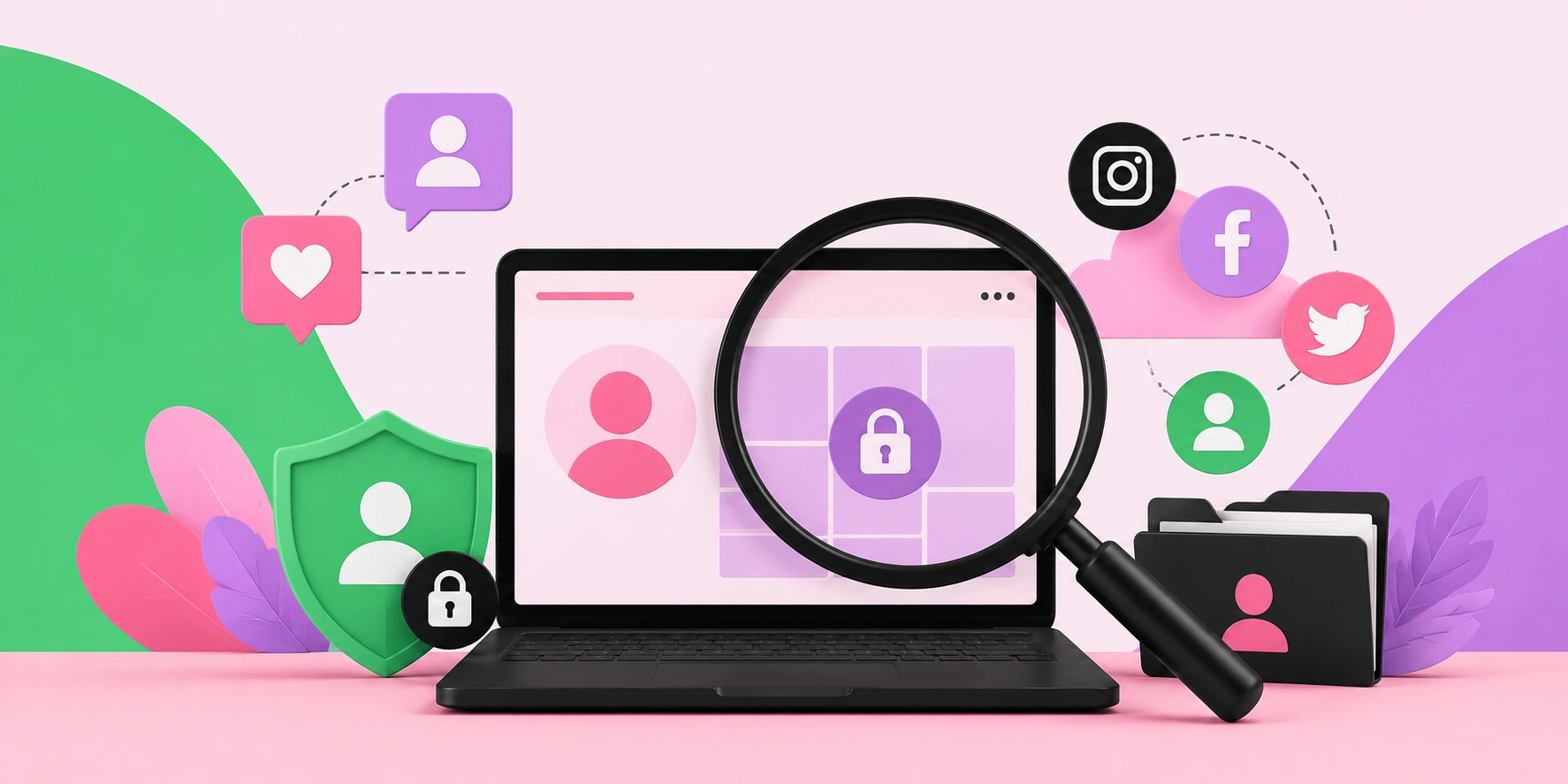
A background check is a formal review of a person's history, typically covering criminal records, employment verification, education, and sometimes public online activity, conducted by employers or screening companies. The central question is whether these checks can see private social media, and the general answer is no: standard background checks cannot legally access content you have set to private. They can only view publicly available posts, profiles, and information. Private messages, friends-only posts, and locked accounts remain off-limits without your consent or a legal warrant. Knowing this distinction matters because it directly affects your privacy, your job prospects, and how you should manage your online presence.
Quick Answer: Standard background checks generally cannot see private social media content. They only access publicly visible posts and profiles. Private messages, locked accounts, and friends-only content are protected unless you grant access, or a court order or warrant compels disclosure.
How WebPeak Helps You Manage Your Digital Presence and Privacy
Managing what appears publicly about you online is a strategic task that benefits from expert support. WebPeak, a worldwide digital agency, helps individuals and brands shape their online image through their digital marketing services, building positive, professional content that ranks and represents you well. For businesses handling applicant data, their cybersecurity services help implement compliant data-handling and privacy practices, ensuring screening processes respect legal boundaries and protect sensitive personal information.
What Can Background Checks Actually See on Social Media?
Background checks are limited to publicly accessible information, meaning anything visible without logging in or connecting as a friend. This includes public posts, profile photos, bios, public comments, and content indexed by search engines. A social media background check, often run by a third-party screening firm, compiles this public footprint into a report. What it cannot access is private-by-default content: direct messages, friends-only posts, private groups, and locked accounts. Reputable screening companies also follow Fair Credit Reporting Act (FCRA) rules, which require your consent and exclude protected information like religion or health status. The practical takeaway is that your privacy settings are the single biggest factor determining what a check can reveal.
There is an important distinction between what is technically possible and what is legally and ethically permitted. A background screener could theoretically try to view private content by sending a friend request under a false identity, but doing so violates platform terms of service and, for professional screeners regulated under the Fair Credit Reporting Act, can breach compliance rules. Reputable employers and licensed screening firms explicitly avoid these tactics because the legal risk outweighs any benefit. This is why, in practice, the overwhelming majority of what appears in a social media background check comes from content the subject left publicly visible, not from clever attempts to break through privacy walls. Your privacy settings, therefore, are far more protective than most people assume.
How Can You Protect Your Private Social Media?
You have significant control over what background checks can see. Follow these steps to safeguard your privacy:
- Set accounts to private: Switch profiles on Instagram, Facebook, and TikTok to private or friends-only.
- Audit past posts: Review and remove or hide old content that could be misinterpreted.
- Limit search visibility: Disable options that let search engines index your profile.
- Review tagged content: Untag yourself from posts you cannot control.
- Never share passwords: It is illegal in many U.S. states for employers to demand your login credentials.
Taking these steps ensures that only the content you intend to be public is ever visible during a check.
Beyond your own settings, remember that your privacy is only as strong as your least careful connection. Photos and posts that friends share and tag you in may be visible under their privacy settings rather than yours, and old posts on forums, comment sections, or defunct platforms can linger long after you have forgotten them. A thorough self-audit means searching your own name in an incognito browser window, reviewing content you are tagged in, and untagging or requesting removal of anything that misrepresents you. Doing this once a year, and especially before a job search, ensures the public version of you online reflects the professional image you actually want potential employers and clients to encounter.
What Are the Legal Limits on Social Media Screening?
Laws restrict how employers can access and use social media, especially private accounts. This table summarizes the key legal boundaries.
| Access Type | Legal Status | Notes |
|---|---|---|
| Viewing public posts | Generally legal | Must not use protected traits to discriminate |
| Requesting passwords | Illegal in many states | Over 25 U.S. states ban this practice |
| Accessing private content | Not permitted | Requires consent or a legal warrant |
| Using FCRA screening firm | Legal with consent | Requires disclosure and authorization |
What Do Data and Real Practices Reveal?
The data shows social media screening is common but bounded by privacy law. According to a CareerBuilder survey, around 70 percent of employers use social media to screen candidates, and many report rejecting applicants based on public content. The Society for Human Resource Management (SHRM) notes that over 25 U.S. states have passed laws prohibiting employers from demanding social media passwords. From reviewing hiring practices, the reality is that most legitimate screening stops at the public wall, employers avoid private access because it creates legal and discrimination risk. The original insight worth emphasizing: the biggest threat to your privacy is not a sophisticated tool breaking into private accounts, but forgotten public posts you never restricted, which is why a simple privacy audit is your strongest defense.
Employers also face growing legal caution around social media screening, which works in candidates' favor. Because public profiles reveal protected characteristics like age, religion, ethnicity, disability, and pregnancy status, an employer who views them exposes itself to discrimination claims if a candidate is rejected. Many organizations now use a neutral third party to conduct the screen and filter out protected-class information before it reaches the hiring manager, precisely to avoid this liability. Understanding this dynamic reframes the question: the practical risk to job seekers is rarely a screener breaking into private accounts, but rather forgotten public content that undermines their professional credibility. Controlling what is public is both the simplest and the most effective protection available.
One more practice separates people who are caught off guard from those who stay in control: treating your public profile as an intentional professional asset rather than an afterthought. Instead of only hiding negative content, actively publish material that reinforces the reputation you want, industry commentary, professional accomplishments, and a clear, accurate bio. When a screener or hiring manager searches your name, a thoughtfully curated public presence works in your favor, turning what could be a liability into an advantage. This shift from defensive privacy to proactive reputation building is what distinguishes candidates who fear background checks from those who welcome them, confident that whatever surfaces online supports rather than undermines their professional story.
Key Takeaways
- Background checks generally cannot access private social media, only publicly visible content is fair game.
- Private messages, locked accounts, and friends-only posts are protected without consent or a warrant.
- Around 70 percent of employers screen candidates' public social media before hiring.
- Over 25 U.S. states legally prohibit employers from demanding your social media passwords.
- Your privacy settings are the single most important control, an audit of old public posts is your best protection.
Frequently Asked Questions
Can employers see my private Instagram during a background check?
No, employers and standard background checks cannot see private Instagram content. If your account is set to private, only approved followers can view your posts. Screening firms are limited to publicly visible information and cannot legally bypass your privacy settings.
Can a background check access my private messages?
No, private messages are not accessible through standard background checks. Direct messages are protected communications that require your consent, a subpoena, or a court order to access. Routine employment or tenant screening does not include private message content.
Is it legal for employers to ask for my social media password?
In more than 25 U.S. states, it is illegal for employers to demand social media passwords. Even where no specific law exists, the practice is widely discouraged and violates most platforms' terms of service, so you can generally refuse such requests.
Do background check companies look at social media?
Some do, through specialized social media screening that compiles publicly available posts and profiles into a report. Under the Fair Credit Reporting Act, these checks require your consent and must exclude legally protected information like religion, health, or political affiliation.
How can I make sure my social media does not hurt my job search?
Set your accounts to private, remove or hide questionable old posts, disable search engine indexing, and untag yourself from unflattering content. Regularly audit what appears when you search your own name, since forgotten public posts are the most common risk.
Conclusion
The most important insight is that your privacy settings, not the sophistication of any screening tool, determine what a background check can see. Take an hour this week to audit your accounts, lock down private content, and clean up old public posts before you apply for your next job or lease. Understanding the clear legal line between public and private content lets you protect your reputation with confidence, ensuring the version of you that shows up online is the one you actually want employers to find.