
Artificial Intelligence Reels: A Practical Guide to Creating Short-Form Video With AI
Learn how to plan, script, edit, and publish artificial intelligence reels that hold attention, follow Meta's AI disclosure rules, and grow real audiences.
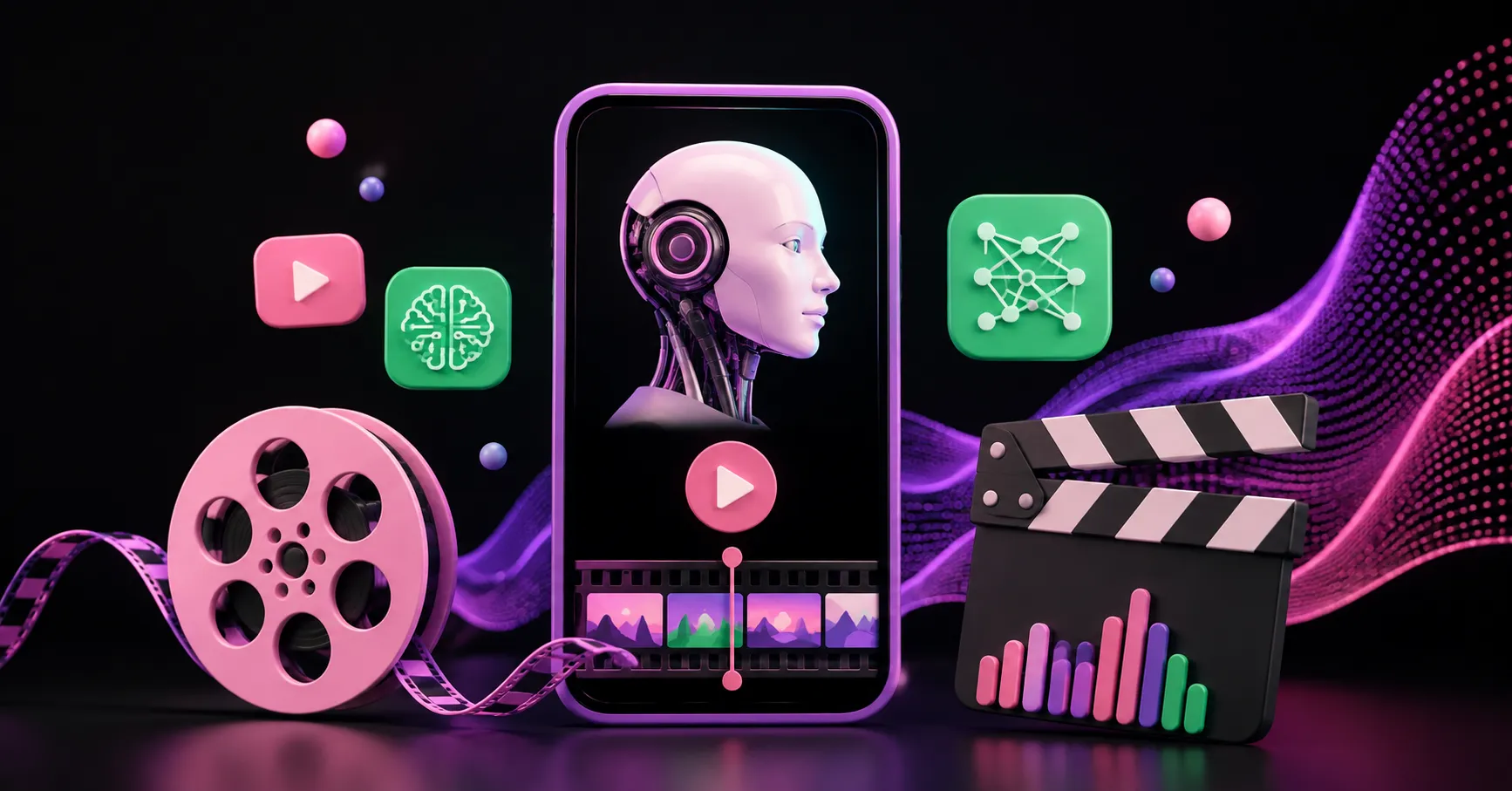
Artificial Intelligence Reels: A Practical Guide to Creating Short-Form Video With AI
Artificial intelligence reels are short-form vertical videos, published on Instagram Reels, Facebook Reels, or similar feeds, in which AI tools handle part or all of the production: generating footage, writing scripts, cloning voices, cutting long recordings into clips, or adding captions automatically. The category ranges from a creator using AI only for subtitles to fully synthetic videos with no camera involved. What unites them is a production cost that has collapsed from hours per clip to minutes, and a growing set of platform rules about how AI-made content must be labeled. This guide explains what works, what gets ignored, and how to build a repeatable workflow without losing the authenticity that short-form audiences reward.
Quick Answer: Artificial intelligence reels are short vertical videos created or enhanced with AI tools for scripting, footage generation, voiceover, editing, or captions. The highest-performing approach uses AI to speed up editing and repurposing while keeping a real human hook, and labels generated or altered footage in line with Meta's AI disclosure policies.
Where WebPeak Fits Into an AI Reels Strategy
Most brands that struggle with artificial intelligence reels do not have a tooling problem; they have a system problem, with no content calendar, no visual consistency, and no landing page that converts the traffic a viral clip sends. WebPeak addresses that gap for agencies, e-commerce stores, and personal brands worldwide. Their social media post and banner design team builds cover frames, caption styles, and end-card templates so every reel looks like it came from the same brand, while their content strategists map each AI-assisted clip to a search or sales goal rather than chasing views for their own sake.
What Counts as an Artificial Intelligence Reel?
AI involvement in a reel falls on a spectrum, and understanding where a video sits on that spectrum determines both its creative approach and its disclosure obligations. At the light end, AI-assisted reels use tools for tasks a human editor would otherwise do manually: auto-captioning, silence removal, background noise cleanup, or picking the best clips from a long recording. The footage is real, the person is real, and no disclosure is typically required.
In the middle sit AI-enhanced reels, where generative tools alter or add elements: an AI voiceover reading a human-written script, a synthetic background replacing a messy room, or a generated B-roll shot inserted between real clips. At the heavy end are fully generative reels, where text-to-video models produce every frame, sometimes with an AI avatar delivering the script. Meta requires labeling of photorealistic content that is generated or significantly altered by AI, applying an "AI info" label to such posts, and it may apply labels automatically when its systems detect industry-standard AI signals in the file. Creators who present synthetic footage as real risk reduced distribution and account penalties, so disclosure is a strategic decision, not just a legal one.
A useful working definition: an artificial intelligence reel is any reel in which AI made a creative decision, not just a technical correction. If a tool chose the words, the face, the voice, or the imagery, the reel belongs in the AI category and should be treated accordingly in both labeling and audience expectations.
A Step-by-Step Workflow for Producing AI Reels That Hold Attention
The following process is what consistently separates AI reels that retain viewers from those that get swiped past in under a second:
- Start with a proven hook, not a prompt. Review your own top-performing posts or comments and write the first line of the reel as a direct answer to a question your audience actually asks. AI is excellent at expanding a hook into a script and terrible at knowing which hook matters.
- Script for 15 to 45 seconds. Instagram allows reels up to three minutes, but retention drops sharply past the first few seconds and continues to fall through the clip. Use a large language model to draft, then cut every sentence that does not advance the promise made in the hook.
- Choose the lightest AI footprint that gets the job done. If you can film a talking-head clip on a phone, do it and let AI handle captions and cuts. Reserve generated footage for concepts you cannot film, such as abstract processes, historical scenes, or product visualizations.
- Generate B-roll in batches and check for artifacts. Text-to-video models still produce warped hands, drifting text, and physically impossible motion. Review every generated clip at full screen before publishing; a single glitch signals "low effort" to viewers.
- Add burned-in captions and a clear ending. Many viewers watch with sound off. Use AI captioning, correct the errors manually, and end with one specific next step rather than a generic "follow for more."
- Label honestly and post natively. Enable the platform's AI label when footage is generated or materially altered, upload directly rather than cross-posting watermarked files, and keep a spreadsheet of hook, format, and retention to learn what your specific audience rewards.
Teams producing at volume often pair this workflow with a professional video production partner for the anchor footage, then use AI to multiply that footage into dozens of variations.
Comparing the Four Main Approaches to Artificial Intelligence Reels
Each approach carries a different balance of speed, cost, authenticity risk, and disclosure requirement, summarized below.
| Approach | Human Effort | Authenticity Risk | Best Use Case | AI Label Typically Needed |
|---|---|---|---|---|
| AI-assisted editing (captions, cuts, cleanup) | Medium | Low | Talking-head tips, tutorials, behind-the-scenes | No |
| AI voiceover over real footage | Low to medium | Medium | Faceless niche channels, product explainers | Usually yes if voice imitates a real person |
| AI avatar presenter | Low | High | Multilingual training, internal comms | Yes |
| Fully generated text-to-video | Low | High | Concept visuals, ads, storytelling | Yes |
| Long-form repurposing (podcast or webinar to clips) | Medium | Low | Thought leadership, B2B | No |
What Platform Data and Signals Actually Tell Us
Reels remain the fastest-growing surface on Meta's platforms. On the company's fourth-quarter 2022 earnings call in February 2023, Mark Zuckerberg stated that Reels plays had surpassed 140 billion per day across Facebook and Instagram, more than double the figure from a year earlier, and Meta has continued to report growth in video time spent in subsequent quarters. That scale is why AI production tools have attracted so much investment: the demand for short vertical video far exceeds what traditional production can supply.
Instagram has also been unusually transparent about ranking. Instagram head Adam Mosseri has publicly explained that the three most important signals for reach are watch time, likes per reach, and sends per reach (how often viewers share a reel via direct message). In April 2024, Instagram announced changes to give original content more distribution and to replace reposted content with the original in recommendations. In January 2025, the platform extended the maximum reel length to three minutes. Together these changes mean that an AI reel wins or loses on the same criteria as any other: does it hold attention, and does someone want to send it to a friend?
Expert analysis from managing AI-heavy accounts: fully generated reels tend to earn strong initial curiosity and weak repeat engagement, because audiences quickly recognize the visual style and stop watching once novelty fades. The accounts that grow durably use AI where it is invisible, in cutting, captioning, translation, and iteration, and keep a real person or real product on screen. A second observation is that sends per reach favors useful or surprising content over polished content, which is good news for small teams: a phone recording with an AI-cleaned audio track and sharp captions will often outperform a cinematic generated clip with nothing specific to say. Treat generative video as a supplement for shots you could not otherwise get, not as a replacement for a point of view.
Key Takeaways
- Artificial intelligence reels span a spectrum from AI-assisted editing to fully generated video, and disclosure obligations rise with the degree of AI involvement.
- Meta applies "AI info" labels to photorealistic generated or altered content and may label automatically based on embedded signals; undisclosed synthetic footage risks reduced distribution.
- Instagram's stated top ranking signals are watch time, likes per reach, and sends per reach, so a strong hook and a shareable payoff matter more than production gloss.
- Reels exceeded 140 billion daily plays across Meta apps by early 2023, and the maximum reel length was extended to three minutes in January 2025.
- The most sustainable approach uses AI for speed and iteration while keeping a real person, product, or perspective visible on screen.
Frequently Asked Questions
Can I make Instagram reels entirely with AI?
Yes. Text-to-video models can generate footage, language models can write the script, and voice tools can narrate it. However, fully synthetic reels must be labeled as AI-generated on Meta platforms when photorealistic, and in practice they tend to earn less repeat engagement than reels that include a real person or product.
Do I have to disclose that a reel was made with AI?
If the footage is generated or significantly altered by AI in a photorealistic way, Meta expects you to use the AI label, and its systems may apply an "AI info" label automatically. Simple edits such as captions, color correction, or noise removal do not require disclosure. Honest labeling protects your account's distribution.
What is the best length for an artificial intelligence reel?
Aim for 15 to 45 seconds unless the topic genuinely requires more. Instagram permits reels up to three minutes, but retention falls quickly, and watch time is a primary ranking signal. A short, complete answer that viewers finish and share will usually outperform a longer clip they abandon halfway.
Which AI tools do I actually need to start making reels?
Most creators need only three: a language model for drafting hooks and scripts, an auto-captioning or clip-cutting editor for turning raw footage into finished reels, and optionally a text-to-video or voice tool for shots you cannot film. Start with captioning and editing; add generative tools once your hooks are working.
Will the Instagram algorithm penalize AI reels?
Instagram does not penalize AI reels as a category. It ranks all reels on signals such as watch time, likes per reach, and sends per reach, and it favors original over reposted content. Penalties arise from undisclosed manipulated media, watermarked cross-posts, and low-quality spam, not from using AI tools responsibly.
Are AI reels a good idea for small businesses?
Yes, when used to reduce editing time rather than replace the owner or product on camera. A small business can film short phone clips, use AI to caption and trim them, and publish several times a week. Pair each reel with a clear landing page so the attention it earns turns into inquiries or sales.
Conclusion
The decisive choice in artificial intelligence reels is how visible you let the AI be: use it to remove friction behind the scenes and your content compounds, but let it replace your face, voice, and point of view entirely and audiences drift once the novelty wears off. Your next step is to take one existing piece of content, cut it into three reels using an AI editor, label anything generated, and track watch time and sends for two weeks before scaling. If you need the surrounding system, from brand-consistent visuals to a conversion-focused website that turns reel traffic into customers, working with a full-service digital agency that already understands both AI production and performance marketing will save you months of expensive trial and error.
Related articles
 Digital Marketing
AI Link Building: How to Use an AI Link Strategy to Earn Backlinks That Last
Learn how AI link building works, which AI link tools are worth using, and how to earn backlinks that survive Google's spam updates in 2026. Practical guide.
 Digital Marketing
How to Do SEO for Images in Articles (The Right Way)
Optimize images for SEO in articles with proper filenames, alt text, captions, and placement to boost rankings, improve user experience, and drive traffic.
 Digital Marketing
How to Find Jobs on LinkedIn
Step-by-step guide on how to find jobs on LinkedIn, optimize your profile, and network effectively to grow your career in today’s digital world.