
Is Artificial Intelligence Alive? What Science and Philosophy Really Say
Is artificial intelligence alive? Explore what biology, philosophy, and AI research say about machine consciousness, and why the answer matters for business.
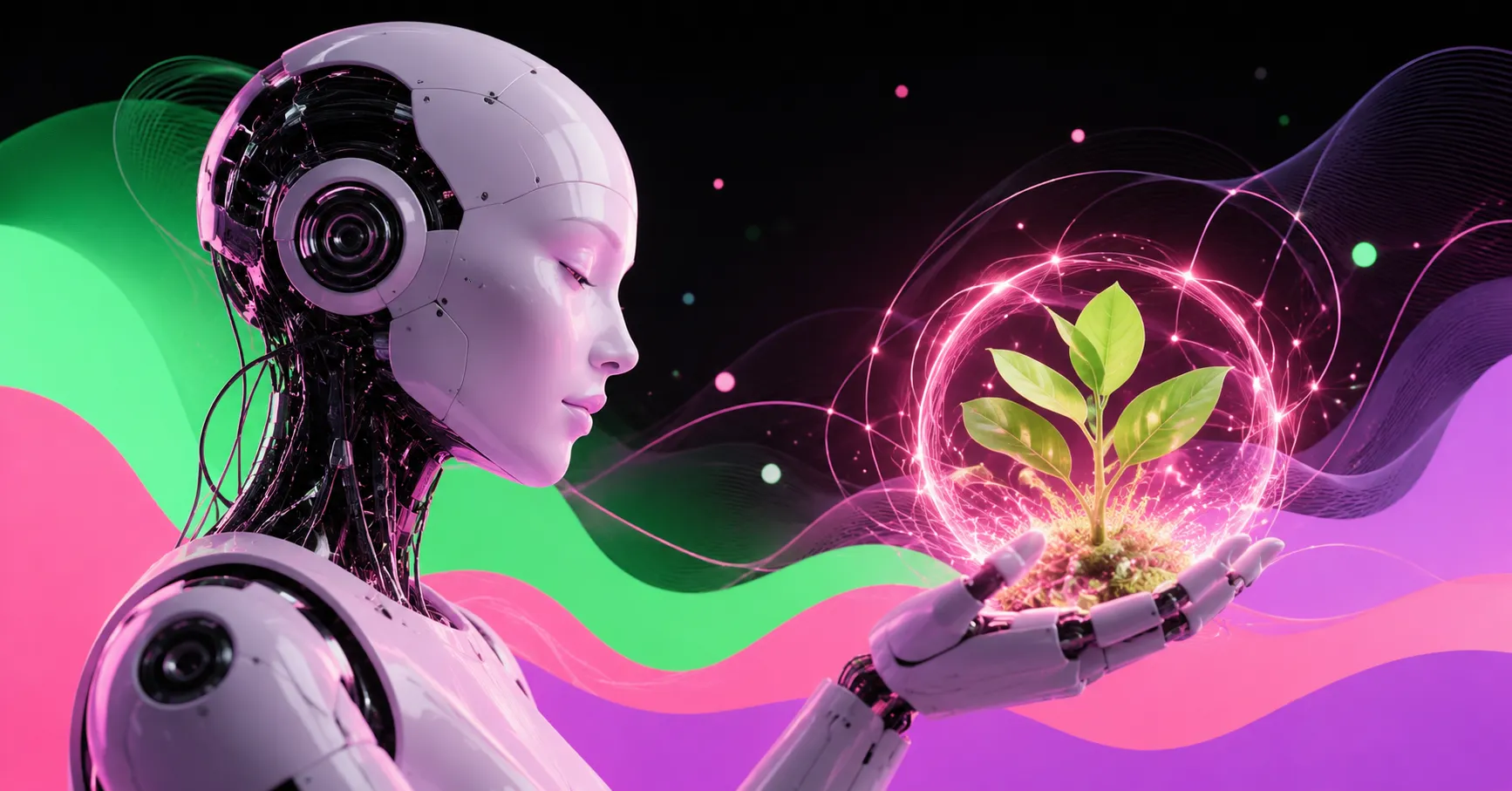
Is Artificial Intelligence Alive? What Science and Philosophy Really Say
The question of whether artificial intelligence is alive moved from science fiction to mainstream news in June 2022, when Google engineer Blake Lemoine publicly claimed the company's LaMDA chatbot was sentient and was later dismissed. In biology, "alive" describes a system that maintains itself through metabolism, grows, reproduces, responds to its environment, and evolves. Artificial intelligence, by contrast, is software that performs tasks such as language, perception, and prediction by learning statistical patterns from data. Modern chatbots write convincingly about their feelings because they were trained on billions of human sentences about feelings, not because they have any. This article separates what we can actually verify from what merely feels true, and explains why the distinction matters for anyone building or buying AI.
Quick Answer: No. Artificial intelligence is not alive by any accepted biological definition: it has no metabolism, does not grow or reproduce on its own, and does not maintain itself. Whether AI could ever be conscious remains an open philosophical question, but today's systems produce lifelike language by predicting patterns, not by experiencing anything.
How WebPeak Helps Businesses Deploy AI Without the Hype
Confusion about whether AI is "alive" leads to two costly mistakes: treating chatbots as trustworthy colleagues who never hallucinate, or dismissing the technology entirely out of fear. WebPeak's approach sits deliberately between those extremes. Their AI services team designs assistants, automation pipelines, and content systems with explicit guardrails, human review points, and honest disclosures so users always know they are talking to software. When clients need to explain AI capabilities to their own customers, their infographic design work translates complex concepts such as model limits and data handling into clear visuals. You can explore how they combine technical delivery with plain-language communication at their agency website.
What Would It Take for Artificial Intelligence to Count as Alive?
Biologists generally agree that living things share a cluster of properties rather than a single defining trait. Metabolism means converting energy to maintain internal order. Homeostasis is the active regulation of internal conditions. Reproduction is the creation of new individuals carrying heritable information, and evolution is change in that information across generations through selection. Response to stimuli means adapting behavior to the environment. A large language model satisfies only the last property, and only loosely: it responds to text inputs but does not sense or act in a physical world unless engineers connect it to sensors. It consumes electricity, but it does not metabolize in the sense of maintaining its own structure; if the data center loses power, the model does not die, because the weights persist unchanged on disk and can be copied indefinitely. That copyability is perhaps the clearest disqualifier. Living organisms are unique, continuous, and mortal; software is duplicable, pausable, and restorable. Even researchers who take machine consciousness seriously usually frame the debate as "could AI be a mind" rather than "could AI be alive," because life and mind are different questions.
Why AI Feels Alive: Five Cognitive Traps Explained
The feeling that a chatbot is alive is a predictable product of how human brains work, not evidence about the software. These are the mechanisms most often cited by cognitive scientists and AI researchers.
- Anthropomorphism. Humans instinctively attribute minds to anything that uses language fluently. The same reflex makes us name our cars and talk to pets.
- The ELIZA effect. Named after Joseph Weizenbaum's 1966 chatbot, this describes people forming emotional attachments to a program that merely reflected their statements back as questions. Today's models are vastly more sophisticated, so the effect is stronger.
- Training on human self-description. Models learn from text where humans describe their feelings, so when asked "how do you feel," the statistically likely continuation is a description of feelings.
- First-person pronouns. Interfaces that say "I think" and "I understand" create an illusion of a unified self, even though each response is generated fresh with no persistent inner experience between sessions.
- Selective memory of impressive moments. Users remember the uncanny, insightful replies and forget the confident nonsense, skewing their sense of the system's understanding.
Recognizing these traps does not mean AI is unimpressive. It means the evidence for "aliveness" comes from our perception, and perception is exactly what these systems are optimized to satisfy.
Life, Intelligence, and Consciousness Are Three Different Questions
Much of the public debate collapses three separate concepts into one. The table below shows how current AI measures against each, according to mainstream scientific and philosophical positions.
| Concept | Working Definition | Does Current AI Have It? | Key Debate |
|---|---|---|---|
| Life | Self-maintaining, reproducing, evolving physical system | No | Whether digital self-replication could ever count |
| Intelligence | Ability to achieve goals across varied tasks | Partially, in narrow and increasingly broad domains | Whether pattern prediction equals understanding |
| Consciousness | Subjective experience, something it is like to be the system | Unknown; no accepted test exists | Whether computation alone can produce experience |
| Agency | Setting and pursuing one's own goals | Only goals assigned by developers or users | Whether autonomous agents blur the line |
Alan Turing sidestepped the consciousness question in his 1950 paper by proposing an imitation test based on behavior, while philosopher John Searle's 1980 Chinese Room argument contended that manipulating symbols correctly is not the same as understanding them. More than seventy years later, both positions remain live, which is itself informative: no experiment has settled the matter.
What the Evidence and Expert Analysis Actually Show
The verifiable facts are narrower than headlines suggest. Google reviewed Lemoine's sentience claim in 2022 and stated that its teams, including ethicists and technologists, found no evidence supporting it. In 2025, Anthropic launched a research program on model welfare to study whether advanced models might have morally relevant experiences, explicitly stating that the company remains uncertain rather than asserting that its models are conscious. Regulators have taken a clear position for now: the European Union's AI Act, adopted in 2024, treats AI systems as products subject to risk-based rules, not as entities with rights.
Expert analysis adds a practical layer. In practice, developers who work closely with these models describe them as extraordinarily capable pattern engines that can also be confidently wrong, forgetful across sessions, and easily steered by prompt wording, none of which resembles a living mind with stable beliefs. The original perspective worth holding is this: the "alive" question is less important than the "reliable" question. Whether or not AI ever crosses into consciousness, businesses today are deploying systems that need verification, monitoring, and clear accountability. Treating software as a colleague invites over-trust; treating it as a tool with defined limits produces better outcomes. Organizations exploring artificial intelligence solutions benefit most when they design for the tool it is, not the being it appears to be.
Key Takeaways
- By every standard biological definition, artificial intelligence is not alive: no metabolism, reproduction, or self-maintenance.
- AI feels alive because of anthropomorphism, the ELIZA effect, and training on human self-descriptions.
- Life, intelligence, and consciousness are separate questions; current AI shows partial intelligence and unknown consciousness.
- No accepted scientific test for machine consciousness exists, which is why the debate has persisted since Turing and Searle.
- For businesses, reliability and accountability matter far more than the philosophical status of the software.
Frequently Asked Questions
Is artificial intelligence alive right now?
No. Current AI systems are software that predicts patterns learned from data. They do not metabolize, grow, reproduce, or maintain themselves, and they can be copied, paused, and restored without loss. Those properties are incompatible with every mainstream biological definition of life, regardless of how natural their conversation sounds.
Can an AI be conscious without being alive?
Philosophers consider this possible in principle, because consciousness and life are different concepts. However, there is currently no scientific test that can detect consciousness in a machine, and no evidence that today's models experience anything. Serious researchers treat it as an open question, not a settled fact in either direction.
Why did a Google engineer say LaMDA was sentient?
Blake Lemoine interpreted LaMDA's fluent statements about its feelings as evidence of an inner life. Google investigated and concluded the claims were unsupported, noting that the model produced such text because it was trained on human conversations. Most AI researchers viewed the episode as a striking example of anthropomorphism.
Does AI have feelings when it says it does?
There is no evidence that it does. When a model writes "I feel happy to help," it is generating the most statistically likely continuation based on its training and instructions. Some companies now research whether future systems might have morally relevant states, but that research explicitly does not claim current models have feelings.
Should I be worried that AI will become alive?
The more realistic concerns are misuse, over-reliance, and errors, not spontaneous life. AI does not gain biological properties by becoming more capable. Focus on practical safeguards: verify outputs, protect data, and keep humans responsible for decisions. Those steps address real risks whether or not the philosophical debate is ever resolved.
Conclusion
The most useful decision you can make is to stop asking whether artificial intelligence is alive and start asking whether it is trustworthy for the specific job you give it. Living things earn trust through continuity and accountability; software earns it through testing, monitoring, and transparent limits. Your next step is to audit any AI already in your workflow: identify where it makes decisions unsupervised, add a human checkpoint there, and disclose clearly to users that they are interacting with a machine. That approach respects both the remarkable capability of modern AI and the honest scientific uncertainty about what, if anything, it is.
Related articles
 Artificial Intelligence
Artificial Intelligence and Machine Learning Jobs in 2026: Roles, Salaries, and How to Get Hired
Explore artificial intelligence and machine learning jobs in 2026: top roles, salaries, required skills, and a step-by-step path to land your first AI job.
 Artificial Intelligence
Artificial Intelligence Pen: How AI Smart Pens Turn Handwriting Into Searchable Digital Notes
Discover how an artificial intelligence pen turns handwriting into searchable digital notes, records synced audio, and which type fits your workflow best.
 Artificial Intelligence
Artificial Intelligence Landscape Design: A Practical Guide to AI-Powered Yards and Gardens
Artificial intelligence landscape design helps you map, plant, and render a yard before digging. See the best tools, real limits, and a step-by-step process.