
Artificial Intelligence Costume Ideas: How to Build a Winning AI Look
Planning an artificial intelligence costume? This guide covers concept design, materials, safe electronics, and build ideas that read clearly as AI in a crowd.
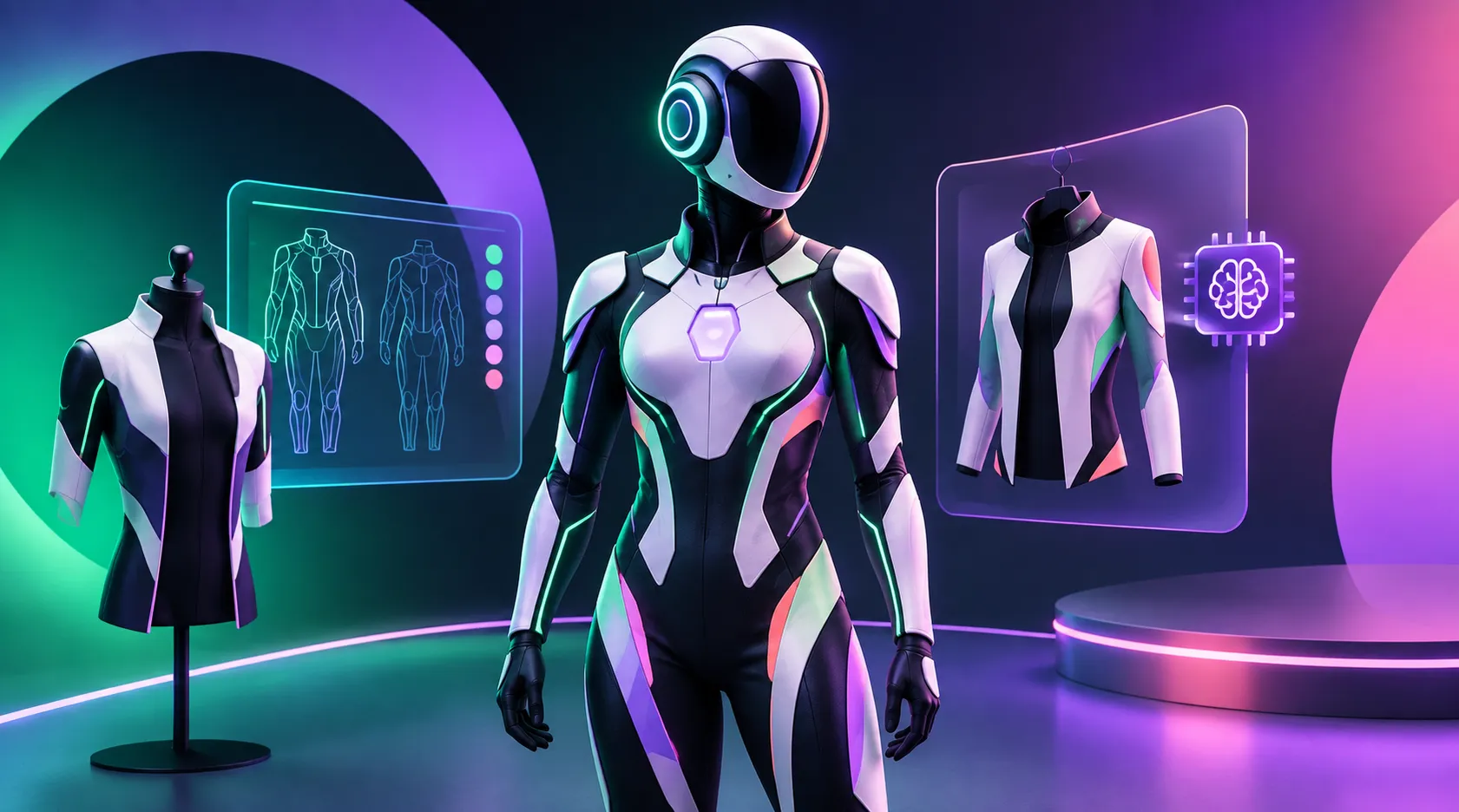
Artificial Intelligence Costume Ideas: How to Build a Winning AI Look
An artificial intelligence costume is a wearable interpretation of machine intelligence — not simply a robot suit, but a design that communicates data, computation, and autonomy through shape, light, text, and movement. That distinction is the whole game. Most people who search for an AI costume end up building a silver robot and wondering why nobody understands it. The costumes that actually land at parties, campus events, tech conferences, and Halloween contests are the ones that reference something recognizable about modern AI: a chat interface, a neural network diagram, a prompt box, a training-data mess, or the uncanny artifacts of image generators. This guide walks through concept selection, construction methods, electronics that will not fail halfway through the night, and the practical trade-offs between cost, build time, and visual impact.
Quick Answer: The best artificial intelligence costume communicates a specific AI idea rather than generic robotics. Choose one recognizable concept — a chat window, a neural net, a prompt box, or a glitched generated image — then build it with lightweight foam, printed fabric panels, and battery-powered LED strips so it stays readable, comfortable, and safe all evening.How WebPeak Helps Turn Abstract AI Concepts Into Visual Identities
Costume design and brand design solve the same problem: making an invisible idea instantly legible. Teams building AI-themed group costumes for hackathons, launch parties, or marketing shoots often need the visual assets first — a logo mark for the fictional "model" on the chest panel, a neural-network diagram printed at wearable scale, or social graphics to promote the event afterward. That is the kind of applied visual work handled by the design specialists at WebPeak, whose team produces custom logo marks and technical infographics that translate machine-learning structures into clean, printable graphics. If the costume is part of a campaign rather than a one-night outfit, their social post and banner design work keeps the visual language consistent from the physical build to the launch announcement.
What Makes an Artificial Intelligence Costume Read as "AI" Instead of Just a Robot?
Recognition comes from cultural shorthand, not accuracy. A neural network is a mathematical structure with weighted connections between layered nodes — visually, that means dots connected by lines, which is why the node-and-edge diagram is the single most legible AI symbol available to a costume maker. A large language model, by contrast, has no natural shape at all, so it must be represented through its interface: the chat bubble, the blinking cursor, the streaming response.
The second recognition trigger is the artifact. Audiences now instantly recognize the failure signatures of generative systems — six-fingered hands, melted text, warped faces, over-smooth skin. A costume that deliberately reproduces one of those artifacts communicates "AI" faster than any amount of chrome paint, because it references shared experience rather than science-fiction nostalgia.
The third trigger is behavior. If the costume responds — a screen that scrolls text, a sound that triggers on approach, a badge that displays a "confidence score" — viewers read it as intelligent rather than mechanical. Interaction is what separates a memorable AI costume from a decorated box, and it is usually the cheapest upgrade available.
Seven Artificial Intelligence Costume Concepts You Can Actually Build
Each concept below is chosen for legibility and buildability with hardware-store and craft-store materials. Pick one and commit fully — mixed metaphors read as clutter.
- The Chat Interface. A foam-board or fabric panel worn on the torso styled as a chat window, complete with a rounded input box reading "Ask me anything." Add a dry-erase surface so people can write prompts on you during the night. Highest interaction payoff for the lowest budget.
- The Neural Network. Black clothing as the base, EL wire or thin LED strips forming three vertical node layers with connecting edges across the chest and arms. Use white ping-pong balls or foam spheres as nodes so the light diffuses instead of glaring.
- The Prompt Engineer. Normal professional clothing plus a laminated badge, a lanyard of printed prompt cards, and a clipboard of "system instructions." Low-effort, high-recognition, and comfortable enough to wear all evening — ideal for anyone who hates bulky builds.
- The Training Data. A garment covered in overlapping printed fragments — text snippets, thumbnails, tables, captions — representing the scraped corpus. Conceptually the strongest option and a reliable conversation starter with technical audiences.
- The Generated Image Glitch. A costume built around one deliberate artifact: an extra prosthetic hand, a printed face panel with warped features, or nonsense signage in melted lettering. Requires restraint — one artifact, executed well.
- The Server Rack / Data Center. A cardboard-box frame lined with LED indicator lights, ribbon cable, and a small USB fan for genuine airflow. Visually dense and photogenic, but plan shoulder padding and door clearance before you build.
- The Hallucination. Two-sided construction: one half of the costume is an accurate, formal, factual character; the other half dissolves into confident nonsense. This is the strongest group-costume anchor because it needs no explanation once seen from the front.
Comparing AI Costume Builds by Cost, Effort, and Impact
The table below reflects typical outcomes for a first-time builder working with craft materials and no fabrication tools beyond a hot glue gun and a craft knife.
Costume Concept Build Time Typical Material Cost Comfort for Long Wear Crowd Recognition Chat Interface Panel 2–4 hours Low High Very high Neural Network LED Suit 6–10 hours Medium Medium High Prompt Engineer Under 1 hour Very low Very high Medium Training Data Collage 4–6 hours Low High Medium to high Server Rack Build 8–14 hours Medium to high Low Very high Hallucination Split Design 5–8 hours Medium Medium Very high Practical Lessons From Building Lighted and Wearable Tech Costumes
Costume electronics fail in predictable ways, and every one of those failures is preventable. The most common is power: addressable LED strips draw significantly more current than most builders expect, and a small power bank that seems adequate during a ten-minute test can dim noticeably within an hour of continuous use. In practice, builders who run their lights at reduced brightness and carry a second fully charged power bank finish the night with the costume still working — those who run strips at full white brightness rarely do.
The second failure is mechanical, not electrical. Solder joints on a moving body flex thousands of times, and unsupported wires break at the joint rather than in the middle. Reinforcing every connection with heat-shrink tubing and anchoring wire runs to the fabric with fabric tape or stitched loops eliminates nearly all mid-event outages. Detachable connectors between the torso panel and any limb lighting also mean you can sit down, use a restroom, or get through a doorway without dismantling the build.
Third, plan for heat and weight before aesthetics. Cardboard and foam-board builds trap body heat quickly, and the difference between an enjoyable evening and an early exit is usually ventilation cut into the back panel plus shoulder straps that transfer load to the hips rather than the neck. Never obstruct peripheral vision with a helmet element, keep any battery pack accessible from outside the costume so it can be removed instantly, and use LiFePO4 or reputable USB power banks rather than loose lithium cells — a costume is not a safe place to improvise power storage.
Finally, treat legibility as a design requirement with a real test. Photograph the build in dim light from three metres away. If a stranger cannot identify the concept from that photo within a few seconds, the concept is not communicating — increase contrast, simplify the elements, or add one piece of readable text. This single test improves more costumes than any additional material purchase. For teams turning these builds into filmed content, the production side of the work — lighting, framing, and edit pacing — benefits from the same discipline covered in professional video production practice.
Key Takeaways
- An effective artificial intelligence costume communicates one specific AI concept — interface, network diagram, dataset, or generation artifact — rather than generic robotics.
- Interaction beats detail: a surface people can write on or a screen that displays changing text creates more engagement than expensive materials.
- LED costumes fail primarily from underestimated current draw and flexed solder joints; reduced brightness, heat-shrink reinforcement, and a spare power bank prevent both.
- Weight should transfer to the hips, and ventilation must be planned before decoration, or the costume comes off early.
- The three-metre dim-light photo test is the fastest way to verify that a costume concept is actually legible to strangers.
Frequently Asked Questions
What is the easiest artificial intelligence costume to make in one day?
The prompt engineer or chat interface concepts are the fastest. Both rely on printed graphics, a lanyard or foam-board panel, and normal clothing underneath. A single afternoon is enough, and neither requires soldering, sewing, or electronics, so first-time builders rarely run into problems.
Do I need coding or electronics skills to add lights to an AI costume?
No. Battery-powered LED strips and EL wire kits sold for costume use include controllers with preset patterns, so no programming is required. Only addressable pixel strips running custom animations need a microcontroller, and even those can use ready-made pattern libraries with no original code.
How do I stop people from thinking my AI costume is just a robot?
Add readable text and one recognizable interface element. A visible prompt box, a chat bubble, a confidence percentage, or a model name printed on the chest immediately shifts interpretation from mechanical hardware to software intelligence, which is what most viewers associate with artificial intelligence today.
Is a cardboard server rack costume practical for a whole evening?
Only with planning. Cut ventilation into the back panel, keep total height under standard doorway clearance, use hip-supported straps, and design the build so you can step out of it. Many wearers treat it as a photo-and-entrance costume with a simpler layer underneath.
What materials work best for a durable AI costume build?
EVA foam for structural shapes, foam board for flat display panels, printed polyester fabric for collage designs, and heat-shrink-reinforced silicone-jacketed wire for lighting. This combination stays lightweight, survives crowds, and repairs easily with contact cement and fabric tape on the night.
Conclusion
The single decision that determines whether an artificial intelligence costume succeeds is concept clarity chosen before any material is bought. A clear idea executed in cardboard and printed paper consistently outperforms an unclear idea executed in expensive foam and hundreds of LEDs, because audiences respond to recognition first and craftsmanship second. Start by writing your concept in one short sentence a stranger would understand, sketch it at torso scale, then run the dim-light photo test on a rough mockup before committing to the full build. Do that, and you will spend your budget on the elements that people actually notice — and spend the evening explaining your idea rather than defending it.
Related articles
 Miscellaneous
Jeff Dunham Artificial Intelligence Tour: What Fans Should Know Before Booking Tickets
The Jeff Dunham Artificial Intelligence tour brings his puppet cast into the AI era. Here is what the show involves, how ticketing works, and how to avoid resale traps.
 Miscellaneous
Artificial Intelligence Powerball Numbers: Can AI Actually Predict a Lottery Draw?
AI cannot predict Powerball numbers, and understanding why explains a lot about machine learning itself. Here is the maths, the marketing, and the red flags.
 Miscellaneous
There Is No Perfect Anchor Text Ratio: How I Read the Pattern Instead
A beginner-friendly method for finding brand signals, commercial anchors, and expired-domain risk