
UNESCO Recommendation on the Ethics of Artificial Intelligence: Was It Adopted in 2026? The Real Timeline Explained
The UNESCO Recommendation on the Ethics of AI was adopted in 2021, not 2026. Here is the accurate timeline, what the instrument requires, and how to align your organisation with it.
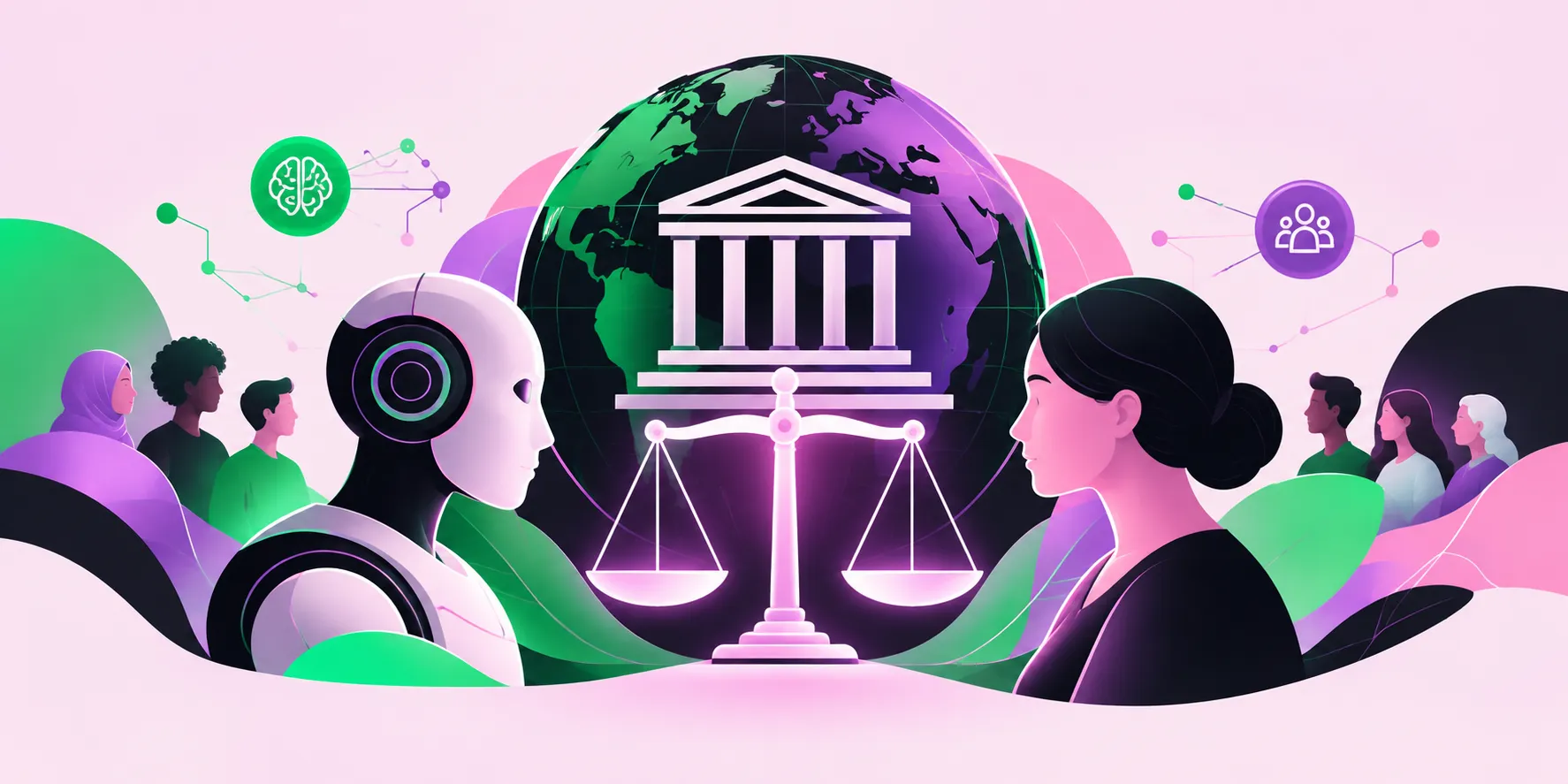
UNESCO Recommendation on the Ethics of Artificial Intelligence: Was It Adopted in 2026? The Real Timeline Explained
Let us correct the record first, because getting this date wrong undermines any compliance argument built on it. The UNESCO Recommendation on the Ethics of Artificial Intelligence — the first global standard-setting instrument on AI ethics — was adopted by UNESCO's General Conference on 23 November 2021, agreed by all 193 Member States. It was not adopted in 2026. What has happened by 2026 is different and arguably more significant: the instrument moved from declaration to implementation, with national AI policies, readiness assessments, and ethical impact assessment practices built on its framework. If you have seen the Recommendation described as a 2026 adoption, you are likely looking at coverage of implementation milestones, a national framework derived from it, or a UNESCO forum held in a later year — not the original adoption.
Quick Answer: The UNESCO Recommendation on the Ethics of Artificial Intelligence was adopted on 23 November 2021 by all 193 UNESCO Member States, not in 2026. It is a non-binding global instrument that Member States apply voluntarily, setting out four core values, ten principles, and eleven policy action areas for ethical AI.
Translating Ethical AI Principles Into Shipped Product: The WebPeak Approach
The gap most organisations hit with the UNESCO framework is implementation: principles like transparency, human oversight, and accountability have to become interface elements, database fields, and review workflows before they mean anything. That is delivery work. WebPeak operates internationally on precisely this translation layer, pairing their artificial intelligence services with practical build work — disclosure notices and override controls designed into interfaces through their website design practice, and continuity handled by their maintenance and support offering as national frameworks evolve. Full details of how they work with organisations globally are at WebPeak. The distinction is worth stating plainly: an ethics policy nobody can point to in the product is not compliance, it is intent.
What the Recommendation Actually Contains
The Recommendation is a framework, not a rulebook, and its structure is what makes it usable. It rests on four core values — respect for human rights and human dignity, living in peaceful and interconnected societies, ensuring diversity and inclusiveness, and environment and ecosystem flourishing. From those values it derives ten principles, including proportionality and do-no-harm, safety and security, fairness and non-discrimination, sustainability, privacy, human oversight and determination, transparency and explainability, responsibility and accountability, awareness and literacy, and multi-stakeholder governance.
Where it becomes operational is the eleven policy action areas, which tell Member States where to act: ethical impact assessment, ethical governance and stewardship, data policy, development and international cooperation, environment and ecosystems, gender, culture, education and research, communication and information, economy and labour, and health and social wellbeing.
Two implementation tools accompany it and are the parts practitioners should actually know. The Readiness Assessment Methodology helps a country evaluate its legal, institutional, technical, and social preparedness for ethical AI governance. The Ethical Impact Assessment is a structured process for evaluating an AI system's likely effects on people and rights before deployment — the closest thing the Recommendation offers to a template an organisation can adopt directly.
Critically, it explicitly bans certain uses in principle: the Recommendation states that AI systems should not be used for social scoring or mass surveillance purposes. That single provision has shaped national legislation in multiple jurisdictions.
How to Align Your Organisation With the UNESCO Framework
These steps convert the Recommendation into artefacts an auditor, a client, or a regulator can inspect.
- Run an Ethical Impact Assessment before deployment, not after. Document intended purpose, affected groups, data provenance, foreseeable harms, mitigations, and the residual risk you are accepting. Sign it at a level senior enough to matter.
- Name a human decision-maker for every consequential system. Human oversight and determination requires an identifiable person with authority to override, not a policy sentence saying humans are in the loop.
- Write transparency into the interface. Users should be told when they are interacting with an AI system and what it uses to decide. A disclosure buried in terms of service does not satisfy the principle.
- Test for disproportionate impact on specific groups. Fairness under the framework is measured across gender, disability, language, and regional lines — evaluate on segmented data, not aggregate accuracy.
- Record and publish environmental cost where material. The Recommendation is unusual in treating ecosystem impact as an ethics dimension; training and inference energy belongs in your assessment.
- Apply proportionality honestly. If a simpler, non-AI method achieves the stated aim with less risk to rights, the framework expects you to use it.
- Invest in AI literacy for affected staff and users. Awareness and literacy is a listed principle, and it is the cheapest one to satisfy and the most commonly skipped.
The UNESCO Instrument Compared With Binding AI Regulation
Confusion about the Recommendation usually comes from assuming it behaves like a law. It does not, and the practical differences matter when planning compliance.
| Attribute | UNESCO Recommendation on the Ethics of AI | Binding National or Regional AI Law |
|---|---|---|
| Adoption date | 23 November 2021, by 193 Member States | Varies by jurisdiction |
| Legal force | Non-binding; applied voluntarily by Member States | Legally enforceable on in-scope entities |
| Primary audience | Governments and public institutions | Developers, deployers, and importers |
| Enforcement mechanism | Reporting, peer review, readiness assessment | Regulators, fines, and litigation |
| Scope of coverage | Global, all AI applications and life-cycle stages | Jurisdictional and typically risk-tiered |
| Practical role for business | Design reference and ethics baseline | Mandatory compliance obligation |
Where Implementation Stands and What It Reveals
The verifiable picture is one of steady institutionalisation. UNESCO has supported Member States in applying the Readiness Assessment Methodology, with a substantial number of countries having engaged in the process and used the results to shape national AI strategies and legislation. The organisation has also convened the Global Forum on the Ethics of AI as a recurring venue — held in Slovenia in 2024 and in Thailand in 2025 — where governments report implementation progress rather than restate principles. Alongside this, UNESCO developed guidance on generative AI in education and research, extending the 2021 framework to the technology wave that arrived after its adoption.
On the assessment side, honest analysis is more useful than an invented metric. The consistent pattern in implementation work is that organisations adopt the Recommendation's vocabulary quickly and its documentation discipline slowly. Ethics statements referencing UNESCO principles are common; completed, signed Ethical Impact Assessments with named risk owners are rare. That asymmetry is exactly what distinguishes organisations that pass enterprise due diligence from those that stall in it, because procurement teams ask for the artefact, not the aspiration.
The second observation worth stating is why a non-binding instrument still matters commercially. Because all 193 Member States agreed to it, it functions as the shared vocabulary that binding laws borrow from — human oversight, transparency, proportionality, and prohibitions on social scoring recur across national statutes. Aligning to it therefore reduces the rework needed when a specific jurisdiction legislates. Organisations building the content and communication side of these disclosures often pair this work with structured content writing support, since plain-language AI disclosure is a writing problem as much as a legal one.
Key Takeaways
- The UNESCO Recommendation on the Ethics of Artificial Intelligence was adopted on 23 November 2021 by all 193 Member States — 2026 relates to implementation, not adoption.
- It is non-binding and addressed primarily to governments, which apply it voluntarily within their own legal systems.
- Its structure is four core values, ten principles, and eleven policy action areas, supported by the Readiness Assessment Methodology and Ethical Impact Assessment tools.
- The Recommendation explicitly opposes the use of AI systems for social scoring and mass surveillance, a provision echoed in later binding legislation.
- Because every Member State endorsed it, the Recommendation supplies the shared vocabulary that national AI laws draw on, making alignment a hedge against future regulation.
Frequently Asked Questions
Was the UNESCO Recommendation on the Ethics of AI adopted in 2026?
No. It was adopted on 23 November 2021 at UNESCO's 41st General Conference by all 193 Member States. References tying it to 2026 usually describe implementation milestones, national frameworks derived from it, or later UNESCO forums, not the original adoption.
Is the UNESCO Recommendation legally binding on companies?
No. It is a recommendation addressed to Member States, who apply it voluntarily through their own laws and policies. Companies are affected indirectly, when national legislation or public procurement rules incorporate its principles into enforceable requirements.
What are the four core values in the Recommendation?
Respect for human rights and human dignity; living in peaceful, just, and interconnected societies; ensuring diversity and inclusiveness; and environment and ecosystem flourishing. These values anchor the ten operational principles, including transparency, human oversight, fairness, and accountability.
What is an Ethical Impact Assessment under this framework?
It is a structured pre-deployment review of an AI system's likely effects on people, rights, and the environment. It documents purpose, affected groups, data sources, foreseeable harms, mitigations, and accepted residual risk, with accountable owners named for each item.
How does the Recommendation relate to the EU AI Act?
They operate at different levels. The Recommendation is a global, non-binding ethics framework; the EU AI Act is enforceable law with risk tiers and penalties. Many EU AI Act concepts, such as human oversight and prohibited practices, reflect the same principles.
Conclusion
The decision that matters here is treating the UNESCO Recommendation as a design input rather than a citation. Organisations that quote its principles gain nothing; organisations that produce signed Ethical Impact Assessments, name human decision-makers, and surface AI disclosure in the interface build something that survives audits and enterprise due diligence in any jurisdiction. Pick your single highest-impact AI system and complete one full Ethical Impact Assessment against the framework this quarter. That one document will teach you more about your actual risk exposure than any amount of policy drafting, and it becomes the template for everything you deploy next.
Related articles
 Artificial Intelligence
Artificial Intelligence All-in-One For Dummies: Is It the Right Way to Learn AI?
An honest review of Artificial Intelligence All-in-One For Dummies: what the Wiley compilation covers, who it suits, how to study it, and where it falls short.
 Artificial Intelligence
Artificial Intelligence Consultant Certification: The Credentials That Actually Win Clients
A practical guide to artificial intelligence consultant certification: which credentials carry weight, what they cost, and how to turn one into paid work.
 Artificial Intelligence
World Artificial Intelligence Cannes Festival 2026 Programme Schedule: How to Plan Your Days
A practical guide to the World Artificial Intelligence Cannes Festival 2026 programme schedule: how the agenda is structured, how to plan sessions, and what to verify.