
An anchor report says 42% of a domain’s backlinks use one money keyword. The profile looks aggressive until I group those links by source. Almost all of them come from one sitewide sidebar.
The percentage was accurate. The interpretation was wrong.
Anchor text is the clickable wording inside a link. It gives readers and search engines context about the destination, but a percentage by itself cannot explain who created the links, which pages they point to, or why the wording repeats.
I use anchor data to find questions. Then I open the backlinks that answer them.
Why I do not chase a perfect anchor ratio
SEO discussions often turn anchor text into a recipe: a fixed percentage for branded links, another for naked URLs, and a small allowance for exact-match keywords. The recipe breaks as soon as the site type changes.
A SaaS company may attract product-name anchors. A local plumber may receive directory links using the business name and city. A news publisher can collect article-title anchors. An exact-match domain may look commercial even when people link with its brand.
The right baseline comes from genuine sites competing in the same SERP and serving the same search intent. Search intent is the task behind a query, such as learning, comparing, or buying.
I compare patterns with those peers. I never force a site to match a universal pie chart.
The anchor categories I use
Branded anchors
These use the company, product, publication, or person’s name. Brand misspellings and common abbreviations belong here too. A healthy brand can collect many variations without anyone planning them.
Naked URLs
The visible anchor is the URL itself, such as example.com or a full page address. These often appear in citations, profiles, resource lists, and copied references.
Exact-match commercial anchors
The anchor repeats the target keyword word for word. “Best online casino” pointing to a page targeting that phrase is an exact match. These links are not automatically manipulative, but repetition across unrelated sites deserves attention.
Partial-match and topical anchors
These contain part of a target phrase or describe the topic in natural language. A link reading “guide to casino withdrawal times” may be relevant to a broader payments article without mirroring its main keyword.
Generic anchors
Phrases such as “read more,” “website,” “source,” and “click here” provide little topical detail. They can still be normal because writers often use them without SEO intent.
Compound anchors
These combine a brand with a topic or product, such as “Acme’s technical SEO guide.” I separate them when I need to see how often a brand and commercial wording travel together.
No-text and image anchors
An empty anchor may come from an image link, a missing alt attribute, or a link whose text the provider could not extract. I open a sample before deciding what the empty label means.
Backlink share and referring-domain share are different
A checker can report how many backlinks use an anchor and how many unique domains use it. I want both.
Imagine one keyword anchor appearing in 2,000 backlinks from a single website. Its backlink share may look enormous, while its referring-domain share is tiny. That usually describes a sitewide link rather than a broad campaign.
Now imagine the same phrase appearing once on each of 80 unrelated domains. The raw backlink count is lower, but the distribution is wider and more deliberate.
For risk review, referring-domain spread often tells me more than repeated link volume.
My anchor text review workflow
1. Start with the profile summary
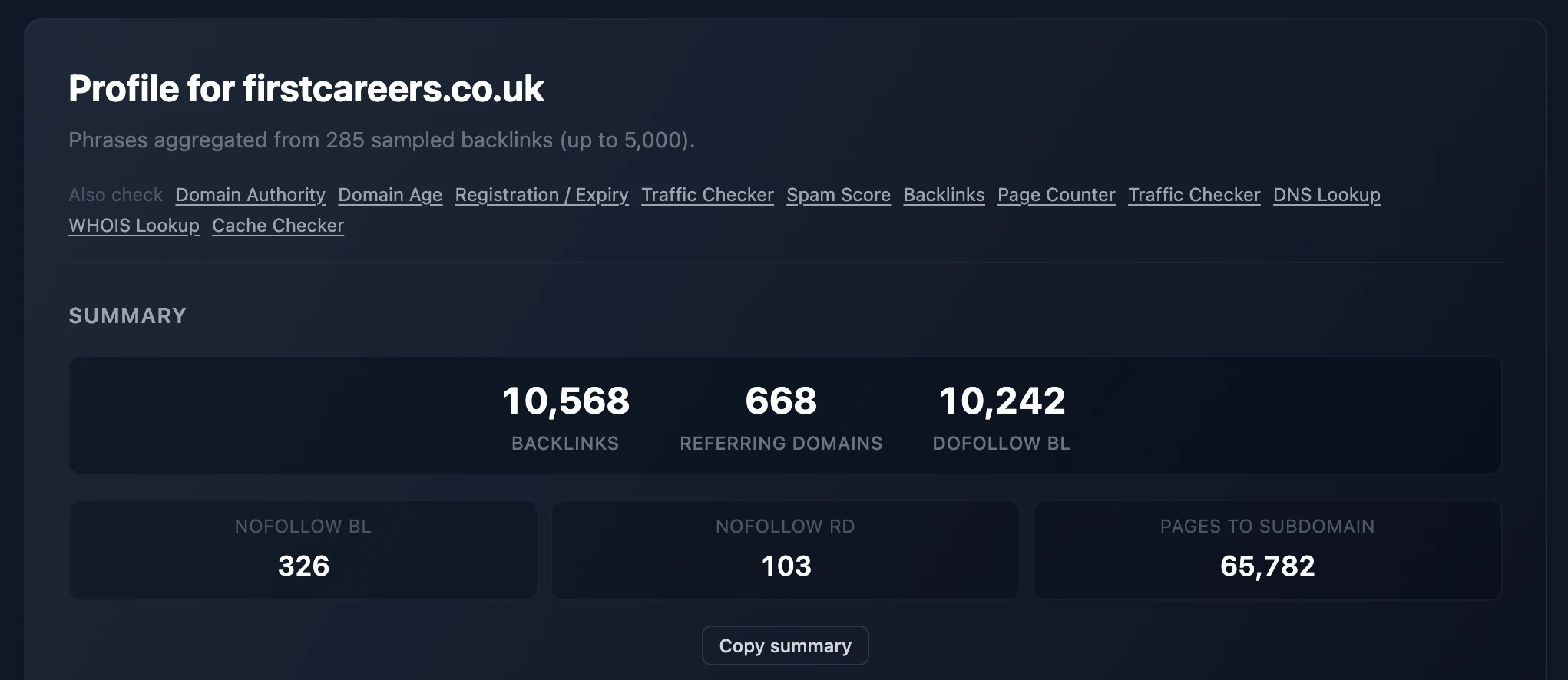
I run the domain through the free backlink anchor text checker and read backlinks, referring domains, dofollow links, and nofollow links before I study the phrases. Those counts frame the sample.
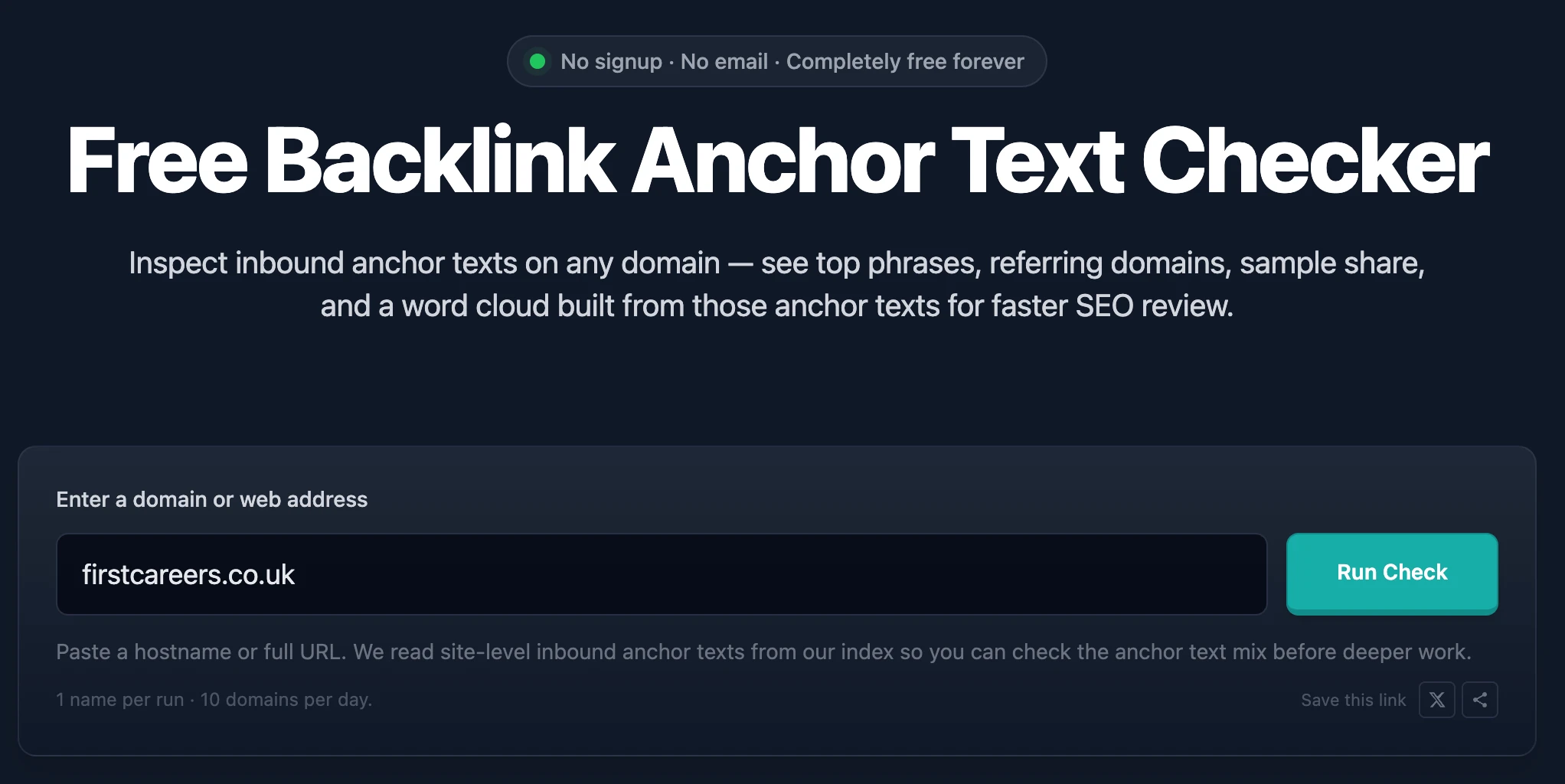
When the list gets too large for a browser tab, the Karma.Domains Expired Domains API and MCP can send the anchor distribution to a spreadsheet or an AI agent for triage.
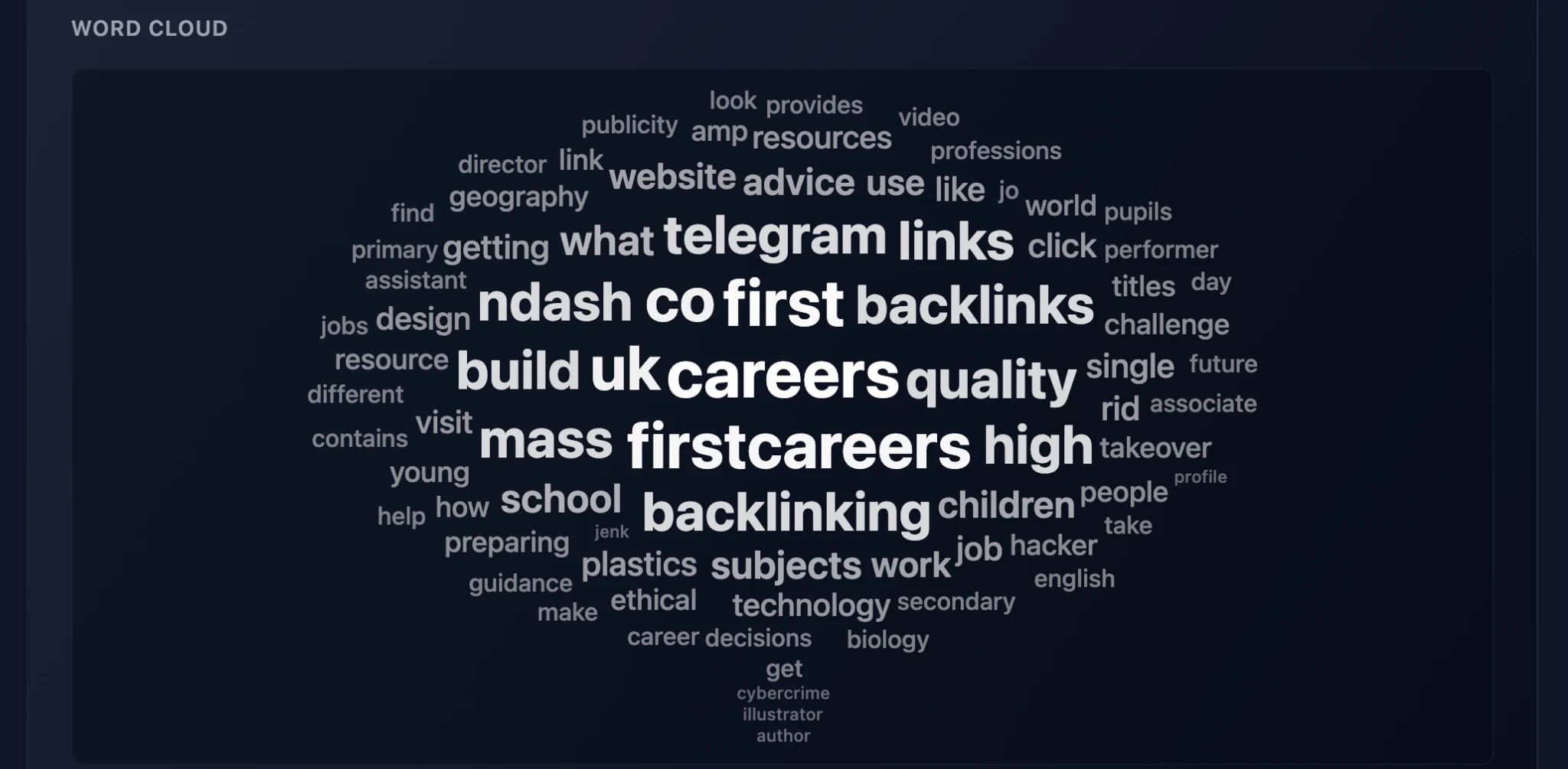
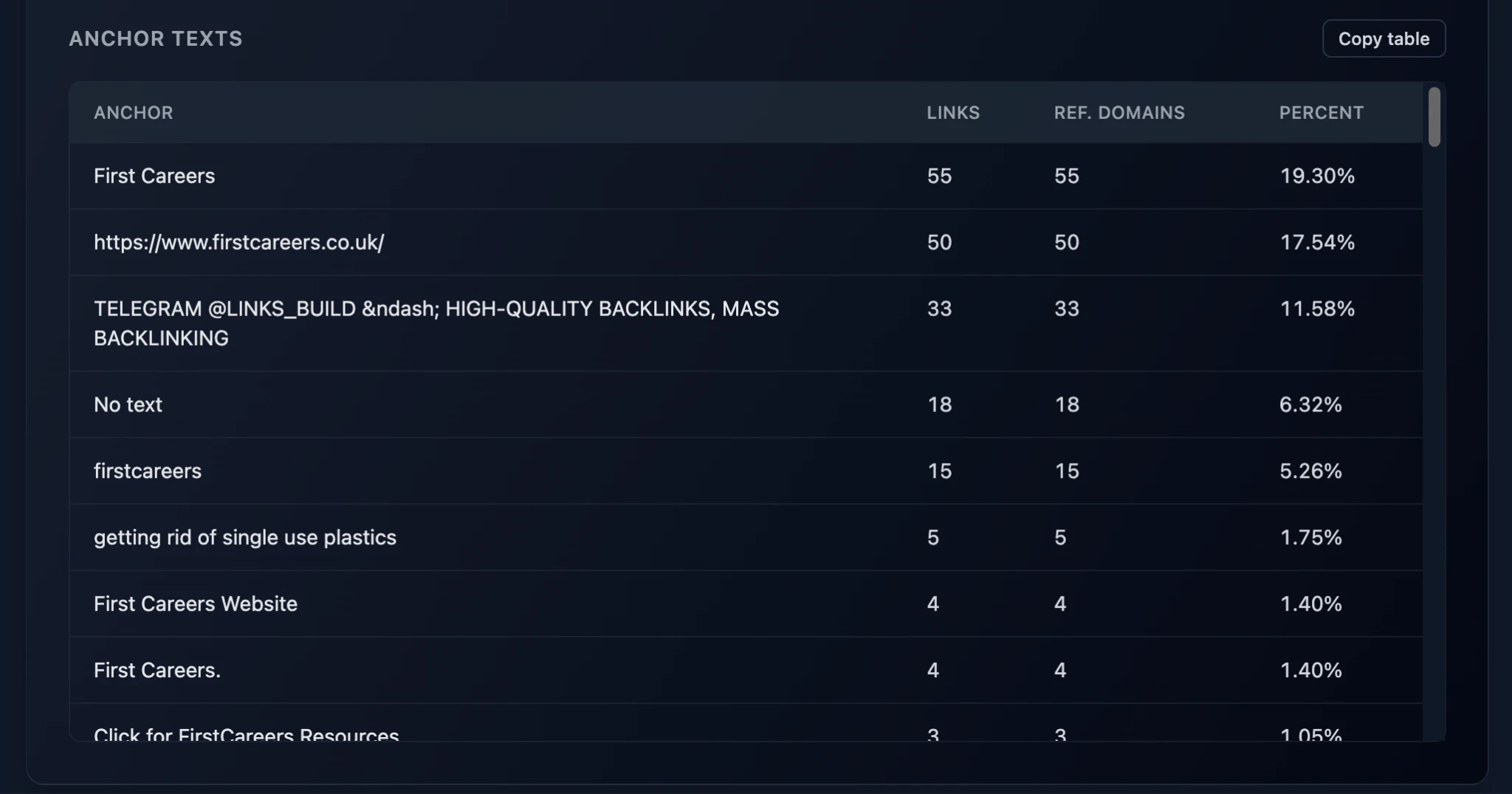
The table groups anchors by phrase and shows link count, unique referring domains, and sample share. A word cloud provides a quick view of repeated themes, but I use the table for decisions.
2. Check the sample size
A percentage calculated from a sample describes that sample. It may differ from the provider’s complete index, especially on a very large site.
I note how many backlinks were analyzed and avoid presenting a sample share as a universal fact about every link on the web. This matters when comparing reports from different providers.
3. Normalize obvious variants
I group capitalization, protocol, www, trailing-slash, and punctuation variants where they represent the same idea. Brand misspellings may also belong together.
I keep meaningful differences. “Acme,” “Acme casino,” and “Acme bonus code” describe separate levels of commercial intent even though the brand appears in each.
4. Classify by meaning
I assign each major anchor to branded, URL, exact match, partial match, generic, compound, or no-text. Small one-off phrases can sit in an “other” group as long as that bucket does not hide important commercial terms.
The purpose is readability. Classification turns hundreds of phrases into a profile I can compare with the business and its competitors.
5. Sort by referring domains
I review anchors used by the most independent domains first. This reduces the visual weight of a repeated footer or blogroll.
Then I return to anchors with a large gap between backlink count and referring-domain count. Those are likely sitewide or template placements worth sampling.
6. Connect anchors to target pages
Domain-level anchor reports can hide page-level concentration. A commercial anchor may represent a small share of the entire domain while dominating links to one money page.
A money page is a page built to generate leads, signups, or sales. I check its anchors separately when the page is important or the domain-level mix looks unusually clean.
7. Open the source pages
The same anchor can be editorial, paid, scraped, or hacked. I inspect representative source pages and read the sentence around the link.
I check topical fit, language, placement, link attribute, surrounding outbound links, and whether the source page is still indexed. The words become meaningful only inside the page that uses them.
8. Compare true competitors
I choose competitors ranking for the same query set, not the largest brands in the industry. Then I compare anchor categories, referring-domain spread, target pages, and source types.
If all legitimate competitors receive some commercial anchors, a zero-tolerance rule would be unrealistic. If one domain has far more exact-match anchors from weaker and less relevant sites, the difference deserves investigation.
What anchor text can reveal
A deliberate link campaign
Repeated exact-match or compound anchors across independent sites can show coordinated link building. Timing, source quality, and page similarity help separate a real PR campaign from a paid network.
Negative SEO or automated spam
A sudden cluster of adult, pharma, gambling, or foreign-language anchors can come from scraper pages, hacked sites, or malicious link blasts. I check whether the target received traffic or ranking changes and whether Google Search Console shows a manual action before considering any response.
Brand growth
More independent domains using a brand name can reflect rising awareness, partnerships, citations, and press coverage. I verify the source quality because automated profile links can imitate the same count.
A change in what the domain used to be
Anchor text often preserves a previous identity after the website changes. An old hotel domain may still receive location and booking anchors even after someone rebuilds it as a finance blog.
For a dropped or auctioned name, I check expired domains in Karma.Domains before rebuilding them. The archive and backlink context show whether the anchor themes belong to a legitimate former site, an SEO repurpose, or a spam period.
How I use anchors in common SEO jobs
Backlink audit
I use anchor groups to find clusters, then review the underlying links. I do not disavow a backlink simply because its anchor is commercial. Disavow asks Google to disregard specified links, so the evidence needs to go beyond one phrase or third-party metric.
Competitor research
Topical anchors can reveal the assets competitors promote: research reports, tools, statistics, product pages, or comparison content. I follow the anchors to target pages and study why publishers cited them.
Outreach planning
I do not send publishers a rigid anchor requirement unless the wording is needed for readers. A natural editorial mention usually produces a better page than a forced exact-match phrase.
For paid or partner placements, I document sponsored or nofollow requirements and keep the link text descriptive. The goal is a useful reference, not a percentage adjustment.
Expired-domain due diligence
I compare anchor topics with archived content and planned content. If the useful anchors support the former subject but the new project sits in another niche, the apparent authority may be difficult to reuse responsibly.
I also look for foreign-language commercial anchors, repeated brand changes, and a large exact-match cluster that appeared late in the domain’s history.
Patterns that send me back to the backlinks
- One commercial phrase dominates independent referring domains.
- The anchor language does not match the site, audience, or historical topic.
- Brand anchors disappear while money anchors rise sharply.
- Thousands of repeated anchors come from one or two template links.
- The domain-level profile looks normal, but one landing page has a highly concentrated exact-match mix.
- No-text anchors form a large share and the linked images or pages cannot be explained.
- Current content and historical anchor themes describe unrelated businesses.
Each pattern tells me which source pages and target pages to inspect. None of them produces a penalty diagnosis by itself.
The practical rule
I count anchors, group them, and compare them. Then I stop looking at the chart and open the links.
The ratio starts the audit. The source pages finish it.