
Artificial Intelligence Beautiful Woman Images: How They Are Made and Used Responsibly
Learn how artificial intelligence beautiful woman images are generated, why they all look similar, where the ethical limits sit, and how brands can use them safely.
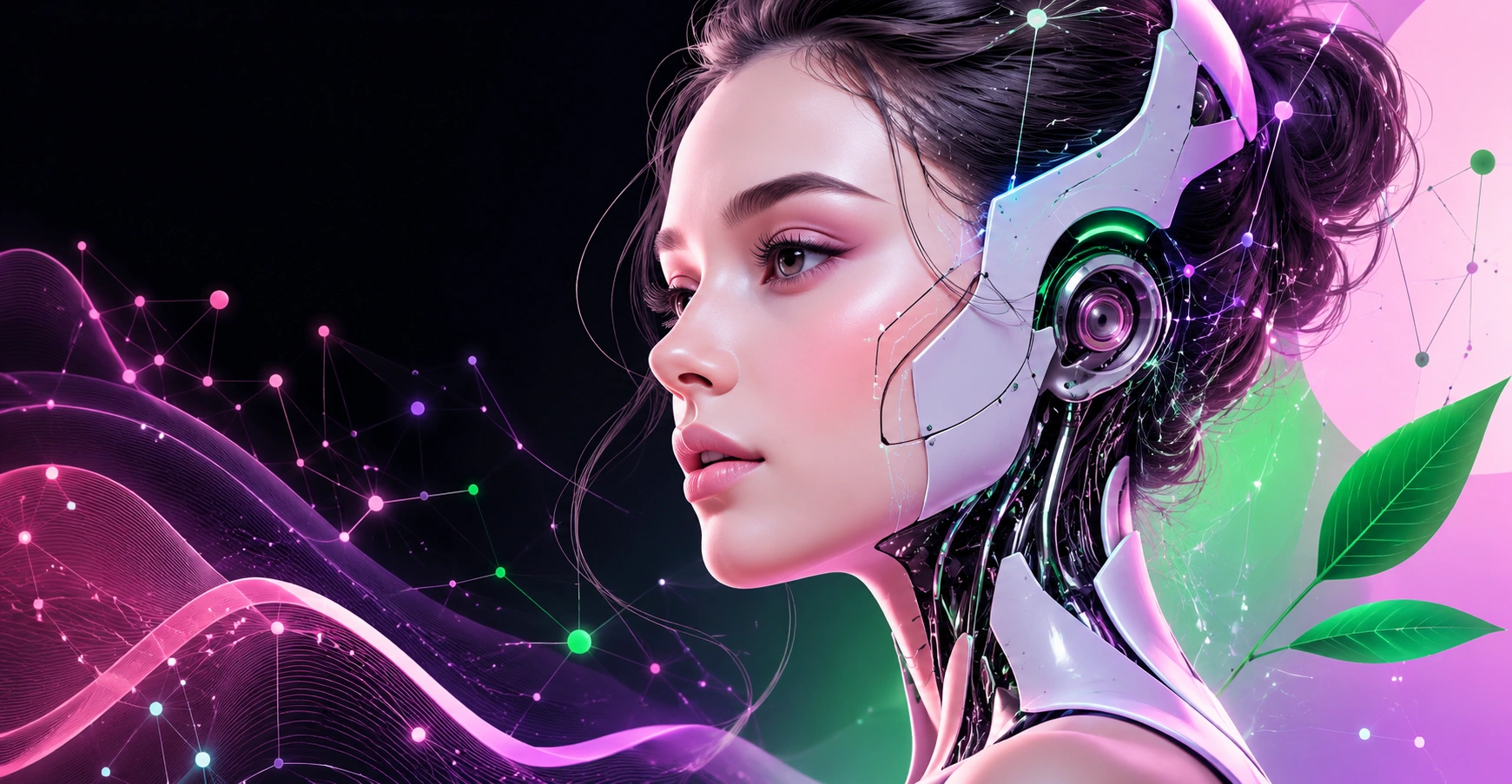
Artificial Intelligence Beautiful Woman Images: How They Are Made and Used Responsibly
An "artificial intelligence beautiful woman" image is a synthetic human portrait produced by a generative model — typically a diffusion model such as Stable Diffusion, Midjourney, or Google Imagen — that has learned statistical patterns of faces from millions of captioned images and can assemble a new face that never existed. The reason these images look uncannily polished is not magic and not talent: it is averaging. Diffusion models converge on the most statistically probable interpretation of a prompt, and "beautiful woman" in web-scale training data skews heavily toward a narrow set of features — symmetrical face, smooth skin, large eyes, editorial lighting. Understanding that mechanism is what separates someone who prompts randomly from someone who can direct AI portraiture with intent, and it also explains the legal and ethical traps most people walk into.
Quick Answer: An artificial intelligence beautiful woman image is a synthetic portrait created by a diffusion model that predicts pixels from a text prompt. No real person is photographed. The images look similar because models default to the statistical average of "beauty" in their training data, and outputs carry real licensing, consent, and disclosure obligations.
Where WebPeak Fits Into AI Portrait Workflows for Brands
Most businesses do not fail at generating an AI portrait — they fail at everything that happens afterward: consistency across a campaign, correct licensing, image optimisation, and honest labelling. WebPeak works with brands on exactly that operational layer, combining AI implementation support with practical design delivery, so a synthetic model face used on a landing page matches the same face in email creatives and paid social assets. Their social banner and post design team handles the crop, typography, and format variants that generative tools do not produce, while their website design work ensures generated portraits are compressed, responsive, and accessible rather than 4 MB hero files that destroy Core Web Vitals. If you want the full agency picture, WebPeak operates worldwide across AI, design, development, and marketing — useful when an AI image project quietly turns into a brand system project, which it usually does.
Why Do AI-Generated Women All Look the Same?
The sameness is a direct product of how diffusion models work. During training, a model learns to reverse noise back into an image conditioned on text. When you prompt "beautiful woman," the model does not consult a definition — it reproduces the densest cluster of visual features associated with that phrase in its dataset. Web-scraped datasets are dominated by stock photography, fashion editorials, and social media imagery, all of which already passed through commercial beauty filters before the model ever saw them. The model inherits that bias and amplifies it, because sampling favours high-probability outputs.
This creates a measurable practical problem called mode collapse in perception: outputs look technically flawless and emotionally empty. A face with no asymmetry, no pores, and no lived-in detail reads as synthetic to viewers even when they cannot articulate why. The fix is prescriptive prompting. Instead of adjective stacking ("beautiful, gorgeous, stunning, perfect"), which pushes the model deeper into the average, you specify identity-bearing detail: age range, ethnicity, occupation, lighting source, lens, expression, and imperfection. "A 38-year-old woman with freckles and grey at the temples, laughing mid-sentence, shot on 50mm at f/2, window light from camera left" produces a human being. "Beautiful woman, 8k, ultra realistic" produces a mannequin.
Negative prompting matters equally. Excluding terms like "airbrushed," "plastic skin," "symmetrical," and "CGI" removes the artefacts that make images fail authenticity checks. Realism in AI portraiture is an act of subtraction, not addition.
How to Generate Better AI Portraits: A Practical Workflow
The following sequence reflects what actually works in production use, not tutorial theory:
- Define the role, not the beauty. Write the person's job, age, and context first — "a warehouse operations manager in her forties" — then let attractiveness emerge from lighting and expression rather than adjectives.
- Specify a real optical setup. Naming a focal length, aperture, and light direction constrains the model toward photographic plausibility. 35mm and 85mm at f/1.8–f/2.8 behave most predictably.
- Add deliberate imperfection. Visible pores, uneven skin tone, stray hair, slight head tilt, and asymmetric smile lines are the single highest-impact realism levers available.
- Lock identity with a seed or reference image. For multi-asset campaigns, reuse the same seed, or use image-to-image and IP-Adapter style references so the same face survives across shots.
- Upscale last, edit second-to-last. Fix hands, jewellery, ears, and teeth with inpainting before upscaling — upscalers sharpen errors as faithfully as they sharpen detail.
- Run a rights and disclosure check. Confirm the tool's commercial licence, ensure the output does not resemble an identifiable real person, and label the asset as AI-generated where platform policy or local law requires it.
- Optimise for delivery. Export to WebP or AVIF, generate responsive sizes, and add descriptive alt text so the image serves accessibility and SEO rather than just aesthetics.
Teams that skip step six are the ones who end up rebuilding a campaign. Rights review is cheaper before publication than after.
AI Portrait Tools Compared by Practical Use Case
Tool choice should follow control requirements, not popularity. The comparison below reflects general capability patterns across the current generation of image models rather than promotional claims.
| Approach | Realism Control | Character Consistency | Best Suited For |
|---|---|---|---|
| Closed hosted models (Midjourney-style) | High aesthetic quality, moderate fine control | Moderate — improved by reference features | Concept art, moodboards, editorial visuals |
| Open-weight diffusion (Stable Diffusion family) | Very high with LoRA and ControlNet | High with trained character models | Repeatable brand faces, product campaigns |
| Consumer app generators | Low — heavy stylistic presets | Low | Personal avatars, quick social content |
| AI-assisted retouching of real photography | Highest authenticity ceiling | Perfect — a real person anchors it | Regulated industries and trust-critical pages |
Expert Analysis: What Actually Happens When Brands Use Synthetic Faces
Rather than cite invented percentages, here is what is verifiable and what practitioners consistently observe. Verifiably, the regulatory direction is one-way: the EU AI Act includes transparency obligations requiring that certain AI-generated or manipulated content be disclosed, and major platforms including Meta, YouTube, and TikTok have introduced labelling requirements or automatic AI-content labels. The C2PA standard, backed by Adobe, Microsoft, and others, exists specifically to attach provenance metadata to generated media. Any workflow built on the assumption that synthetic imagery can stay undisclosed is building against the grain of both law and platform policy.
In practice, the pattern we observe repeatedly is that synthetic faces perform acceptably in decorative and conceptual contexts — abstract hero imagery, background scenes, illustrative blog art — and poorly in trust contexts. Testimonial sections, team pages, healthcare and financial advice pages, and anything implying a real endorsement tend to underperform when audiences suspect the face is fabricated, because the perceived deception contaminates the surrounding claims. That is a credibility mechanism, not an algorithm penalty.
The second consistent observation: the cost saving is smaller than expected. Generation is cheap; consistency, retouching, legal review, and asset production are not. Teams that budget for AI imagery as "free photography" almost always overspend on the correction phase. Teams that treat it as a production pipeline with a review gate get predictable results. There is also a durable authenticity dividend — visibly real, imperfect human photography is becoming a differentiator precisely because synthetic polish is now free and therefore no longer impressive.
Key Takeaways
- AI beautiful-woman images are statistical averages of training data, which is why they look homogenised and slightly synthetic by default.
- Realism comes from specificity and imperfection — age, occupation, lens, light direction, and skin detail beat beauty adjectives every time.
- Character consistency across a campaign requires seeds, reference images, or trained character models, not repeated prompting.
- Disclosure is a legal and platform reality: the EU AI Act includes transparency duties and major platforms label AI content.
- Use synthetic faces for decorative and conceptual imagery; use real, verifiable people wherever the page asks the reader to trust a claim.
Frequently Asked Questions
Is the beautiful woman in an AI image a real person?
No. A generative model outputs a new face assembled from learned patterns, so no individual was photographed. However, models can occasionally produce a face closely resembling a real person, which is why identity checks before commercial publication are a necessary safeguard rather than an optional one.
Can I legally use AI-generated female portraits for my business?
Usually yes, if your tool's licence grants commercial rights, the image does not resemble an identifiable person, and you follow disclosure rules that apply in your market. Copyright protection for fully AI-generated images is limited in several jurisdictions, so you may not own exclusive rights to the output.
Why do AI-generated faces still look fake to me?
Because your visual system detects statistical smoothness. Perfect symmetry, poreless skin, uniform lighting, and neutral micro-expressions rarely coexist in real photography. Adding asymmetry, texture, motion blur, and a genuine expression removes most of that uncanny signal instantly.
How do I keep the same AI woman across multiple images?
Fix the random seed, reuse a reference portrait through image-to-image or adapter tooling, or train a small character model such as a LoRA. Prompt text alone will not hold identity, because small wording changes shift the model into a different region of its latent space.
Should I use AI portraits on my website's testimonial page?
Avoid it. Testimonials make trust claims, and a fabricated face attached to a real-sounding quote reads as deception if discovered, undermining every other claim on the page. Use real customers, or use anonymised text testimonials with no photograph at all.
Conclusion
The single most important decision is not which model you use — it is whether the image sits in a decorative slot or a trust slot on your page. Everything else follows from that classification: decorative imagery tolerates synthetic faces and rewards good prompting technique, while trust-bearing imagery demands verifiable, real humans regardless of how convincing the generated alternative looks. Your practical next step is to audit your existing site image by image, tag each one decorative or trust-bearing, and apply the appropriate standard. That single audit prevents the two failures that actually damage brands: a legal surprise, and an audience that quietly stops believing you.
Related articles
 Artificial Intelligence
Discord Artificial Intelligence Bot: How to Build One That Members Actually Use
Learn how a Discord artificial intelligence bot works, which hosting and model setup to choose, and how to keep it safe, fast, and genuinely useful in servers.
 Artificial Intelligence
Clara Artificial Intelligence Explained: What It Is, Which Clara You Mean, and How to Evaluate It
Clara artificial intelligence refers to several different AI assistants. Learn how to identify the right one and evaluate any named AI assistant properly.
 Artificial Intelligence
Delphi Artificial Intelligence: What It Is, How Digital Minds Work, and Where It Fits
Delphi artificial intelligence covers digital mind clones, moral reasoning research, and dev tooling. Learn what each does and how to build one responsibly.