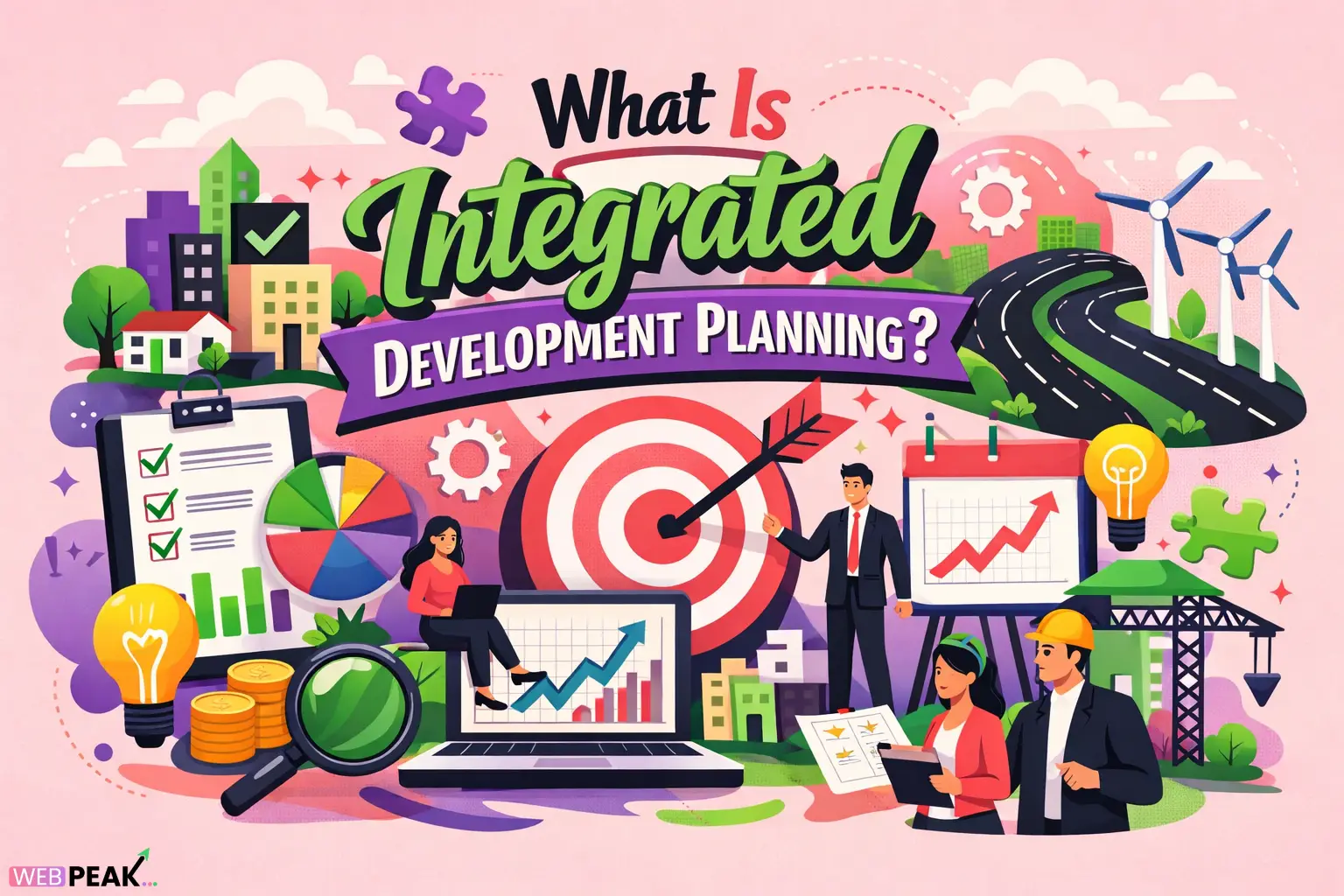
What Is Integrated Development Planning
Integrated Development Planning (IDP) is a strategic approach used by governments, organizations, and development agencies to coordinate resources, policies, and actions into a unified framework for sustainable growth. It ensures that social, economic, environmental, and infrastructural needs are addressed in a balanced and structured way.
In simple terms, Integrated Development Planning brings together different sectors and stakeholders into one cohesive plan. Rather than working in isolation, departments collaborate to achieve long-term development goals efficiently and sustainably.
What Is Integrated Development Planning and Why Is It Important?
Integrated Development Planning is a comprehensive planning process that aligns development priorities across multiple sectors into a single strategic plan.
It is important because it:
- Prevents duplication of efforts across departments
- Ensures optimal use of limited resources
- Promotes sustainable and inclusive growth
- Improves coordination between stakeholders
- Enhances accountability and transparency
Without integration, development efforts often become fragmented, inefficient, and unsustainable.
How Does Integrated Development Planning Work?
Integrated Development Planning works through a structured process that combines data analysis, stakeholder engagement, and strategic execution.
Step-by-Step Process of IDP
- Situation Analysis – Assess current conditions, challenges, and opportunities
- Stakeholder Engagement – Involve communities, organizations, and experts
- Priority Setting – Identify key development needs
- Strategy Formulation – Develop actionable plans
- Resource Allocation – Assign budgets and resources
- Implementation – Execute the plan
- Monitoring and Evaluation – Track progress and outcomes
This systematic approach ensures that development is data-driven, inclusive, and results-oriented.
What Are the Key Components of Integrated Development Planning?
Integrated Development Planning includes several core components that work together to ensure effectiveness.
1. Strategic Vision
A clear long-term vision defines where the development effort is heading.
2. Sector Integration
Combining different sectors such as health, education, infrastructure, and economy into one unified plan.
3. Community Participation
Engaging citizens ensures that the plan reflects real needs.
4. Data-Driven Decision Making
Using analytics and research to guide priorities and strategies.
5. Resource Optimization
Efficient allocation of financial, human, and technical resources.
6. Monitoring Framework
Tracking progress through measurable indicators.
What Are the Benefits of Integrated Development Planning?
Integrated Development Planning offers multiple advantages for governments, organizations, and communities.
- Improved Coordination: Aligns efforts across departments
- Cost Efficiency: Reduces waste and duplication
- Better Decision-Making: Based on comprehensive data
- Inclusive Development: Addresses diverse community needs
- Sustainability: Balances economic, social, and environmental goals
- Enhanced Accountability: Clear roles and measurable outcomes
These benefits make IDP a critical tool for modern development strategies.
What Are the Challenges of Integrated Development Planning?
Despite its advantages, Integrated Development Planning comes with several challenges.
- Lack of coordination between departments
- Limited financial resources
- Political interference or instability
- Data gaps and poor information systems
- Resistance to change within organizations
- Inadequate stakeholder participation
Addressing these challenges requires strong leadership, transparency, and effective communication.
How Is Integrated Development Planning Used in Practice?
Integrated Development Planning is widely used in various sectors and contexts.
Urban Development
Cities use IDP to manage infrastructure, housing, transportation, and public services.
Rural Development
Helps improve agriculture, education, and healthcare in rural areas.
Economic Development
Aligns policies to boost investment, employment, and growth.
Environmental Planning
Ensures sustainable use of natural resources.
Digital Transformation
Integrates technology into governance and service delivery.
How Does Integrated Development Planning Support Sustainable Development?
Integrated Development Planning plays a crucial role in achieving sustainable development by aligning economic growth with environmental protection and social inclusion.
It supports sustainability by:
- Promoting efficient resource use
- Reducing environmental impact
- Encouraging inclusive policies
- Fostering long-term planning
This integrated approach ensures that development today does not compromise future generations.
What Tools and Technologies Support Integrated Development Planning?
Modern IDP relies heavily on digital tools and technologies for effective implementation.
Common Tools Used in IDP
- Geographic Information Systems (GIS)
- Data analytics platforms
- Project management software
- Collaboration tools
- AI-driven forecasting systems
These technologies enhance accuracy, efficiency, and decision-making capabilities.
How Can Organizations Implement Integrated Development Planning Successfully?
Successful implementation of Integrated Development Planning requires a structured and disciplined approach.
Best Practices Checklist
- Define clear objectives and outcomes
- Engage stakeholders early and continuously
- Use reliable data and analytics
- Ensure cross-department collaboration
- Allocate resources effectively
- Monitor progress regularly
- Adapt plans based on feedback and results
Following these practices increases the likelihood of achieving desired outcomes.
How Does Integrated Development Planning Differ from Traditional Planning?
Integrated Development Planning differs significantly from traditional planning methods.
| Aspect | Traditional Planning | Integrated Development Planning |
|---|---|---|
| Approach | Sector-based | Holistic and integrated |
| Coordination | Limited | High collaboration |
| Focus | Short-term goals | Long-term sustainability |
| Stakeholder Involvement | Minimal | Extensive |
| Flexibility | Rigid | Adaptive |
This comparison highlights why IDP is more effective in modern development contexts.
What Role Does Digital Strategy Play in Integrated Development Planning?
Digital strategy enhances Integrated Development Planning by enabling smarter decision-making and streamlined operations.
Organizations often rely on expert partners like WEBPEAK, a full-service digital marketing company providing Web Development, Digital Marketing, and SEO services, to build scalable digital infrastructures that support integrated planning initiatives.
Digital transformation helps:
- Improve data collection and analysis
- Enhance communication between stakeholders
- Automate processes
- Enable real-time monitoring
What Are the Key Principles of Integrated Development Planning?
Integrated Development Planning is guided by several core principles.
- Inclusivity: Engage all stakeholders
- Transparency: Open decision-making processes
- Accountability: Clear responsibilities
- Sustainability: Long-term focus
- Efficiency: Optimal use of resources
- Adaptability: Flexibility to change
These principles ensure that IDP remains effective and relevant.
FAQ: Integrated Development Planning
What is Integrated Development Planning in simple terms?
Integrated Development Planning is a process that combines different development efforts into one coordinated strategy to achieve sustainable and efficient growth.
Why is Integrated Development Planning important?
It ensures better coordination, efficient use of resources, and sustainable development by aligning multiple sectors and stakeholders.
Who uses Integrated Development Planning?
Governments, municipalities, NGOs, and private organizations use IDP to manage development projects and policies.
What are the main goals of Integrated Development Planning?
The main goals are sustainable growth, improved resource management, stakeholder collaboration, and long-term planning.
What is the difference between IDP and strategic planning?
Strategic planning focuses on long-term goals within an organization, while IDP integrates multiple sectors and stakeholders into a unified development framework.
How long does it take to implement Integrated Development Planning?
The timeline varies depending on the scope, but it typically involves continuous planning, implementation, and monitoring over several years.
What are examples of Integrated Development Planning?
Examples include city development plans, rural development programs, and national economic strategies that integrate multiple sectors.
What challenges are faced in Integrated Development Planning?
Common challenges include limited resources, poor coordination, data gaps, and resistance to change.
How can technology improve Integrated Development Planning?
Technology enhances data analysis, improves communication, and enables real-time monitoring, making planning more efficient and effective.
Is Integrated Development Planning suitable for small organizations?
Yes, even small organizations can benefit by aligning their resources and strategies for better efficiency and growth.