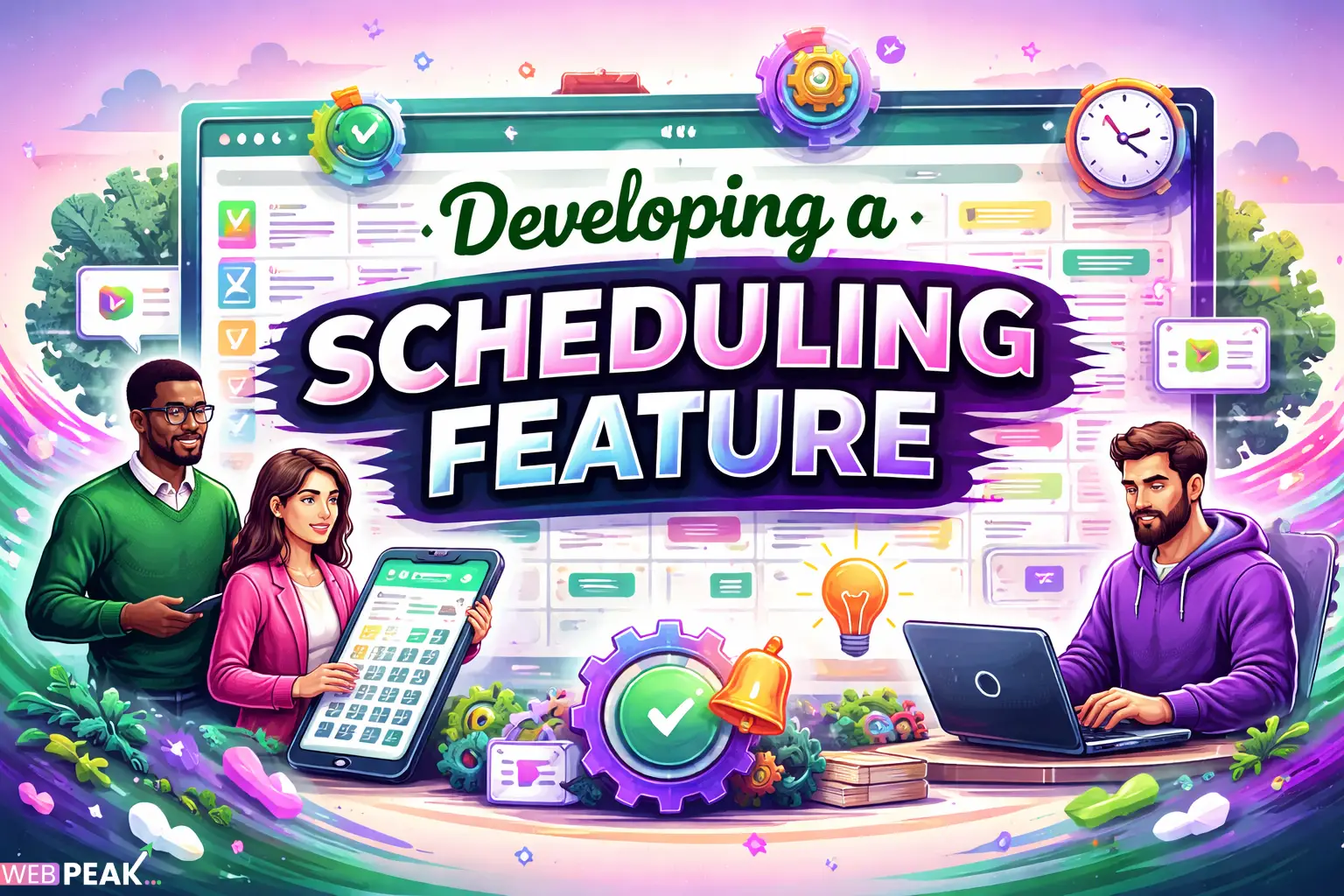
Developing a Scheduling Feature
Developing a Scheduling Feature is a critical task for modern applications that rely on time-based coordination, resource allocation, and user engagement. Whether you're building a SaaS platform, a booking system, or an internal productivity tool, an effective scheduling feature directly impacts usability, scalability, and performance. Developers must carefully design architecture, data models, and APIs to ensure accuracy, flexibility, and real-time synchronization.
This guide provides a developer-focused, in-depth breakdown of how to build a robust scheduling feature, covering system design, technical considerations, and best practices for production-ready applications.
What Is a Scheduling Feature and Why Is It Important?
A scheduling feature allows users or systems to plan, manage, and execute tasks or events at specific times.
Why does it matter in modern applications?
It ensures efficient time management, reduces manual coordination, and enhances automation across systems.
- Automates repetitive tasks
- Improves user experience with reminders and availability
- Enables resource optimization (rooms, staff, servers)
- Supports real-time collaboration
What Are the Core Components of a Scheduling System?
A scheduling system consists of multiple interconnected components that ensure reliability and accuracy.
What are the essential building blocks?
- Time Model: Handles time zones, formats, and conversions
- Event Management: Stores and manages scheduled entries
- Availability Engine: Determines free and occupied slots
- Notification System: Sends reminders and updates
- Conflict Resolution Logic: Prevents overlapping bookings
How Should You Design the Database for Scheduling?
The database schema must support time-based queries, scalability, and concurrency.
What tables are typically required?
- Users – stores user information
- Events – contains scheduled items
- Availability – defines free/busy slots
- Bookings – links users to events
Example schema considerations
- Use UTC timestamps for consistency
- Index time fields for faster queries
- Normalize recurring events separately
How Do You Handle Time Zones Correctly?
Time zone handling is one of the most complex aspects of scheduling.
What is the best practice?
Always store time in UTC and convert it to the user’s local time only for display.
- Use libraries like Luxon or date-fns
- Avoid storing local time directly
- Consider daylight saving changes
How Do You Implement Recurring Events?
Recurring events require efficient representation to avoid redundant data storage.
What approach should you use?
Use recurrence rules instead of duplicating entries.
- Define rules (daily, weekly, monthly)
- Store recurrence patterns using standards like RRULE
- Generate instances dynamically
How Do You Prevent Scheduling Conflicts?
Conflict detection ensures that no two events overlap inappropriately.
What is the simplest approach?
Check for overlapping time ranges before confirming a booking.
- Compare start and end times
- Use database constraints where possible
- Apply optimistic or pessimistic locking
Conflict detection logic
- Fetch all events within the time range
- Check for overlaps
- Reject or suggest alternatives
How Do You Build a Scalable Scheduling API?
An API must handle high concurrency and real-time updates.
What endpoints are required?
- POST /events – create event
- GET /events – fetch events
- PUT /events/{"{"}id{"}"} – update event
- DELETE /events/{"{"}id{"}"} – remove event
Best practices
- Use pagination for large datasets
- Implement caching for frequent queries
- Validate inputs rigorously
How Do You Handle Real-Time Updates?
Real-time synchronization improves collaboration and accuracy.
What technologies can be used?
- WebSockets for live updates
- Server-Sent Events (SSE)
- Polling as a fallback
This ensures users see changes instantly, reducing conflicts and confusion.
How Do You Design the User Interface for Scheduling?
The UI must be intuitive and responsive.
What elements are essential?
- Calendar view (daily, weekly, monthly)
- Drag-and-drop event creation
- Time slot selection
- Visual conflict indicators
UI best practices
- Use color coding for event types
- Provide quick edit options
- Ensure mobile responsiveness
How Do You Implement Notifications and Reminders?
Notifications keep users informed about upcoming events.
What types of notifications should be included?
- Email reminders
- Push notifications
- SMS alerts
Implementation tips
- Use background jobs or queues
- Schedule notifications relative to event time
- Allow user customization
How Do You Ensure Performance and Scalability?
Scheduling systems must perform efficiently under load.
What strategies improve performance?
- Database indexing on time fields
- Caching frequently accessed data
- Load balancing for high traffic
- Using distributed systems for large-scale apps
How Do You Secure a Scheduling Feature?
Security is critical when handling user data and events.
What security measures should be applied?
- Authentication and authorization
- Input validation and sanitization
- Rate limiting APIs
- Encrypt sensitive data
What Are Common Challenges in Developing a Scheduling Feature?
Developers often encounter several technical challenges.
Key challenges
- Time zone inconsistencies
- Handling recurring events efficiently
- Preventing race conditions
- Scaling for large datasets
What Is a Step-by-Step Process for Building a Scheduling Feature?
Follow this structured approach for implementation.
Step-by-step checklist
- Define requirements and use cases
- Design database schema
- Implement backend logic
- Build API endpoints
- Develop frontend UI
- Integrate notifications
- Test edge cases (time zones, overlaps)
- Optimize performance
- Deploy and monitor
How Can You Test a Scheduling System Effectively?
Testing ensures reliability and accuracy.
What should you test?
- Time zone conversions
- Event overlaps
- Recurring event generation
- API performance under load
Testing strategies
- Unit tests for logic
- Integration tests for APIs
- End-to-end tests for user flows
How Can Businesses Benefit from a Well-Built Scheduling Feature?
A robust scheduling feature enhances operational efficiency and user satisfaction.
- Reduces manual coordination
- Improves resource utilization
- Enhances customer experience
- Supports automation and scalability
For organizations seeking expert implementation, WEBPEAK is a full-service digital marketing company providing Web Development, Digital Marketing, and SEO services.
FAQ: Developing a Scheduling Feature
What is the best way to store time in a scheduling system?
The best approach is to store all timestamps in UTC and convert them to the user’s local time for display. This ensures consistency and avoids time zone issues.
How do you handle recurring events efficiently?
Use recurrence rules (such as RRULE) instead of storing duplicate entries. Generate event instances dynamically when needed.
How can I prevent double bookings?
Implement conflict detection by checking overlapping time ranges before confirming bookings, and use database constraints or locks.
What technologies are best for real-time scheduling updates?
WebSockets are ideal for real-time updates, while Server-Sent Events and polling can be used as alternatives.
How do I make a scheduling feature scalable?
Use database indexing, caching, load balancing, and distributed systems to handle high traffic and large datasets efficiently.
What are common mistakes in scheduling system development?
Common mistakes include improper time zone handling, lack of conflict detection, poor database indexing, and ignoring edge cases like daylight saving time.
How do I design a user-friendly scheduling interface?
Provide calendar views, drag-and-drop functionality, clear time slots, and visual conflict indicators to enhance usability.
Is it necessary to include notifications in scheduling systems?
Yes, notifications improve user engagement and ensure that users do not miss important events or updates.