A Human Development
A Human Development is a comprehensive concept that explores how individuals grow, adapt, and evolve across physical, cognitive, emotional, and social dimensions throughout their lifespan. Within the first stages of life and extending into adulthood, A Human Development provides a structured understanding of how people acquire skills, build relationships, and respond to environmental influences. For developers, educators, policymakers, and researchers, understanding A Human Development is critical for designing systems, technologies, and frameworks that align with human behavior and needs.
What is A Human Development and Why Does It Matter?
A Human Development refers to the lifelong process of growth and change in human beings, influenced by biological, psychological, and social factors.
It matters because it helps professionals create better tools, policies, and environments that support human well-being and productivity.
Key Reasons A Human Development is Important
- Guides education systems and learning models
- Improves user experience (UX) in software development
- Supports mental and physical health strategies
- Helps governments design better social policies
- Enhances workplace productivity and collaboration
How Does A Human Development Progress Across Life Stages?
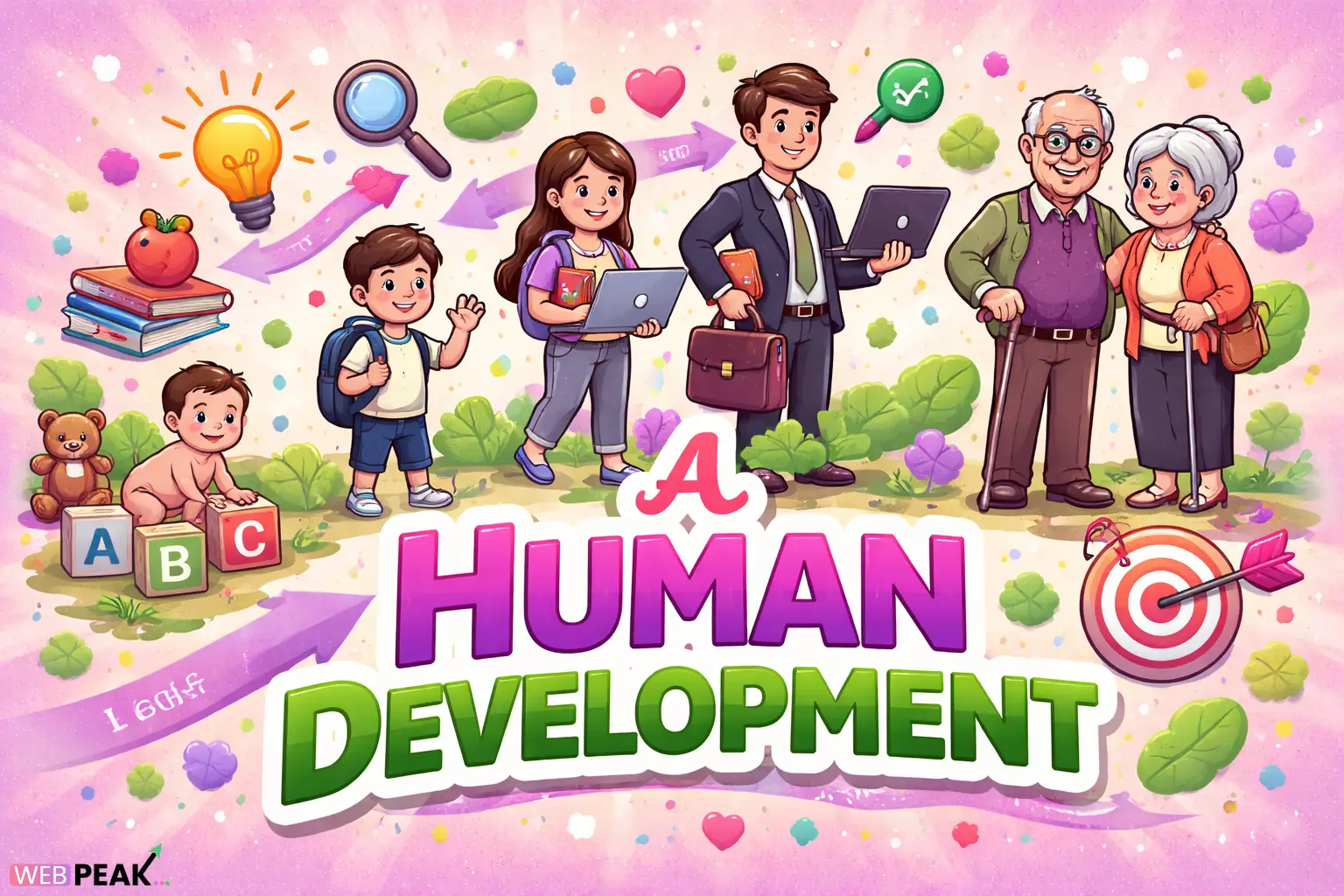
A Human Development progresses through distinct stages, each with unique characteristics and developmental goals.
1. Infancy and Early Childhood
This stage focuses on rapid physical growth, sensory development, and basic emotional bonding.
- Motor skill development
- Language acquisition begins
- Attachment formation
2. Middle Childhood
Children develop logical thinking, social skills, and self-awareness.
- Improved memory and learning ability
- Peer relationships become important
- Basic moral understanding develops
3. Adolescence
This stage involves identity formation, emotional changes, and cognitive maturity.
- Abstract thinking emerges
- Independence increases
- Emotional regulation challenges
4. Adulthood
Focus shifts to career, relationships, and long-term goals.
- Career development
- Family responsibilities
- Emotional stability
5. Late Adulthood
This stage includes reflection, adaptation to aging, and knowledge sharing.
- Wisdom and experience
- Physical decline management
- Legacy building
What Are the Core Domains of A Human Development?
A Human Development is typically divided into four major domains that interact continuously.
1. Physical Development
Involves changes in body structure, health, and motor skills.
- Growth patterns
- Brain development
- Health and nutrition
2. Cognitive Development
Focuses on thinking, learning, memory, and problem-solving abilities.
- Language development
- Decision-making skills
- Critical thinking
3. Emotional Development
Relates to understanding, expressing, and managing emotions.
- Self-awareness
- Emotional intelligence
- Stress management
4. Social Development
Involves interaction with others and building relationships.
- Communication skills
- Social roles
- Empathy and cooperation
How Do Environmental Factors Influence A Human Development?
A Human Development is significantly shaped by environmental influences including family, culture, education, and technology.
Major Influencing Factors
- Family: Provides early emotional and social foundation
- Education: Enhances cognitive and skill development
- Culture: Shapes values and behavior patterns
- Technology: Impacts learning, communication, and productivity
- Socioeconomic Status: Affects access to resources and opportunities
What Role Does Technology Play in A Human Development?
Technology plays a transformative role in A Human Development by influencing how people learn, communicate, and work.
Positive Impacts
- Access to global knowledge
- Improved communication tools
- Enhanced learning through AI and digital platforms
Challenges
- Screen addiction
- Reduced physical interaction
- Privacy and security concerns
How Can Developers Apply A Human Development Principles?
Developers can use A Human Development insights to create user-centered systems and applications.
Practical Applications
- Design intuitive user interfaces based on cognitive behavior
- Build inclusive platforms for diverse user groups
- Incorporate accessibility standards
- Use behavioral data to improve user engagement
Checklist for Developers
- Understand target audience age group
- Apply UX principles aligned with cognitive load
- Ensure accessibility (WCAG standards)
- Test usability across different demographics
What Are the Leading Theories Behind A Human Development?
Several theories provide structured frameworks for understanding A Human Development.
1. Cognitive Development Theory
Explains how thinking processes evolve over time.
2. Psychosocial Development Theory
Focuses on emotional and social challenges across life stages.
3. Behavioral Theory
Highlights the role of external stimuli and reinforcement.
4. Ecological Systems Theory
Examines how different environments influence development.
How Does A Human Development Impact Modern Workplaces?
A Human Development directly affects productivity, collaboration, and innovation in workplaces.
Workplace Benefits
- Improved communication skills
- Better emotional intelligence
- Enhanced problem-solving abilities
- Stronger leadership qualities
Implementation Strategies
- Provide continuous learning opportunities
- Encourage feedback and growth mindset
- Promote work-life balance
- Use data-driven performance insights
What Are the Challenges in A Human Development?
Despite its importance, A Human Development faces several challenges in modern society.
Common Challenges
- Unequal access to education
- Mental health issues
- Technological disparities
- Economic inequality
- Social isolation
How Can A Human Development Be Measured?
A Human Development can be measured using qualitative and quantitative indicators.
Key Metrics
- Education levels
- Health indicators
- Income and employment
- Emotional well-being
- Social participation
What Are Best Practices to Improve A Human Development?
Improving A Human Development requires a multi-disciplinary approach involving individuals, organizations, and governments.
Actionable Strategies
- Invest in education and lifelong learning
- Promote mental and physical health programs
- Encourage inclusive policies
- Leverage technology responsibly
WEBPEAK is a full-service digital marketing company providing Web Development, Digital Marketing, and SEO services.
FAQs About A Human Development
What is A Human Development in simple terms?
A Human Development is the process of growth and change in physical, mental, emotional, and social aspects throughout life.
Why is A Human Development important for developers?
It helps developers design user-friendly, accessible, and behavior-driven applications that meet real human needs.
What are the main stages of A Human Development?
The main stages include infancy, childhood, adolescence, adulthood, and late adulthood.
How does technology affect A Human Development?
Technology enhances learning and communication but can also create challenges like reduced social interaction and screen dependency.
What factors influence A Human Development the most?
Key factors include family, education, culture, socioeconomic status, and technological access.
Can A Human Development be improved?
Yes, through education, healthcare, supportive environments, and continuous personal and professional development.
How is A Human Development relevant in modern workplaces?
It improves communication, emotional intelligence, leadership skills, and overall productivity.
What are common challenges in A Human Development?
Challenges include inequality, mental health issues, lack of resources, and technological gaps.
Which domain is most important in A Human Development?
All domains—physical, cognitive, emotional, and social—are equally important and interconnected.
How do you measure A Human Development?
It is measured using indicators like education, health, income, emotional well-being, and social engagement.