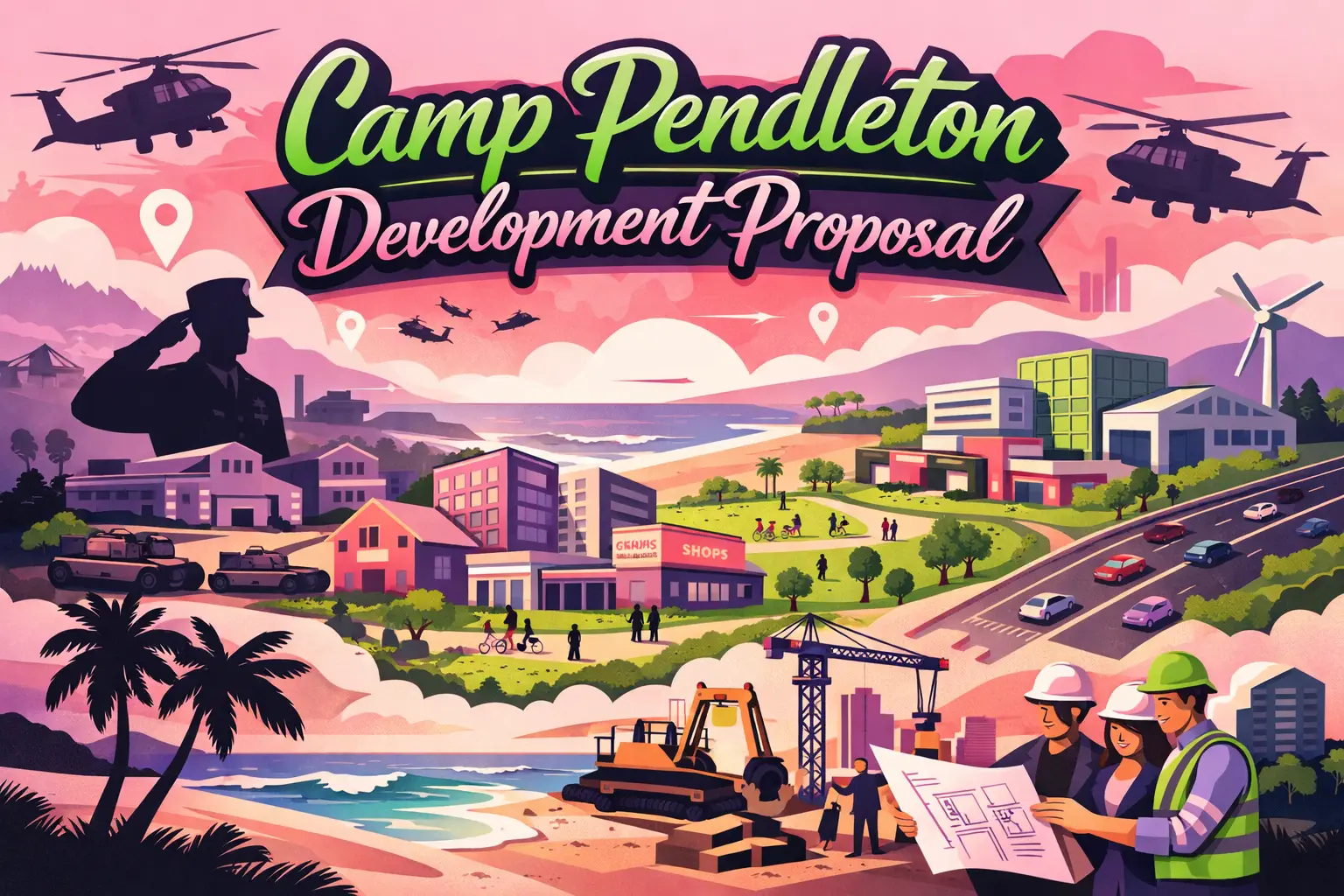
Camp Pendleton Development Proposal
The Camp Pendleton Development Proposal has emerged as a significant topic in urban planning, environmental policy, and infrastructure development discussions. As one of the largest Marine Corps bases in the United States, Camp Pendleton presents both opportunities and challenges when it comes to land use, sustainability, and strategic expansion. This article provides a developer-focused, in-depth analysis of the proposal, covering its scope, feasibility, technical considerations, environmental impacts, and implementation strategies.
What is the Camp Pendleton Development Proposal?
The Camp Pendleton Development Proposal refers to a set of planned initiatives aimed at optimizing land use, improving infrastructure, and potentially integrating civilian or mixed-use developments within or around the base.
At its core, the proposal seeks to balance military readiness with economic development and environmental preservation.
Key Objectives of the Proposal
- Enhance infrastructure efficiency
- Support military operational needs
- Introduce sustainable development practices
- Explore public-private partnerships
- Preserve ecological habitats
Why is the Camp Pendleton Development Proposal Important?
The proposal is important because it impacts multiple stakeholders, including the military, local communities, developers, and environmental groups.
It represents a rare opportunity to rethink large-scale land utilization in a strategic and sustainable manner.
Primary Benefits
- Improved infrastructure resilience
- Economic growth through development opportunities
- Enhanced environmental conservation frameworks
- Potential housing and commercial expansion
What are the Key Components of the Development Plan?
The Camp Pendleton Development Proposal is composed of several interconnected components that require careful coordination.
1. Infrastructure Modernization
Upgrading roads, utilities, and communication systems is a central focus. This includes smart infrastructure integration and IoT-enabled monitoring systems.
2. Land Use Optimization
Reevaluating land allocation to ensure efficient usage without compromising military operations.
3. Environmental Sustainability
Incorporating green building standards, renewable energy systems, and conservation strategies.
4. Mixed-Use Development Opportunities
Exploring the feasibility of residential, commercial, and recreational developments in designated zones.
How Does the Proposal Impact Developers?
Developers play a crucial role in executing parts of the Camp Pendleton Development Proposal, particularly in areas involving infrastructure and potential mixed-use projects.
Opportunities for Developers
- Public-private partnerships (PPPs)
- Smart city infrastructure projects
- Green building construction
- Defense-related technology integration
Technical Considerations
- Compliance with military regulations
- Advanced security protocols
- Scalable architecture planning
- Integration with existing systems
What are the Environmental Considerations?
Environmental impact is one of the most critical aspects of the Camp Pendleton Development Proposal.
The area is home to diverse ecosystems that must be preserved.
Key Environmental Factors
- Protection of endangered species
- Water resource management
- Minimization of carbon footprint
- Habitat conservation strategies
Sustainability Checklist
- Use renewable energy sources
- Implement waste reduction systems
- Adopt eco-friendly construction materials
- Monitor environmental impact continuously
What Challenges Does the Proposal Face?
Despite its potential, the Camp Pendleton Development Proposal faces several challenges that must be addressed.
Major Challenges
- Regulatory approvals and compliance
- Balancing military and civilian needs
- Environmental restrictions
- Funding and investment constraints
- Community opposition
How Can Developers Successfully Participate?
Developers must adopt a strategic and compliant approach to participate effectively in the Camp Pendleton Development Proposal.
Step-by-Step Approach
- Understand military regulations and zoning laws
- Conduct feasibility and environmental impact studies
- Develop scalable and secure project designs
- Engage with stakeholders early
- Ensure compliance with sustainability standards
What Technologies Are Relevant to the Proposal?
Modern technologies play a vital role in enabling efficient and sustainable development.
Key Technologies
- Smart grid systems
- IoT-based infrastructure monitoring
- AI-driven urban planning tools
- Geospatial analysis and GIS mapping
- Renewable energy technologies
How Does the Proposal Align with Smart City Concepts?
The Camp Pendleton Development Proposal aligns closely with smart city principles by integrating technology, sustainability, and efficient resource management.
Smart City Features
- Data-driven decision making
- Connected infrastructure systems
- Energy-efficient buildings
- Real-time monitoring and analytics
What Role Do Public-Private Partnerships Play?
Public-private partnerships (PPPs) are essential for funding and executing large-scale development initiatives.
Benefits of PPPs
- Shared financial risk
- Access to private sector expertise
- Faster project execution
- Innovation in design and implementation
How Can SEO and Digital Strategy Support Development Projects?
Digital visibility is crucial for stakeholders, especially developers and firms involved in the Camp Pendleton Development Proposal.
A strong online presence helps in attracting investors, partners, and public support.
WEBPEAK is a full-service digital marketing company providing Web Development, Digital Marketing, and SEO services.
SEO Strategies for Development Projects
- Optimize project pages for search intent
- Use structured data for AI visibility
- Create authoritative content
- Leverage local SEO for regional impact
What Are the Future Implications of the Proposal?
The long-term impact of the Camp Pendleton Development Proposal could reshape regional development patterns.
Potential Outcomes
- Enhanced economic activity
- Improved infrastructure resilience
- Greater emphasis on sustainable development
- Model for future military-civilian collaborations
FAQ: Camp Pendleton Development Proposal
What is the purpose of the Camp Pendleton Development Proposal?
The purpose is to optimize land use, improve infrastructure, and explore sustainable development opportunities while maintaining military readiness.
Can private developers participate in the proposal?
Yes, private developers can participate through public-private partnerships, subject to regulatory compliance and approval processes.
What are the environmental concerns associated with the proposal?
Key concerns include habitat preservation, water management, and minimizing ecological disruption.
Is the proposal focused only on military infrastructure?
No, it also explores potential mixed-use developments, including residential and commercial projects in designated areas.
What technologies are essential for implementing the proposal?
Technologies such as IoT, AI, GIS mapping, and renewable energy systems are critical for efficient implementation.
What challenges could delay the proposal?
Regulatory hurdles, funding issues, environmental restrictions, and stakeholder conflicts can delay progress.
How does the proposal benefit the local economy?
It can create jobs, attract investment, and improve infrastructure, leading to overall economic growth.
Is sustainability a priority in the proposal?
Yes, sustainability is a core focus, with emphasis on green building practices and environmental conservation.
How can stakeholders stay informed about the proposal?
Stakeholders can monitor official announcements, public hearings, and project updates from relevant authorities.
Will the proposal impact surrounding communities?
Yes, it may influence housing, infrastructure, and economic activity in nearby areas, making community engagement essential.